
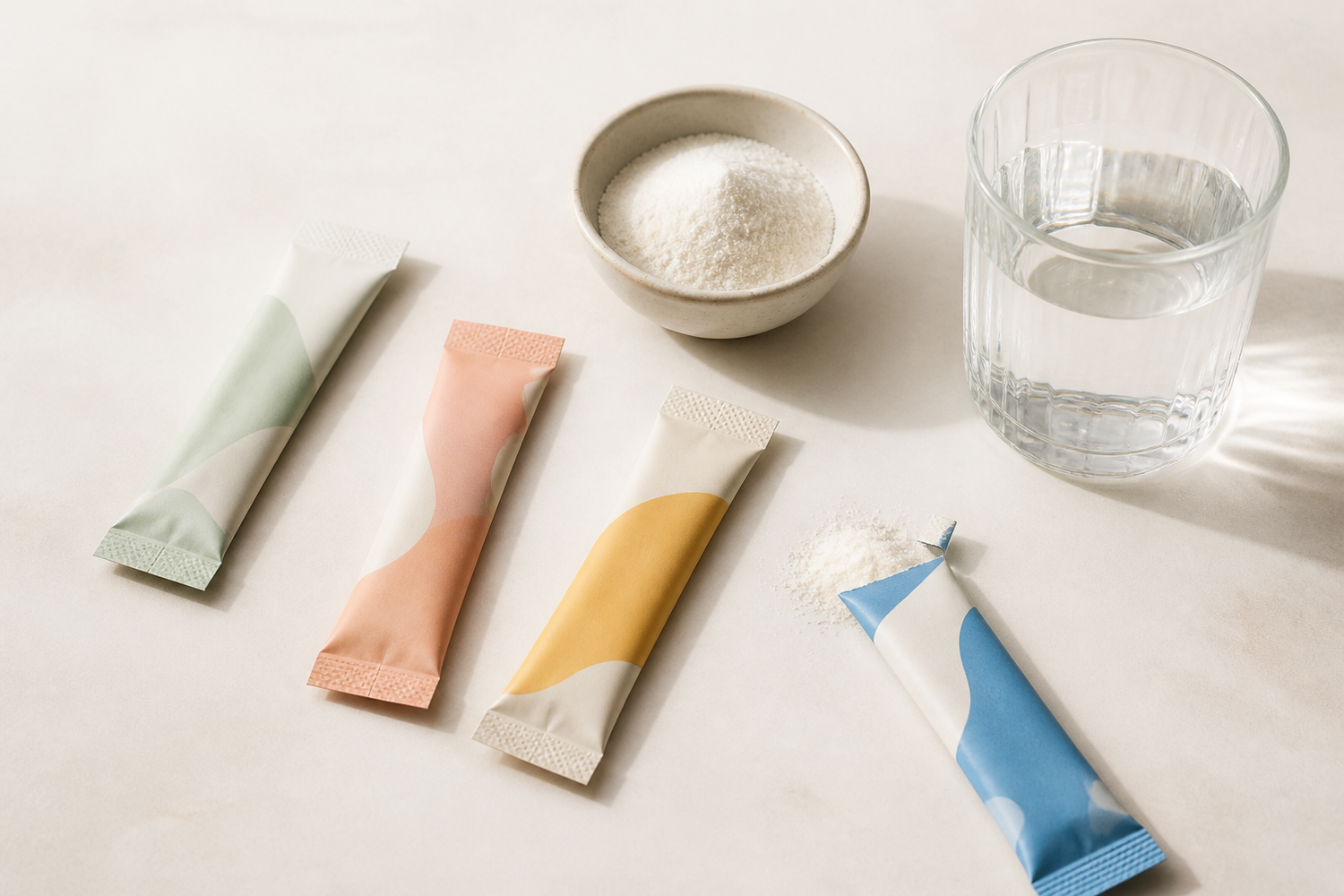
Electrolyte powder sachet packaging looks simple because the finished pack is small. The production questions are not. A useful supplier brief has to connect the dose, the way the powder flows, the filling line, the seal area, the label layout and the checks the brand will use on filled samples.
This guide is for U.S. hydration and wellness brands preparing a single-serve pilot. It is not formulation, stability, shelf-life, regulatory or legal advice. Your formula owner, contract packer, packaging supplier and qualified regulatory reviewers should confirm the final specification for the actual product, process and market.

1. Lock the serving before you discuss the sachet
Begin with the finished serving, not a preferred pouch picture. Record the target fill weight, allowed tolerance, powder bulk density, serving directions, target water volume and whether the pack is a retail unit, a sample, or one piece inside a multipack.
Then define the user action. Is the customer tearing the sachet by hand and pouring it into a narrow bottle, a shaker or a glass? The answer affects the opening width, tear direction and the amount of headspace the packer may need. A slim stick pack and a wider three-side-seal sachet can serve different filling and pouring needs even when the nominal dose is the same.
Avoid sending only “10 g hydration packet.” Add the target dose, tolerance owner, powder and filler information, opening use case, pack count and sales channel. Those fields give the supplier and packer a shared starting point.
2. Describe powder behavior and the real filling line

Fine drink-mix powders can behave differently during dosing and sealing. Tell the packaging team whether the blend flows freely, creates dust, has a history of clumping, contains oily flavor components, or changes between flavors. These are project inputs, not reasons to assume a particular laminate.
Ask the contract packer for the actual forming, filling and sealing route. Useful questions include:
- Which roll width, registration mark and repeat length can the machine run?
- What seal width and clear seal zone does the packer require?
- How is powder kept away from the sealing interface?
- How will fill weight be checked and recorded during the run?
- Where will lot or date information be applied?
- Which sample quantity is needed for setup, destructive tests and retained samples?
The Anacotte powder sachet packaging guide provides a broader comparison of sachets, stick packs, pouches and rollstock. Use that format discussion together with the packer’s confirmed equipment limits.
3. Separate barrier questions from seal-process questions
“High barrier” is not a complete specification. The brand should provide known formula sensitivities, expected storage conditions, target shelf-life study and distribution route. The packaging and formulation teams can then decide which barrier properties need to be measured and what evidence is required.
Seal integrity is a related but separate question. The ASTM F02.20 standards list identifies F88/F88M as a method for measuring the seal strength of flexible barrier materials. A test method does not supply a universal pass/fail limit. Your team must document the sample conditioning, specimen location, method, equipment and acceptance criteria that apply to the project.
For an early trial, ask what the team will learn from empty film, machine-made empty packs and product-filled sachets. Do not let a successful empty-pouch review stand in for filling, seal contamination, distribution or stability work.
4. Reserve label, lot and proof zones before artwork approval
The FDA Dietary Supplement Labeling Guide describes required statement categories and panel placement for products marketed as dietary supplements in the United States. The brand owns the label review; a packaging dieline only provides the physical space.
Map the principal display panel, information panel, net quantity statement, Supplement Facts area when applicable, ingredient and business information, directions, warnings, barcode, flavor cue, lot/date field and seal-safe margins. If several flavors share one structure, identify which fields are fixed and which change by SKU.
Also name the proof owner for regulatory copy, artwork, color and variable-data placement. A proof should not move forward while required information is still changing.
5. Build a filled-sample record, not just a visual review

FDA’s dietary-supplement CGMP guide describes packaging specifications, batch controls, examination, traceability and quality-control review. Translate that discipline into a practical pilot record with your quality team.
For each trial, record at least the film and artwork revision, formula and flavor, filler, target and observed fill checks, seal settings, code application, sample count, storage condition, test date, method and disposition. Inspect more than appearance. Depending on the qualified plan, the team may review fill consistency, seal contamination, tear behavior, leakage, print registration, code legibility and changes during the stability program.
If the formula, dose, filler, seal settings, sachet dimensions, material, storage or distribution route changes, decide whether the previous result still applies. Do not silently carry an old approval into a changed project.
6. Send one quote-ready handoff for the whole SKU family

A clear request for quote should include:
- Product category, target market and intended use.
- Formula owner, known powder behavior and storage expectations.
- Target fill weight, tolerance owner, serving count and opening use case.
- Confirmed filling machine, rollstock or premade format, seal-zone and coding needs.
- SKU list, quantity per SKU, shared artwork elements and variable flavor fields.
- Required documentation, sample stages, test questions and approval owners.
- Artwork status, target date and ship-to location.
That handoff makes the supplier conversation specific without pretending the package is already validated. Review Anacotte’s single-serve electrolyte powder sachet direction, then request a project-specific quote with the dose, filler, SKU and test details above.
Frequently asked questions
Should we choose the film before the contract packer reviews the sachet?
Usually the packer’s equipment, seal process and product behavior should be part of the review. A visually preferred film is not enough to establish machine or product suitability.
Does ASTM F88 define the correct seal strength for every hydration sachet?
No. It is a measurement method. The project team must define whether it applies and document its own sampling, conditioning and acceptance criteria.
Can one approval cover every flavor?
Not automatically. Confirm whether flavor changes affect powder flow, dust, oil content, artwork, required label information or the filling process, and document the decision.
What should be ready before requesting a quote?
Prepare the dose, powder behavior, filling route, format, SKU quantities, artwork status, label zones, target market, timing and filled-sample questions. Unknowns can be listed explicitly rather than guessed.

Leave a comment
This site is protected by hCaptcha and the hCaptcha Privacy Policy and Terms of Service apply.