
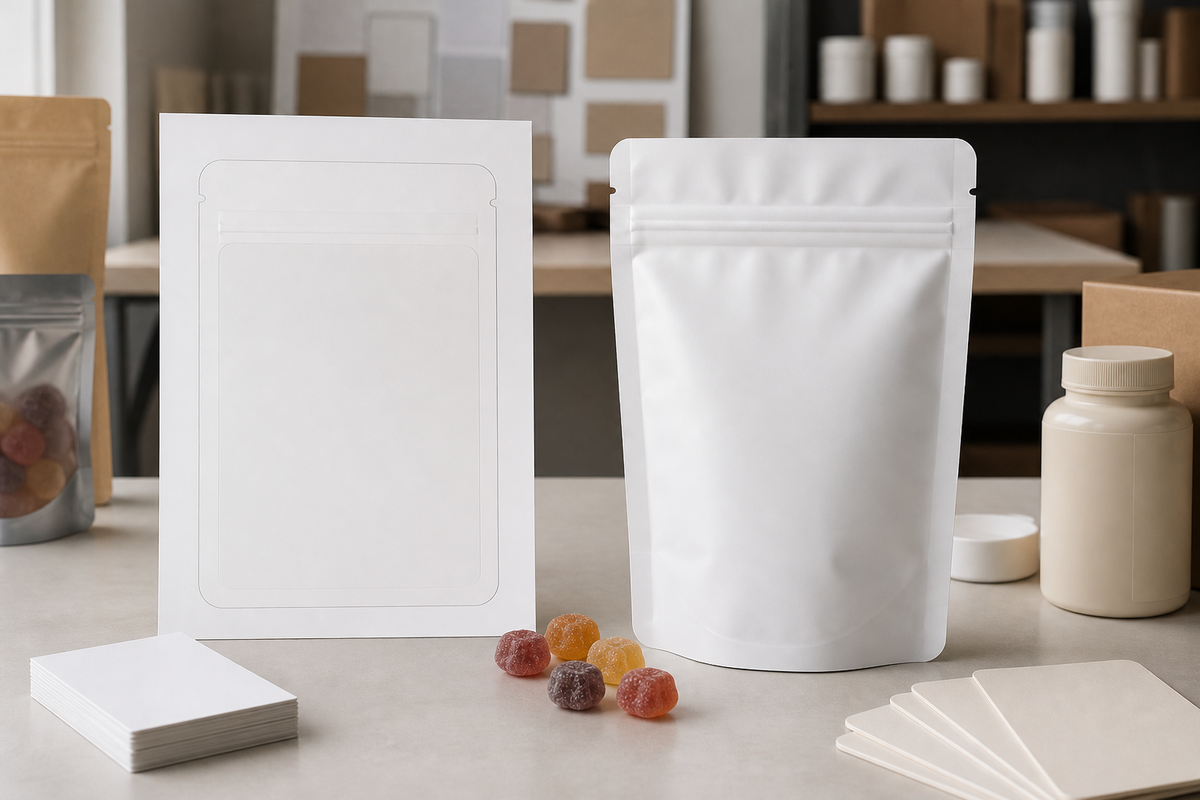
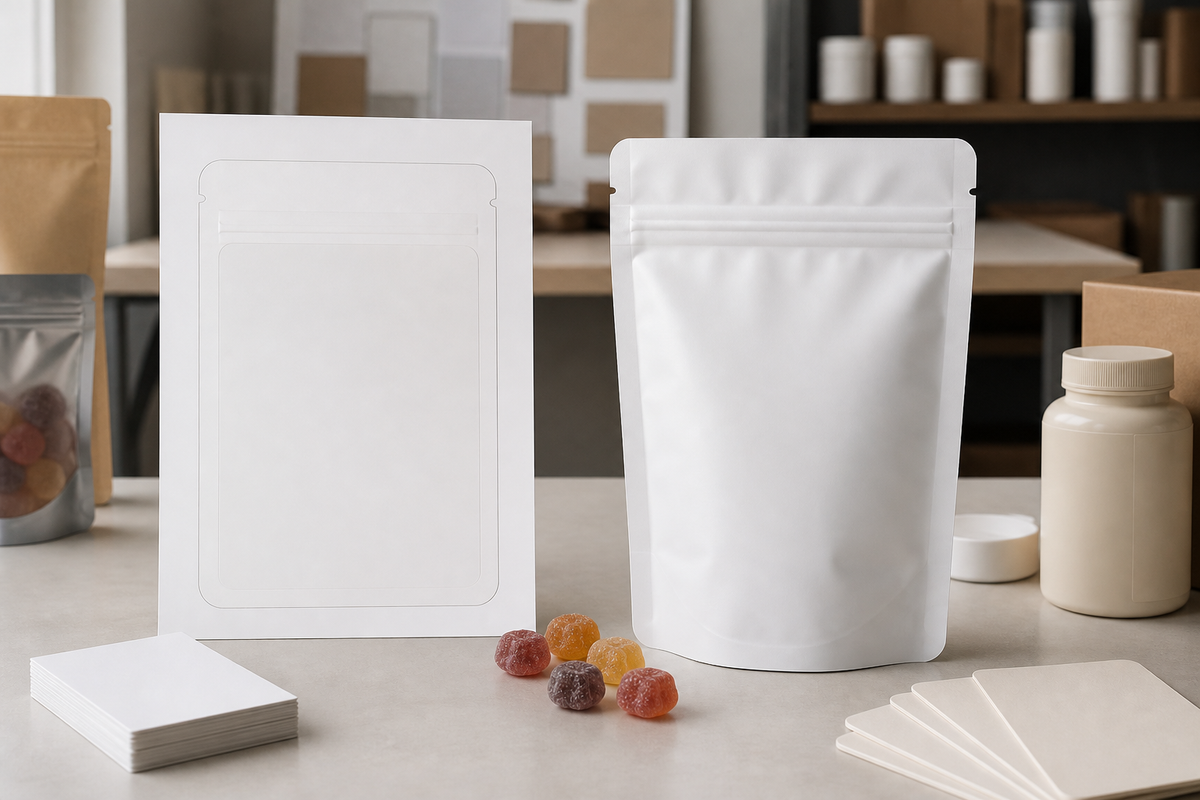
White-label packaging is often described as a printing project. For a new CPG brand, it is better treated as a handoff system: product details move into pouch geometry, material questions, artwork, proof approval, first-run checks, and repeat production. If those handoffs are vague, the same brand family can end up with different assumptions for every SKU.
The goal is not to pick one “best” bag before the product is understood. The goal is to make the next supplier conversation specific enough that format, artwork, and production decisions can be tested instead of guessed.

Start with the product family, not the front panel
Before discussing colors or finishes, list what each SKU actually contains and how it will be filled, stored, shipped, and opened. A dry snack, a powder, a liquid, and a personal-care formula may all use the phrase “private label packaging,” but they do not automatically share a pouch structure or material need.
- Product behavior: record particle or piece size, density, dust, oil, stickiness, fragility, viscosity, and any heat or cold exposure.
- Target fill: define sellable weight or volume, tolerance, headspace, case pack, and the dimensions the co-packer needs to run.
- Use and storage: note single-use versus multi-use, room-temperature versus controlled storage, shipping route, and the customer’s opening routine.
- Label and code space: reserve areas for approved ingredients, nutrition, warnings, barcode, lot/date code, and instructions. The packaging format does not approve the copy.
Keep these inputs in a SKU matrix. It shows which decisions can be shared across the family and which ones need a separate sample. That is more useful than assuming every variation can use the same dimensions, zipper, window, or barrier.
Choose a pouch route your fill can actually use
For a dry-goods example, a flat-bottom or box-bottom pouch can provide a stable retail footprint and broad printable panels. A stand-up bottom-gusset pouch may be a better starting point when the pack needs a lighter display structure or a different shelf profile. A flat three-side-seal pouch can make more sense for a sample, single serve, or compact pack. These are starting hypotheses, not universal winners.
Anacotte’s private-label packaging bags page is a useful place to compare the available format family. For a dry-goods structure reference, review the flat-bottom pouch collection and bring the intended fill to a sample conversation. The page and collection show options; they do not replace confirmation of product fit, material, or compliance.
For a broader shelf-presence comparison, the related stand-up versus flat-pouch guide is useful context. Keep the new white-label article focused on the handoff between product requirements and the final production decision.

Make each SKU a controlled artwork handoff
Lock the dieline before polishing the design
A brand can share a visual system across SKUs while still requiring different dielines. Confirm finished width and height, gusset or bottom construction, seal zones, zipper position, tear notch, window, hang hole, and code area before final artwork is approved. Ask the supplier which areas are printable, which are reserved for seals or folds, and how the proof represents the finished pouch.
The existing digital-versus-gravure printing guide can help frame the print-route discussion. A separate digital printing and multi-SKU article is useful when the brand is comparing short-run tests with a later repeat program. The correct route depends on the supplier, order structure, SKU count, artwork changes, and required finish.
Assign version ownership
Decide who owns the master artwork, who checks the dieline, who approves color and finish, who confirms legal copy, and who releases the final file. Use an explicit file name and version for every SKU. A proof approval should identify the exact file reviewed; otherwise a late copy or barcode change can be mistaken for an approved production version.

Use the first run as an acceptance step
A first printed sample or starter batch should answer operational questions that a flat artwork proof cannot. Fill representative product into the intended size, then review the result with the brand, co-packer, and responsible quality owners.
- Does the product fit without excessive empty space, crushing, bridging, or strain at the mouth?
- Can the filler load the pouch in the intended direction and keep product out of the seal area?
- Do the tear notch, zipper, or other opening features work for the actual user routine?
- Are the front, back, code, barcode, and seal zones still usable after the pouch is filled?
- Does the finished pack survive the planned handling, case pack, parcel, or retail display review?
- Do the responsible material, food-contact, label, and safety owners approve the intended use and copy?
Record the result as accepted, accepted with changes, or not accepted. A packaging sample is evidence for a decision; it is not proof that every future SKU or storage route will perform the same way.

Carry what worked into repeat production
After the first run, separate locked decisions from changeable ones. The repeat record can include the approved pouch dimensions, structure reference, closure, finish, artwork version, color reference, code-zone position, fill method, case pack, and acceptance notes. If a supplier or co-packer changes a material, machine, seal condition, or artwork file, route the change back through the same review.
| Handoff item | Question to close before repeat production |
|---|---|
| Product and fill | Did the tested fill, density, headspace, and line direction match the planned SKU? |
| Construction | Are the finished dimensions, seams, zipper, notch, window, and code zones recorded? |
| Artwork | Is the approved file version tied to the exact dieline and finish? |
| Quality | Which filled-pack checks must be repeated when the SKU, material, or process changes? |
What to send with a white-label packaging quote request
Start with the product family and the decisions you already know: SKU count, target fill, product form, storage, fill method, preferred pouch route, artwork status, code zones, sample needs, and the tests that will determine acceptance. Then identify what is still unknown, especially material, barrier, food-contact, and regulatory questions. FDA guidance explains that the regulatory status of a food-contact material depends on its components, authorizations, specifications, and conditions of use; treat that as a compliance-owner handoff, not a blanket claim.
When you are ready, contact Anacotte Packaging with the product family, SKU count, target fill, pouch format, artwork status, code zones, storage route, sample plan, and repeat-run assumptions. A more complete input set makes the next sample and quote conversation easier to compare.
White-label packaging FAQs
Can every SKU in a private-label line use the same pouch?
Not automatically. SKUs may share a visual system while differing in density, fill, storage, opening, code space, or material need. Use a shared structure only after representative samples support it.
Should a new brand choose digital or gravure printing first?
Compare the supplier’s print route, SKU count, artwork-change frequency, run size, finish, proof process, and repeat plan. A general label such as “short run” or “premium” is not enough to make the decision.
Does a white-label pouch automatically meet food-contact requirements?
No. The responsible supplier and compliance/food-safety owners must confirm the intended product, conditions of use, components, documentation, and approved copy for the actual project.

コメントを書く
このサイトはhCaptchaによって保護されており、hCaptchaプライバシーポリシーおよび利用規約が適用されます。