
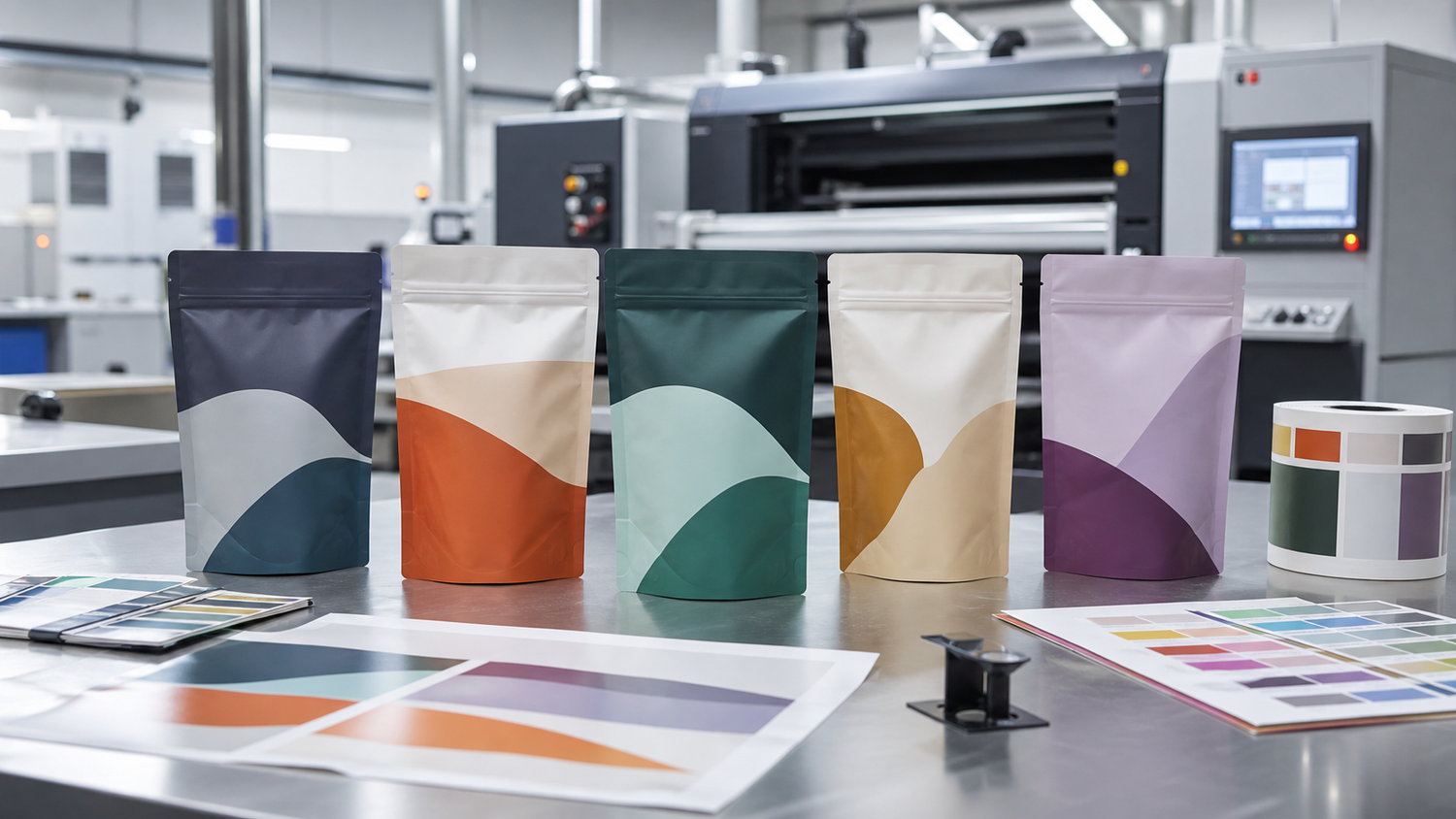
Digital Printing Packaging: When Low-MOQ Pouch Runs Make Sense
Digital printing packaging is attractive because it removes some friction from custom pouch buying. A brand can test several designs, split volume across SKUs, and avoid treating the first artwork file as a permanent commitment.
That does not mean every job should be digital. The better question is narrower: does this project need speed, version control, lower setup friction, and smaller quantities more than it needs the lowest unit cost at high volume?

Digital print is strongest when the order has versions
Digital printing is a good fit when the project has multiple SKUs, seasonal artwork, test markets, limited runs, or frequent label changes. Providers such as HP Indigo describe digital print around short runs, variable work, and flexible production. That matches the real buyer problem: too many versions for a comfortable first order.
For brands ordering low MOQ packaging, the value is not only the smaller quantity. It is the ability to learn before buying too much inventory. Shopify's inventory management guide makes the same operational point from the retail side: stock decisions affect cash, storage, and availability.

Common digital-print use cases include:
- launching three to ten SKU designs at once;
- testing flavor, size, scent, or formula variants;
- preparing retailer samples;
- updating claims, QR codes, or regulatory panels;
- running a seasonal design without locking into large stock;
- matching pouch print to a fast ecommerce campaign.
Plate-based printing may still win at scale
Digital printing is not a magic pricing tool. When volume becomes stable and artwork stops changing, plate-based printing can become more economical. Buyers should compare setup cost, unit cost, lead time, reorder frequency, color expectations, and waste risk before deciding.
A practical route is to start with customized packaging for the launch run, then review the repeat order once sales data is real. If two SKUs become winners and six move slowly, the second order should not simply repeat the first order split.
The buyer's decision should consider:
- number of designs;
- expected reorder timing;
- acceptable color tolerance;
- finish requirements;
- pouch material and barrier structure;
- whether the design is still changing;
- total inventory risk.
The pouch still needs a material brief
Digital printing controls the artwork route. It does not choose the right pouch structure by itself. A digitally printed pouch still needs the correct format, film, closure, finish, and seal performance.
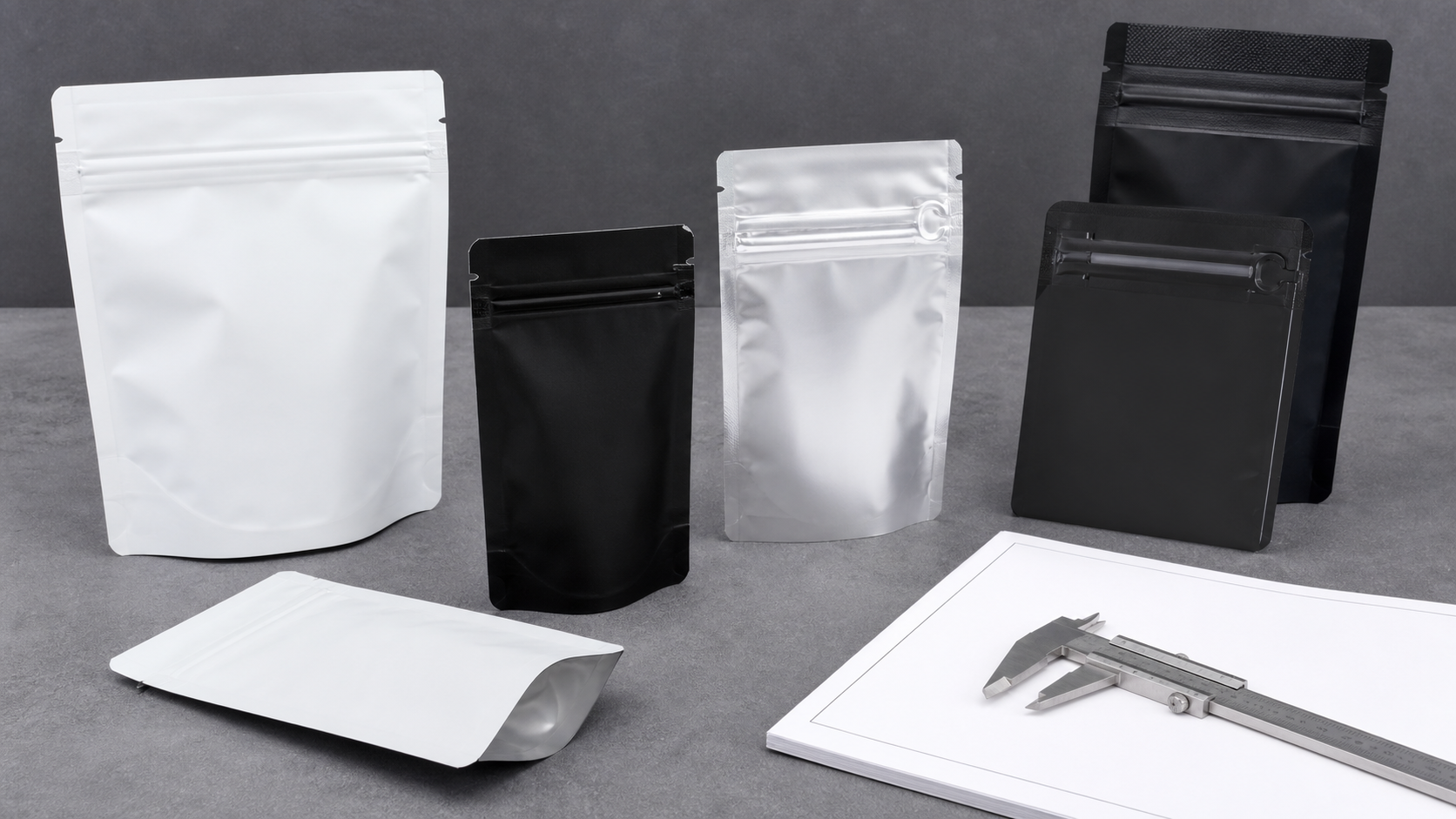
For dry goods, snacks, supplements, samples, and refill products, stand up pouches often give a good first structure to compare. For heavier retail presence or larger panel space, flat bottom pouches may make more sense.
If sustainability is part of the brief, ask early whether a recyclable packaging route is realistic for the product and print finish. Do not wait until final proofing to discover that the material route and artwork claim do not match.

Proof review is where low-MOQ projects stay organized
Low MOQ does not excuse loose files. It actually makes file control more important because the order may include many small versions. A supplier can move faster when the SKU map is stable before proofing.
Prepare this before asking for a quote:
- SKU name and version code;
- pouch size and fill weight;
- format, zipper, tear notch, valve, or window needs;
- material target and barrier notes;
- finish preference such as matte, gloss, metallic, or soft-touch;
- artwork file for each version;
- barcode, QR code, lot-code, and label panel requirements;
- expected first order and reorder timing.
Packaging trade coverage from Packaging World regularly shows how flexible packaging decisions combine materials, production route, and market timing. Digital print only helps when those details are controlled enough for production.

A quote checklist for digital printed pouches
Before approving digital printing packaging, confirm:
- the supplier knows the full SKU count;
- every artwork file has a stable version name;
- the pouch structure is chosen before final color review;
- material, finish, and closure are included in the quote;
- proof approval covers all versions, not only the hero SKU;
- reorder economics are discussed separately from the launch run;
- the team knows when it may move from digital to larger production.
This checklist prevents the common mistake: asking for low MOQ, then creating delays through late artwork changes, unclear SKU names, or missing pouch details.
Talk to Anacotte
If you are planning digital printed pouches for a launch, test market, or multi-SKU product line, Anacotte Packaging can help compare print route, pouch format, material structure, and low-MOQ planning. Review low MOQ packaging, explore customized packaging, or request a quote with your SKU map and artwork status.
A short packaging consultation is useful before proofing if the team is still deciding between digital print, a recyclable pouch route, or a higher-volume production plan.


Leave a comment
This site is protected by hCaptcha and the hCaptcha Privacy Policy and Terms of Service apply.