Flexible Packaging

Pouch Seal Strength Testing: A Pre-Production Checklist for CPG Brands

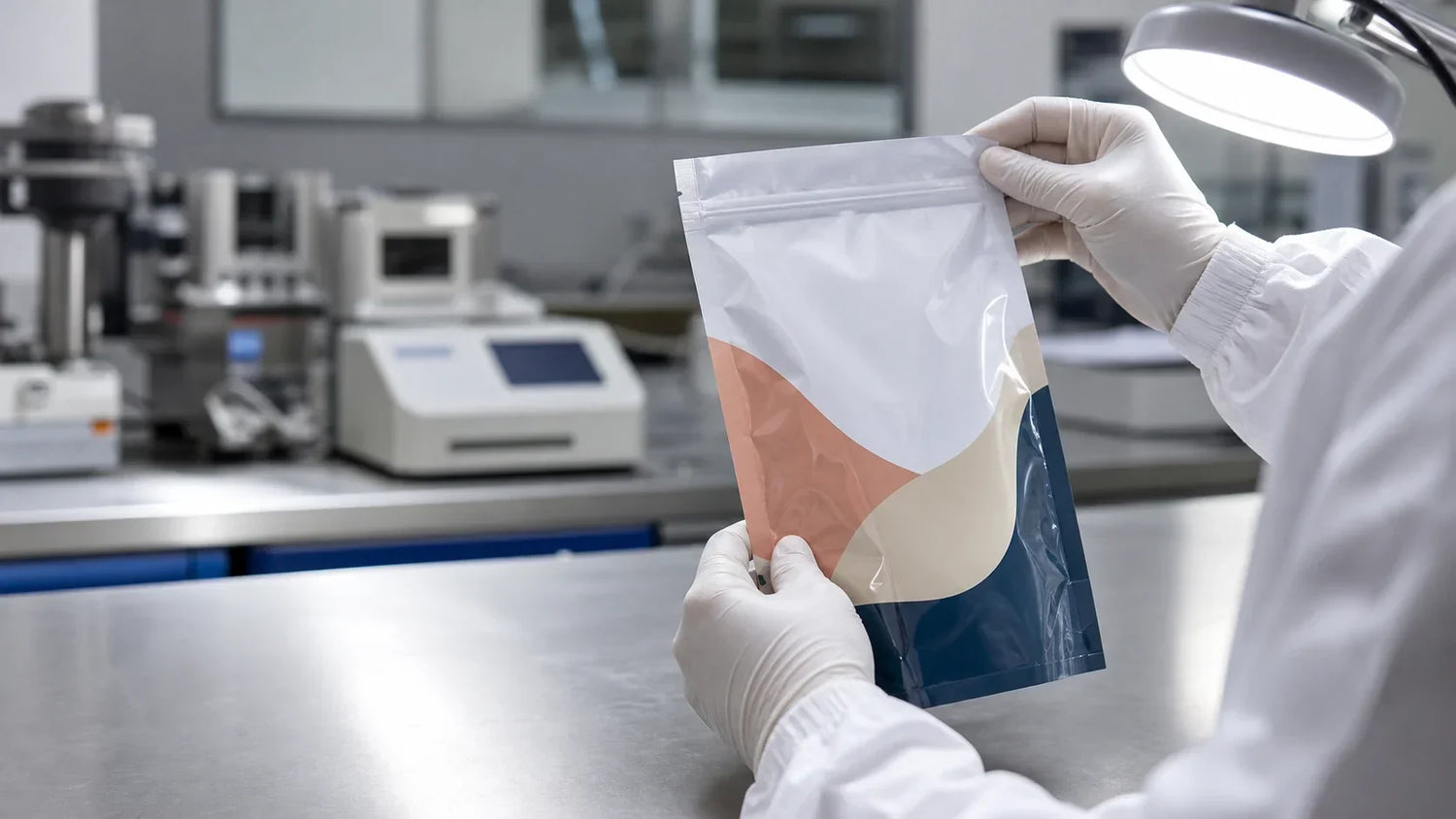
Flexible pouch seal strength testing in a packaging quality-control laboratory

A custom pouch can look perfect and still fail where it matters most: the seal. A weak, contaminated, wrinkled, or inconsistent seal can lead to leaks, loss of freshness, customer complaints, and damaged shipments.

That is why pouch approval should cover more than artwork and color. Before a CPG brand approves production, the packaging team should connect the pouch structure, sealing process, product characteristics, filling method, storage conditions, and distribution environment in one test plan.

This guide explains the questions to ask and the evidence to collect. It does not provide a universal pass/fail number, because the correct acceptance criteria depend on the actual package and use case.

1. Define the Use Case Before You Test the Seal

Start with the product, not the test equipment. A pouch for dry tea faces different risks from a pouch for oily snacks, frozen food, fine powder, or liquid concentrate.

Document these details before requesting samples:

  • Product type and whether it is dry, oily, acidic, abrasive, powdered, or liquid
  • Fill weight and expected headspace
  • Filling temperature and sealing conditions
  • Room-temperature, refrigerated, frozen, hot-fill, or reheating requirements
  • Expected shelf life
  • Ecommerce, retail, wholesale, or export distribution
  • Zipper, valve, spout, tear notch, hang hole, or other fitments

For food packaging, the U.S. Food and Drug Administration distinguishes food types and conditions of use when evaluating food-contact substances. That is a useful reminder that material suitability is tied to intended use—not simply to the words “food grade.”

2. Inspect the Seal Before Running Instrumented Tests

Visual inspection is the fastest first filter. Review samples under consistent lighting and check every seal area, including corners and locations near zippers, valves, or spouts.

Look for:

  • Channels, folds, wrinkles, or incomplete seal areas
  • Product contamination in the seal
  • Uneven seal width
  • Distortion, scorching, or excessive film shrinkage
  • Delamination close to the seal
  • Misaligned zipper or fitment components
  • Tears beginning at notches or corners

Record the pouch lot, sample number, material structure, dimensions, and observations. Photographs help the supplier distinguish isolated damage from a repeatable process issue.

A visual pass is not proof of package integrity, but a visual failure is a strong reason to pause approval.

3. Understand What a Seal-Strength Test Measures

ASTM F88/F88M covers seal-strength measurement for flexible barrier materials. In simple terms, a strip containing the seal is pulled apart and the force required to separate it is measured. The test can also identify how the sample failed.

Flexible barrier material seal strip undergoing a laboratory peel-strength test
A peel test measures separation force and helps document how the sealed sample fails.

Seal strength is useful for process validation and consistency. However, the highest force is not automatically the best result. A package may need enough strength to survive filling and distribution while still being openable by the intended user.

When reviewing results, ask:

  • Were samples cut to a consistent width and orientation?
  • Which seal areas were tested?
  • What failure mode occurred: seal separation, film tear, or delamination?
  • Are results consistent across multiple pouches and production positions?
  • Were samples conditioned and tested using a documented method?
  • What acceptance range was selected, and why does it fit the product use?

Do not copy a seal-strength number from another pouch. Material, thickness, sealant layer, equipment, temperature, dwell time, pressure, and package geometry can all change the result. Use Anacotte Packaging's flexible packaging materials guide to organize the structure questions that should be confirmed before testing.

4. Add a Gross-Leak Test Where Appropriate

Seal strength and leak detection answer different questions. A strong-looking seal may still contain a channel or small defect.

Flexible pouch undergoing a gross-leak bubble-emission test
Leak testing and seal-strength testing answer different package-integrity questions.

ASTM D3078 describes a bubble-emission method for identifying gross leaks in flexible packages with headspace gas. The method also notes an important limitation: sensitivity depends on the product, packaging material, and chosen test parameters, and small leaks may not be detected.

Ask your packaging or testing partner:

  • Is the selected leak method appropriate for this package format and contents?
  • Will the test be performed on empty samples, filled samples, or both?
  • How will fitments, valves, zippers, and corners be evaluated?
  • What leak size or failure type can the method reasonably detect?
  • Could the product itself block a leak path during testing?

If a bubble test is not suitable, a packaging laboratory may recommend another validated integrity method. The important point is to choose the method for the package—not to force every pouch through the same test.

5. Test Filled Pouches Under Realistic Conditions

Empty pouch samples are useful for artwork, dimensions, film feel, and basic construction. They cannot reproduce every risk created by the product and filling process.

Filled flexible pouches undergoing storage and distribution validation
Filled-pack trials should reflect expected storage, handling and distribution conditions.

Whenever practical, run a controlled filled-pack trial that reflects:

  • Actual product or a technically appropriate simulant
  • Target fill weight and headspace
  • Production sealing equipment and settings
  • Expected storage time and temperature
  • Compression inside cases
  • Vibration, drops, and parcel handling for ecommerce
  • Freeze-thaw or heat exposure where relevant

Inspect immediately after filling and again after the planned conditioning period. A failure that appears after temperature cycling or distribution is just as important as one found on the filling line.

For liquid and spouted packages, include fitment and cap areas in the test plan. For powders, keep the seal zone clean and evaluate whether dust interferes with consistent sealing. For oily products, confirm that the product and film structure are compatible with the intended shelf life.

6. Separate Three Different Approval Questions

Packaging buyers sometimes combine several decisions into one. Keep these questions separate:

  1. Is the seal process consistent? Seal-strength and process records help answer this.
  2. Is the finished package intact? Leak, distribution, and filled-pack trials help answer this.
  3. Is the material suitable for the intended food-contact use? Supplier documentation and the applicable regulatory basis are needed.

A package can perform well mechanically while still lacking the documentation required for a particular use. It can also use suitable food-contact materials but fail because the seal process is poorly controlled.

For U.S. food-contact applications, request documentation that identifies the material structure and its regulatory basis for the intended food type and use conditions. The FDA explains how to determine the regulatory status of components in food-contact materials. You can also review Anacotte Packaging's compliance and certification hub when preparing supplier-document requests. Avoid relying on a generic “FDA approved pouch” statement without supporting detail.

7. Build a Clear Approval Record

Before approving production, keep one record containing:

  • Approved pouch dimensions and tolerances
  • Material structure and thickness
  • Sealant layer and sealing guidance
  • Zipper, valve, spout, and other fitment specifications
  • Artwork proof and version
  • Sample lot or production reference
  • Test methods, sample count, conditions, and results
  • Photographs and failure observations
  • Food-contact or other required documentation
  • Final approver, decision date, and unresolved limitations

If the product, fill process, supplier, material structure, pouch size, or distribution environment changes, review whether the package needs to be tested again.

8. Pre-Production Pouch Approval Checklist

Before you sign off, confirm that:

  • The product and conditions of use are documented.
  • The pouch format, size, material, and fitments match the brief.
  • Seal areas pass a documented visual inspection.
  • Seal-strength results are consistent with product-specific criteria.
  • An appropriate leak or integrity method has been selected.
  • Filled-pack trials reflect real filling, storage, and distribution conditions.
  • Food-contact or other market documentation has been reviewed where applicable.
  • Failures, limitations, and corrective actions are recorded.
  • The final sample, artwork, and specification versions match.
  • A named person has approved the package for production.

Frequently Asked Questions

What is the minimum acceptable pouch seal strength?

There is no single number for every pouch. The correct range depends on the material, seal design, product, opening requirement, filling process, and distribution risks. Your supplier or packaging laboratory should help establish and document product-specific criteria.

Is a bubble test enough to approve a pouch?

Not by itself. A bubble-emission test can help identify gross leaks under defined conditions, but it may not detect every small defect. Combine it with visual inspection, seal-strength evaluation, filled-pack trials, and distribution testing as appropriate.

Can empty samples be used for final approval?

They are useful for construction and print review, but a filled trial gives better evidence about contamination, headspace, product interaction, storage, and shipping performance.

Does “food grade” mean the pouch is suitable for every food?

No. Suitability depends on the material components, food type, temperature, contact time, and other conditions of use. Ask for documentation tied to the intended application.

When should a brand repeat pouch testing?

Review testing whenever there is a meaningful change to the material, supplier, dimensions, fitment, product, fill process, sealing equipment, storage condition, or distribution channel.

Prepare a Better Pouch Brief Before You Order

The best seal test begins with a clear packaging brief. Share your product type, fill weight, pouch format, storage conditions, expected quantity, artwork status, and launch timeline before requesting a quote.

Explore low-MOQ flexible packaging options, or send your packaging specifications to Anacotte Packaging for a project-specific recommendation.

前後の記事を読む

Laundry detergent pouch format comparison for powder pods and liquid
Unbranded single-serve energy gel pouch beside a sports bottle

コメントを書く

このサイトはhCaptchaによって保護されており、hCaptchaプライバシーポリシーおよび利用規約が適用されます。

Contact Us

Do you have any question?