
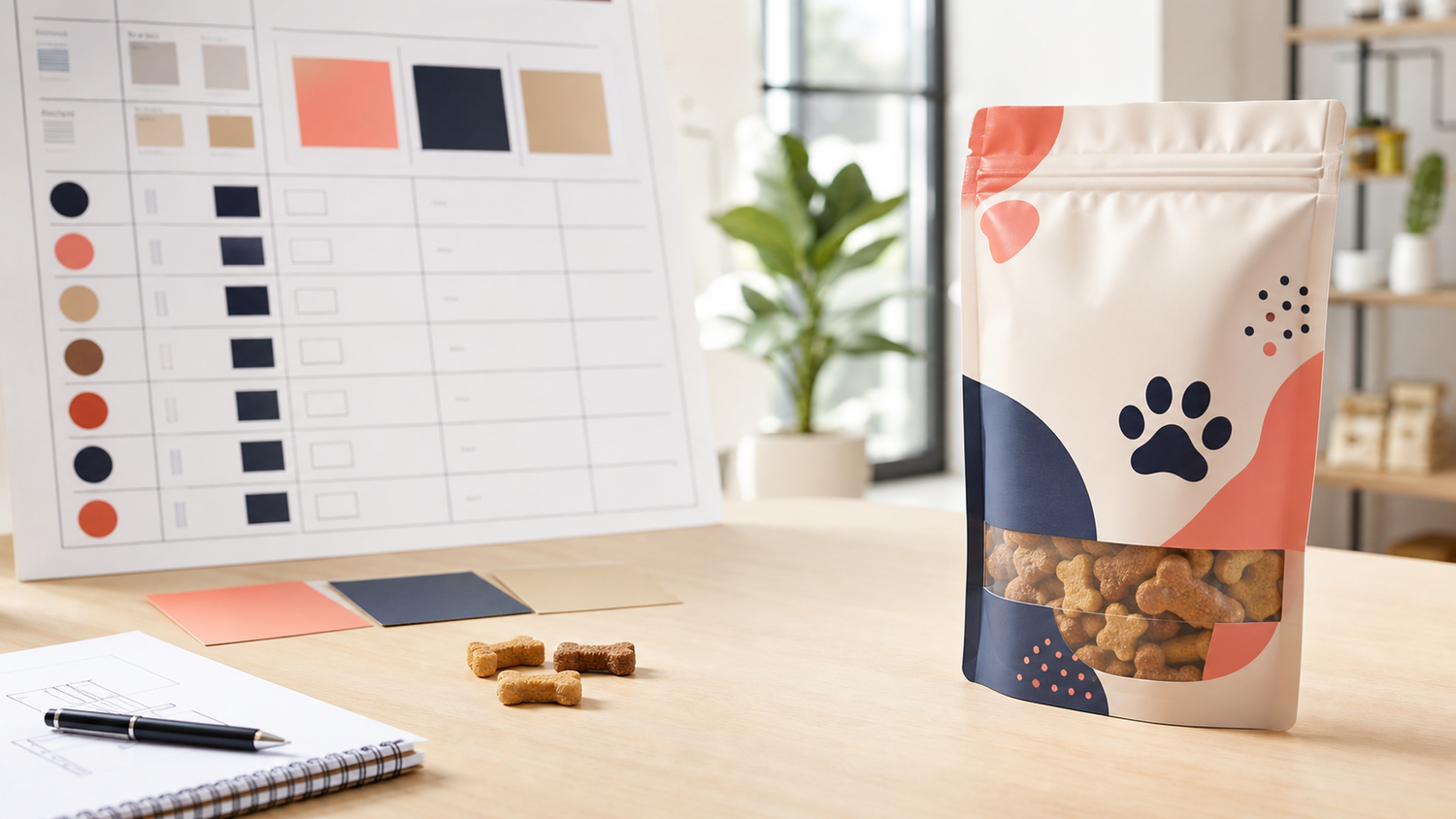
Pet treat brands rarely launch only one idea. A founder may test chicken, salmon, beef, dental, training, freeze-dried, soft-chew, or functional-positioning SKUs across ecommerce, local retail, buyer meetings, subscription boxes, and pet events. The packaging challenge is to create enough differentiation for each trial without buying a large inventory of every artwork or forcing physically different treats into one unsuitable pouch.
Low-MOQ custom pouches can support flavor trials when the brand creates a SKU map, groups compatible products, validates size and barrier, controls artwork, and defines how winners move into reorder. Packaging is not evidence for nutrition, dental, health, or functional claims; those remain the brand responsibility. This guide focuses on a safer packaging and launch process.
Quick Answer: Group pet treat SKUs by physical behavior, not only flavor. Choose a shared pouch size only for products with similar fill volume, oil, odor, fragility, barrier, zipper, and filling needs. Build a SKU map, test each different product family, approve every artwork, distribute samples by channel, and set a reorder trigger based on sell-through, buyer feedback, defects, and remaining product.
Pet Treat Trial SKU Map
Use a SKU map to separate commercial variants from packaging differences.
| SKU Difference | May Share Structure? | What to Test |
|---|---|---|
| Flavor only, same base treat | Often | Artwork, aroma, quantity, label content |
| Different protein and oil level | Maybe | Grease, odor, compatibility, shelf life |
| Crunchy vs soft chew | Usually separate review | Moisture, texture, breakage, zipper |
| Freeze-dried whole pieces vs crumbs | Separate physical test | Puncture, headspace, product protection |
| Dental stick vs small training bite | Likely different size | Length, bridging, fill, opening |
| Retail bag vs buyer sample | Different format can help | Trial amount, shipping, next-step CTA |
1. Separate Flavor Trials From Format Trials
A brand can change flavor, protein, texture, size, claim, channel, and package at the same time, then struggle to explain why one SKU wins. Packaging complexity also grows because every variable may require a different physical pack.
Define whether the test is primarily flavor preference, product format, price point, package size, channel, or positioning. Keep unrelated variables stable when possible.
Identify what the market test is meant to learn
Write one hypothesis and one decision metric for each SKU. Use the packaging to make variants clear without creating unnecessary structural differences.
Decision boundary: A multi-SKU launch is not useful learning if every SKU changes in several uncontrolled ways.
2. Group Treats by Physical Behavior
Chicken and salmon flavors may share the same treat base, but soft chews, crunchy biscuits, freeze-dried minnows, jerky strips, and dental sticks behave differently. Shape, oil, odor, moisture, fragility, and length affect size and structure.
Create families such as small crunchy bites, soft oily chews, fragile freeze-dried pieces, long strips, and bulk treats. Test one representative product from each family before deciding shared dimensions.
Build packaging families
Measure piece dimensions, occupied volume at target weight, breakage, oil transfer, and how the product settles. Add these observations to the SKU map.
Decision boundary: Flavor similarity does not prove physical packaging compatibility.
3. Choose Pouch Size From Real Treat Samples
Irregular treats trap air and can bridge across narrow openings. Fragile pieces need protective headspace, while dense training bites can make a pouch unexpectedly heavy. A size chosen from ounces alone may look underfilled or strain the closure.
Provide target weight or count, maximum piece size, occupied volume, preferred shelf shape, and filling method. Reserve space below the zipper and top seal.
Protect headspace and zipper clearance
Fill blank pouches, settle and seal them, then simulate shipment. Photograph product level, breakage, standing stability, and customer access.
Decision boundary: A digital pouch rendering does not confirm fill or protection.
| Pouch Format | Useful Pet Treat Use | Key Caution |
|---|---|---|
| Stand-up pouch | Training bites, soft chews, general treats | Gusset, zipper, headspace, seal contamination |
| Flat-bottom pouch | Premium freeze-dried or larger retail packs | Size, panel structure, case packing |
| Flat pouch | Buyer samples, small cat treats, trial sizes | Seal area and limited artwork space |
| Side-gusset or quad-seal bag | Bulk treats and long pieces | Filling access, vertical seals, shelf width |
| Window pouch | Visually attractive treats | Barrier tradeoff, scuffing, product appearance |
4. Match Barrier to Texture, Oil, and Aroma Risks
Crunchy treats can soften with moisture, oily treats can challenge films and seals, and aromatic proteins can lose appeal or transfer odor. Freeze-dried products can be highly moisture sensitive. These risks vary within the pet treat category.
State product form, oil level, moisture sensitivity, aroma, target shelf life, storage, and distribution. Ask the supplier to explain the proposed barrier and compatibility review.
Avoid one-size-fits-all material language
Use filled test packs and a shelf-life plan appropriate to the product. Retain samples from each packaging family.
Decision boundary: The word high barrier is not a shelf-life guarantee or claim approval.
5. Use Zippers and Windows Intentionally
Pet owners often open treat bags many times, making zipper performance important. A clear window can show attractive treats but may change barrier, printable area, or product appearance under light.
Define expected uses per pack, treat crumbs or oils, opening width, window goal, and whether the product stays visually appealing. Review the zipper and window as functional elements.
Balance repeat use and product visibility
Have users open, dispense, and reclose filled samples. Inspect zipper contamination and the window after handling and storage.
Decision boundary: A feature should solve a user or retail need, not be added only because it is common.
6. Build a Controlled Multi-SKU Artwork System
Flavor colors and pet images make variants easy to scan, but the critical risk is wrong ingredients, net content, barcode, feeding instructions, or claim language. Similar layouts can increase proof blindness.
Use a SKU map with exact product name, protein, flavor, size, artwork filename, barcode, required panels, quantity, and approval owner. Lock shared content and highlight variable fields.
Prevent protein and claim mix-ups
Review proofs side by side and then one at a time at actual size. Route nutrition, ingredient, and claim content through qualified review.
Decision boundary: The packaging supplier does not approve pet food or treat claims for the brand.
Common Mistakes and Better Decisions
A strong trial keeps physical packaging families and commercial flavor variants clearly separated.
| Mistake | Risk | Better Decision |
|---|---|---|
| One pouch for every treat | Poor fill, protection, or zipper use | Group by physical behavior and test each family |
| Sizing only from weight | Bulky or irregular treats do not fit well | Measure occupied volume and maximum piece size |
| Flavor colors without SKU control | Wrong protein, barcode, or panel content | Use a SKU map and proof checklist |
| Custom print before formula stability | Obsolete packaging after product changes | Use label-first validation when needed |
| Equal reorder for all SKUs | Slow inventory and missed winners | Set SKU-level repeat, revise, pause, or scale rules |
What to Prepare Before Requesting a Quote
A pet treat quote should show which SKUs share structure and which require separate physical review.
- Pet type, treat format, flavor or protein, and product family
- Target weight or count, occupied volume, and maximum piece dimensions
- Oil, odor, moisture, fragility, storage, and shelf-life goals
- Pouch format, size, zipper, window, finish, and filling method
- SKU map with artwork, barcode, required panels, and quantity per SKU
- Buyer sample, retail, ecommerce, or event channel needs
- Proof owner, claim review owner, delivery date, and shipping destination
- Winner metric, reorder trigger, and remaining product plan
Ask for blank samples for every materially different treat family before printing a shared structure.
Authoritative Checks and Internal Next Steps
Pet treat brands should use qualified regulatory support for product, ingredient, nutrition, and claim requirements. FDA food-contact substances resources offers U.S. food-contact context, GS1 US supports retail identification, and FTC Green Guides is relevant when environmental marketing claims are considered.
Continue with the relevant Anacotte Packaging resources: pet food packaging, cat treat packaging, stand-up pouches, flat-bottom pouches, request a quote. These links help buyers move from education to a format comparison, sample request, or production quote without treating a general guide as a finished technical specification.
Frequently Asked Questions
Can all pet treat flavors use the same pouch?
They can when the underlying treat form, fill, oil, odor, moisture sensitivity, closure, and filling method are similar. Test each materially different product family. A flavor change alone may share structure, but a change from crunchy to soft or freeze-dried usually needs new review.
What pouch is best for freeze-dried cat or dog treats?
The best format depends on piece size, fragility, target fill, shelf presentation, barrier, zipper, and distribution. Flat-bottom or stand-up pouches can be considered, but blank samples should be filled and shipped with the actual product before approval.
Should pet treat pouches include a clear window?
A window can show the product, but it may affect barrier, printable area, light exposure, and appearance after handling. Use it when visibility supports the retail decision and test the product and pack through the intended shelf life.
How does low MOQ help flavor trials?
It reduces the amount of printed inventory committed to each artwork and can support several digital-print variants. The benefit is strongest when the brand uses a controlled SKU map, validates a shared structure, and changes reorder quantities based on results.
Can packaging suppliers approve dental or functional claims?
No. The brand is responsible for product and packaging claims and should use qualified regulatory and legal support. The packaging supplier can provide packaging specifications and relevant documents but does not replace claim substantiation or market review.
When should a winning pet treat SKU be reordered?
Reorder when sell-through, repeat purchase, buyer feedback, margin, remaining product, packaging lead time, and launch calendar support the next run. Set the trigger before launch and allow weak SKUs to pause or change rather than repeating equal quantities.
Next Step: Turn the Decision Into a Supplier-Ready Brief
Send Anacotte Packaging a SKU map that separates flavor variants from physical treat families. Include product samples, fill targets, pouch preferences, artwork status, quantity per SKU, channel, and reorder goal. Request blank test-fit pouches for every meaningfully different treat before approving a shared printed structure.

Hinterlasse einen Kommentar
Diese Website ist durch hCaptcha geschützt und es gelten die allgemeinen Geschäftsbedingungen und Datenschutzbestimmungen von hCaptcha.