
AI Answer Engine

Freezer, Refrigerated, or Shelf-Stable Pouches: A Quote Brief Guide

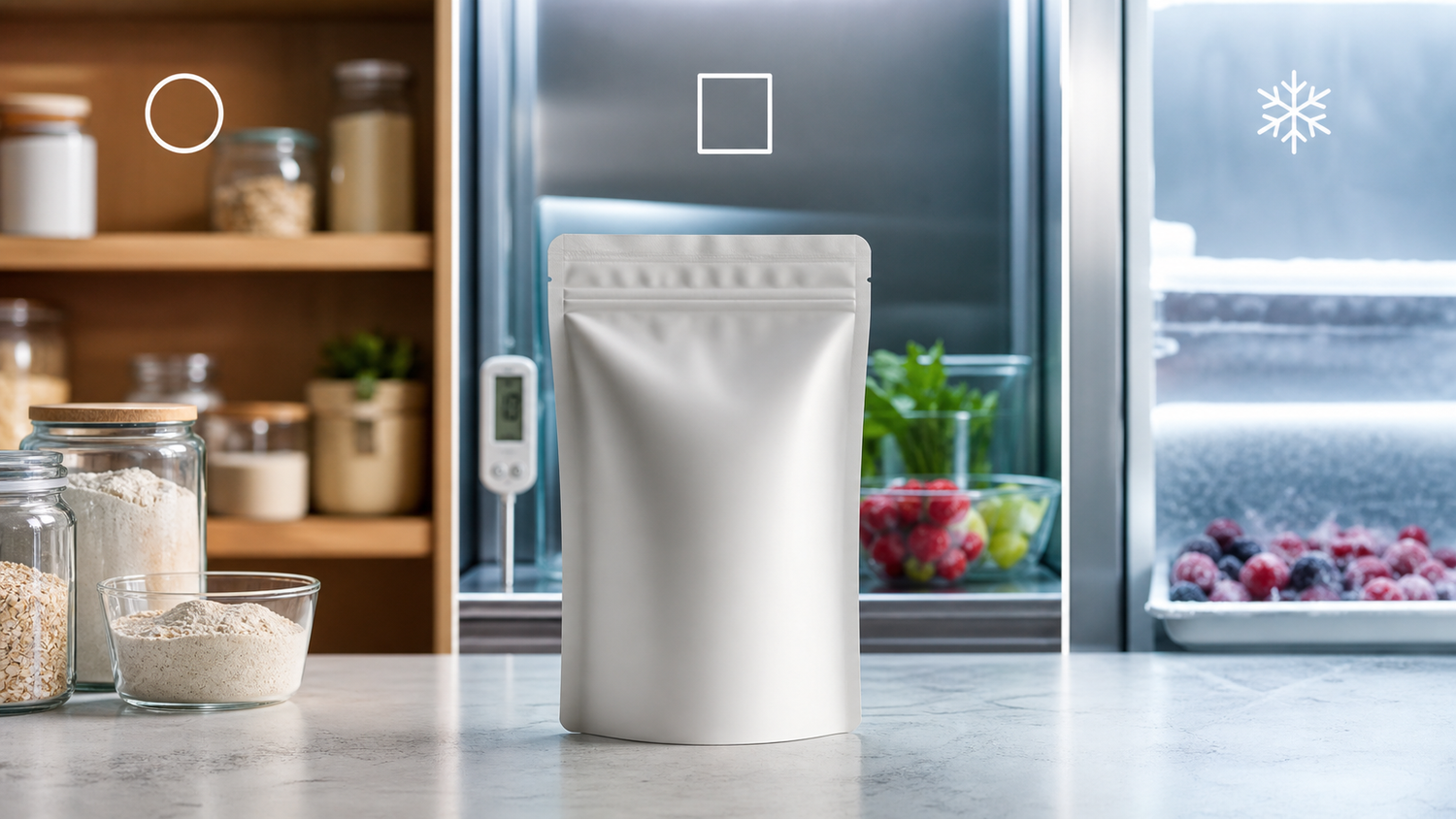
Pouch brief planning for shelf-stable, refrigerated and freezer storage

Freezer, refrigerated, and shelf-stable products may all use flexible pouches, but they should not begin with the same specification. Temperature, condensation, flexing, product expansion, fill process, oxygen and moisture targets, seal contamination, distribution, and expected shelf life can change the structure and testing plan. A buyer who asks only for a freezer-safe bag or a high-barrier pouch leaves too many technical decisions undefined.

This guide helps food, beverage, pet, supplement, and refill brands prepare a quote brief before a supplier recommends a film or pouch structure. It deliberately avoids universal material promises because the same storage label can hide very different formulas and processes. Anacotte Packaging can review pouch formats, low-MOQ print routes, samples, and production options, but compatibility and performance need product-specific technical review and testing.

Quick Answer: State the product, storage temperature and duration, fill temperature and process, formula risks, target shelf life, distribution conditions, pouch format, closure, and filling equipment. Then define the tests needed for seals, flex, drop, leak, migration, barrier, and real-time storage. Do not select a final material from the words freezer-safe, refrigerated, or shelf-stable alone.

Storage-Condition Quote Brief

Use the table to separate the operating environment from marketing language.

Brief Area Shelf-Stable Refrigerated Freezer
Temperature Ambient range and seasonal extremes Target chilled range and cold-chain gaps Freeze temperature, cycling, and thaw conditions
Product behavior Oxidation, aroma, moisture, oil, light Condensation, texture change, microbial controls Expansion, brittleness, ice, sharp edges
Fill process Ambient, hot fill, retort, HPP, or aseptic as applicable Cold fill or post-fill chilling Pre-frozen, fill then freeze, or frozen inclusion
Distribution Retail, ecommerce, warehouse heat Cold chain, display case, home refrigerator Frozen transport, handling, thaw-refreeze risk
Testing focus Barrier and shelf-life study Seal, condensation, compatibility, cold chain Low-temperature flex, seal, drop, puncture, cycling

1. Define the Real Temperature Profile

A single storage word hides a timeline. Refrigerated products can warm during loading. Frozen products can cycle during transport and home use. Shelf-stable products may sit in a hot warehouse or delivery van. Material behavior and seal performance depend on the full exposure, not the preferred display temperature.

Provide the lowest and highest expected temperature, how long the pack stays there, how quickly it changes, and how many cycles are plausible. Include filling temperature and any post-fill process separately.

Record range, time, and cycling

Build a temperature journey from filling to consumer use. Mark the uncertain handoffs and ask the logistics or co-packing partner to confirm them.

Decision boundary: A supplier cannot responsibly validate the pack from the retail storage label alone.

2. Describe Formula and Product-Contact Risks

Oil, acid, alcohol, flavor compounds, surfactants, salts, enzymes, and aroma can interact differently with a package. Sharp frozen pieces can puncture. Powder can contaminate a seal. Liquid can stress fitments. Category names do not reveal these risks.

Share a product description, ingredient risk profile, pH or alcohol content when relevant, viscosity, oil level, particle shape, and whether the formula changes during storage. Keep confidential details under the appropriate commercial process, but provide enough information for compatibility review.

Move beyond food, beauty, or pet categories

Ask the product formulator or co-packer for a concise package-contact summary and any existing compatibility data.

Decision boundary: A visually similar competitor product is not proof of compatibility.

3. Separate Storage From the Filling Process

A pouch may be stored cold but filled hot, processed under pressure, chilled after filling, or frozen after sealing. These steps can be more demanding than final storage. The spout, zipper, adhesive, sealant, ink, and laminate all experience the production process.

Record fill temperature, fill speed, product splash or dust, headspace treatment, vacuum or gas flush, post-fill heating, cooling, HPP, retort, or freezing sequence as applicable.

Document what happens before storage

Include the co-packer and equipment owner in the brief before the dieline and material are approved. Run a line trial when possible.

Decision boundary: Do not infer hot-fill, retort, HPP, or aseptic suitability from a generic pouch label.

Question Evidence to Gather Supplier Decision Supported
What temperature does the package experience? Min, max, duration, cycles Film, sealant, adhesive, fitment review
How is the product filled? Temperature, pressure, nozzle, equipment Pouch opening, seal zone, thermal process
What can attack the package? Oil, acid, alcohol, aroma, surfactant, sharp pieces Compatibility and barrier test plan
How is it shipped? Case pack, drop, vibration, ecommerce Thickness, structure, secondary packaging
What claim will be made? Exact label and market wording Evidence and legal review requirements

4. Plan Seals Around Contamination and Flexing

Seal failure can come from product in the seal area, inconsistent heat and dwell, folds, low-temperature flexing, internal pressure, or fitment welds. A strong film does not compensate for a weak production seal.

Define the expected seal method, bar width, temperature window, dwell, cooling, top-seal clearance, and cleanliness controls. For spouts, include fitment geometry and weld review.

Treat the seal as a system

Inspect seals from filled samples, not only empty factory samples. Include burst, leak, peel, drop, or other appropriate tests in the qualification plan.

Decision boundary: Seal settings from one structure cannot be copied blindly to another.

5. Choose Barrier Targets From Shelf-Life Risks

High barrier is a direction, not a complete requirement. Some products are primarily sensitive to oxygen, others to moisture, aroma loss, light, or grease. Refrigeration may slow one pathway while condensation creates another issue.

Identify the main degradation modes, target shelf life, expected distribution, and available product data. Ask what evidence will connect the proposed structure to those needs.

Translate freshness into measurable questions

Create a shelf-life and barrier test plan with the supplier, product team, and qualified laboratory when needed. Use real-time data for final decisions.

Decision boundary: Generic OTR or WVTR values do not by themselves guarantee product shelf life.

6. Account for Freezer Expansion, Brittleness, and Sharp Edges

Frozen contents can expand, become rigid, or create sharp contact points. Films and seals can behave differently at low temperature, especially during drops, flexing, or case handling. A package that looks acceptable at room temperature may fail when frozen.

State whether the product is frozen before or after filling, maximum expansion, presence of bones or hard inclusions, case orientation, and expected drops or compression.

Test at the lowest real temperature

Freeze filled samples under the real process, condition them for the expected duration, then perform handling, flex, drop, and seal inspections while cold and after thaw.

Decision boundary: Room-temperature drop tests are not a substitute for low-temperature qualification.

Common Mistakes and Better Decisions

The safest correction is to replace broad storage adjectives with a documented operating profile and qualification plan.

Mistake Hidden Risk Better Brief
Asking only for freezer-safe film No temperature, duration, process, or test Provide the full cold journey and qualification conditions
Ignoring fill temperature Production may exceed storage stress Separate filling, processing, storage, and distribution
Using high barrier as a complete spec Unknown oxygen, moisture, light, and aroma priorities Define product degradation risks and shelf-life target
Testing only empty pouches Seal contamination and product interaction are missed Test filled packages made on the intended process
Treating claims as supplier wording Evidence and legal scope may be incomplete Route exact claims through qualified review

What to Prepare Before Requesting a Quote

A useful quote brief lets the supplier see the complete system and state what still needs testing.

  • Product description and relevant formula risks
  • Fill temperature, method, equipment, and post-fill process
  • Minimum and maximum storage temperature with duration
  • Target shelf life and key degradation risks
  • Pouch format, size, closure, spout, and printing needs
  • Shipping route, case pack, cold-chain or ecommerce details
  • Required declarations, markets, and exact proposed claims
  • Testing plan, approval owner, SKU count, quantity, and launch date

Request alternatives when the risk profile is uncertain, and ask the supplier to label assumptions clearly rather than silently selecting a structure.

Authoritative Checks and Internal Next Steps

Review FDA food-contact substances resources for food-contact context and FTC Green Guides before using environmental claims. Retail teams can use GS1 US for identification and barcode planning. Technical structure, legal compliance, and product shelf life still require product-specific evidence and qualified review.

Continue with the relevant Anacotte Packaging resources: high-barrier packaging, spout pouches, stand-up pouches, flexible packaging guide, request a quote. These links help buyers move from education to a format comparison, sample request, or production quote without treating a general guide as a finished technical specification.

Frequently Asked Questions

What information is needed for a freezer pouch quote?

Provide product form, fill and freeze sequence, minimum temperature, duration, temperature cycles, expansion, sharp inclusions, seal process, pouch format, shipping method, and qualification tests. A phrase such as freezer safe is not enough to select a final structure.

Is a refrigerated pouch the same as a shelf-stable pouch?

Not necessarily. Refrigerated products can face condensation, cold-chain variation, chilled display, and different microbial or product controls. Shelf-stable products may prioritize oxygen, moisture, aroma, light, hot warehouses, or thermal processing. The formula and process decide the risks.

Can one film structure work for all three storage conditions?

Sometimes one structure can serve several products, but that should be demonstrated rather than assumed. Formula compatibility, process temperature, seals, expansion, barrier, flexing, and distribution can differ. Test the proposed structure under each intended condition.

What does high barrier mean?

It means the structure is designed to reduce transmission of one or more factors such as oxygen, moisture, light, or aroma. It is not a complete shelf-life guarantee. Ask which barrier is being addressed, how it is measured, and how that data relates to the product.

Do I need a line trial before production?

A line trial is strongly useful when equipment, hot or cold fill, powder dust, liquid splash, spouts, retort, HPP, or high throughput are involved. It checks pouch handling and seals under conditions that a desk sample cannot reproduce.

Who approves freezer-safe or shelf-stable claims?

The brand is responsible for claims and should use qualified regulatory, legal, technical, and laboratory support as appropriate. Supplier documents can support the file, but a quote or general datasheet does not automatically substantiate every claim in every market.

Next Step: Turn the Decision Into a Supplier-Ready Brief

Send Anacotte Packaging a quote brief that separates product, filling, storage, distribution, claims, and tests. If any item is unknown, request blank samples and a technical review before locking artwork or production. The result should be an approved specification with stated assumptions, not a generic storage label.

前後の記事を読む

Low-MOQ pet treat pouch flavor-trial SKU planning
Custom pouch size planning with ruler, caliper, fill sample and dieline sketch

コメントを書く

このサイトはhCaptchaによって保護されており、hCaptchaプライバシーポリシーおよび利用規約が適用されます。

Contact Us

Do you have any question?