
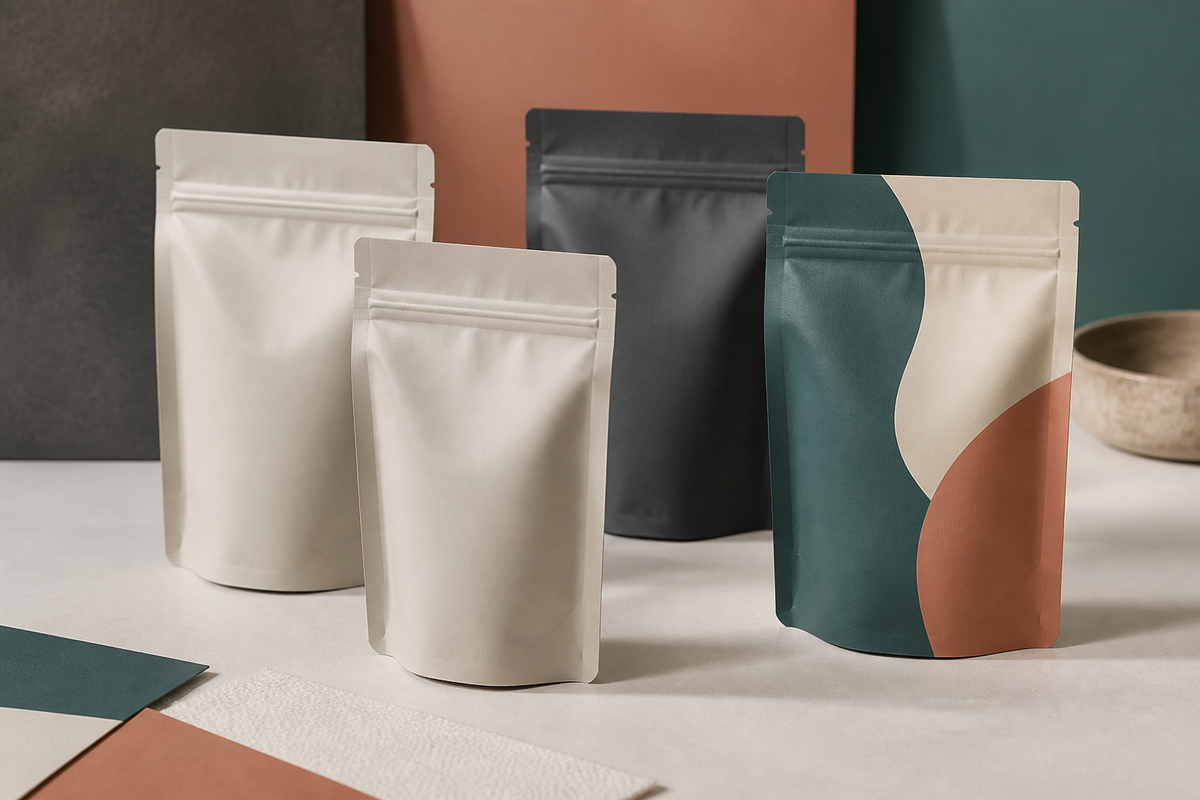
Dried fruit packaging has to start with the product, not a generic promise about “freshness.” Dried mango, cranberries, apricots, banana chips, fruit crisps, and mixed fruit can differ in piece size, flexibility, fines, sugar or oil exposure, and target storage. Those differences affect the fill, pouch mouth, closure, material questions, and the tests a supplier or co-packer should see.
A useful first decision is not “Which material is best?” It is “What product behavior must the pack support, and how will we verify it?”

Describe the dried fruit before choosing the bag
Put the product variables into the first supplier conversation. A chewy fruit piece can present a different seal-contamination or reclosure question than a crisp chip. A mixed-fruit pack can have a different fill profile than a single-fruit SKU. The goal is to give the packaging team a representative sample and a target, not just a category name.
- Fruit form: record fruit type, cut size, thickness, flexibility, stickiness, fines, and fragile pieces.
- Fill target: provide sellable weight or volume, bulk density if known, tolerance, headspace, and case pack.
- Storage and channel: identify room-temperature or controlled storage, shipping route, e-commerce exposure, retail display, and expected opening routine.
- Label and codes: reserve space for ingredients, nutrition, allergen review, lot/date code, barcode, instructions, and any approved claims.
This information lets a supplier compare a sample against the real product. It also keeps the article’s advice conditional: pouch appearance alone cannot establish moisture performance, shelf life, food-contact suitability, or a universal format winner.
Compare three starting format routes
Flat-bottom or box-bottom pouch
A flat-bottom or box-bottom pouch is a reasonable starting hypothesis for a retail pack that needs a stable footprint and broad printable panels. Its finished base, seal layout, zipper, and capacity still need to be checked with the intended fruit and fill route. Review Anacotte’s custom flat-bottom dried-fruit pouch as a live application reference, not as proof that its configuration fits every product.
Stand-up bottom-gusset pouch
A stand-up pouch can suit a retail format that benefits from a different shelf profile, a zipper, or a lighter construction. Confirm that the bottom gusset supports the filled pack, that the mouth is wide enough for the pieces, and that the closure remains usable after filling.
Flat three-side-seal pouch
A flat pouch can be a practical starting point for a sample, single-serve unit, or pack that should stack and ship compactly. It may be less suitable when the customer needs repeated opening or a large upright retail presentation. Treat it as a use-case choice rather than a lower-cost default.
Anacotte’s quad-seal dried-fruit pouch is another live structured-format reference, while the flat-bottom pouch collection helps compare related retail formats. A spout is not a default fit for dry pieces; it adds a dispensing feature without solving the main dry-fruit fill question.
If a window is under consideration, the related stand-up pouch window guide can help frame visibility and panel trade-offs. The filled fruit, not the empty mockup, should decide the final configuration.

Turn moisture and barrier language into questions
Supplier pages often use terms such as high barrier, moisture protection, or freshness. Those terms are useful prompts, but they are not a project specification. Ask which structure is proposed, which product and storage conditions it is meant for, what documentation is available, and what filled-pack observation or testing will support the decision.
For U.S. food-contact work, the FDA food types and conditions of use tables separate product categories and conditions such as room-temperature storage, refrigeration, freezing, hot fill, and high-temperature use. Keep those conditions with the responsible supplier and food-safety/compliance owners. Do not turn a general film name into a claim about the finished product.
Storage after opening is also a product-use question. USDA FSIS guidance for dried fruits discusses quality retention and tight sealing after opening; it is a storage reference, not a shelf-life approval for a particular pouch. Write the customer instruction only after the food-safety and quality owners approve the product and storage program.

Match the closure to the opening routine
A zipper can support a multi-use retail pack, but only if the product can be removed without fouling the closure and the consumer can close it consistently. A tear notch and heat seal may be more appropriate for a single-use or portion pack. A window can support visibility, but it consumes panel area and may change the material or construction conversation.
Ask the supplier and filler to review:
- mouth width and product clearance during manual or automated filling;
- product or fines in the seal and zipper area;
- tear path, opening force, and reclosure after one or more openings;
- window position, code zone, barcode space, and the filled pouch’s final shape;
- puncture, abrasion, case-pack, drop, and parcel-handling risks for the planned route.
The related resealable-pouch guide can help frame the customer-experience conversation. For a product-specific moisture and fill comparison, use the granola moisture and crumb test plan as adjacent context, then adapt the tests to the actual dried fruit.
Use a filled-pack validation loop
Request samples in the proposed geometry and fill them with representative product. Compare the empty sample, the filled sample, and the handled sample. Record observations rather than assuming a performance result.
- Fit: check target fill, headspace, piece clearance, and final dimensions.
- Seal: inspect product contamination, seal appearance, opening, and any visible stress after filling.
- Use: open, pour, scoop, and reclose according to the intended customer routine.
- Storage: define the planned storage observation with the responsible food-safety and quality owners; do not infer shelf life from a sample photograph.
- Handling: review case pack, compression, drops, parcel movement, and retail display as appropriate.
- Artwork: confirm front/back panels, nutrition and ingredient areas, lot/date code, barcode, and approved copy on the filled shape.

What to send for a dried-fruit pouch quote
Include the fruit type, cut and size, moisture state, sugar or oil exposure, fragile pieces or fines, target fill, headspace, storage route, sales channel, fill method, and case pack. Add the desired opening routine, zipper or tear-notch preference, window decision, artwork status, code zone, and the acceptance tests you expect to run.
When you are ready, contact Anacotte Packaging with those inputs and identify what is still unknown. Anacotte’s product range includes current dried-fruit flat-bottom and quad-seal references, but the final pouch, material, barrier, size, and compliance basis must be confirmed for the actual project.
Dried fruit packaging FAQs
Is a flat-bottom pouch always the best dried-fruit bag?
No. It can be a useful starting point for a structured retail pack, but stand-up and flat pouches may fit different fills, channels, opening routines, and equipment. Use a representative filled sample to decide.
Does “high barrier” prove a dried fruit pouch will stay fresh?
No. Barrier needs depend on the product, structure, seals, storage, distribution, and target quality. Ask for the proposed construction, intended conditions, documentation, and the tests or observations that support it.
Should every dried-fruit pouch have a zipper?
No. A zipper is a use-case decision. It may suit a multi-use retail pack, while a single-serve pack may need a tear opening. Check product pieces, fines, seal cleanliness, opening force, and reclosure with the real fill.

コメントを書く
このサイトはhCaptchaによって保護されており、hCaptchaプライバシーポリシーおよび利用規約が適用されます。