
Match the packaging format to product risk, filling method, and shelf channel.
Liquid packaging guide
Spout Pouch Packaging for Protein Drinks
Spout Pouch Packaging for Protein Drinks helps buyers compare packaging options, material trade-offs, MOQ paths, and quote inputs before choosing a pouch, film, or custom structure.
Need pricing for this exact packaging decision?
Share product type, fill weight, target quantity, material or barrier needs, artwork status, and launch timing. Anacotte can shortlist the practical structure before you over-spec the order.
Start an RFQCompare material, barrier, print, closure, and sustainability trade-offs before locking a spec.
Send product details, size target, quantity, and timing for a tighter quote.
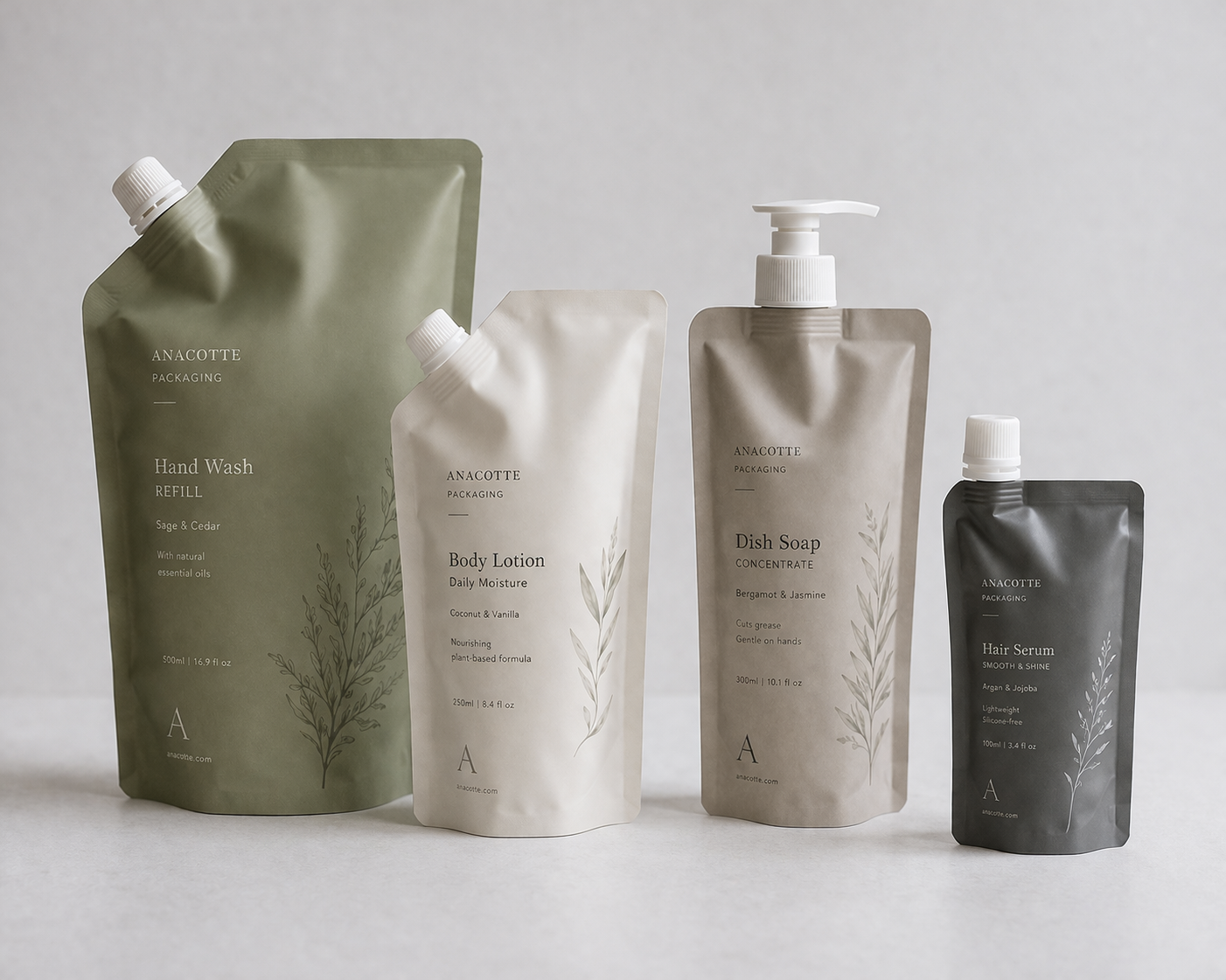
Spout Pouch Packaging for Protein Drinks
Direct answer: spout pouch packaging for protein drinks must be designed around the finished beverage and its qualified process. Confirm whether the product is dairy-based, plant-based, clear protein, a thick shake, or a concentrate; then define pH, viscosity, particles, oxygen and light sensitivity, fill temperature, storage, shelf-life target, spout, cap, filling equipment, and distribution before selecting a film structure.
Anacotte supplies custom flexible packaging rather than beverage formulation or co-packing. The pouch body, fitment, cap, process, and filling line should be approved as one package system with the brand, beverage processor, co-packer, laboratory, and qualified specialists.
Protein beverage project types
| Product route | Packaging questions | Validation focus |
|---|---|---|
| Ready-to-drink protein beverage | Process, shelf life, oxygen, light, flavor, cap opening, and drinking experience | Product compatibility, process qualification, barrier, seal, fitment, and filled-pack aging |
| Refrigerated protein shake | Cold-chain conditions, viscosity, settling, handling, and distribution time | Low-temperature flexing, leakage, cap behavior, storage orientation, and shipping |
| Thick shake or smoothie-style protein drink | Particles, flow, squeeze force, spout bore, residue, and evacuation | Nozzle fit, fill control, dispensing, headspace, seal cleanliness, and consumer use |
| Protein concentrate or multi-serve base | Dose, dilution use, repeated opening, reclosure, and stronger flavor load | Fitment and cap, repeated use, compatibility, barrier, and evacuation |
| Launch sample or multi-SKU trial | Serving size, number of flavors, artwork changes, and first-run inventory | One qualified pack family, boundary-formula testing, and suitable print path |
Do not choose the pouch before the process
| Process input | What to confirm | Why it changes the package |
|---|---|---|
| Product and formulation | Ingredients, protein source, pH, fat or oil, sugars, minerals, flavors, viscosity, particles, and sensitivities | Compatibility, barrier, sealant, fitment, flavor protection, and shelf-life plan |
| Thermal or non-thermal route | Actual validated process, fill temperature, hold or cooling conditions, and storage state | Film, adhesive, seal, fitment, cap, distortion risk, and qualification tests |
| Shelf-life target | Ambient or refrigerated storage, time, light exposure, orientation, and destination market | Barrier direction, aging study, printing, and distribution tests |
| Consumer use | Drink, pour, squeeze, reclose, number of servings, grip, and use temperature | Spout bore, cap, pouch geometry, headspace, opening force, and evacuation |
| Commercial plan | Quantity per flavor, design count, artwork status, forecast, destination, and timing | Sampling, MOQ, digital, flexographic, or rotogravure production path |
Spout, cap, and filling-machine compatibility
- Confirm whether the pouch is filled through the spout or through an open edge before final sealing.
- Share the filler, co-packer, machine reference, pouch rail or support method, nozzle, fill accuracy, capping method, speed, coding, and inspection requirements.
- Match the spout bore to the real viscosity and any particles at production and use temperatures.
- Evaluate cap application and removal torque, tamper-evidence needs, cap-feed compatibility, drinking or pouring comfort, and repeated reclosure.
- Approve pouch dimensions, fitment family, headspace, seal areas, artwork exclusion zones, and filled profile before production artwork is locked.
Required protein drink pouch tests
- Use the actual beverage to screen film, adhesive, ink, sealant, fitment, and cap compatibility over the intended storage period.
- Run process and filling trials at representative temperature, viscosity, particles, speed, headspace, capping, coding, and seal-contamination conditions.
- Evaluate opening, drinking or pouring, squeeze force, reclosure, evacuation, residue, and use at the intended serving temperature.
- Test filled packs for seal integrity, leakage, drop, squeeze, compression, puncture, storage orientation, temperature exposure, and the intended shipping route.
- Validate the beverage process, shelf life, food safety, labeling, and market requirements with qualified project partners.
Common project pattern: multi-flavor nutrition drink launch
Project brief: a nutrition brand wants several protein drink flavors in a portable pouch while limiting initial packaging inventory.
Packaging approach: keep one qualified pouch geometry, material, fitment, cap, and finish across the initial range where beverage testing permits; use the highest-viscosity and most sensitive boundary products during validation; and separate artwork approval from filled-product approval.
Validation points: process, compatibility, filling, cap application, seal cleanliness, opening, drinking or pouring, leakage, aging, storage, and distribution. This is a composite project pattern, not a customer testimonial or guaranteed result.
What to send for a protein drink pouch quote
- Beverage type, key formulation characteristics, pH if known, viscosity, particles, fill temperature, process, storage, and shelf-life target.
- Fill volume, desired dimensions, drinking or pouring use, fitment and cap preference, and current reference pack.
- Filler or co-packer, machine, filling and capping route, coding, inspection, and required qualification tests.
- Quantity per flavor, number of designs, artwork status, destination, forecast, and launch timing.
Send the beverage, process, and filling specifications for a quote. Also review aseptic spout pouch planning, spout pouch filling-machine compatibility, material and barrier options, and smoothie pouch requirements.
Frequently asked questions
Can every protein drink use the same spout pouch?
No. Protein source, formulation, pH, fat, viscosity, particles, process, storage, shelf life, and use can change the required package and tests.
Can the pouch supplier decide whether the beverage is shelf stable?
No. Shelf stability and the qualified beverage process must be established by the responsible brand, processor, process authority, laboratory, and other qualified specialists.
Does Anacotte fill protein drinks?
Anacotte supplies custom flexible packaging. Beverage formulation, processing, filling, food safety, and final qualification remain with the brand and its manufacturing partners.
Technical evidence for this packaging application
Anonymous project pattern: Liquid nutrition projects require the package to be matched to the real beverage process. A separate beverage brief involving carbonation was not treated as a standard spout-pouch job: it required a pressure-rated pouch, fitment and cap system plus testing under the actual cold-fill, storage and distribution conditions. Non-carbonated protein drinks still need viscosity, barrier and filling checks.
What we validate before production
- Cold-fill, hot-fill, HPP or other process conditions
- Protein sediment, viscosity, oxygen/light barrier and shelf-life target
- Fitment flow, filler compatibility, seal integrity and pressure testing when applicable
Evidence boundary: This is a composite, anonymized pattern from active quotation and sampling records. It contains no customer identity, confidential formulation or claimed production outcome. Dimensions and structures are project-specific examples, not universal specifications.
Download the Packaging RFQ + Validation Checklist (PDF) to send product, filling, fitment, material, SKU and test requirements in one brief.
Related protein and supplement packaging guides
Use these guides to connect powder or ready-to-drink behavior with pouch format, barrier, filling and MOQ.
- Protein powder packaging pillar — Barrier, format and production inputs.
- Low-MOQ protein powder packaging — Short-run format and print choices.
- Size a pouch by density and fill volume — Calculate a starting capacity and validate it.
- Pouch filling-machine compatibility — Match the package to the intended line.
Request quote support
Send product specs for a packaging recommendation
Tell us your product, target pack size, barrier needs, quantity, artwork status, and timing. We will help you narrow the right packaging direction before you lock the spec.
Get direction on pouch type, film structure, closure, finish, and shelf-life risk before locking a specification.
Share your target run size so we can compare digital, custom, and bulk production trade-offs.
Include filling method, pack size, material preference, artwork status, and launch timing for a more precise reply.
Decision tools
Turn serving size and filling inputs into a testable pack.
Sports-nutrition packaging decisions should connect product density or flow, serving weight, barrier target, seal area, filling equipment, SKU count, and sample validation.
Updated
Method: transparent screening inputs and decision limits
Final specification requires representative samples and documented testing
01Size × density calculatorConvert serving weight and density into a transparent sample-capacity estimate.
02Filling-line checklistExpose missing line, seal, process, and acceptance inputs before artwork approval.
03Multi-SKU estimatorPlan flavors and serving formats around one qualified specification family.