
Match the packaging format to product risk, filling method, and shelf channel.
Liquid packaging guide
Energy Gel Spout Pouches
Energy Gel Spout Pouches helps buyers compare packaging options, material trade-offs, MOQ paths, and quote inputs before choosing a pouch, film, or custom structure.
Need pricing for this exact packaging decision?
Share product type, fill weight, target quantity, material or barrier needs, artwork status, and launch timing. Anacotte can shortlist the practical structure before you over-spec the order.
Start an RFQCompare material, barrier, print, closure, and sustainability trade-offs before locking a spec.
Send product details, size target, quantity, and timing for a tighter quote.
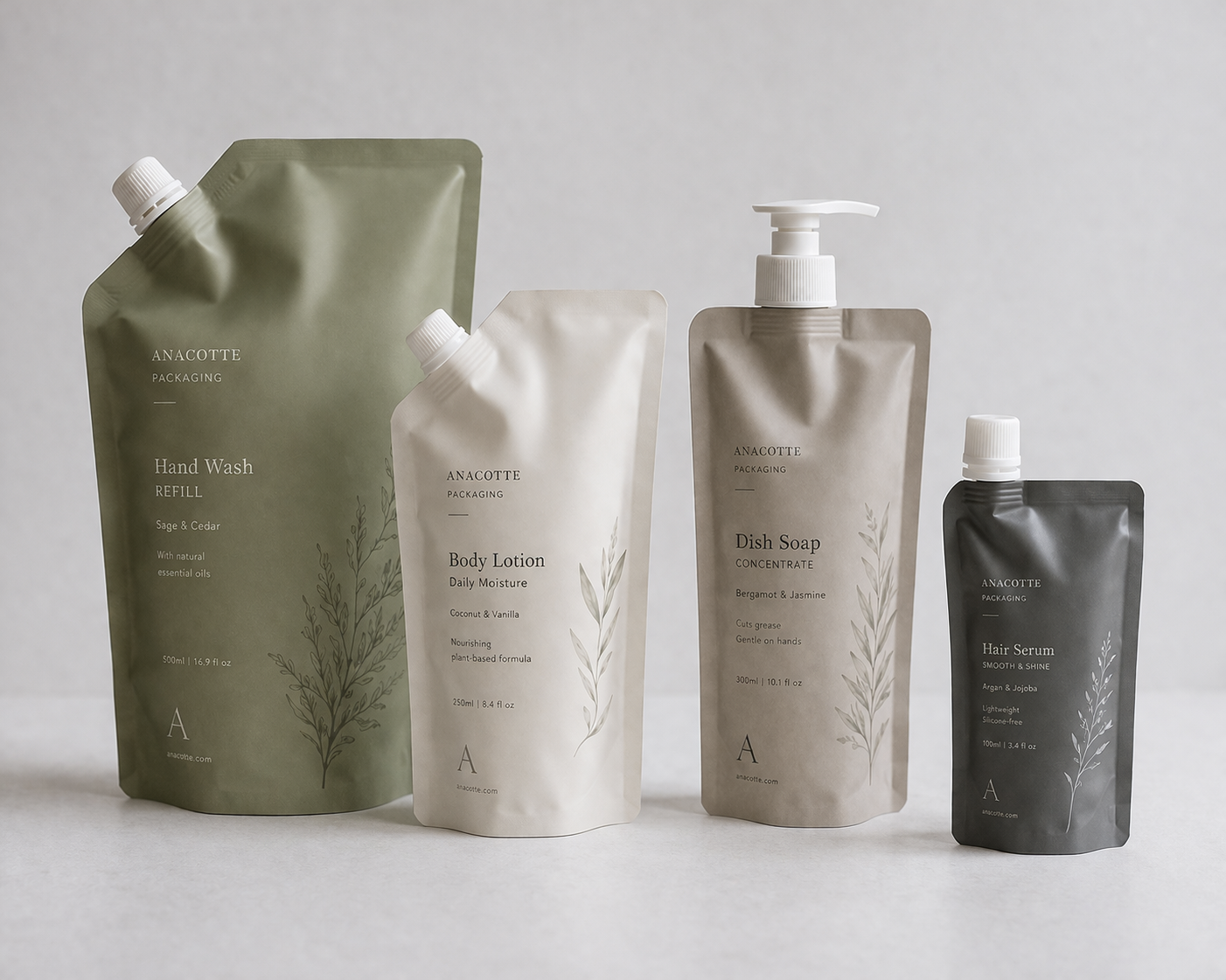
Energy Gel Spout Pouches
Direct answer: an energy gel spout pouch is most useful when the product needs a reclosable opening, a larger serving, controlled repeat dispensing, or a refill-style format. For compact single-use doses, a tear-open sachet, shaped pouch, or printed rollstock may be a better starting point. The format should be chosen from the gel, dose, filling route, opening experience, and validation plan—not from appearance alone.
Anacotte supplies custom flexible packaging rather than finished gel or co-packing. Share the formula behavior, fill target, intended use, filling equipment, SKU count, and launch quantity so the pouch, fitment, cap, film, and print route can be evaluated together.
When a spout pouch fits an energy gel project
| Project need | Spout-pouch fit | Alternative to compare |
|---|---|---|
| Multi-serve gel or concentrate | Reclosure and repeat dispensing can support several uses. | Rigid bottle or tube |
| Larger portable serving | A small fitment can provide controlled squeeze dispensing. | Shaped tear-open pouch |
| Bulk or refill sports fuel | The pouch can refill a reusable flask when the pour path is validated. | Large flat pouch or bottle |
| Single-use race dose | Possible, but cap, fitment, cost, and pack profile need justification. | Sachet or printed rollstock |
Technical inputs for a custom gel pouch
| Input | What to provide | Decision affected |
|---|---|---|
| Gel behavior | Viscosity range, particles, sugar, acidity, oils, aromas, and any temperature-dependent flow change | Spout bore, squeeze force, sealant, compatibility, and evacuation |
| Dose and use | Fill weight or volume, number of uses, one-hand requirement, grip, opening, reclosure, and residue target | Pouch geometry, cap, fitment position, headspace, and opening system |
| Process | Fill temperature, storage condition, shelf-life target, and qualified food process | Film structure, adhesive, fitment, seal window, and test plan |
| Filling route | Premade pouch or rollstock, machine or co-packer, nozzle, pouch support, capping method, speed, coding, and inspection | Machine compatibility and production acceptance |
| Commercial plan | Quantity per flavor, number of designs, artwork status, forecast, destination, and launch date | Digital, flexographic, or rotogravure print path |
Fitment, cap, and filling-line compatibility
- Confirm whether the gel is filled through the spout or through an open pouch edge before final sealing.
- Match the fitment bore to the real viscosity range, not only a room-temperature sample.
- Check cap application, removal torque, tamper-evidence needs, and cap-feed compatibility with the selected equipment.
- Validate pouch support, nozzle clearance, headspace, seal-area cleanliness, coding position, and inspection method at production speed.
- Ask the filler or co-packer to approve dimensions, fitment family, material specification, and sample performance before artwork is locked.
Required sample and filled-pack tests
- Screen the actual formula against the film, adhesive, ink, sealant, fitment, and cap over the intended storage period.
- Run realistic filling and capping trials at the intended temperature, viscosity, dose, speed, and contamination risk.
- Evaluate one-hand opening, squeeze force, flow control, reclosure, evacuation, residue, and use with wet or gloved hands where relevant.
- Test filled packs for seal integrity, leakage, drop, squeeze, compression, puncture, storage orientation, and the intended shipping route.
- Validate food process, shelf life, labeling, and market requirements with the brand, co-packer, laboratory, and qualified specialists.
Common project pattern: multi-flavor gel launch
Project brief: a sports-nutrition team wants several gel flavors and a reclosable pack while limiting first-run inventory.
Packaging approach: keep one qualified pouch geometry, fitment, cap, material, and finish across the flavor family where formula testing permits; use the highest-viscosity and most aggressive boundary samples during validation; and separate artwork approval from filled-pack approval.
Validation points: dose, flow, seal cleanliness, cap behavior, opening, evacuation, compatibility, leakage, squeeze, storage, and on-the-go handling. This is a composite project pattern, not a named customer case, testimonial, or performance claim.
What to send for an energy gel spout pouch quote
- Formula description, viscosity range, fill weight or volume, storage, and shelf-life target.
- Single-use, multi-serve, or refill use; desired pouch dimensions; fitment and cap preference.
- Filler, co-packer, machine, filling method, and any approved sample or current specification.
- Quantity per flavor, total SKU count, artwork stage, destination, and required timing.
Send the gel and filling specifications for a quote. For a broader comparison of sachets, shaped pouches, spout pouches, and rollstock, review energy gel packaging formats, the fitment and cap guide, and spout pouch leak testing.
Frequently asked questions
Are spout pouches the best format for every energy gel?
No. They are strongest when reclosure, repeat dispensing, a larger serving, or a refill use justifies the fitment. Compact single-use gels often need a sachet or rollstock comparison.
Can one spout size work for every flavor?
Not automatically. Viscosity, particles, temperature, and desired flow can differ by formula, so boundary samples should be tested.
Can Anacotte fill the gel?
Anacotte supplies custom flexible packaging. The brand or co-packer remains responsible for formula processing, filling, food safety, and production validation.
Request quote support
Send product specs for a packaging recommendation
Tell us your product, target pack size, barrier needs, quantity, artwork status, and timing. We will help you narrow the right packaging direction before you lock the spec.
Get direction on pouch type, film structure, closure, finish, and shelf-life risk before locking a specification.
Share your target run size so we can compare digital, custom, and bulk production trade-offs.
Include filling method, pack size, material preference, artwork status, and launch timing for a more precise reply.