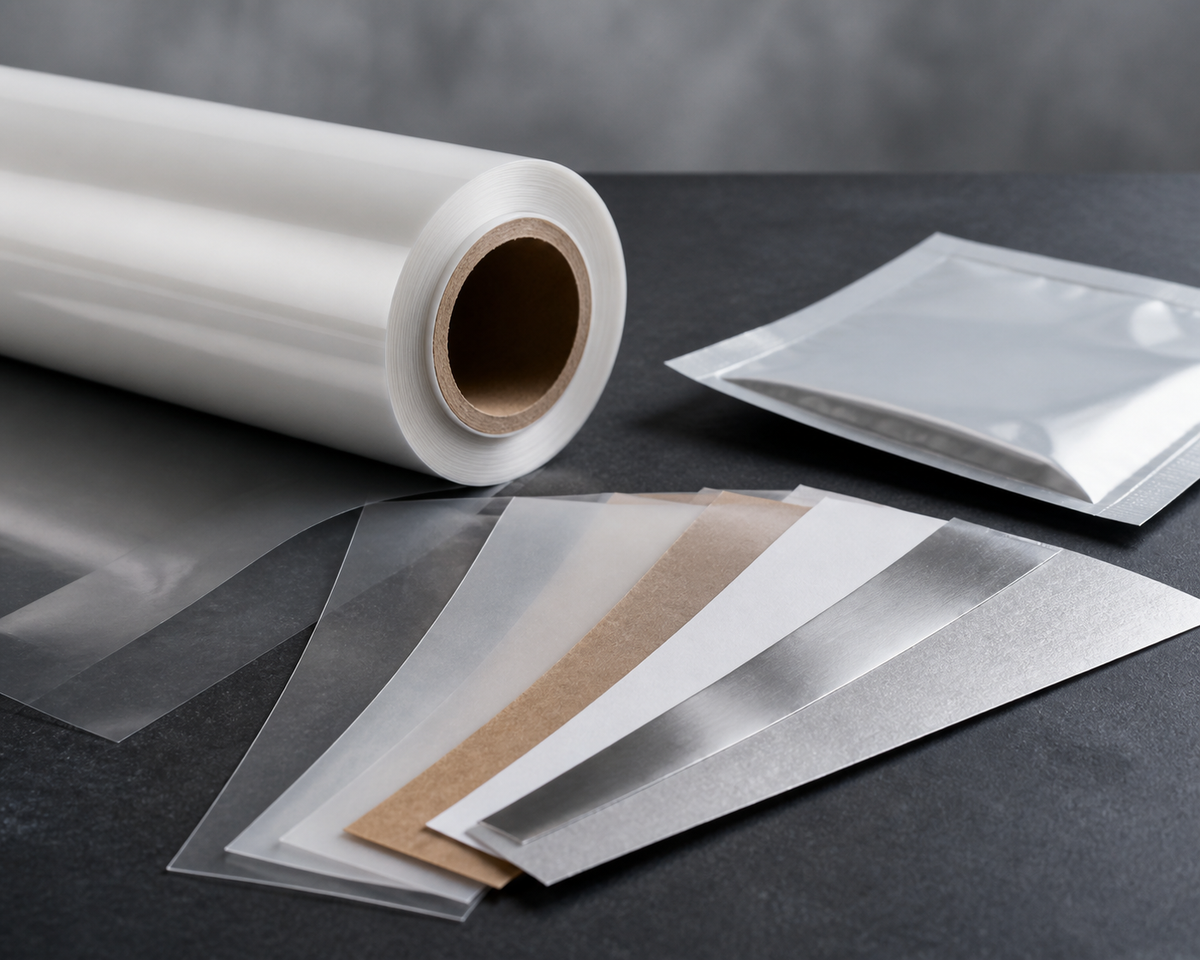
“Water-based lamination” is a useful starting description, but it is not a finished flexible-packaging specification. The result depends on the substrate pair, surface treatment, print or coating, process route, product and exposure conditions, line, cure or hold, and the evidence required for the finished pack.
Quick answer: A supplier-ready brief should name both substrates, record treatment and print/coating conditions, distinguish wet-film from dry-film questions, describe the product and route, define process and cure information, state bond/appearance/odor/print checks, and assign an owner for changes and regulatory review. Current technical pages show water-based systems for particular flexible-packaging applications, but they also show why a named system cannot be treated as universal approval.

| Brief field | What to record | Why it matters |
|---|---|---|
| Substrates | Film, paper, foil, print, coating, and side to be bonded | Different interfaces can require different treatment and process decisions |
| Process | Wet-film or dry-film route, line, application method, and owner | A process label does not define the whole construction |
| Product and exposure | Dry/liquid, oils/surfactants, temperature, humidity, storage, food/non-food context | Connects the laminate to the actual use case |
| Evidence | Bond, appearance, odor, print, seal, and route checks with pass criteria | Defines what “works” means for this project |
| Change control | Substrate, ink, adhesive, line, product, and retest owners | Keeps an old result from being reused after the job changes |
1. Start with the laminate job, not the label
Before asking for a water-based adhesive, state what the package needs to do. Is the finished material a dry-food pouch, a liquid refill, a label or sleeve, a paper/film construction, or another flexible format? Is the outside printed, coated, metallized, transparent, or opaque? Will the package be filled cold, warm, wet, oily, or with a formula that can challenge an interface?
The internal Search Console export contains several water-based lamination query variants and a separate water-based-lamination page row. That supports an educational topic, but it does not identify the formula, substrate, or line behind any query. Treat the query as a signal to explain the handoff, not as proof that one adhesive or process is demanded for every pouch.
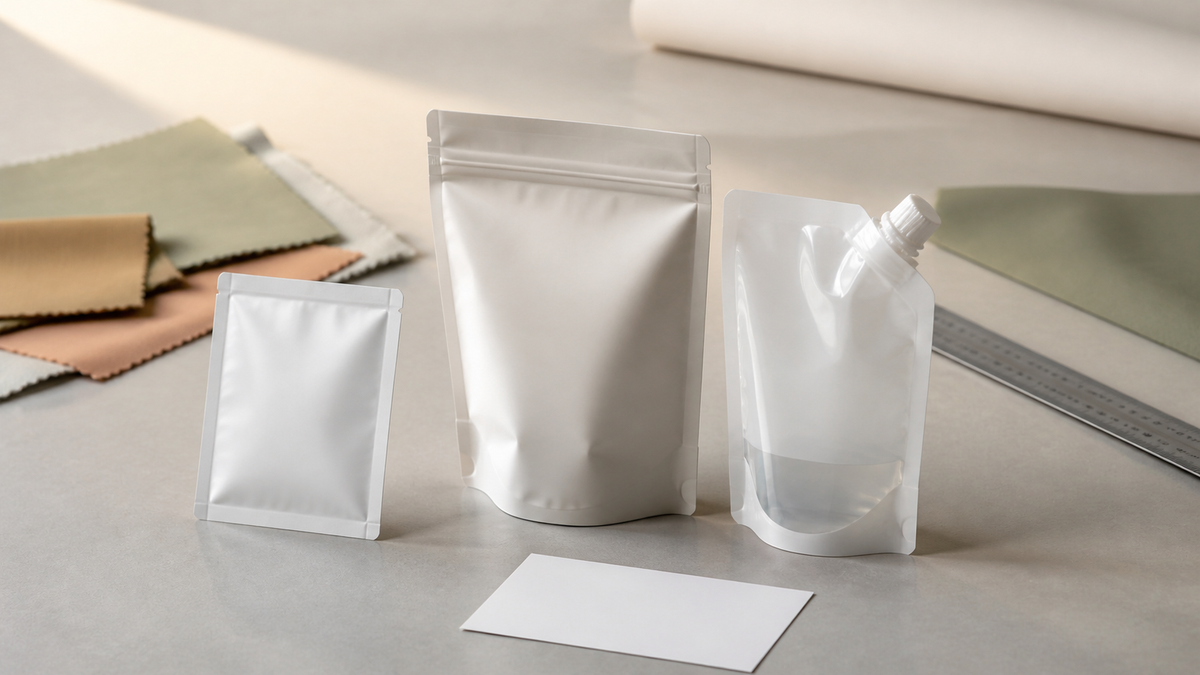
Write the intended end use, sales channel, storage, and expected review owner at the top of the brief. If the product, fill, or final pouch geometry is not decided, mark those fields as open. A flat laminate sample can teach material questions without pretending that a stand-up, flat-bottom, or spout pouch has already been approved.
2. Name both substrates and the surface condition
“Film-to-film” or “film-to-paper” is more useful than a generic film name, but it is still incomplete. Record the substrate family, thickness or gauge if known, printed or unprinted side, coating or ink, treatment status, and the side that must be bonded. Include any window, metallized layer, sealant, or surface finish that could affect the interface.
Ask the converter or adhesive supplier which surface condition they require and how it will be checked. A technical product page may identify a particular treated substrate range, but that is a product-specific statement. It does not establish that the same threshold, treatment, or adhesive works for another film, ink, coating, line, or end use.
Useful questions include:
- Which two surfaces are being bonded, and is either one printed or coated?
- What treatment, cleaning, storage age, or handling condition is assumed?
- Does the sample represent the commercial substrate and ink system?
- What document records the substrate identity, lot, treatment, and sample date?
3. Separate wet-film and dry-film questions
Wet-film and dry-film lamination are process descriptions, not interchangeable product labels. The line, coating/application method, substrate behavior, drying or curing path, and target appearance need to be discussed with the responsible converter. A buyer’s brief should request the proposed route and its assumptions rather than choose it from a search snippet.
Scitech’s current lamination-adhesive page lists water-based systems for flexible packaging and gives separate wet-film and dry-film examples. That is useful market evidence that the process decision can be described in more than one way. It remains supplier-specific; the page does not approve an Anacotte pouch construction or decide which route is right for a new project.

| Process question | What the buyer should provide or request | What remains open |
|---|---|---|
| Route | Wet-film, dry-film, or supplier-proposed route; line owner | Final process window and sample plan |
| Application | Substrate order, printed/coated side, machine and handling constraints | Coating/application details from the converter |
| Timing | Drying, cure, hold, or release timing required for the next step | Supplier-specific instructions and acceptance criteria |
| Change | What changed since the reference sample | Whether the result must be re-tested |
4. Add the product and exposure conditions
A laminate that looks clear and bonded on a dry sample may still require a different review for a liquid, oily, fragranced, acidic, alkaline, or surfactant-containing product. The material brief should record whether the package is food or non-food, dry or liquid, single-use or reclosable, and exposed to heat, cold, humidity, pressure, parcel handling, or repeated opening.
For a cleaning liquid or detergent, include the best available formula description, pH or viscosity range, fragrance or solvent notes, fill temperature, storage range, target duration, and route. For a food application, assign the food-contact documentation owner and intended-use review; do not infer food-contact authorization from “water-based” or from a generic flexible-packaging page.
Dow’s current ROBOND L-238 page describes one two-component water-based system for particular flexible-packaging substrates and general or medium-performance applications, and it states that other uses are subject to performance trials and testing. That is a useful example of the boundary: a product page can describe a candidate system, while the project must still supply the actual substrates, product, process, and tests.

5. Define cure, hold, and process evidence
Ask the supplier or converter to state the process information that controls the sample: system type, mix or handling instructions when applicable, application conditions, line assumptions, drying or cure path, hold time before the next operation, and sample identification. Do not invent a line speed, coating weight, temperature, or cure schedule from another project.
Keep the technical document with the sample record. A useful record connects substrate lot, ink or coating, adhesive/system identifier, machine or line, operator or owner, date, conditioning, and the next operation. If any of those changes, the team can decide whether the prior result is still relevant.
The purpose of a brief is not to force a supplier into one answer. It is to make proposals comparable and to expose what still needs a technical response. Ask for the data sheet or equivalent supplier documentation, but keep supplier data separate from an approved project specification.
6. Decide what “works” means before testing
Bond strength is only one possible observation. Depending on the application, the review may include:
- Bond or peel behavior under the defined method and conditioning.
- Delamination, curl, tunneling, blocking, haze, bubbles, or other appearance changes.
- Print rub, ink/coat interaction, surface marks, and code or label readability.
- Odor or appearance changes after defined exposure where relevant.
- Seal behavior, fitment attachment, pouch forming, and filled-pack handling for the final package.
- Storage, temperature, humidity, parcel, or repeated-use checks that the route actually requires.
Write the method, sample count, conditioning, owner, and pass criteria before the result arrives. A supplier’s “good adhesion” phrase does not replace a project acceptance criterion. A blank or flat laminate strip can answer material questions; it cannot prove that a final spout pouch, seal, closure, or distribution route will perform unchanged.
For a broader package-material decision, the mono-material decision article is adjacent context. It should not be read as a reason to substitute a material or make an environmental claim without project evidence.
7. Control changes before approving the pouch
Record what the result actually covered. A change in film supplier, thickness, treatment, ink, coating, adhesive/system, line, fill, product formula, temperature, secondary pack, or distribution route can change the question. Assign a change owner and a retest trigger before the first sample is approved.
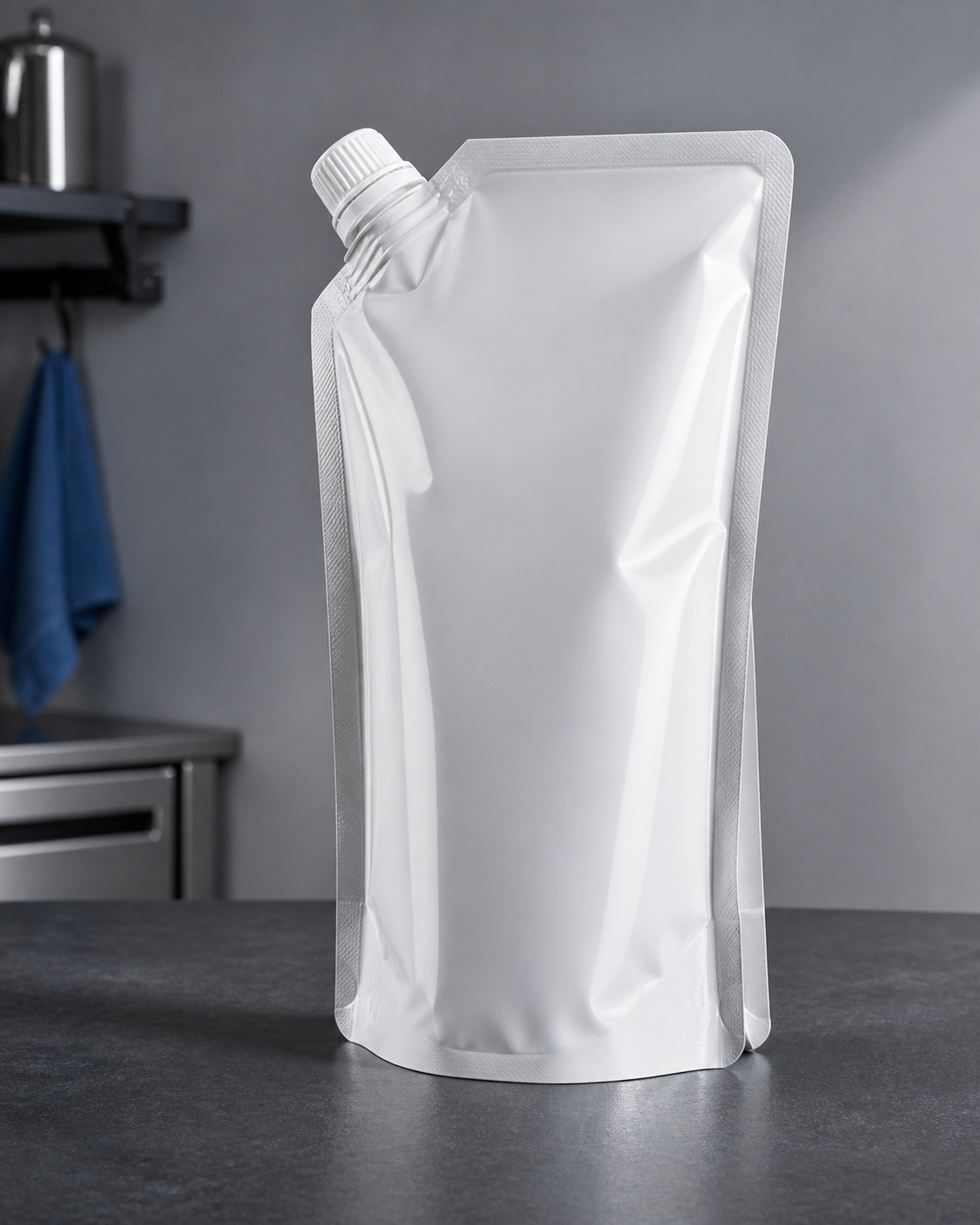
This is especially important when the finished pouch adds a sealant layer, zipper, spout, window, metallized layer, or special finish. The laminate may be acceptable as a material sample while the completed package still needs forming, sealing, closure, filled-use, and route review. Keep the final pouch geometry separate from the material brief until the product and operations are known.

8. Send a supplier-ready material brief
A concise request can include:
- End use and product: dry or liquid, product description, food/non-food context, storage, temperature, humidity, and route.
- Substrates: each layer, thickness if known, printed/coated side, treatment, finish, and sample lot.
- Process: wet-film or dry-film question, line/equipment, sequence, cure/hold need, and responsible converter.
- Performance review: bond, appearance, odor, print, seal, fitment, filled-pack, and route checks with pass criteria.
- Documents: proposed system identifier, data sheet, handling instructions, conditions, assumptions, exclusions, and change-control requirements.
- Commercial scope: sample quantity, artwork/print status, final pouch geometry if known, quantity, case pack, destination, and target date.
Anacotte’s current water-based lamination page and flexible packaging material page are useful internal context, while the active flexible-packaging solutions sample provides a natural product/sample path. These references do not establish a named adhesive formula, universal substrate approval, food-contact status, barrier, odor, seal, or shelf-life result.
Current technical supplier pages from Dow and Scitech show why the brief should ask about substrate, process, and trials. They are market examples, not a ranking or an Anacotte specification.
Frequently Asked Questions
What is water-based adhesive lamination?
It is a family of lamination systems and processes in which a water-based adhesive is used to bond specified substrates. The useful project definition still needs the substrate pair, surface condition, process route, product exposure, line, timing, and test evidence. The phrase alone does not select the right construction.
Is water-based automatically more sustainable or safer?
No. “Water-based” describes one attribute of a system. It does not by itself establish lifecycle benefit, non-toxicity, food-contact authorization, low odor in a finished pack, recyclability, or performance. Those questions need the evidence and qualified review applicable to the project.
What is the difference between wet and dry lamination?
They are different process descriptions with different substrate, application, drying, and line questions. Ask the converter to state the proposed route, operating assumptions, cure or hold needs, and sample method for the actual substrates rather than choosing from the label alone.
Can water-based lamination be used for every pouch?
No. The final answer depends on the substrate, treatment, print/coating, product, exposure, line, finished geometry, sealing, and relevant tests. A flat laminate sample and a completed filled pouch answer different questions.
What should be tested before approval?
Define the observations that matter for the application: bond behavior, delamination, curl, haze, bubbles, print/coat interaction, odor or appearance changes, seal/fitment behavior, filled use, storage, and distribution where relevant. Write the method, conditioning, sample ID, acceptance criteria, and owner before testing.
Next step
If you are ready to discuss a laminate or pouch sample, request a project-specific material and packaging conversation with the substrates, product/use, process route, target geometry, test questions, quantity, and destination. Keep the final adhesive, material, package, regulatory, and performance decisions with the responsible converter, supplier, and qualified project owners.

Leave a comment
Situs ini dilindungi oleh hCaptcha dan berlaku Kebijakan Privasi serta Ketentuan Layanan hCaptcha.