
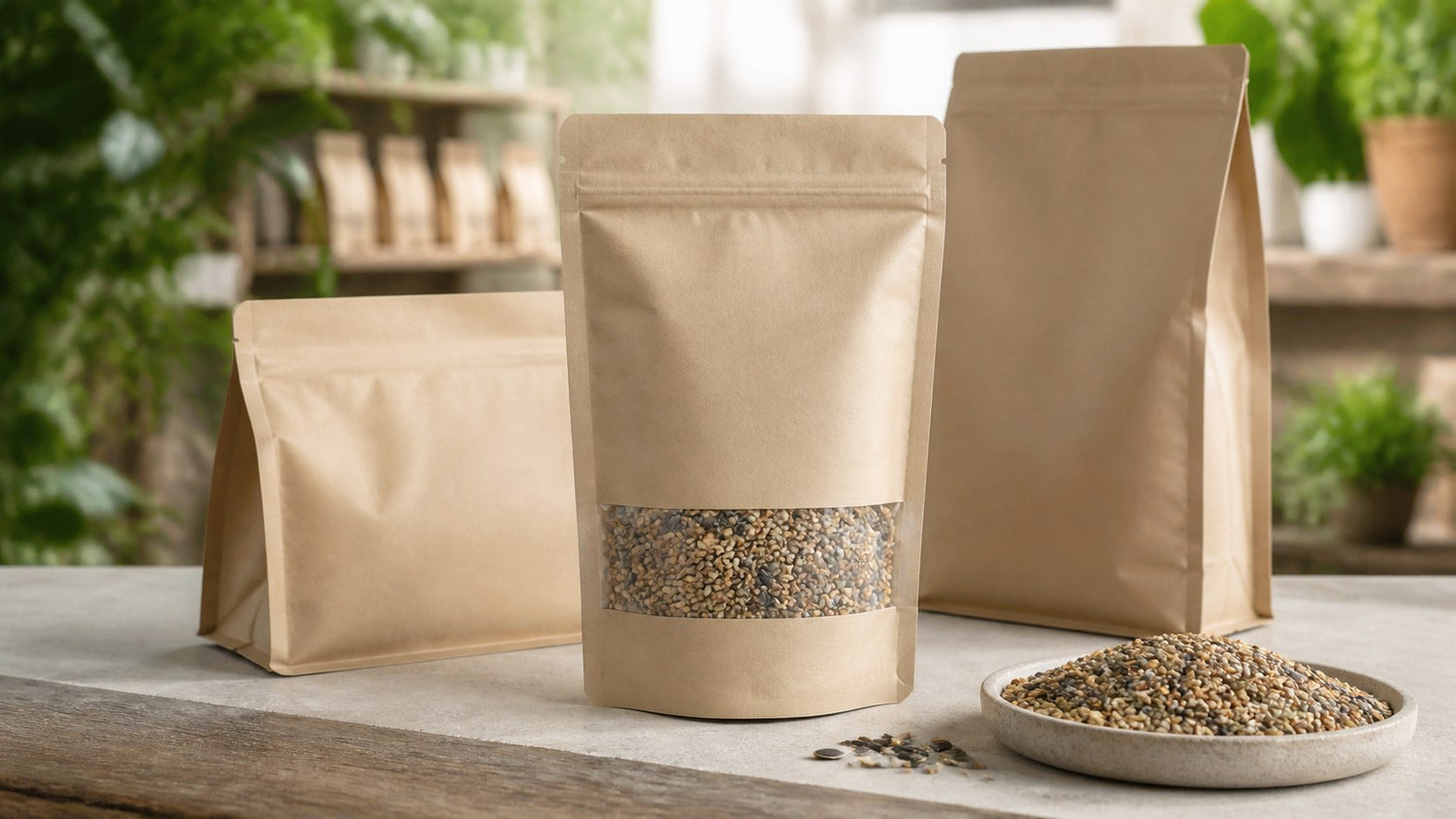
Bird seed bags have to work through more than a shelf-display moment. A buyer may open the pack repeatedly, scoop a mixed blend, move it between a garage and a feeder, or order it through parcel delivery. The useful starting point is not “the biggest bag” or “the prettiest window.” It is the combination of blend behavior, fill weight, opening routine, shelf posture, and storage assumptions.

Start with the bird-seed use pattern
Before choosing a custom bird seed bag, write down what the product and customer will actually do. A small wild-bird blend sold as a repeat-use retail pack may need a different opening and shelf posture from a heavier bulk seed bag. A trial or seasonal SKU may need a simpler route than a permanent multi-SKU family.
| Use pattern | Starting format hypothesis | Questions to confirm |
|---|---|---|
| Small or medium retail blend | Resealable stand-up pouch with a bottom gusset for shelf presence and repeated access. | Actual fill height, zipper cleaning, scoop access, tear notch, and whether a hang hole is needed. |
| Premium blend or visibility-led SKU | Stand-up or flat-bottom pouch with a modest window only if the material, artwork, and blend justify it. | Window placement, light exposure, code zone, label density, and whether the visible product represents the shipped blend. |
| Large or heavier fill | Flat-bottom or larger side-gusset/heavy-gauge route when footprint and handling require it. | Weight, seed shape, seams, handles, case pack, parcel drops, and how the buyer will lift and store it. |
| Trial, seasonal, or buyer sample | Smaller stand-up or flat portion format with the simplest valid opening routine. | Quantity per SKU, artwork version, code placement, and whether the first run can share a pouch body. |
Storage and opened-pack handling should remain visible in the brief. Harrison’s current storage guidance tells consumers to keep the product in its original bag and check its condition; that is a useful handling signal, not proof that any particular film or zipper guarantees freshness.

Compare three bird seed bag routes
1. Resealable stand-up pouch
This is the most natural starting hypothesis for a repeat-use retail pack: it can stand on a shelf, offer a clear opening routine, and give the brand a front panel without requiring a large bulk format. Confirm whether the actual blend leaves dust, oil, hulls, or sharp particles near the zipper. Test scoop access with the real fill, not an empty sample.
2. Flat-bottom pouch
A flat-bottom format may help when the SKU needs a more stable footprint or a larger front-facing area. It is not automatically the better choice. Ask how the bottom construction, fill height, case pack, and retailer shelf interact. If the pack will ship directly to consumers, include filled-pack parcel checks before locking the structure.
3. Larger side-gusset or heavy-gauge route
Heavier fills may need a different load and handling assumption from a small retail pouch. Supplier pages show this as a separate market route, not simply a larger version of a small stand-up bag. Confirm the actual seed weight, seam design, lift points, case pack, and storage routine before selecting it.
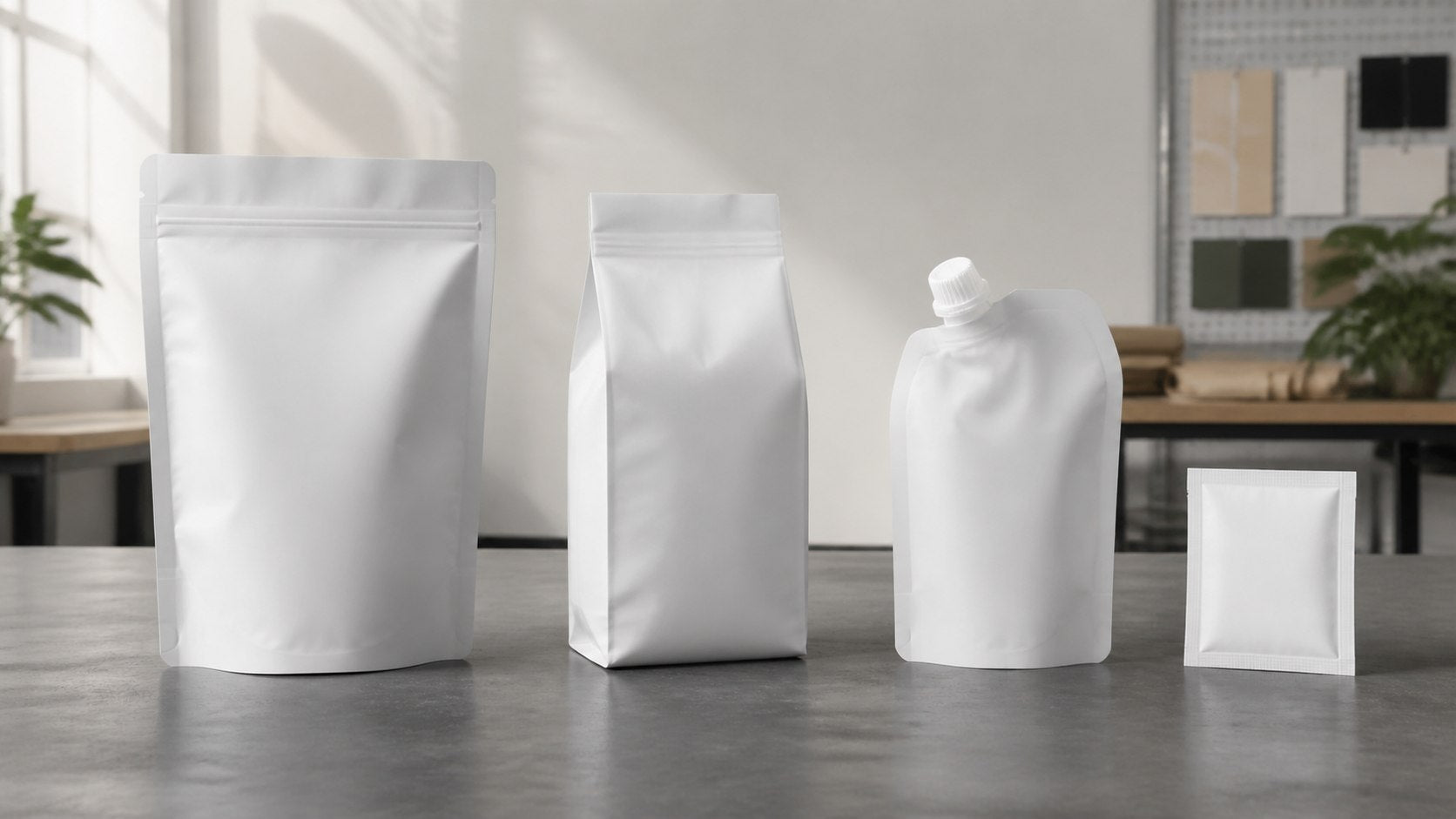
Current market pages support this three-route comparison. Sparal’s bird-seed page frames an RFQ around product, fill weight or volume, pouch format, SKU count, quantity per SKU, barrier goal, features, artwork, timing, and destination. Friesen Plastics presents retail stand-up, flat-bottom, and larger seed-bag routes. RuiHong’s bird-seed examples show supplier-specific options such as zippers, windows, tear notches, and multiple formats. These observations describe the market; they do not set a universal MOQ, material, shelf life, or performance result.
Decide whether a window earns its space
A clear window can help a buyer see the blend, but it also changes the artwork, seal-zone planning, and material conversation. Ask whether the visible seed is central to the purchase decision, whether the window remains clear after filling and handling, and whether the actual blend and storage conditions create a reason to prefer more visual protection. Do not promise that a window improves trust or that an opaque structure is always safer. Test the real product and route.

Design the opening and code zones together
The zipper, tear notch, window, hang hole, gusset, seal, barcode, lot/date area, and feeding-information panel compete for physical space. Show all of them on the proof. Keep variable SKU information stable enough that a new blend or size does not force a completely new pouch body unless the fill or handling really changes.
For the first filled sample, review four moments: opening, scooping, resealing, and putting the pack away. If the pack is sold in more than one channel, add shelf display and parcel handling to the same review. The purpose is to discover whether the selected format supports the customer routine—not to infer freshness, mold prevention, or moisture performance from the artwork.
Build a quote-ready bird-seed SKU family
Send the supplier a compact handoff containing:
- Blend description, representative seed sample, and the reason the current package needs to change.
- Fill weight or volume, fill height, expected density, and the number of SKUs.
- Preferred pouch route: stand-up zipper, flat-bottom, larger side-gusset, or an open question.
- Feature needs: window, tear notch, hang hole, handle, closure, and code-safe zones.
- Artwork status, variable SKU fields, barcode/lot/date ownership, and retailer requirements.
- Storage and distribution assumptions, including shelf display, parcel delivery, and case pack.
- Sample tests: zipper use, scoop access, filled-pack drop or parcel handling, seam review, and reclose routine.

Use live product references without over-reading them
Anacotte’s custom garden bird seed bag is the closest live application reference for the default retail angle. The custom bulk seed packaging bag is a useful alternate geometry reference for larger quantities. Both are starting points for a quote conversation; neither page replaces a blend-specific sample, filled-pack test, label review, or destination-market check.
For broader context, see the lawn-and-garden packaging overview. If your project is actually a small horticultural seed packet, use the seed-packet label and proof guide instead; that is a different product and search intent.
What remains project-specific
Before finalizing bird seed bags, confirm the actual blend, fill, closure, window, film structure, seam, storage, parcel route, code zone, and retailer requirements with the responsible owners. A good brief does not promise that a pouch will keep seed fresh or dry. It creates a sample plan that can test the customer routine honestly.
Ready to compare a starting format with a real blend and fill target? Request a project-specific quote from Anacotte Packaging with your SKU count, preferred closure, artwork status, and sample questions.

Leave a comment
Situs ini dilindungi oleh hCaptcha dan berlaku Kebijakan Privasi serta Ketentuan Layanan hCaptcha.