
Match the packaging format to product risk, filling method, and shelf channel.
Packaging decision guide
Custom Packaging Cost Breakdown Guide
Custom Packaging Cost Breakdown Guide helps buyers compare packaging options, material trade-offs, MOQ paths, and quote inputs before choosing a pouch, film, or custom structure.
Need pricing for this exact packaging decision?
Share product type, fill weight, target quantity, material or barrier needs, artwork status, and launch timing. Anacotte can shortlist the practical structure before you over-spec the order.
Start an RFQCompare material, barrier, print, closure, and sustainability trade-offs before locking a spec.
Send product details, size target, quantity, and timing for a tighter quote.
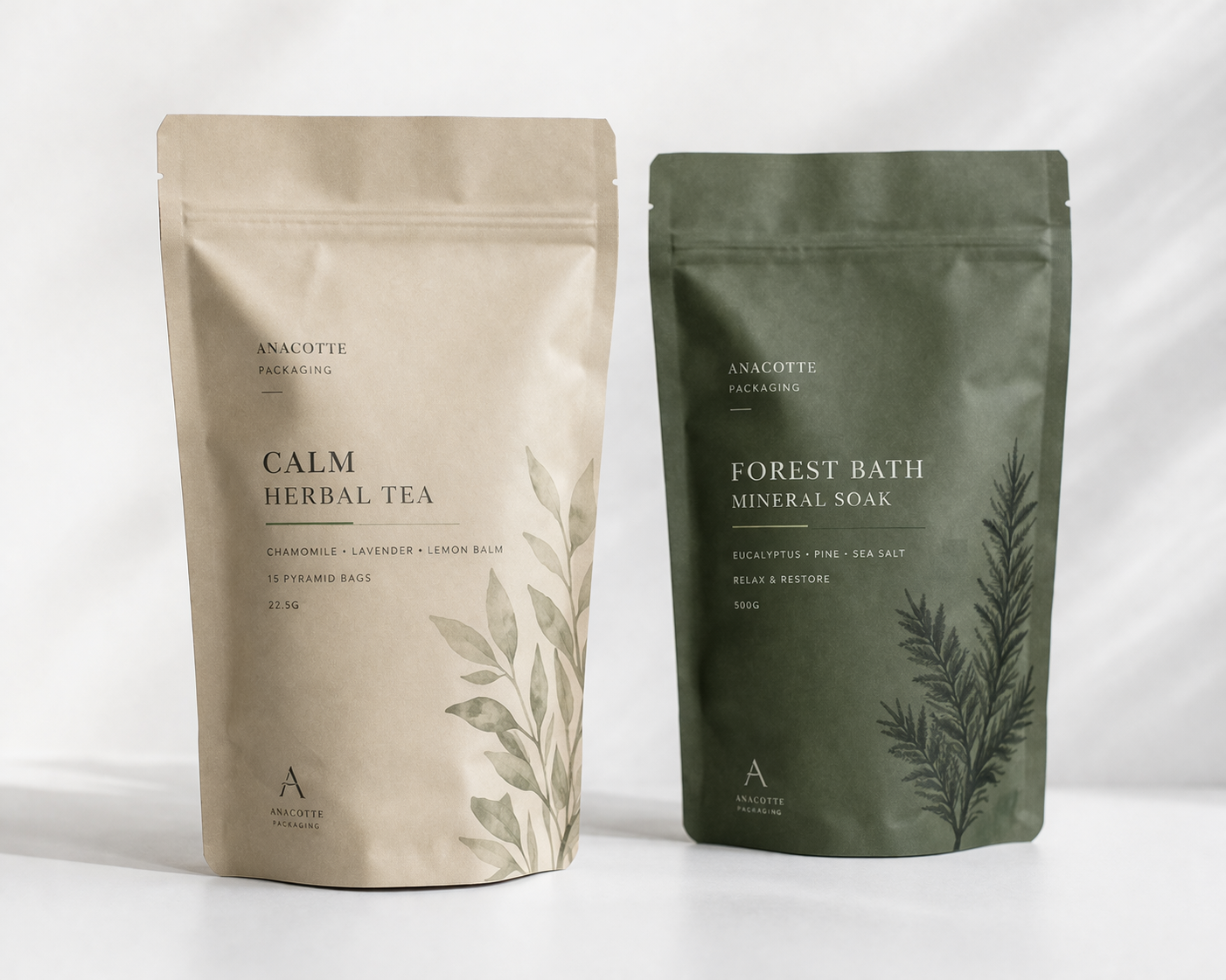
Custom Packaging Cost Breakdown Guide
Custom Packaging Cost Breakdown Guide Custom packaging cost is not only the pouch unit price; it includes material structure, print setup, tooling, closures, finish, testing, freight, and SKU complexity.
Custom packaging cost is driven by material structure, print method, MOQ, tooling, closures, finish, sampling, freight, and how many SKUs share the same specification.
TL;DR
- Digital print usually fits launch-stage SKUs and lower MOQ trials.
- Rotogravure usually fits larger repeat runs where color consistency and scale matter.
- The cheapest quote can become expensive if it ignores filled-package testing or freight.
Decision table
| Decision area | Why it matters | What to confirm |
|---|---|---|
| Material | Controls barrier and cost | Mono-material, foil, kraft, clear |
| Print method | Changes setup economics | Digital, flexo, or rotogravure |
| Features | Add tooling and validation | Zipper, valve, spout, window |
| Freight | Changes landed cost | Carton count and destination |
Related packaging resources
Low MOQ packaging, Stock packaging, Sample packaging, Rotogravure printing guide, White label packaging guide.
Frequently Asked Questions
What drives custom packaging cost most?
Material structure, MOQ, print method, tooling, features, and freight usually drive the largest differences.
Is digital printing cheaper?
It can be for low-MOQ launches, but repeat high-volume programs may favor other print methods.
How can brands lower cost?
Share structures across SKUs, reduce revisions, validate samples early, and choose the right print method for volume.
Request quote support
Send product specs for a packaging recommendation
Tell us your product, target pack size, barrier needs, quantity, artwork status, and timing. We will help you narrow the right packaging direction before you lock the spec.
Get direction on pouch type, film structure, closure, finish, and shelf-life risk before locking a specification.
Share your target run size so we can compare digital, custom, and bulk production trade-offs.
Include filling method, pack size, material preference, artwork status, and launch timing for a more precise reply.