
How valve-ready structures support roasted coffee freshness
Format comparison
Coffee Bags with Valve vs Flat Pouches
Compare degassing valve bags and flat pouches by freshness, shelf impact, and launch economics so buyers can choose the right coffee packaging path.
Need pricing for this exact packaging decision?
Share product type, fill weight, target quantity, material or barrier needs, artwork status, and launch timing. Anacotte can shortlist the practical structure before you over-spec the order.
Start an RFQWhen flat pouches outperform on samples and small runs
What MOQ, barrier, and merchandising trade-offs matter first
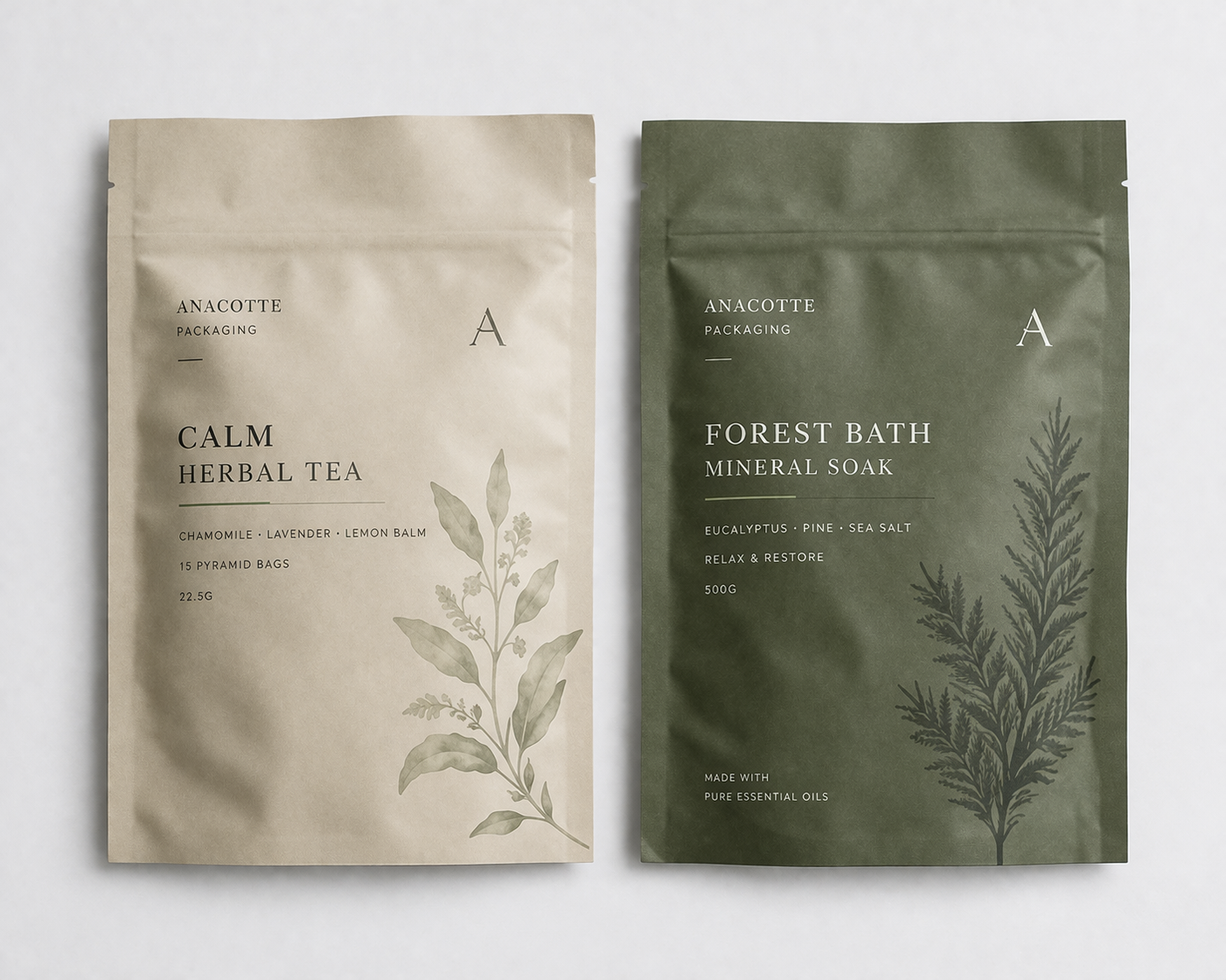
Coffee brands often compare coffee bags with valve against flat pouches when they need to balance freshness, shelf impact, and launch budget. The right answer depends on roast style, pack size, shelf life target, and whether the bag needs to support premium retail placement.
When valve bags are the better choice
Valve bags are typically the stronger fit for freshly roasted whole beans because they help release gas while protecting aroma and barrier performance. They also support a more premium positioning for specialty coffee lines and private label launches.
When flat pouches are the better choice
Flat pouches are often a better choice for samples, lower-cost trial packs, inserts, and compact ecommerce bundles. They use less material, store efficiently, and can still be designed with high barrier structures.
What buyers compare first
- Freshness retention and degassing needs
- Pack size and fill efficiency
- Retail shelf presentation
- MOQ and lead time
- Barrier material strategy
Recommended next pages
Explore Coffee Packaging, Coffee & Tea Packaging, and High Barrier Packaging to refine the final format.


Request quote support
Send product specs for a packaging recommendation
Tell us your product, target pack size, barrier needs, quantity, artwork status, and timing. We will help you narrow the right packaging direction before you lock the spec.
Get direction on pouch type, film structure, closure, finish, and shelf-life risk before locking a specification.
Share your target run size so we can compare digital, custom, and bulk production trade-offs.
Include filling method, pack size, material preference, artwork status, and launch timing for a more precise reply.