
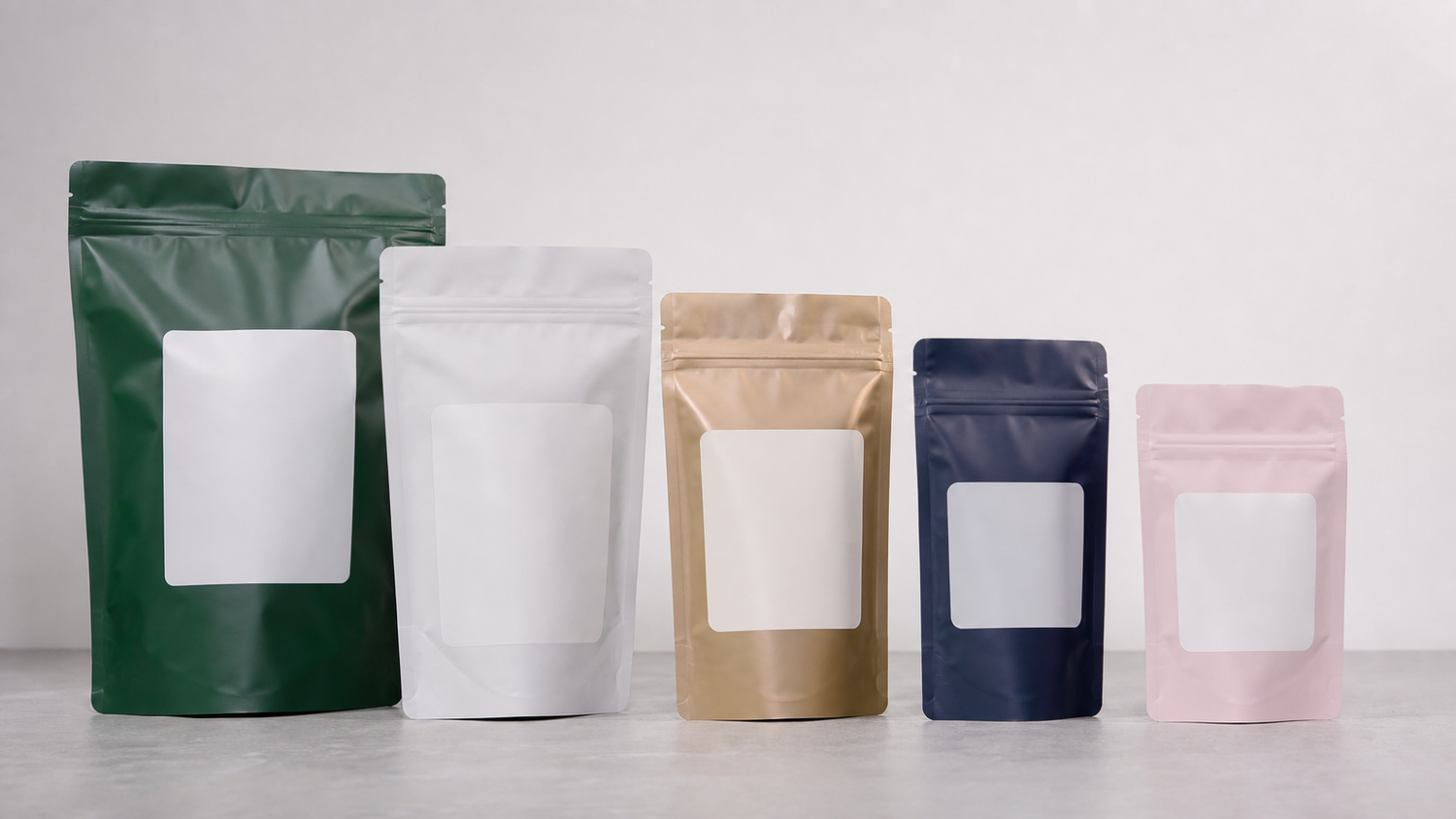
Multi-SKU orders become expensive when each artwork quietly turns into a separate packaging specification. A better low-MOQ test keeps the pouch platform stable and changes only the information that differs between SKUs.
This guide covers packaging procurement only. It does not provide legal advice or conclusions about a particular product or market.
Define one pouch platform

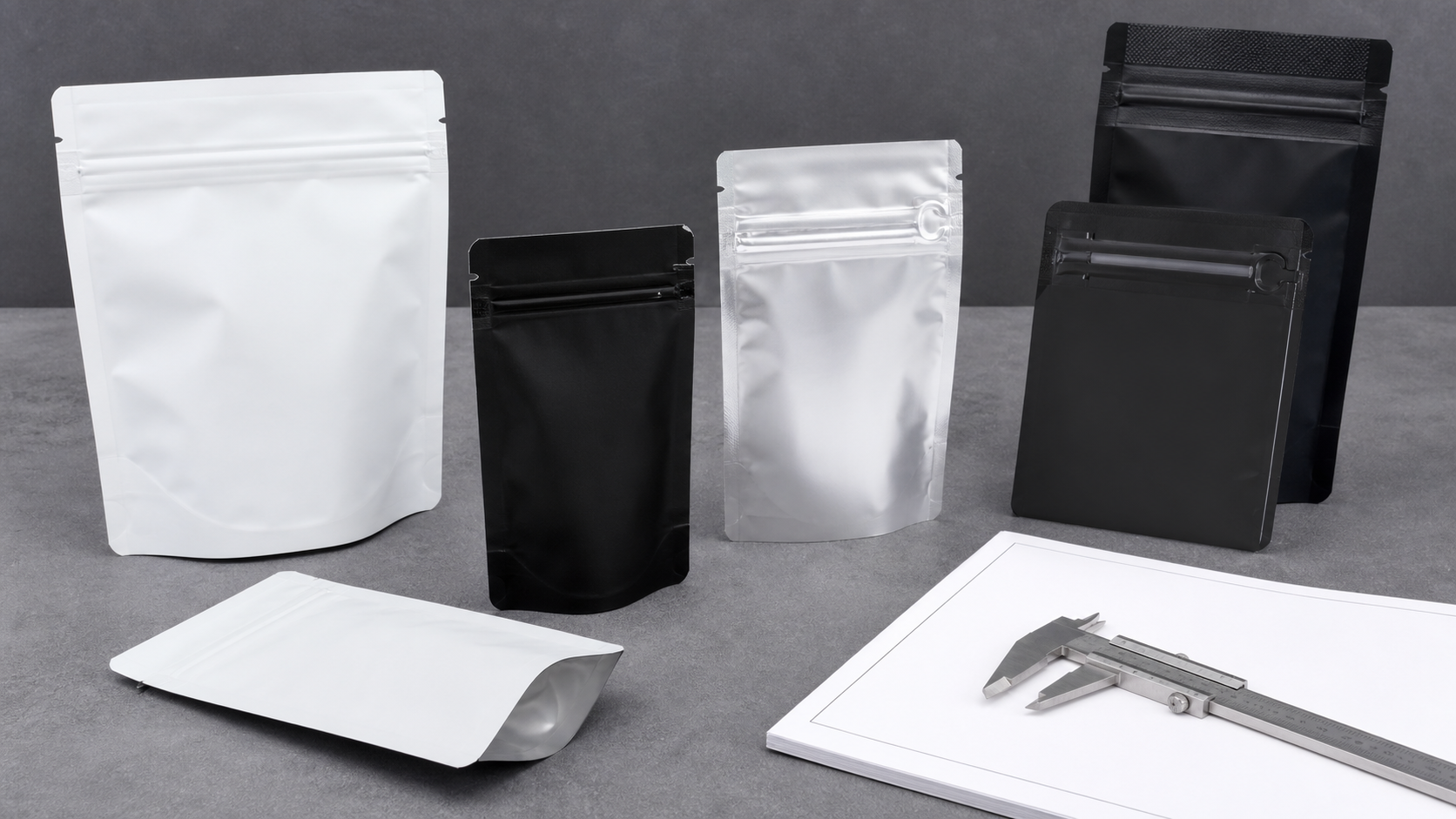
Start with a common size, laminate, finish, closure, and seal layout. Record finished dimensions, fill weight and bulk volume, complete structure, barrier targets, exact closure, pouch format, print process, total quantity, and units per artwork.
Use Anacotte's stand-up pouches, high-barrier packaging, and customized packaging to establish the platform before splitting artwork.
Separate fixed graphics from variable information
Keep shared brand graphics and opening instructions in a fixed layer. Reserve a clean panel for SKU name, batch coding, dates, barcode, and market-specific information. Confirm label content with qualified reviewers and preserve enough clear space to implement their conclusions.
Treat child resistance as a documented package decision
If the project calls for special packaging, request product-specific evidence. The CPSC PPPA guidance and 16 CFR 1700.20 explain the federal framework and testing protocol in the United States.
The brief should identify the closure, opening motion, reclosable or single-use format, tested dimensions and structure, laboratory report reference, change limits, and sample checks. A generic certificate image is not enough to match evidence to the quoted bag.
Build the SKU quantity table
List each SKU, artwork version, unit count, variable panel, and approval owner. Ask whether MOQ applies to the total run, each artwork, each size, or each film structure. Confirm spoilage allowance, invoiced overruns, and carton quantities. Anacotte's low-MOQ packaging supports this kind of controlled test.
Approve samples in the right order
First approve closure and physical size with an unprinted sample. Next approve the dieline and artwork proof. If color or finish is critical, request the closest printed prototype and document its limits.
Run a filled-pack check for product fit, headspace, zipper access, heat-seal settings, odor and moisture behavior, scuffing, puncture, barcode readability, and distribution handling.
For sustainability language, use exact material facts. The CEFLEX guidelines can inform flexible-pack design, while the FTC Green Guides summary explains why broad claims should be avoided.
Turn the sheet into a comparable quote
Send the same specification to each supplier. Require line items for bags, setup, proofs, tooling, freight, and optional features. Compare flat-bottom pouches if shelf stability or panel area matters, then request an Anacotte quote or use the contact page.

Dejar un comentario
Este sitio está protegido por hCaptcha y se aplican la Política de privacidad de hCaptcha y los Términos del servicio.