

Capability fit
Useful for comparing high-barrier films, sealants, and automated packaging film structures.
Buyer confidence
Co-extrusion forms multiple polymer layers together, while lamination bonds existing substrates. The right route depends on barrier targets, sealant behavior, print needs, curl, and delamination risk.

Useful for comparing high-barrier films, sealants, and automated packaging film structures.
Buyer review should include oxygen, moisture, aroma, light, puncture, and seal-window requirements.
Filled-pack testing helps catch curl, pinholes, poor seal, or delamination before scale-up.
Quote path should include product sensitivity, pack format, line speed, and target shelf life.
| Buyer situation | Recommended path |
|---|---|
| Layer formed together | Co-extrusion review |
| Existing webs bonded | Extrusion or adhesive lamination |
| High barrier need | Material stack and test plan |
| Seal risk | Hot tack, COF, and filled-pack testing |
Share product type, fill weight, material preference, target MOQ, artwork status, and launch timing so the quote can be matched to the right structure.
No. Co-extrusion forms layers together, while lamination bonds existing substrates.
Neither is universally better; the best route depends on product sensitivity, barrier target, and conversion risk.
Test barrier, seal behavior, curl, bond or layer integrity, drop resistance, and storage behavior.
Extrusion and Adhesive Lamination
Built with a focus on providing top-quality performance and reliability.
Our advanced extrusion and adhesive lamination technology will fine-tune your packaging requirements. We offer exceptional extrusion development services, including extrusion capabilities and expert guidance, enhance current product lines and explore new material options for barrier rigid food packaging, thermoforming rollstock, and heat seal seal rollstock. Our goal is to provide top-quality support to help you succeed in the industry.
Co-extrusion forms multiple polymer layers together, while extrusion lamination bonds existing substrates, so the right process depends on the stack and failure risk.
| Decision area | Why it matters | What to confirm |
|---|---|---|
| Layer route | Defines process choice | Formed together or bonded later |
| Barrier target | Controls material stack | Oxygen, moisture, aroma, light |
| Sealant | Affects filling | Hot tack, seal window, contamination tolerance |
| Failure mode | Reduces launch risk | Curl, delamination, pinholes, poor seal |
Co-extrusion vs extrusion lamination process, Extrusion lamination for high-barrier packaging, Extrusion laminating packaging guide, Flexible packaging films, Rollstock packaging.
No. Co-extrusion forms layers together, while lamination bonds existing substrates.
Neither is universally better; the right process depends on barrier, sealant, product sensitivity, and conversion risk.
Test seal behavior, bond or layer integrity, barrier performance, curl, drop resistance, and storage behavior.
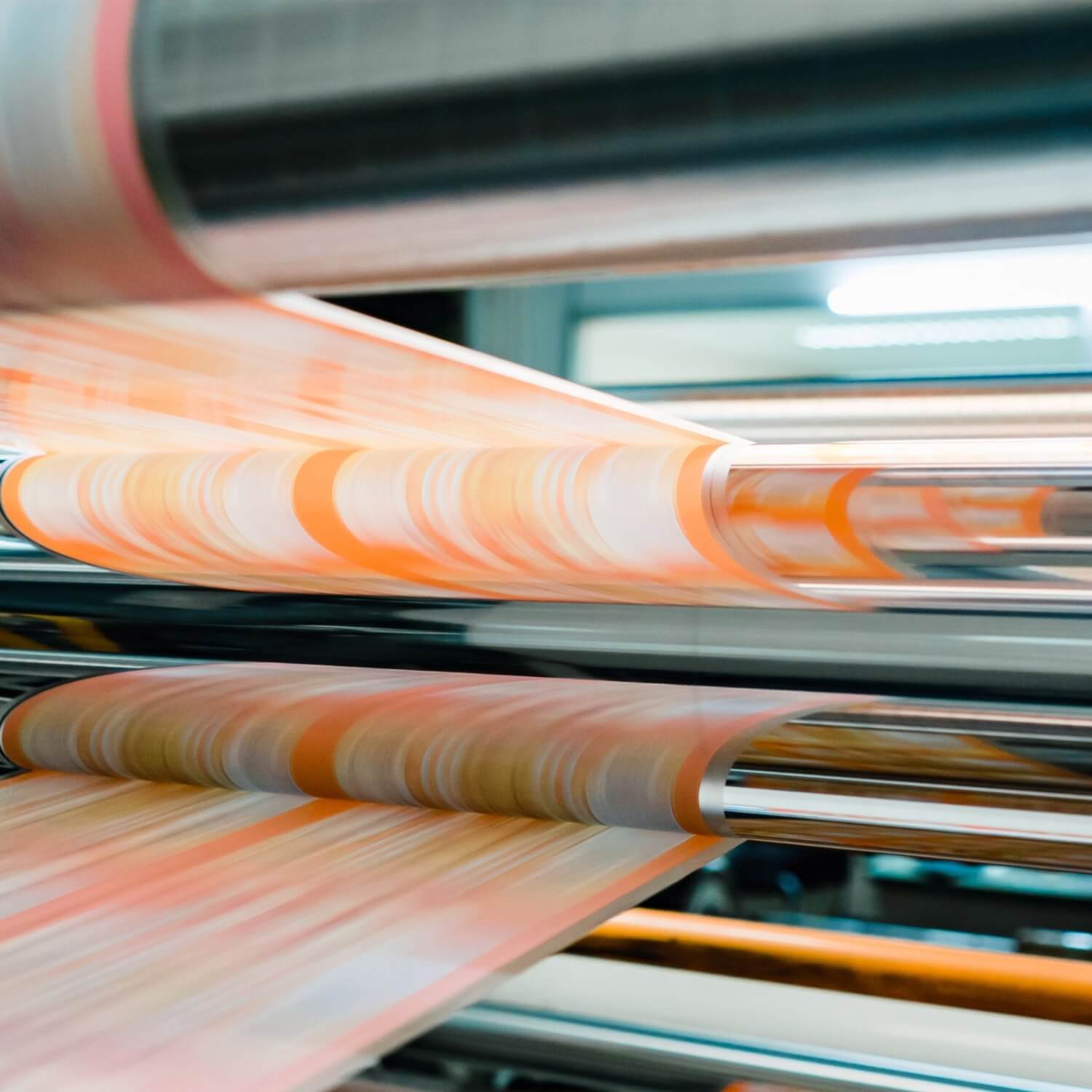
Adhesive and Extrusion Lamination Process
In adhesive lamination, a film material is bonded to another film using an adhesive. This process can be repeated with multiple layers to create a multi-layered film structure, or it can be combined with extrusion lamination to create a flexible packaging material with both adhesive and extrusion properties. In the extrusion lamination process, two films are brought together extruded through computer-controlled dies with advanced gauge controls, such as automatic gauge monitoring profile control. This creates a multilayer flexible packaging lamination. The process can be repeated to create the final flexible packaging structure, or it can be combined with adhesive lamination to complete the flexible packaging.
Explore Extrusion LaminationExplore the possibilities
Thin, single-layered rollstock made from a carefully chosen substrate material can be customized to specific size and shape requirements. The selection of performance resins and additives is also an option to ensure optimal performance.
Customize your barriers to meet your specific needs:
Custom barrier specifications: You can specify the dimensions, shape, and other characteristics of your barriers to suit your specific needs.
Custom substrate selection: You can choose from a range of substrate materials, including plastic, metal, and glass, to create a barrier that is durable and suitable for your application.
Easy-peel and weld-seal: These features allow you to easily install and remove the barriers, making them convenient for use in a variety of settings.
Performance resins and additive selection: You can choose from a range of performance resins and additives to optimize the strength, durability, and other properties of your barriers.
Custom barriers can be created to meet specific requirements. These barriers can be configured by mutli-layer films in order to meet the optmial barrier performance. The selection of performance resins and additives can also impact the effectiveness of the barriers as an additonal option.
Thin, single-layered rollstock made from a carefully chosen substrate material can be customized to specific size and shape requirements. The selection of performance resins and additives is also an option to ensure optimal performance.
Customize your barriers to meet your specific needs:
Custom barrier specifications: You can specify the dimensions, shape, and other characteristics of your barriers to suit your specific needs.
Custom substrate selection: You can choose from a range of substrate materials, including plastic, metal, and glass, to create a barrier that is durable and suitable for your application.
Easy-peel and weld-seal: These features allow you to easily install and remove the barriers, making them convenient for use in a variety of settings.
Performance resins and additive selection: You can choose from a range of performance resins and additives to optimize the strength, durability, and other properties of your barriers.
Custom barriers can be created to meet specific requirements. These barriers can be configured by mutli-layer films in order to meet the optmial barrier performance. The selection of performance resins and additives can also impact the effectiveness of the barriers as an additonal option.
Extrusion lamination has a distinct advantage when it comes to thickness, stiffness, or puncture resistance, thanks to the added bulk provided by the molten resin. For example, we can use extrusion lamination to combine two 70-gauge films with seven pounds of polyethylene, resulting in a 180-gauge lamination. This is a more cost-effective way to increase thickness compared to purchasing higher gauge film. Additionally, the thickness of the resin layer can be customized to meet specific needs. While adhesive lamination is more common, fewer converters have extrusion lamination lines due to the higher initial equipment cost. However, the benefits of extrusion lamination, such as cost-effective rigidity or thickness, enhanced barrier properties, and increased puncture resistance, make it a valuable investment for packaging film production.
One way to cost-effectively add rigidity or thickness to a material is by using reinforcing materials, which can be incorporated into the base material to improve its mechanical properties.
Most commonly, barrier properties refer to a material's ability to block the passage of gases, liquids, or other substances. Different resins can have different barrier properties, and by choosing the appropriate resin, it is possible to enhance the barrier properties of a material. For example, some resins have good oxygen barrier properties, making them suitable for packaging applications where it is important to prevent the infiltration of oxygen.
Adding reinforcing materials or using certain resins can also increase the puncture resistance of a material. Puncture resistance refers to a material's ability to withstand being pierced or penetrated by a sharp object without breaking or tearing. This property is important in applications where the material will be subjected to mechanical stresses, such as in packing or transportation.
Extrusion and adhesive lamination