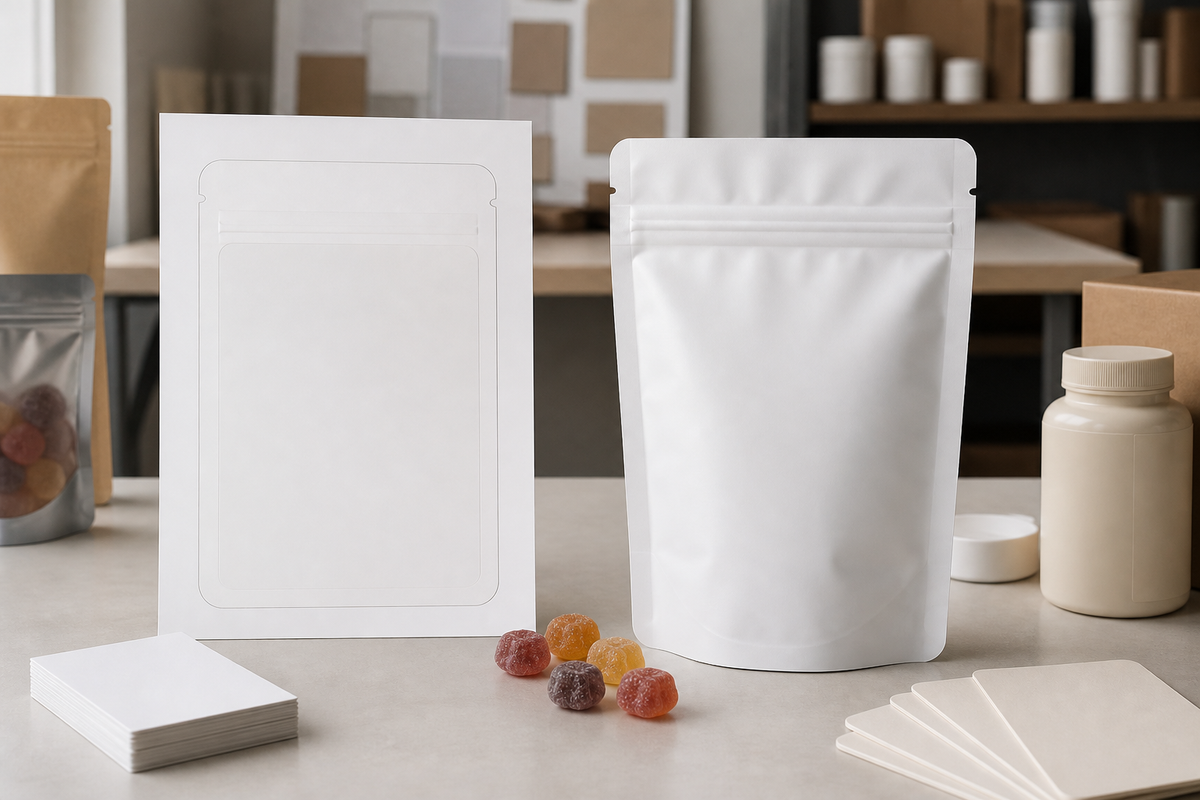
Cut-and-stack and pressure-sensitive labels are not interchangeable names for the same job. They describe different constructions and different application paths. When the package is flexible, the decision also has to account for pouch flex, finish, seams, gussets, zippers, tear notches, SKU changes, and whether direct printing should be quoted instead.
This guide is for U.S. consumer brands, co-packers, artwork teams, and packaging buyers comparing label-led and direct-print routes. It is a packaging-planning resource, not a label-compliance approval or an adhesive-performance guarantee. The brand and its qualified label owner must approve the final copy, claims, codes, and applicable market requirements.

Begin with the route: label-led, direct print, or hybrid
Before choosing a label type, ask whether the pouch itself will carry the main graphics. A direct-printed pouch can reduce a separate application step when the artwork, quantity, and print path are ready. A label-led route may be useful when the pack needs a changeable panel, a smaller artwork commitment, a variable-data layer, or a way to update a specific area. A hybrid can combine a printed pouch with a controlled over-label.
The decision is project-specific. Do not treat “label” as an automatic shortcut for a flexible pouch, and do not assume direct print is automatically the lowest-cost route. Put the same pouch drawing, filled dimensions, artwork scope, SKU count, equipment, and test questions in front of the converter or packaging supplier.
What the two label formats actually bring
| Route | Construction and application | Questions for a flexible pouch |
|---|---|---|
| Cut-and-stack | Label pieces are supplied as stacks; glue is applied during the labeling process. Paper and film substrates, die-cutting, and finishing can vary by supplier. | Does the line have the right glue/roller or labeling equipment? How will drying, orientation, changeover, and pouch flex be handled? |
| Pressure-sensitive | A facestock, adhesive, and liner work as one label construction and are applied with pressure. | Will the adhesive and facestock stay bonded across the pouch surface, folds, finish, seams, and handling route? How will rolls, liners, and dispensing be managed? |
| Direct printed pouch | The pouch film or laminate carries the artwork during converting; it is not a label format, but it is an important control option. | Is the print route, artwork, quantity, and SKU plan ready? Are the safe areas, codes, zipper, tear feature, and seal margins protected? |
Smyth’s current cut-and-stack page lists paper and film glue-applied substrates, finishing options, and digital or lithographic processes. Avery Dennison’s pressure-sensitive label explanation identifies the facestock, adhesive, and liner and describes pressure application without heat, water, or solvent. These pages clarify the constructions; they do not select a route for your pouch.
Compare the route on five buyer questions
1. What is the actual surface?
A flexible pouch may have a smooth film face, a matte or tactile finish, a window, a gusset, a seal edge, or a surface that bends during filling and shipping. A label that looks good on a rigid bottle may crease, lift, bridge a seam, or obstruct an opening feature on a pouch. Test the facestock and adhesive—or the glue-applied label—on the actual pouch surface and finish.
2. What equipment applies it?
Cut-and-stack labels typically need an application process that handles stacks and applies glue during the line operation. Pressure-sensitive labels need a dispensing and pressure-application path and create a liner-handling question. Direct print moves more of the artwork and conversion decision upstream. Your co-packer or labeling operator should describe the real sequence, speed, changeover, and line-clearance constraints.
3. How many SKUs will change?
SKU count changes the economics and the operational burden, but there is no universal volume threshold at which one format wins. A short launch, frequent flavor changes, variable information, and staged artwork may point toward a different route than a stable, high-volume program. General Press’s current cut-and-stack example discusses economical positioning, substrate choice, and custom die-cutting; read that as one supplier’s offer, not as a guaranteed cost comparison.
4. Where does the label sit?
Map the label against the filled pouch, not only the flat artwork. Keep space clear for the heat seal, zipper, fitment, tear notch, gusset fold, barcode, lot/date code, and any required information panel. An over-label should not hide an approved panel or create confusion between revisions. Anacotte’s artwork and label-space guide is useful adjacent reading for panel ownership and proof questions.
5. What is the total job?
Ask for the complete cost and responsibility map: artwork and proof, plates or tooling where applicable, label or pouch conversion, glue/adhesive, liner, application, scrap, changeover, inspection, rework, freight, and order splits. A unit price without the application path is not a comparable quote.

Use a simple flexible-pouch decision path
- If the pouch is already printed: decide whether the label is a planned variable-data layer, a changeable information panel, or unnecessary duplication.
- If the line already runs glue-applied labels: treat cut-and-stack as a candidate and confirm the pouch shape, glue system, drying, orientation, and changeover.
- If the line needs roll-fed dispensing or frequent SKU variation: pressure-sensitive may be a candidate, but test the construction across pouch flex, finish, and handling.
- If artwork and quantity are ready for a converting program: compare direct print with the label-led alternatives using the same filled-pack requirements.
- If no route is obvious: send a drawing, representative filled pouch, application sequence, and sample questions to both the packaging and labeling owners.
Taghleef’s current label-film portfolio is a useful reminder that film selection and label technology are separate decisions: the portfolio covers pressure-sensitive, cut-and-stack wrap-around, shrink, and in-mold routes. Choose from the actual surface and application requirements rather than from a material name alone.

Build a quote-ready comparison
| Input | What to send | Why it changes the decision |
|---|---|---|
| Pouch construction | Film/finish, filled width, height, gusset, seams, zipper, fitment, tear notch, and safe areas. | Flex and geometry control adhesion, wrinkles, clearance, and artwork placement. |
| Application route | Before or after filling, equipment, glue/adhesive system, speed, orientation, and line owner. | The label format must work with the actual operation, not a catalog image. |
| Artwork and codes | Copy owner, proof status, barcode, lot/date code, variable data, SKU matrix, and revision control. | Label-led and direct-print routes carry different proof and changeover risks. |
| Order plan | SKU count, quantity by SKU, launch stages, repeat timing, case pack, and rework tolerance. | Total cost includes conversion, application, scrap, inventory, and handling—not only label price. |
| Validation | Filled samples, adhesion/edge-lift review, crease and seam check, opening, storage, shipping, and inspection owner. | It converts a route preference into an observable pass/fail conversation. |
Keep the supplier’s assumptions next to the quote. If one proposal says “pressure-sensitive label” and another says “cut-and-stack label,” ask both to show the label construction, delivery form, application sequence, pouch placement, and the test method.
Connect the label choice to the pouch brief
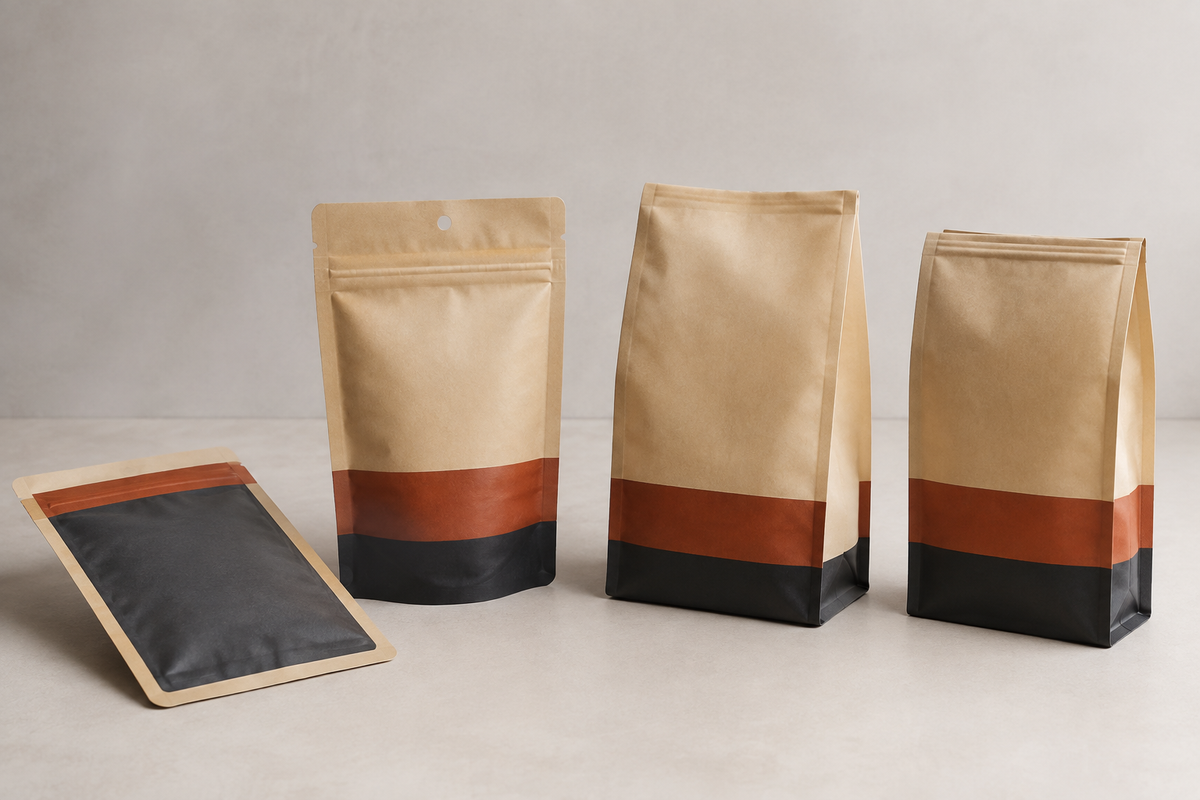
Anacotte’s private-label packaging bag reference can start a conversation about label-led, direct-print, and hybrid packaging routes. The matte stand-up pouch reference is a separate route example; it does not approve a label size, adhesive, or application method for your project.
For the direct-print side of the comparison, see the digital-printing and low-MOQ pouch guide and the digital-versus-gravure printing guide. They are adjacent planning resources, not a reason to assume a particular print path is best.

What to send before asking for a label quote
Share the pouch film and finish, filled dimensions, seams and openings, label or direct-print route, equipment, glue or adhesive requirements, label coverage, SKU count, artwork and code status, quantity by SKU, and filled-pack sample questions. Then contact Anacotte for a project-specific packaging conversation. The right format is the one that fits the pouch, the line, the artwork, and the validation plan together.

Hinterlasse einen Kommentar
Diese Website ist durch hCaptcha geschützt und es gelten die allgemeinen Geschäftsbedingungen und Datenschutzbestimmungen von hCaptcha.