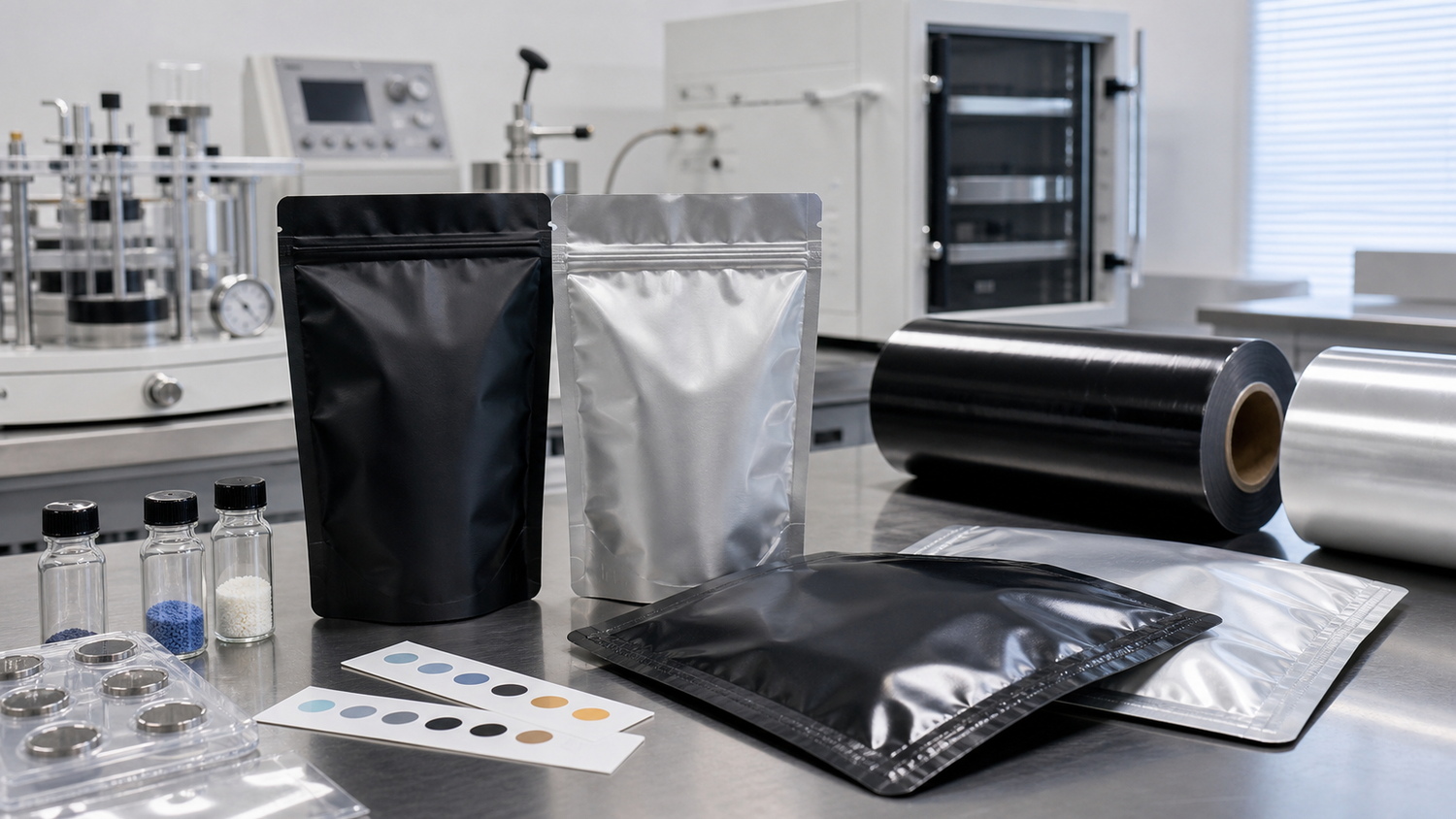
This is a packaging-only buyer guide. It covers film structure, odor resistance, moisture control, seal quality, zipper choice, label space, MOQ, printing, and supplier selection. It does not discuss product effects, consumption, dosage, medical advice, recreational advice, or legal conclusions.
Searches for smell proof Mylar bags usually show strong buying intent. Buyers are not only reading about materials; they are comparing suppliers, custom printing, minimum order quantities, and quote details. The phrase sounds simple, but odor resistance depends on the full pouch system, not one layer alone.

Smell proof starts with structure
Mylar is often used loosely in buyer language. In practice, a supplier should describe the film structure, thickness, barrier layer, inner contact layer, and finish. For packaging that may contact food or regulated products, the FDA's food contact packaging page is useful background for material review. It does not replace the buyer's own compliance process.
For Anacotte's high barrier packaging, odor control is considered alongside moisture, oxygen, puncture resistance, and seal performance. A thicker pouch is not automatically a better pouch. Ask what the structure is meant to block, how it seals, and whether it fits the filling process.
The seal and zipper deserve as much attention as the film
A good film cannot rescue a weak heat seal or a zipper that does not close consistently. Ask the supplier how seal strength is checked, whether the zipper profile fits your pouch size, and whether the tear notch placement leaves enough headspace above the zipper.

If child-resistant packaging is part of the buyer's requirement set, treat it as a separate specification and review path. The federal eCFR text for 16 CFR 1700.20 gives testing-protocol context for special packaging. Do not assume that a zipper or pouch is child-resistant unless the supplier provides appropriate documentation and your team completes its review.
Use low MOQ for structure and artwork validation
Smell proof Mylar bags are often ordered across several SKUs. A large minimum for every design can create dead printed inventory. A low MOQ packaging run lets the buyer compare pouch size, closure, finish, label panel, print contrast, and reorder timing before committing to larger production.
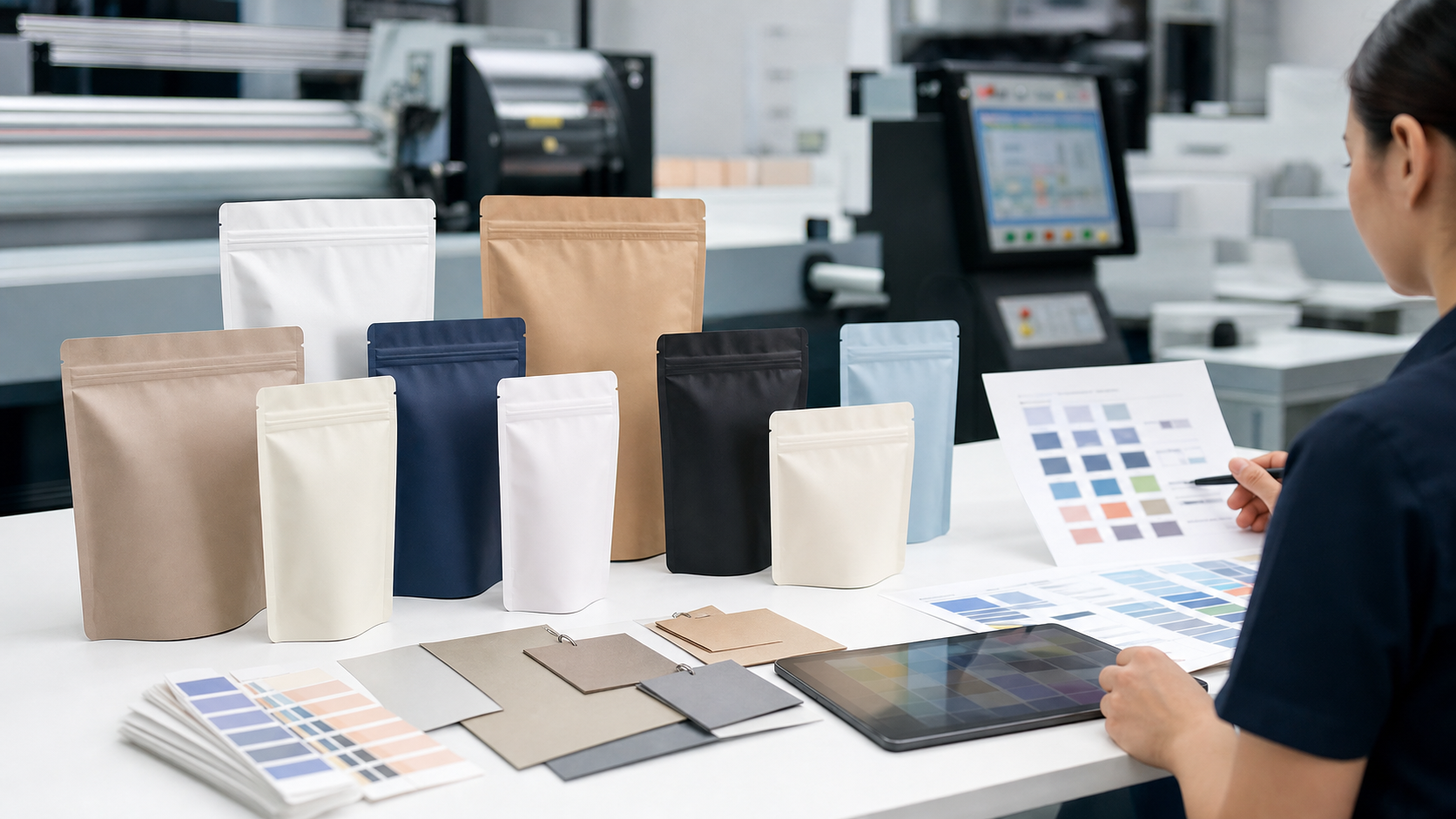
For branded bags, combine customized packaging with a clear SKU table. If the project includes custom printed Mylar bags for cannabis or CBD retail channels, keep the supplier conversation to packaging: material, format, print, label space, barrier, odor resistance, moisture control, and quote readiness.
Ask these supplier questions before the quote
- What exact film structure and thickness are being quoted?
- Which barrier needs does the structure prioritize: odor, moisture, oxygen, light, or puncture?
- How are seal strength and zipper closure checked?
- Can the same structure support several artworks in a low MOQ run?
- What proofing steps happen before production?
- How much label space remains after zipper, gusset, and seal areas are reserved?

Do not overclaim sustainability or compliance
If the bag uses recyclable or reduced-material language, check the claim carefully. The FTC's Green Guides, the APR Design Guide, and the CEFLEX guidelines help buyers understand packaging claim and design considerations. Actual recyclability still depends on structure and local collection systems.
For a quote, send Anacotte your target pouch format, fill weight, number of artworks, desired closure, barrier priority, and label-space needs. Compare stand up pouches, flat bottom pouches, or start with the get a quote page when your SKU map is ready.

Leave a comment
This site is protected by hCaptcha and the hCaptcha Privacy Policy and Terms of Service apply.