
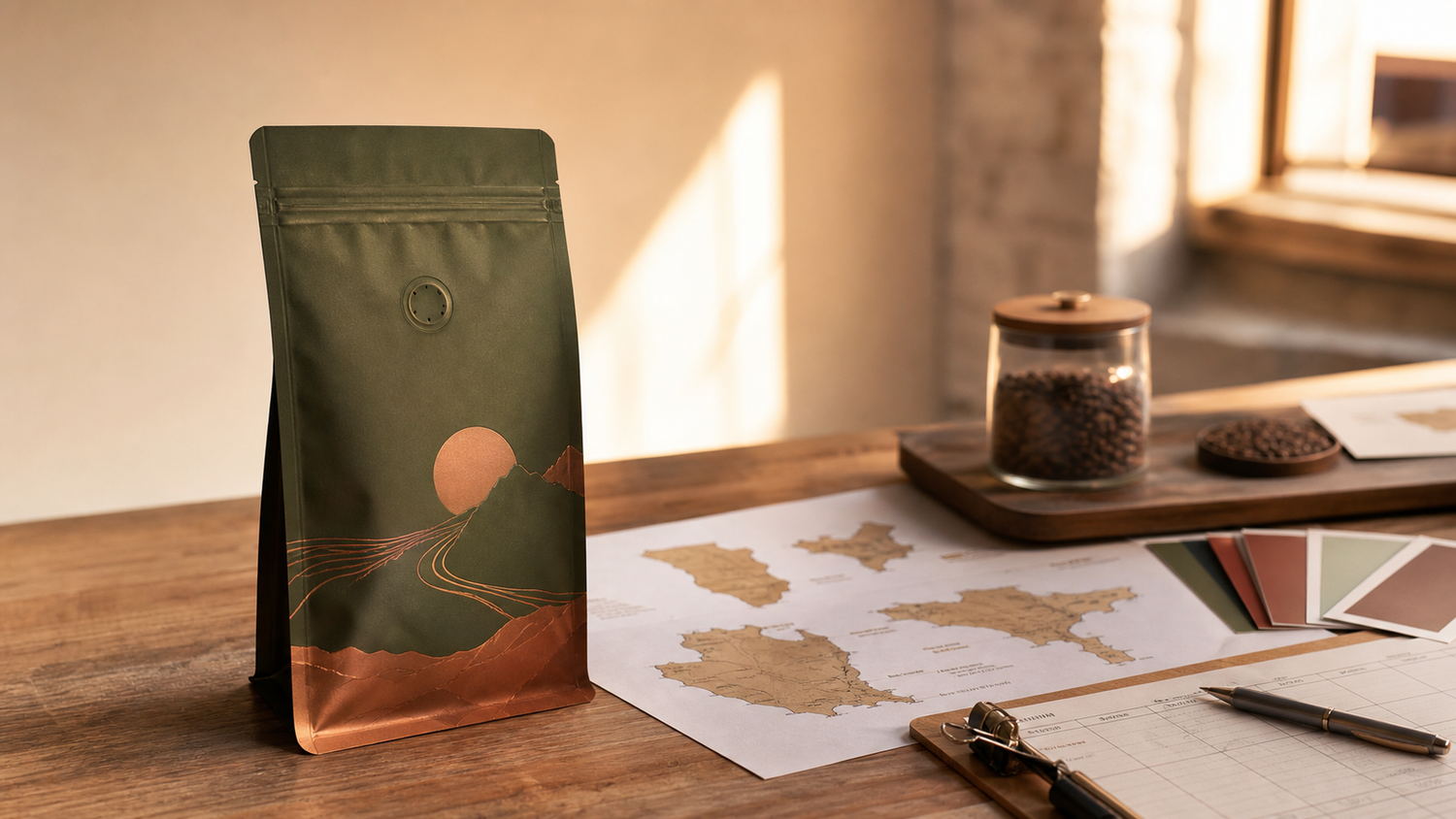
Seasonal coffee origin drops create a packaging problem that permanent blends do not. The roaster wants each harvest, farm, processing method, or roast profile to feel distinct, but the selling window can be short and the final demand uncertain. Large printed inventories can outlive the green coffee, while generic bags can weaken the story and make a premium drop feel temporary in the wrong way.
Low-MOQ custom coffee bags can support microlots, subscription releases, wholesale samples, retail pilots, and multi-origin calendars when the roaster controls bag size, valve, barrier, artwork versions, proof ownership, and reorder timing. This guide focuses on the commercial and operational decisions behind the bag. Final barrier, valve, material, and shelf-life choices still need supplier review and product testing.
Quick Answer: Use one validated bag structure across physically similar origin SKUs, separate variable artwork in a controlled SKU map, confirm fill weight and valve placement with roasted coffee samples, choose a low-MOQ print route, approve every proof, and set a reorder trigger based on sell-through and the remaining green-coffee or roasted-coffee plan. Do not print seasonal bag inventory without a calendar and exit plan.
Origin-Drop Packaging Plan
The packaging quantity should be connected to the roast and sales calendar.
| Program Type | Packaging Need | Planning Note |
|---|---|---|
| Single microlot | One distinctive artwork, limited quantity | Tie bag count to available coffee and roast loss |
| Three-origin flight | Shared structure, coordinated artwork family | Approve each origin panel and barcode separately |
| Subscription rotation | Predictable cadence, flexible artwork | Set monthly proof and reorder deadlines |
| Wholesale buyer samples | Smaller flat packs or tasting pouches | Link sample to sell sheet and full-bag quote |
| Seasonal retail drop | Shelf-ready bag and launch date | Include retailer setup and case-pack needs |
| Core blend test | Low-MOQ pilot before permanent packaging | Track repeat sales and feedback before scaling |
1. Build the Drop Calendar Before the Bag Order
Seasonal packaging becomes obsolete when the coffee sells out, the origin changes, the crop year advances, or the product name is retired. A packaging quote without the coffee calendar can encourage the wrong quantity.
Map available green coffee, expected roast yield, bag fill weight, planned launch, channels, sales rate, and end date. Include a buffer for samples and damage, but define what happens to unused bags.
Connect coffee availability to packaging inventory
Calculate a low, base, and high demand scenario and choose a quantity that the program can absorb before the origin story becomes outdated.
Decision boundary: A lower unit price at a larger quantity is not a saving if the seasonal artwork expires.
2. Decide Which Elements Are Shared Across Origins
Every origin may need unique farm, region, process, altitude, variety, tasting notes, and roast information. Rebuilding the whole design increases proof errors and slows the next launch.
Lock shared brand, format, compliance, and preparation elements. Reserve controlled variable zones for origin-specific content and color. Keep filenames and revision numbers consistent.
Create a repeatable artwork system
Create a master template and a SKU map that lists every variable field. Review all variants side by side before approval.
Decision boundary: A template accelerates work only when variable content is still checked individually.
3. Validate Fill Weight and Bag Size With Roasted Coffee
Light and dark roasts can occupy different volume at the same weight, and bean size varies by origin and processing. A bag that looks well filled for one coffee may look underfilled or tight for another.
Measure occupied volume for the target fill across representative coffees. Include headspace for filling, zipper, top seal, and valve. Test the least dense or bulkiest compatible coffee.
Account for bean density and roast profile
Fill blank samples, settle them, seal them, and review shelf appearance and case packing. Document which origin was used for approval.
Decision boundary: A 250 g or 12 oz label does not establish final dimensions.
| Bag Choice | Strength | Tradeoff |
|---|---|---|
| Stand-up pouch | Flexible low-MOQ starting format | Less box-like shelf presence than flat bottom |
| Flat-bottom bag | Premium panels and stable shelf shape | Higher structural complexity and size sensitivity |
| Quad-seal bag | Tall form and side-panel branding | Needs careful filling and case-pack review |
| Flat sample pouch | Efficient tasting and buyer outreach | Not a substitute for a full retail coffee bag |
| Stock bag plus label | Fastest early validation | Reduced custom-print impact and label labor |
4. Place the Valve as a Functional Component
The one-way valve affects both coffee performance and artwork. Its location must remain clear of seals, folds, and critical text. Different roast and packing timing can change outgassing behavior.
Provide roast level, time from roast to packing, fill weight, bag format, and desired valve location. Ask the supplier to review valve type and bonding area.
Review roast, outgassing, and panel design
Use a physical valve sample and annotated dieline. Pack representative coffee and observe the filled bag through the intended early storage period.
Decision boundary: A decorative valve icon or copied competitor location is not a valve specification.
5. Define Barrier and Shelf-Life Goals
Coffee quality is affected by oxygen, moisture, aroma loss, light, roast profile, grinding, and time. High barrier is useful language but not a finished requirement.
State whole bean or ground, target shelf life, storage, distribution, valve, zipper, and product quality goals. Ask for structure data and a testing plan appropriate to the coffee.
Protect aroma without vague promises
Retain control samples and use sensory or analytical evaluation as the program requires. Update the specification when roast or format changes materially.
Decision boundary: Packaging cannot restore freshness lost before filling or through poor storage.
6. Choose Digital Printing for the Right Reason
Digital printing can reduce setup barriers and support multiple artworks, but it should serve a clear test rather than encourage uncontrolled variants. Every origin still requires a correct proof and quantity.
Use the route when seasonal artwork, small quantities, short lead times, or multiple SKUs matter more than the lowest possible unit cost at scale.
Use flexibility to test real variables
Compare total cost, proof workflow, color expectations, finish, quantity tiers, and repeat-order plan with other print paths.
Decision boundary: Low MOQ does not eliminate artwork preparation, production tolerances, or lead time.
Common Mistakes and Better Decisions
Origin-drop packaging works when the bag order is integrated with coffee supply, artwork control, and a planned reorder decision.
| Mistake | Result | Better Decision |
|---|---|---|
| Buying for the unit-price break | Outdated seasonal bags | Connect quantity to available coffee and sell-through |
| One-off artwork for every drop | Slow proofs and inconsistent files | Use a controlled variable template |
| Sizing from label weight only | Uneven fill across roasts | Test representative bean density |
| Valve placed after design | Conflict with copy, folds, or seals | Approve valve and dieline before final art |
| No reorder trigger | Stockout or unnecessary second run | Review bags and coffee together |
What to Prepare Before Requesting a Quote
A coffee bag quote becomes more useful when it includes the complete origin-drop program.
- Origin or program name and planned launch dates
- Whole bean or ground, roast profile, and pack timing
- Fill weight, measured volume, bag dimensions, and format
- Valve, zipper, finish, barrier direction, and storage
- Number of origin artworks and quantity per SKU
- Dieline and artwork status with proof owner
- Wholesale samples, subscription, retail, and case-pack needs
- Remaining coffee, reorder trigger, delivery date, and shipping destination
Ask the supplier to identify assumptions and confirm which elements can remain shared across the origin family.
Authoritative Checks and Internal Next Steps
Use FDA food-contact substances resources for food-contact regulatory context and GS1 US for retail identification and barcode planning. Environmental claims about coffee bags should be reviewed against FTC Green Guides and applicable market requirements rather than inferred from appearance or a single material label.
Continue with the relevant Anacotte Packaging resources: coffee and tea packaging, flat-bottom pouches, stand-up pouches, flat sample pouches, request a coffee bag quote. These links help buyers move from education to a format comparison, sample request, or production quote without treating a general guide as a finished technical specification.
Frequently Asked Questions
What is a practical MOQ for a seasonal coffee bag?
It depends on print route, bag structure, valve, finish, number of artworks, and supplier setup. Choose a quantity that fits available coffee, expected roast yield, sales window, and reorder lead time. Compare total obsolete-inventory risk, not unit price alone.
Can several origins share one bag size and structure?
Yes when fill weight, bean density, roast profile, valve, zipper, and shelf needs are compatible. Test the bulkiest or least dense representative coffee and approve every origin artwork separately.
Do all coffee bags need a degassing valve?
The decision depends on product form, roast, pack timing, storage, and distribution. Whole freshly roasted coffee often uses valves, but the final choice and placement should be reviewed with the supplier using the actual program details.
Should I use flat-bottom or stand-up coffee bags?
Flat-bottom bags offer strong shelf structure and multiple panels. Stand-up pouches can be a flexible low-MOQ starting point. Compare fill, shelf price, design needs, equipment, case packing, and budget using physical samples.
How should I manage origin-specific artwork?
Use a master design with locked brand and required elements, controlled variable zones, clear filenames, a SKU map, and one proof owner. Print the proof at actual size and check origin, process, crop or date, barcode, and tasting content.
When should I reorder seasonal coffee bags?
Set a trigger before launch using bag inventory, weekly sell-through, packaging lead time, remaining coffee, and whether the origin continues. Do not reorder simply because inventory is low; confirm the coffee and sales plan still support the run.
Next Step: Turn the Decision Into a Supplier-Ready Brief
Share your origin calendar, fill weight, preferred bag, valve, artwork count, quantity per origin, and launch date with Anacotte Packaging. If size or structure is not final, request blank samples and test representative roasted coffee before approving print. Plan the first reorder trigger at the same time as the first order.

Leave a comment
This site is protected by hCaptcha and the hCaptcha Privacy Policy and Terms of Service apply.