
Match the packaging format to product risk, filling method, and shelf channel.
Liquid packaging guide
Custom Smoothie Spout Pouch Packaging
Custom Smoothie Spout Pouch Packaging helps buyers compare packaging options, material trade-offs, MOQ paths, and quote inputs before choosing a pouch, film, or custom structure.
Need pricing for this exact packaging decision?
Share product type, fill weight, target quantity, material or barrier needs, artwork status, and launch timing. Anacotte can shortlist the practical structure before you over-spec the order.
Start an RFQCompare material, barrier, print, closure, and sustainability trade-offs before locking a spec.
Send product details, size target, quantity, and timing for a tighter quote.
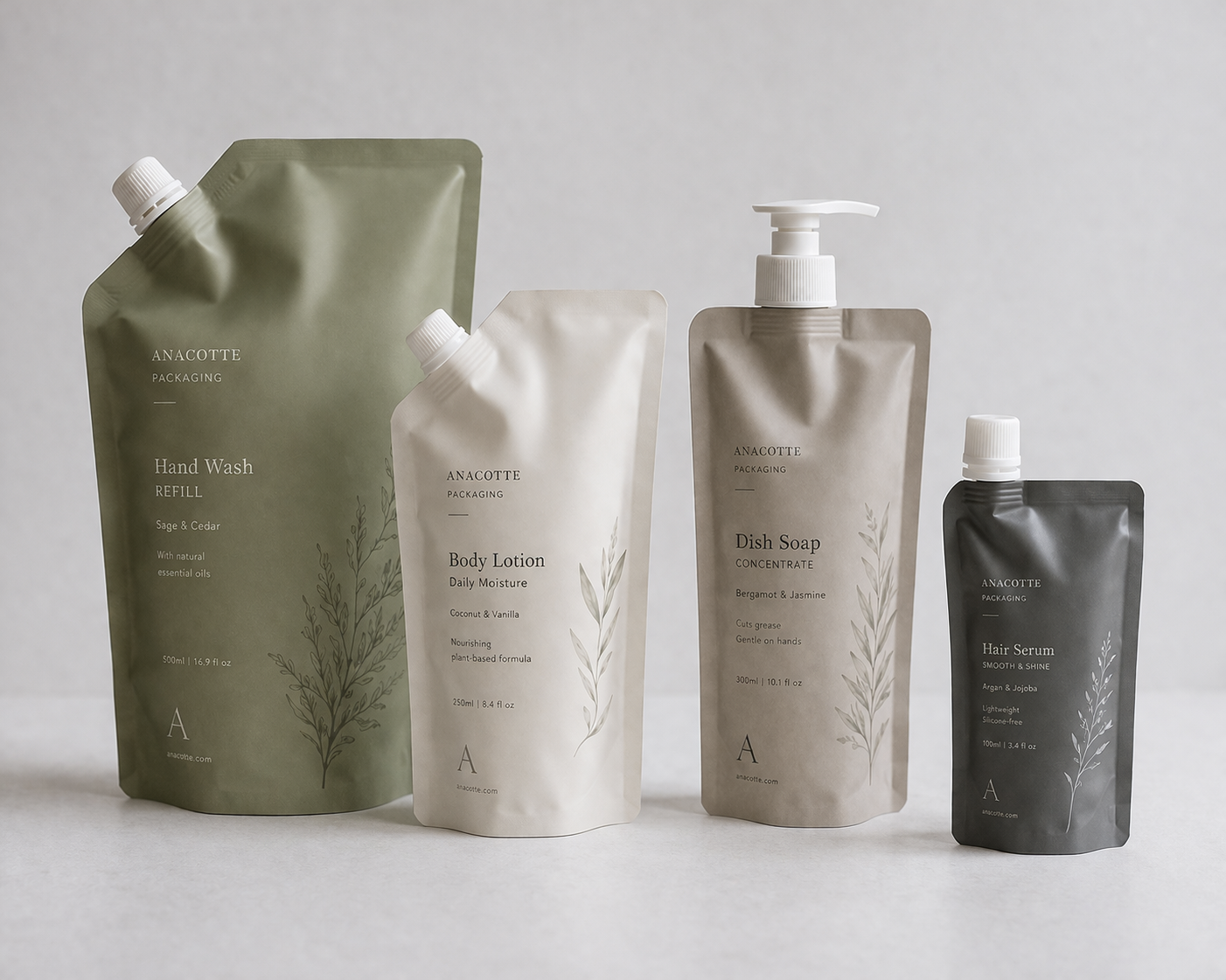
Custom Smoothie Spout Pouch Packaging
Direct answer: smoothie spout pouch packaging should be developed around viscosity, pulp or particles, fill temperature, cold-chain or shelf-stable process, oxygen exposure, spout flow, cap application and the actual filling line. A pouch that works for clear juice is not automatically suitable for a thick smoothie.

Four smoothie packaging paths that require different decisions
| Program | Primary questions | Validation focus |
|---|---|---|
| Refrigerated smoothie | Cold-chain duration, condensation, handling and shelf life | Cold seal integrity, drops, flavor protection and distribution |
| Frozen smoothie base | Freezer temperature, expansion, thaw cycle and pouch flexibility | Low-temperature toughness, seals and puncture resistance |
| Shelf-stable beverage | Qualified process, barrier, fill conditions and package geometry | Process compatibility and shelf-life validation |
| Thick puree or protein blend | Viscosity, particles, foaming, spout bore and squeeze force | Fill rate, dispensing, evacuation and cap cleanliness |
Spout and filling-machine compatibility
The fitment must work with both the product and the equipment. A larger bore may improve flow for a thick blend, while the same opening can provide poor control for a thinner drink. Confirm nozzle-to-spout fit, pouch support, fill rate, foaming, headspace, cap feed, torque and leak-test method with the equipment owner or co-packer.
- Share the filler and capper make, model and approved fitment interface.
- Test the actual smoothie at commercial temperature rather than substituting water.
- Check whether particles or fiber can interrupt flow or contaminate the fitment and cap.
- Run blank and printed samples at realistic speed before the first commercial order.
Technical inputs for a smoothie pouch specification
| Input | Examples of useful detail |
|---|---|
| Product | Fruit, dairy or plant base; viscosity range; particles; acidity; aroma sensitivity; foaming tendency |
| Process | Cold fill, pasteurized, frozen, hot fill, aseptic or another processor-approved route |
| Pack | Fill volume, headspace, pouch dimensions, spout location, bore, cap and intended consumption method |
| Line | Premade or through-spout fill, nozzle, pouch support, cap torque, speed, coding and inspection |
| Commercial plan | SKU count, quantities per design, launch date, artwork status, market and delivery destination |
Tests to include in the development plan
- Actual-product fill, flow and dispensing tests at the lowest and highest expected viscosity.
- Fitment weld, cap torque, leakage, squeeze pressure and reclosure checks.
- Seal contamination, filled drop, compression and distribution tests.
- Cold, freeze-thaw or thermal exposure trials when those conditions are part of the real route.
- Qualified shelf-life, food-contact and process validation appropriate to the product and target market.
Common project pattern: several smoothie SKUs on one package platform
This composite pattern represents a frequent B2B planning problem. A brand wants multiple flavors but does not want separate pouch development for every design. The practical route is to standardize pouch geometry, fitment, cap, print zones and case pack where product behavior permits, then validate the formulas that create the highest and lowest viscosity, most particles and most demanding process conditions.
What to send for a smoothie pouch quotation
- Product type, viscosity range, particles, foaming tendency and fill temperature.
- Storage route, target shelf life, process owner and co-packer or equipment information.
- Fill volume, target dimensions, preferred spout and cap, barrier or material direction.
- Quantity per SKU, number of designs, print finish, artwork status and launch timing.
Frequently asked questions
Can the same smoothie pouch be used for cold-fill and shelf-stable products?
Not by assumption. The material, sealant, fitment, process and tests must match the intended route.
Do smoothies always need a large spout?
No. The bore should be selected from viscosity, particles, desired flow and filling equipment, then confirmed through actual-product trials.
Does Anacotte provide the filling machine?
No. Anacotte supplies the pouch and helps align packaging inputs with the equipment supplier or co-packer.
Review juice spout pouches, fitment and cap options, line compatibility or send your smoothie pouch brief.
Request quote support
Send product specs for a packaging recommendation
Tell us your product, target pack size, barrier needs, quantity, artwork status, and timing. We will help you narrow the right packaging direction before you lock the spec.
Get direction on pouch type, film structure, closure, finish, and shelf-life risk before locking a specification.
Share your target run size so we can compare digital, custom, and bulk production trade-offs.
Include filling method, pack size, material preference, artwork status, and launch timing for a more precise reply.