
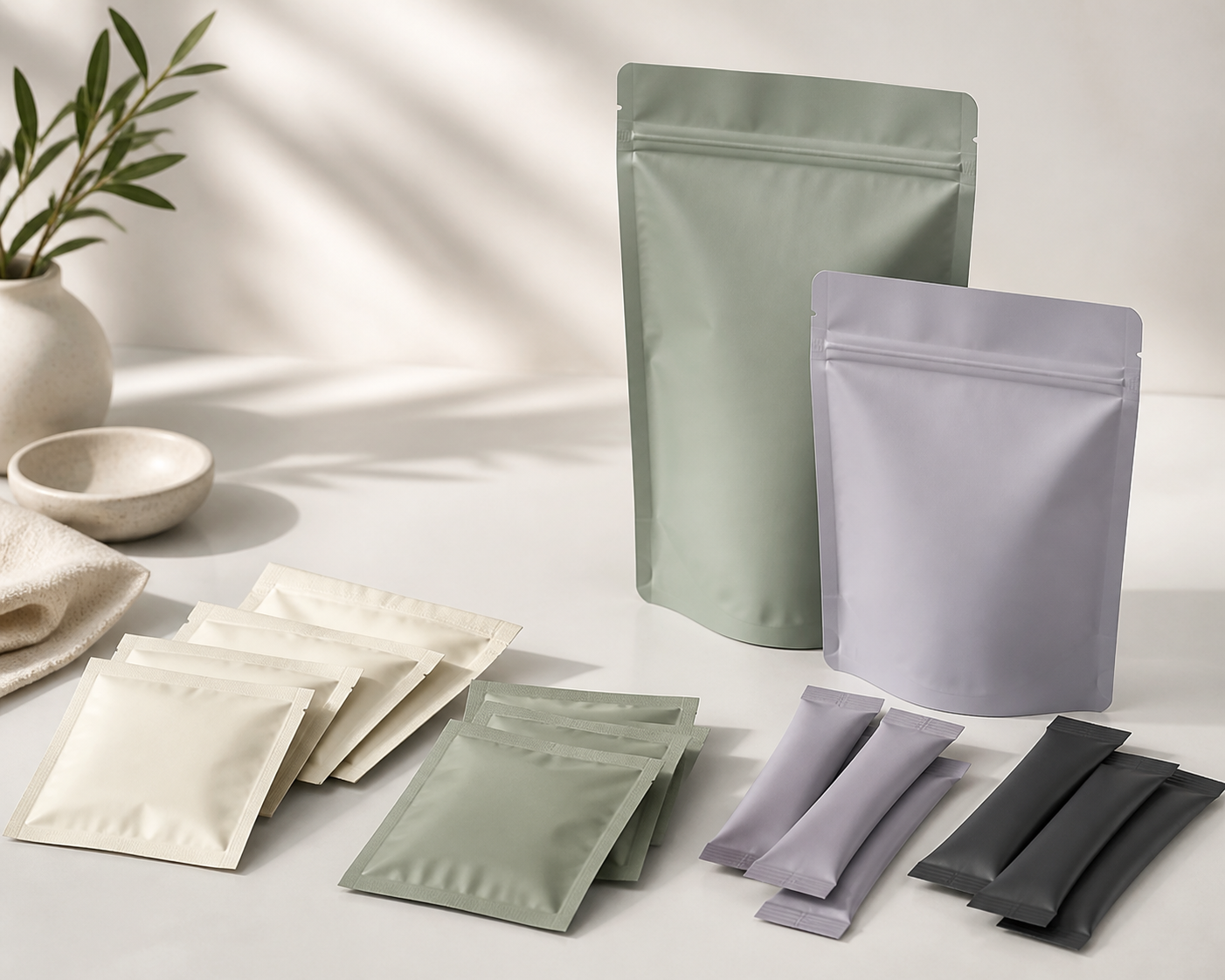
Custom vitamin packs are easier to brief when the serving model comes first. A single-serve powder, a multi-dose pouch of gummies, and a family of starter packs may all be called “vitamin packaging,” but they create different questions for filling, opening, label space, coding, and proofing. Use the format as a working hypothesis, then validate it with the real product and artwork.

Start with the serving model
First decide what one package means to the customer. Is it one measured serving, several servings with a resealable opening, or a starter set containing several units? Then record the target fill, the product state, the number of SKUs, and how the lot/date code will be applied. This sequence keeps the packaging brief tied to a real use case rather than a generic pouch shape.
Label planning belongs in the same conversation. The FDA Dietary Supplement Labeling Guide describes core labeling statements such as identity, net quantity, nutrition labeling, an ingredient list, and business information. The FDA nutrition-labeling guidance also discusses serving size, servings per container, listed amounts, and applicable Daily Value fields. These sources help a team plan panel space; they are not a packaging-format recommendation or a substitute for qualified label review.
Use a sachet or stick pack for a single-serve hypothesis
A flat sachet or stick pack is a reasonable starting hypothesis when one unit is intended to deliver one measured powder serving. The proof questions are practical: can the powder flow into the selected width, can the seal stay clear of product, is the tear edge usable, and is there enough room for required copy and a lot/date code?
A stick pack is not simply a longer sachet. Its slender geometry can change fill behavior, line handling, opening direction, and the usable artwork area. Ask for a filled sample using the actual powder or a representative test material before approving a production route.
Current supplier pages illustrate this market route without setting a universal standard. Teal Packaging presents individual vitamin packs and custom printed pack options, while MSD shows a vitamin/mineral sachet example with a tear notch and a supplier-specific PET/AL/PE structure. Treat those as examples to compare, not as a specification for every formula or market.

Use a resealable pouch for a multi-dose hypothesis
A resealable pouch is a reasonable starting hypothesis when the consumer opens the pack more than once, when a larger panel is needed for a family SKU, or when the serving model is built around a multi-dose container. The key questions are whether the zipper remains usable after filling, whether the product can be removed cleanly, whether the code zone stays visible, and whether the artwork works across every SKU.
Anacotte's current vitamin-packaging collection includes a functional-gummies pouch reference, while the live catalog also includes a custom electrolyte powder sachet reference. Those products are useful visual and format anchors. They do not establish a health benefit, ingredient claim, child-resistant feature, moisture barrier, shelf life, or regulatory approval for another product.
For broader context, start with Anacotte's supplement packaging options article, then use its single-serve powder sachet guide when the product points toward a flat unit. This article adds the serving-model and artwork-handoff layer rather than replacing those pages.

Turn the label panel into a packaging input
Do not send a finished dieline to a converter before the label content and code plan have been reviewed. At minimum, reserve the areas needed for identity, net quantity, ingredient information, Supplement Facts or other applicable nutrition information, business information, directions, warnings, lot/date coding, and any required language or market-specific content. The exact content is product-specific.
For a single-serve pack, confirm whether the panel can carry the information required for one unit or whether a carton, outer pouch, or insert is part of the system. For a multi-dose pouch, confirm serving size and servings-per-container assumptions before the artwork is divided across the front, back, and side panels. Never use a generated package visual as the source for nutrition numbers or regulatory copy.
A serving-model decision table
| Starting project signal | Format hypothesis | Proof questions |
|---|---|---|
| One measured powder serving per unit | Sachet or stick pack | Powder flow, target fill, seal clearance, tear edge, code zone, and line compatibility |
| Several uses from one container | Resealable pouch | Zipper/reclosure, opening size, product removal, panel area, and storage/use loop |
| Multiple flavors or formulas in one launch | Common format only if each SKU passes the same proof | Artwork matrix, color/finish consistency, code placement, and version sign-off |
| Starter or sample pack | Flat units or a coordinated bundle | Unit count, outer packaging, labeling responsibility, and sample handling |

Build a quote-ready vitamin-pack brief
Give the supplier or co-packer the inputs that make a sample meaningful:
- Product state, target fill weight, serving size, servings per container, and any powder-flow or gummy-geometry notes.
- Single-serve or multi-dose behavior, opening direction, reclosure expectation, and intended customer setting.
- Preferred format, dimensions, seal style, tear notch or zipper direction, and any line or filling constraints.
- Label-panel map, Supplement Facts or nutrition review status, lot/date-code method, barcode plan, and required warnings.
- Number of SKUs, artwork status, proof approval owner, quantity, sample requirements, and target ship date.
For a project discussion, pair the current product references with Anacotte's quote path. Ask which assumptions can be tested in a filled sample and which require a production-line review.
FAQ
Are stick packs and sachets the same thing?
They are both sealed flexible single-serve formats, but their dimensions and opening direction can change filling, seal, handling, and artwork decisions. Confirm the exact geometry with the filled sample.
Is a resealable pouch always better for vitamin products?
No. It may fit a multi-dose use pattern, but a single-serve product can be better served by a sachet or stick pack. Start with the serving model and test the actual product.
Does custom printing make a supplement label compliant?
No. Printing is a production step. Label content, claims, serving information, ingredients, warnings, and market requirements still need qualified review.
Are MOQ, barrier, and lead-time claims universal?
No. Supplier pages show supplier-specific offers. Ask for a written quote and confirm the material, fill, seal, quantity, and timing assumptions for your project.
Bottom line: Build custom vitamin packs from the serving model outward. Choose a sachet, stick pack, or pouch only after the fill, label panel, code zone, SKU matrix, and proof sequence are clear enough to test.

댓글 남기기
이 사이트는 hCaptcha에 의해 보호되며, hCaptcha의 개인 정보 보호 정책 과 서비스 약관 이 적용됩니다.