
Protect odor, freshness, grease, puncture resistance, and repeat opening.
Pet packaging solution
Pet Food Topper Packaging Pouches
Pet Food Topper Packaging Pouches helps buyers compare packaging options, material trade-offs, MOQ paths, and quote inputs before choosing a pouch, film, or custom structure.
Need pricing for this exact packaging decision?
Share product type, fill weight, target quantity, material or barrier needs, artwork status, and launch timing. Anacotte can shortlist the practical structure before you over-spec the order.
Start an RFQCompare stand up pouches, flat bottom bags, zipper formats, and high-barrier laminates.
Use fill weight, kibble or treat shape, quantity, and channel to prepare a quote.
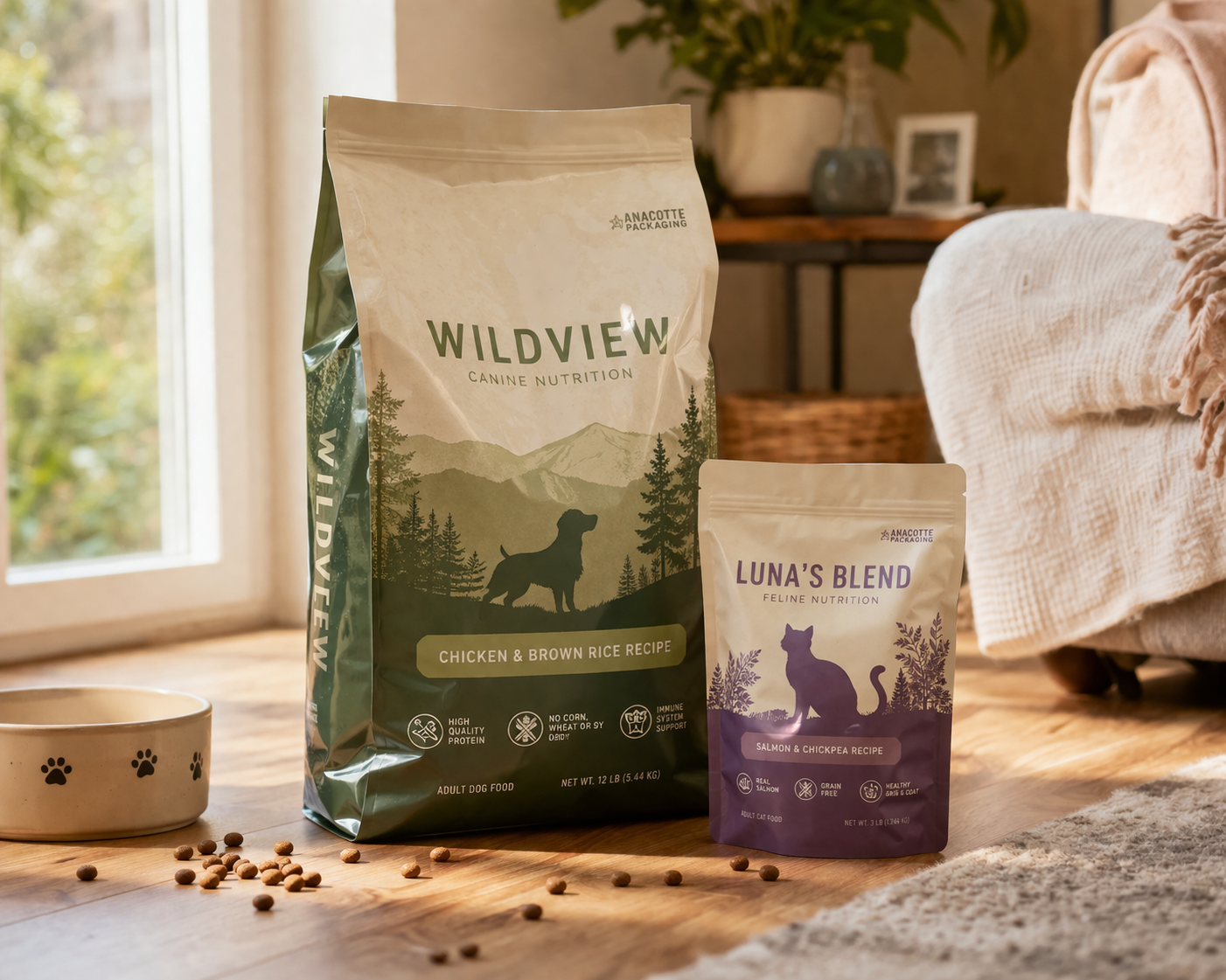
Pet Food Topper Packaging Pouches
Direct answer: pet food topper packaging should begin by separating dry and flowable products. Freeze-dried pieces, powders, dusts, crumbles, and dehydrated toppers commonly need moisture, oxygen, odor, grease, zipper, and puncture planning. Broth, gravy, puree, gel, oil, and liquid supplement toppers need process, viscosity, particles, fitment or opening, filling-line, leakage, and filled-pack validation.
Anacotte supports custom pouches and printed rollstock for pet topper projects, including eligible low-MOQ and multi-SKU routes. Final film, closure, fitment, process, shelf life, and market requirements must be approved against the actual topper and manufacturing conditions.
Dry and liquid pet topper paths
| Topper type | Format to evaluate | Main specification risks |
|---|---|---|
| Freeze-dried pieces | Zipper stand-up pouch, flat-bottom pouch, or rollstock | Moisture and oxygen exposure, fragile pieces, puncture, headspace, zipper, and repeated opening |
| Powder, dust, or fine crumble | Stand-up pouch, sachet, or rollstock | Bulk density, dust in seals or zipper, scoop access, dose, moisture, and opening control |
| Broth or thin liquid topper | Spout pouch, sachet, or process-compatible rollstock | Process, barrier, flow, headspace, cap or tear, leakage, and storage |
| Gravy, puree, or gel | Spout pouch, flat pouch, sachet, or rollstock | Viscosity, particles, nozzle, fitment bore, squeeze force, seal contamination, and evacuation |
| Oil or concentrated supplement topper | Small spout pouch, sachet, or controlled-dose format | Compatibility, aroma, dose, drip control, repeated use, light exposure, and residue |
Pet topper packaging specification matrix
| Project input | What to provide | Packaging decision |
|---|---|---|
| Product form | Dry, freeze-dried, powder, broth, gravy, puree, gel, oil, mixed particles, and bulk density or viscosity range | Pouch format, opening, closure, fitment, headspace, and filling route |
| Formula risk | Ingredients, oil, grease, aroma, moisture, acidity, oxygen or light sensitivity, particle size, and compatibility concerns | Film, adhesive, sealant, barrier, closure, fitment, and shelf-life plan |
| Process and storage | Fill temperature, qualified food process, ambient, refrigerated or frozen storage, shelf-life target, and destination | Material structure, zipper or cap, process validation, and aging tests |
| Pack use | Fill weight or volume, serving direction, scoop or pour, reclosure, dispensing rate, number of uses, and residue target | Dimensions, gusset, mouth width, zipper, spout, cap, and evacuation |
| Equipment and launch | Filler or co-packer, machine, web and repeat, nozzle, seal or cap, coding, inspection, quantity per SKU, and timing | Machine fit, tolerances, print method, MOQ, and scale-up route |
Filling-machine and co-packer compatibility
- For dry toppers, share bulk density, piece size, dust, target dose, mouth width, zipper location, seal jaws, web or pouch dimensions, and line speed.
- For flowable toppers, share viscosity and particles at fill temperature, nozzle, fill route, pouch support, headspace, fitment, cap, seal-contamination risk, and inspection method.
- For rollstock, confirm web width, repeat length, unwind direction, registration marks, splice, coding area, seal layout, and material acceptance criteria.
- Ask the co-packer to approve the pouch or film specification and run representative trials before production artwork is locked.
Required pet topper pouch tests
- Assess the actual topper against the film, adhesive, ink, sealant, zipper, fitment, and cap over the intended storage period.
- Run filling and sealing or capping trials at realistic temperature, viscosity, particles, grease, dust, dose, speed, and contamination conditions.
- Evaluate opening, zipper or cap operation, scoop or dispensing access, portion control, evacuation, residue, and repeated use where relevant.
- Test filled packs for seal integrity, leakage for liquids, drop, squeeze, compression, puncture, flex-crack risk, odor, storage orientation, and distribution.
- Validate food process, shelf life, labeling, pet-food requirements, and market compliance with the brand, co-packer, laboratory, process authority, and qualified specialists.
Multi-SKU launch planning
- Group SKUs by dry, powder, and flowable product behavior before attempting to use one common package.
- Use the oiliest, most aromatic, highest-moisture, most fragile, dustiest, thickest, and largest-particle boundary products during testing.
- Keep one qualified size, closure, material, and finish across flavors only where the product and filling results support it.
- Separate artwork proof approval from product, process, filled-pack, shelf-life, and shipping approval.
Common project pattern: dry and wet topper range
Project brief: a pet brand is planning several toppers that include freeze-dried pieces, powder, and a flowable gravy product.
Packaging approach: create separate dry and liquid specifications, use a zipper pouch family for suitable dry SKUs, evaluate a spout or sachet route for the gravy, and align both paths around a common visual system rather than forcing one material or filling method.
Validation points: compatibility, moisture and odor protection, piece breakage, dust, filling, seal or fitment cleanliness, opening, dispensing, leakage, drop, storage, and parcel shipping. This is a composite pattern without customer identity, formula, testimonial, or claimed performance result.
What to send for a pet food topper quote
- Topper form, ingredients, oil, grease, aroma, moisture, bulk density or viscosity, particles, fill temperature, process, and storage.
- Fill weight or volume, target dimensions, pouch format, zipper or spout and cap preference, and consumer-use direction.
- Filling equipment or co-packer, target rate, web or pouch specifications, coding, inspection, shelf-life target, distribution, and tests.
- Quantity per SKU, number of designs, artwork status, forecast, destination, and target timing.
Send the topper, filling, and SKU specifications for a quote. Compare flexible packaging for pet food, cat-food packaging bags, powder sachets and stick packs, spout pouches, and pouch filling-machine compatibility.
Frequently asked questions
Can dry and liquid toppers share one pouch?
They can share a visual system, but they normally require separate technical specifications because product behavior, opening, filling, barrier, seal, and leakage risks differ.
Do freeze-dried toppers always need the highest possible barrier?
The appropriate barrier should come from the actual product, shelf-life target, storage, opening frequency, and testing rather than a universal assumption.
Can pet topper pouches start at low MOQ?
Eligible digitally printed pouch projects can start from 200 pieces, depending on format, material, closure or fitment, size, print path, and design allocation.
Related pet-food and topper packaging guides
Connect product form, fat and moisture barrier, closure, filling, format and launch quantity.
- Pet-food packaging pillar — Formats, barrier and project inputs.
- Cat-food packaging guide — Dry, treat and flexible-bag decisions.
- Pet-treat packaging — Resealability and barrier decisions.
- Low-MOQ pet-treat packaging — Short-run launch options.
- Pouch sizing by density and volume — Turn fill weight into a testable starting size.


Request quote support
Send product specs for a packaging recommendation
Tell us your product, target pack size, barrier needs, quantity, artwork status, and timing. We will help you narrow the right packaging direction before you lock the spec.
Get direction on pouch type, film structure, closure, finish, and shelf-life risk before locking a specification.
Share your target run size so we can compare digital, custom, and bulk production trade-offs.
Include filling method, pack size, material preference, artwork status, and launch timing for a more precise reply.
Decision tools
Qualify flow, fitment, filling, and leak risk together.
Liquid refill and flowable pet products need the actual formula, viscosity and particles, fill route, closure, storage, and filled-pack test plan—not a format recommendation based on product name alone.
Updated
Method: transparent screening inputs and decision limits
Final specification requires representative samples and documented testing
01Spout × viscosity matrixScreen a candidate bore from viscosity, particles, and the filling route.
02Filling-line checklistConnect the product, pouch, fitment, machine, and test protocol.
03Barrier material selectorTurn product, process, barrier, transparency, and recycling goals into a test brief.