
Match the packaging format to product risk, filling method, and shelf channel.
Liquid packaging guide
Custom Honey Spout Pouches
Custom Honey Spout Pouches helps buyers compare packaging options, material trade-offs, MOQ paths, and quote inputs before choosing a pouch, film, or custom structure.
Need pricing for this exact packaging decision?
Share product type, fill weight, target quantity, material or barrier needs, artwork status, and launch timing. Anacotte can shortlist the practical structure before you over-spec the order.
Start an RFQCompare material, barrier, print, closure, and sustainability trade-offs before locking a spec.
Send product details, size target, quantity, and timing for a tighter quote.
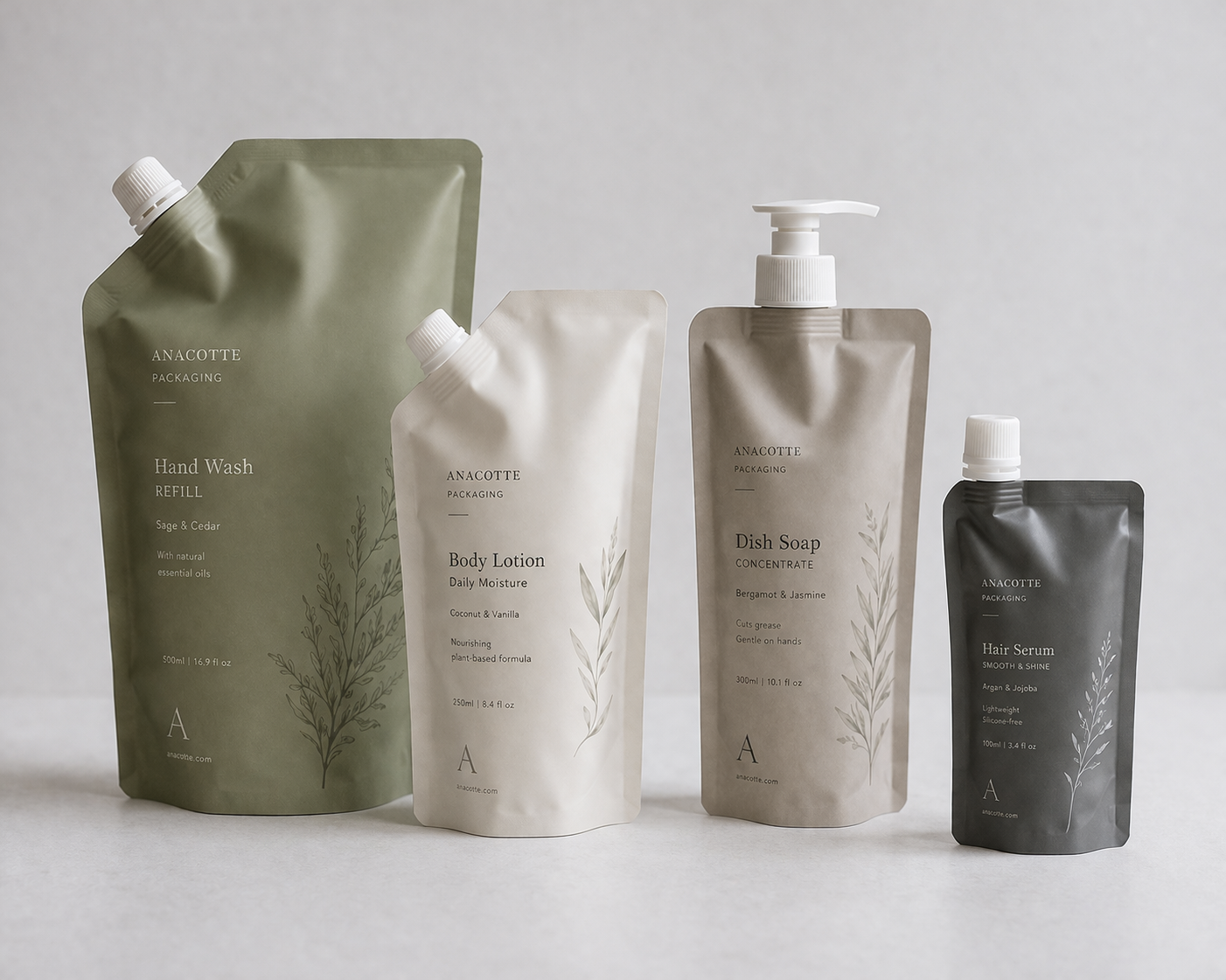
Custom Honey Spout Pouches
Direct answer: honey spout pouches should be specified around viscosity across the expected temperature range, fill method, dispensing control, fitment weld, cap seal, pouch evacuation and sticky-leak prevention. Packaging can improve handling, but it does not by itself prevent crystallization or establish product shelf life.

Choose the honey pouch format by use case
| Use case | Packaging priorities | Questions to test |
|---|---|---|
| Retail squeeze pouch | Controlled dispensing, clean reclosure and shelf presence | Flow rate, squeeze force, cap cleanliness and repeated use |
| Travel or sample format | Portability, seal strength and dose control | Drop, compression, opening and residual product |
| Refill pouch | Pour control, grip, evacuation and transport efficiency | Spout position, reclosure, sidewall collapse and leakage |
| Foodservice pouch | Higher fill weight, repeated handling and dispensing speed | Support, cap torque, case pack and operational use |
Honey behavior belongs in the packaging brief
Honey does not have one fixed dispensing behavior. Temperature, formulation and product state change how it moves through the spout. Share the realistic low and high viscosity conditions and test the commercial product. If crystallization is possible during intended storage, include that condition in dispensing and consumer-use trials rather than assuming a wider spout will solve the product issue.
Technical decisions before artwork approval
- Fitment and bore: balance filling speed with controlled squeezing or pouring.
- Cap and tamper route: define cap application, torque, reclosure and the target market's requirements.
- Fill temperature: provide the maximum product and package temperature plus the cooling and handling sequence.
- Pouch geometry: confirm fill weight, headspace, grip, gusset, spout location and case orientation.
- Material direction: select from compatibility, barrier, stiffness, seal performance, print and distribution needs.
- Line interface: confirm nozzle, pouch support, capper, torque control, coding and leak inspection.
Honey pouch validation matrix
| Test | What it should answer |
|---|---|
| Fill and dispense | Can the real honey be filled and evacuated at expected temperatures without poor control? |
| Fitment and cap | Do weld integrity, torque, reclosure and cap cleanliness remain acceptable? |
| Leak and squeeze | Can the pouch tolerate squeeze pressure, orientation changes and repeated use? |
| Distribution | Does the filled pack survive drops, compression, case packing, storage and ecommerce exposure where applicable? |
| Compatibility and shelf life | Does the qualified commercial structure perform with the actual product over the intended period? |
Common project pattern: retail pouch plus larger refill
This is a composite technical pattern rather than a client claim. A honey brand may want a smaller squeeze pack and a larger refill. The two sizes can share visual architecture, but they should not automatically share spout, film gauge or handling assumptions. The refill experiences higher filled weight and different grip, pour and case-pack forces, so it needs its own filled validation.
Quote-ready honey pouch information
- Honey type, viscosity or temperature range, fill temperature and target shelf life.
- Fill weight, preferred pouch style, dimensions, spout position, cap and tamper requirements.
- Filler or co-packer, nozzle and capper details, target speed and inspection method.
- Target markets, material preference, SKU count, quantity per design, artwork and launch date.
Frequently asked questions
Can a honey spout pouch replace a bottle or jar?
It can be evaluated as an alternative, but retail use, dispensing, filling, shelf life, distribution and customer expectations must be tested.
What causes sticky leakage?
Common contributors include poor fitment or cap matching, product in the sealing area, incorrect torque, weak pouch support and untested distribution forces.
Should honey be tested only at room temperature?
No. Test at the realistic temperatures that affect filling, storage and consumer dispensing.
Compare sauce spout pouches, review the leak-testing guide, check fitment and cap selection or send your honey pouch requirements.
Request quote support
Send product specs for a packaging recommendation
Tell us your product, target pack size, barrier needs, quantity, artwork status, and timing. We will help you narrow the right packaging direction before you lock the spec.
Get direction on pouch type, film structure, closure, finish, and shelf-life risk before locking a specification.
Share your target run size so we can compare digital, custom, and bulk production trade-offs.
Include filling method, pack size, material preference, artwork status, and launch timing for a more precise reply.