
Match the packaging format to product risk, filling method, and shelf channel.
Packaging decision guide
Flexible Packaging
Flexible Packaging helps buyers compare packaging options, material trade-offs, MOQ paths, and quote inputs before choosing a pouch, film, or custom structure.
Need pricing for this exact packaging decision?
Share product type, fill weight, target quantity, material or barrier needs, artwork status, and launch timing. Anacotte can shortlist the practical structure before you over-spec the order.
Start an RFQCompare material, barrier, print, closure, and sustainability trade-offs before locking a spec.
Send product details, size target, quantity, and timing for a tighter quote.
Flexible Packaging Company and Custom Pouch Solutions
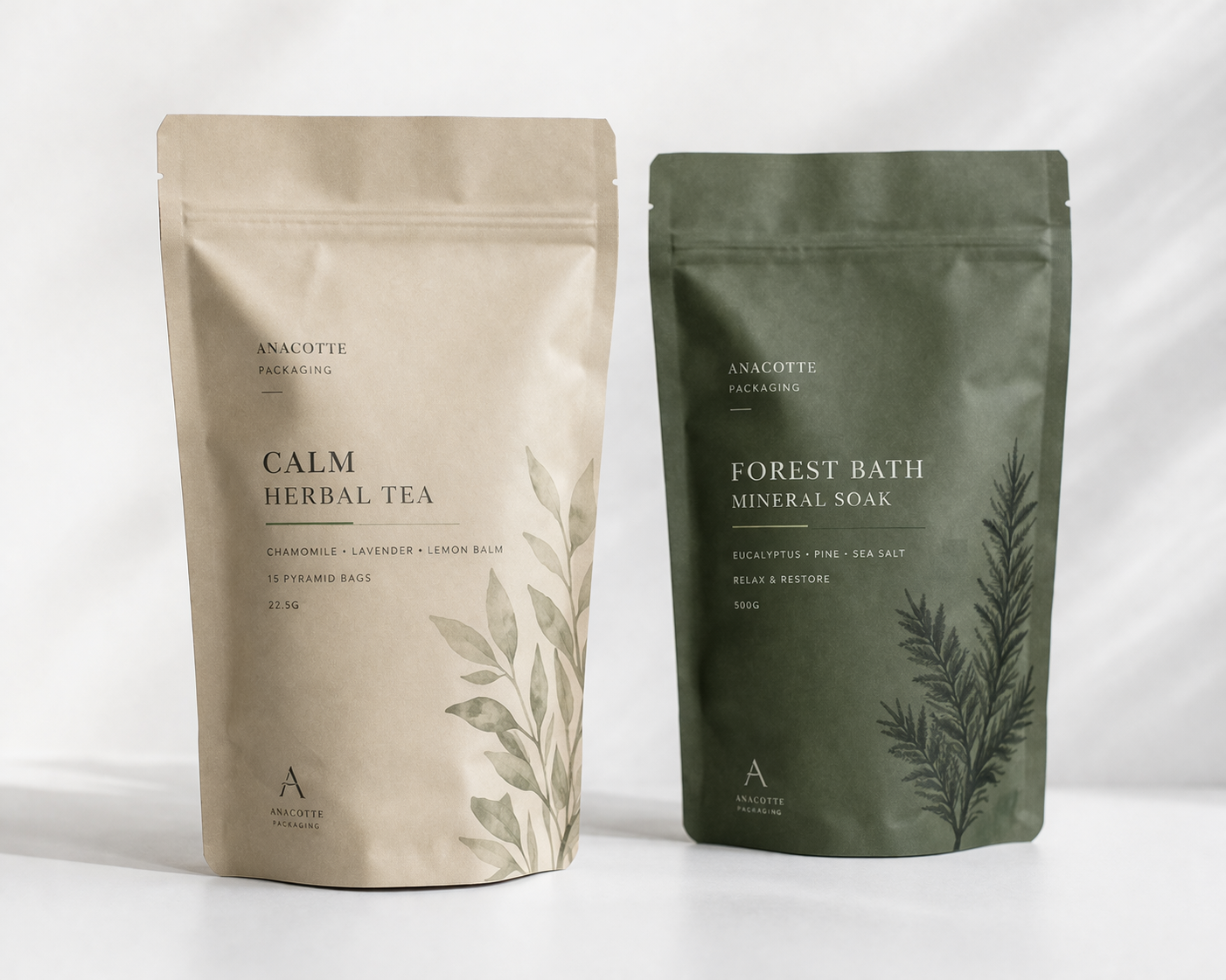
Direct answer: Anacotte Packaging supplies custom flexible packaging for food, beverage, pet care, supplements, beauty, personal care, and household refill products. Available paths include premade pouches, custom stand-up and spout pouches, rollstock, low-MOQ digital printing from 200 pieces for eligible pouch specifications, and larger-volume print programs. Final MOQ, material, and production route depend on the format, barrier, closure, artwork, filling process, and validation requirements.
A useful flexible packaging recommendation starts with the product and filling line—not a generic bag size. Share the contents, fill amount, storage and processing conditions, equipment, distribution channel, quantity by SKU, and shelf-life target before locking the structure or artwork.
Flexible packaging solution paths
| Solution path | Best fit | Confirm first |
|---|---|---|
| Low-MOQ custom pouches | Launches, seasonal designs, and multi-SKU tests | Pouch style, shared material structure, design count, and quantity per SKU |
| Custom stand-up pouches | Snacks, powders, pet products, coffee, and retail-ready packs | Fill weight, dimensions, gusset, zipper or valve, barrier, and shelf display |
| Custom spout pouches | Liquids, purees, sauces, concentrates, and refill products | Viscosity, fill path, fitment, cap, headspace, torque, and leak test |
| Printed rollstock | Form-fill-seal and co-packer production | Machine specification, web width, repeat, eye marks, seal window, and unwind |
| Scale production | Stable artwork and repeat higher-volume programs | Forecast, print method, color targets, change control, and production approval |
Technical parameters to define before quotation
| Parameter | Information to provide | Why it matters |
|---|---|---|
| Product | Food or non-food use, ingredients or chemistry, viscosity, particles, oil, acid, aroma, and sensitivity | Guides compatibility, sealant, barrier, fitment, and testing |
| Process and storage | Cold fill, hot fill, retort, HPP, frozen, refrigerated, ambient, or another validated route | Changes film, seal, fitment, and process requirements |
| Pack geometry | Fill volume or weight, dimensions, headspace, opening, gusset, and display orientation | Affects stability, machinability, consumer use, and shipping |
| Closure and features | Zipper, valve, spout, cap, tear notch, hang hole, window, or handle | Features must fit both production and end use |
| Filling equipment | Machine or co-packer, line path, target speed, grippers, seal jaws, nozzle, and coding | Prevents pouch and line incompatibility |
| Commercial plan | Quantity per SKU, number of designs, artwork status, forecast, destination, and launch date | Determines the practical print and production path |
Validation requirements before scale production
- Confirm product-to-film, ink, adhesive, fitment, and sealant compatibility with the actual formula and storage period.
- Run fill, seal, cap or zipper, dispensing, and production-line trials using the intended equipment and process conditions.
- Test filled packs for seal integrity, leakage, drop, squeeze, compression, storage orientation, and distribution risk.
- Validate barrier and shelf life with the brand, co-packer, and qualified laboratory when product stability depends on oxygen, moisture, aroma, or light protection.
- Approve dielines, readable copy, color expectations, coding zones, and finished-pack appearance before production.
Anonymous project pattern: multi-SKU product launch
Project brief: A growing brand needs several flavors in a retail-ready pouch but does not want excess inventory before demand is known.
Packaging approach: Keep one qualified pouch size and material structure across the range, use digital printing for the initial designs, and separate artwork approval from filled-pack performance approval.
Validation points: Check the highest-risk formula, final fill weight, zipper or closure operation, filled-pouch stability, seal and drop performance, and the most demanding shipping route. This pattern is anonymized and does not disclose any client name, logo, formula, order value, or performance claim.
What to send for a flexible packaging quote
- Product name, ingredients or chemistry, viscosity, particles, and sensitivity.
- Fill volume or net weight, preferred pouch format, target dimensions, and closure.
- Filling and processing method, equipment or co-packer details, storage, and distribution conditions.
- Barrier and shelf-life target, compliance or documentation needs, and required validation tests.
- Quantity per SKU, number of designs, artwork or dieline status, destination, and target timing.
Send your packaging specifications for a quote. If the format is not final, compare custom stand-up pouches, custom spout pouches, low-MOQ custom packaging, and the pouch filling-machine compatibility guide.
Flexible packaging FAQ
What does a flexible packaging company need before recommending a pouch?
The minimum useful brief includes the product, fill amount, pouch or rollstock format, processing and storage conditions, filling equipment, quantity by SKU, barrier target, artwork status, destination, and test requirements.
Can custom flexible packaging start at 200 pieces?
Eligible digitally printed pouch projects can start from 200 pieces. The applicable MOQ depends on the size, structure, features, fitment, print route, and design allocation.
Can one packaging supplier support both launch quantities and scale production?
Yes. The practical route is to define a structure that can be validated at launch, then review digital, flexographic, or rotogravure production as artwork and demand stabilize.
Request quote support
Send product specs for a packaging recommendation
Tell us your product, target pack size, barrier needs, quantity, artwork status, and timing. We will help you narrow the right packaging direction before you lock the spec.
Get direction on pouch type, film structure, closure, finish, and shelf-life risk before locking a specification.
Share your target run size so we can compare digital, custom, and bulk production trade-offs.
Include filling method, pack size, material preference, artwork status, and launch timing for a more precise reply.