

Digital Printing vs Gravure Printing: Which Is Better for Custom Pouch Packaging?
When a CPG brand starts looking for custom packaging, one of the first questions is usually about quantity.
How many bags do we need to order?
Is there a plate fee?
Can we print five different SKUs?
Can we change the design later?
How fast can we launch?
These questions usually lead to one bigger decision: digital printing vs gravure printing.
Both printing methods can produce high-quality custom pouch packaging. But they are designed for very different business situations.
For large brands producing the same packaging design at very high volume, gravure printing can make sense. For small and growing CPG brands that need lower quantities, multiple SKUs, faster testing, or seasonal packaging, digital printing is often the better starting point.
At Anacotte Packaging, we help emerging CPG brands create custom flexible packaging with low MOQ from 200 pcs, no plate fee, unlimited colors, and support from AI packaging design to production and delivery.
Quick Answer: Digital Printing vs Gravure Printing
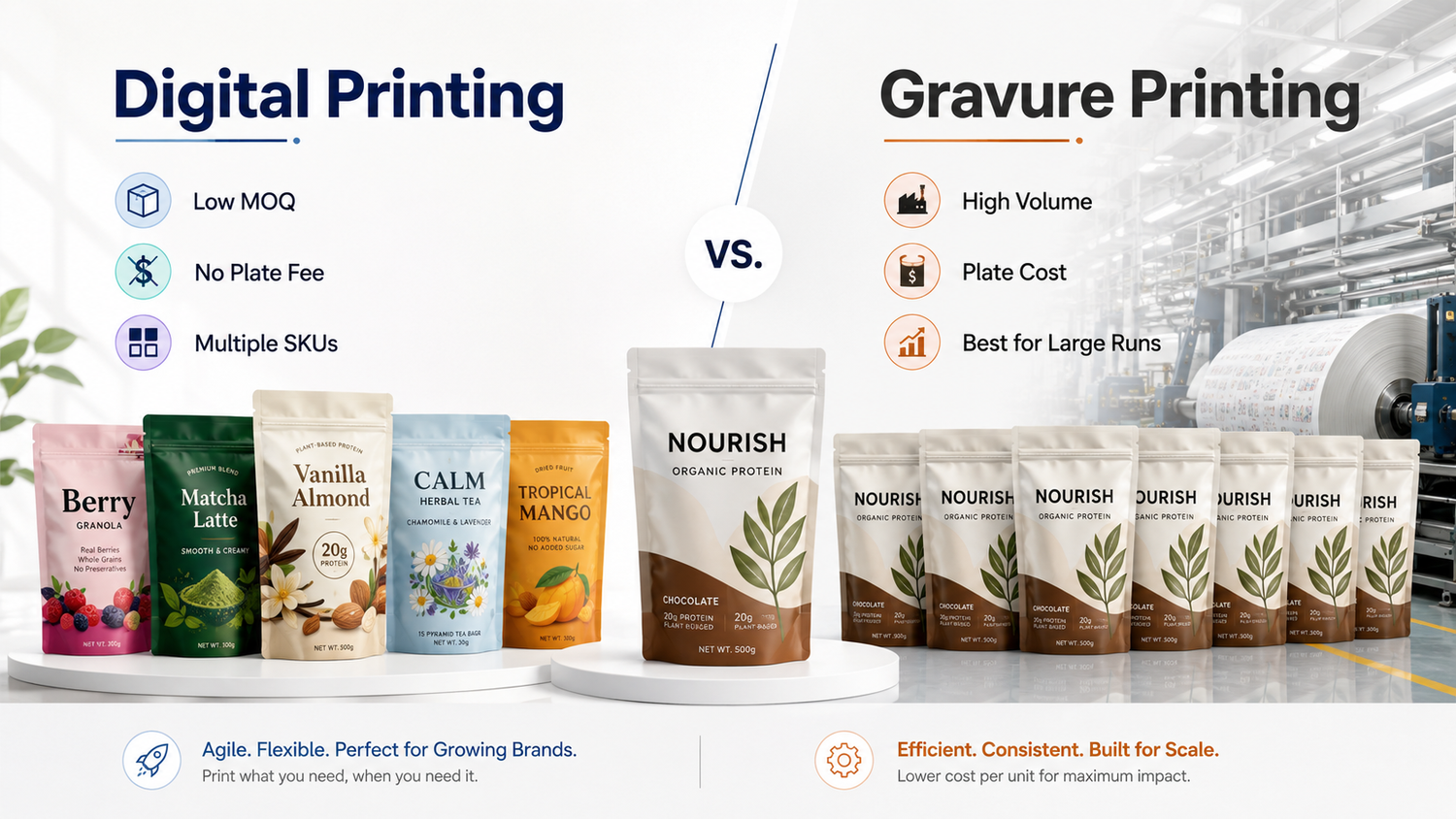
Digital printing is usually better for small CPG brands, first production runs, multi-SKU launches, seasonal packaging, and limited-edition products because it allows low MOQ, no plate fee, and faster design flexibility.
Gravure printing is usually better for large-volume, stable packaging orders where the same design will be printed in very high quantities over a long period of time.
In simple terms:
Digital printing is better for testing and flexibility. Gravure printing is better for mass production at scale.

Digital printing vs gravure printing comparison for custom pouch packaging
What Is Digital Printing for Packaging?
Digital printing is a printing method where artwork is printed directly onto packaging film without the need for traditional printing plates.
This makes it especially useful for brands that want to print smaller quantities or multiple designs. Instead of investing in printing cylinders or plates for each SKU, brands can print different designs more flexibly.
For custom pouch packaging, digital printing is often used for:
- first production runs
- small-batch packaging
- seasonal product drops
- multi-flavor launches
- subscription-exclusive SKUs
- influencer or retail sample kits
- Kickstarter or Indiegogo product launches
- packaging tests before scaling
For example, a snack brand with five flavors may not want to order 10,000 bags per flavor. With digital printing, that brand can start with a smaller run, test customer response, and scale the best-performing SKUs later.
This is why digital printing is often a strong fit for low MOQ custom packaging.
What Is Gravure Printing for Packaging?
Gravure printing is a traditional high-volume printing method that uses engraved cylinders to transfer ink onto packaging film.
It can produce excellent print quality and consistent results, especially for very large orders. Once the cylinders are made and the design is finalized, gravure printing can be efficient for long production runs.
However, the setup process is more involved. Each design usually requires printing cylinders or plates, which creates upfront costs. If you have many SKUs, each SKU may require its own setup. If you want to change the design later, new setup work may be needed.
For large brands with stable packaging designs and high-volume demand, this can be perfectly fine.
But for early-stage CPG brands, it can create problems:
- high minimum order quantity
- plate or cylinder fees
- less flexibility for design changes
- higher risk if the product does not sell
- more expensive to test multiple SKUs
Gravure printing is not “bad.” It is just often built for a later stage of the business.
Digital Printing vs Gravure Printing: Key Differences
| Factor | Digital Printing | Gravure Printing |
|---|---|---|
| Best for | Small runs, testing, multi-SKU launches | Large-volume mass production |
| MOQ | Can start from low quantities, such as 200 pcs | Usually much higher |
| Plate fee | No plate fee | Usually requires plate or cylinder cost |
| Multi-SKU flexibility | Very strong | More expensive for many designs |
| Design changes | Easier to update | More difficult after cylinders are made |
| Lead time | Often faster for small runs | Longer setup before production |
| Unit cost at very high volume | Higher than gravure at scale | Lower at very large volume |
| Ideal users | Startups, DTC brands, Shopify brands, Kickstarter brands | Mature brands with stable demand |
The biggest difference is not only print quality. It is business flexibility.
A large brand wants efficiency.
A small brand needs flexibility.
That is why the right printing method depends on where your brand is in its growth journey.

Why Small CPG Brands Often Choose Digital Printing
For small brands, the early stage is full of uncertainty.
You may still be testing product-market fit. You may not know which flavor will sell best. You may be preparing for your first retail meeting. You may have a great product, but the packaging design is still evolving.
In that situation, digital printing can reduce risk.
Instead of committing to thousands of bags for one design, you can start smaller and learn from the market.
A coffee roaster can test three seasonal blends.
A pet treat brand can launch chicken, salmon, and beef recipes.
A supplement brand can test five flavor designs.
A candy brand can create different packaging for gummies, sour candies, and functional sweets.
This kind of flexibility is difficult with traditional printing because each design may require setup costs.
With digital printing, brands can move faster and make better decisions after real customer feedback.

Multiple custom printed pouch packaging designs made with digital printing and no plate fee
The Plate Fee Problem
One of the biggest challenges with gravure printing is the plate or cylinder fee.
In packaging production, the plate fee is an upfront setup cost for creating the printing tools needed for a specific design. If you only have one design and a large order, that cost may be spread across many units.
But if you have several SKUs, the cost adds up quickly.
Imagine you are launching five flavors:
- Strawberry Gummies
- Lemon Gummies
- Berry Gummies
- Peach Gummies
- Watermelon Gummies
If each flavor needs its own gravure setup, you may have to pay separate setup costs before you even begin production. You may also need to meet a high MOQ for each flavor.
For an early-stage brand, that can be too much risk.
Digital printing removes this barrier because there is no plate fee. This makes it much easier to build a complete SKU line without committing to huge quantities too early.
At Anacotte Packaging, this is one of the main reasons brands use digital printing for custom flat bottom pouches, quad seal pouches, and side gusset bags.
When Digital Printing Makes the Most Sense
Digital printing is especially useful when your brand needs speed, flexibility, or smaller starting quantities.
It is a strong fit for:
First Production Runs
If you are producing packaging for the first time, you may not want to order a large quantity before testing demand.
Multiple Flavors or Recipes
If your product line has several SKUs, digital printing allows each one to have its own design without separate plate fees.
Seasonal or Limited-Edition Packaging
Holiday flavors, summer drops, subscription exclusives, and influencer collaborations often need smaller production runs.
Retail Buyer Samples
If you are preparing samples for retail buyers, you may need professional packaging before committing to mass production.
Shopify and DTC Brands
Online brands often test quickly. Digital printing allows packaging to evolve as the brand learns from real customers.
Crowdfunding Campaigns
Kickstarter and Indiegogo brands often need packaging for first production runs, not massive long-term inventory.

Low MOQ custom packaging for first production runs and small CPG product launches
When Gravure Printing Makes More Sense
Digital printing is not always the best answer.
If your brand already has a stable best-selling product and needs very large quantities of the exact same packaging design, gravure printing may become more cost-effective.
Gravure printing can make sense when:
- your design is finalized
- your SKU is stable
- you need very high volume
- you are ordering the same design repeatedly
- you want to reduce unit cost at large scale
- you are not planning frequent artwork changes
For example, if a mature brand needs hundreds of thousands of identical snack bags every month, gravure printing may be the right choice.
This is why we do not think of digital printing and gravure printing as enemies. They serve different stages.
A practical approach is:
Use digital printing to test, launch, and refine. Use gravure printing later when demand is stable and volume is high.
That is often the smartest packaging path for growing CPG brands.
Example Launch Scenarios
Example 1: A Coffee Roaster Launching Seasonal Blends
A coffee roaster wants to release three seasonal blends for the holidays. Each blend has its own name, origin story, and tasting notes.
With gravure printing, the brand may face high setup costs and large MOQs for each design.
With digital printing, the brand can produce smaller runs of custom coffee bags, test demand through Shopify and local cafes, then reorder the best-selling blend later.
For this type of launch, coffee bags with valve are usually a better fit with digital printing.

Example 2: A Pet Food Brand Testing New Recipes
A pet food startup wants to test chicken, salmon, and lamb recipes. The team is not sure which formula will sell best.
Ordering a large quantity of packaging for each recipe may create unnecessary risk.
With digital printing, the brand can create three professional designs, produce a smaller quantity of each, and collect customer feedback before scaling.
This is useful for pet food, dog treats, cat treats, freeze-dried meals, and functional pet nutrition.

Example 3: A Supplement Brand Launching Multiple Flavors
A supplement brand wants to launch vanilla, chocolate, strawberry, matcha, and cookies & cream flavors.
Each flavor needs a different color system, but the brand wants the packaging to feel consistent as a family.
Digital printing allows the brand to create multiple designs under one visual system without paying separate plate fees for every flavor.
This is especially helpful for protein powder, collagen, creatine, greens powder, hydration blends, and functional wellness products.

Best Pouch Types for Digital Printing
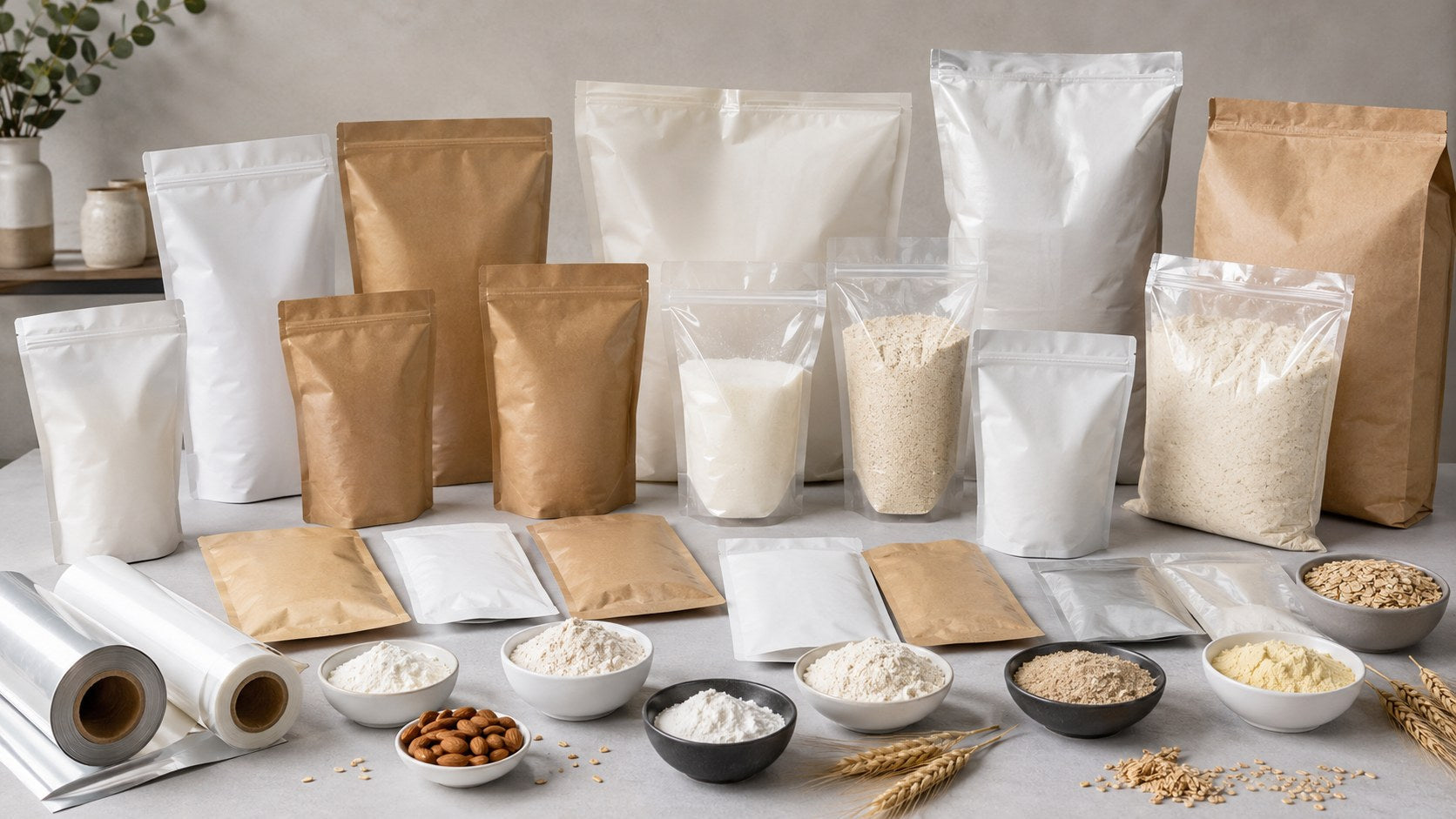
Digital printing works across many flexible packaging formats. The best pouch type depends on your product, fill weight, shelf strategy, and user experience.
| Product Type | Recommended Pouch Type | Why It Works |
|---|---|---|
| Coffee beans | Side gusset bags, flat bottom coffee bags, coffee bags with valve | Helps protect aroma and improve shelf presentation |
| Gummies and candy | Stand-up pouches or flat bottom pouches | Strong visual appeal for colorful products |
| Pet food | Quad seal bags, flat bottom pouches, side gusset bags | Better for higher capacity and premium structure |
| Protein powder | Quad seal pouches or side gusset bags | Suitable for larger powder fill weights |
| Granola and snacks | Flat bottom pouches or stand-up pouches | Good shelf presence and resealable freshness |
| Tea | Side gusset bags or flat bottom pouches | Good for bulky loose leaf tea and premium branding |
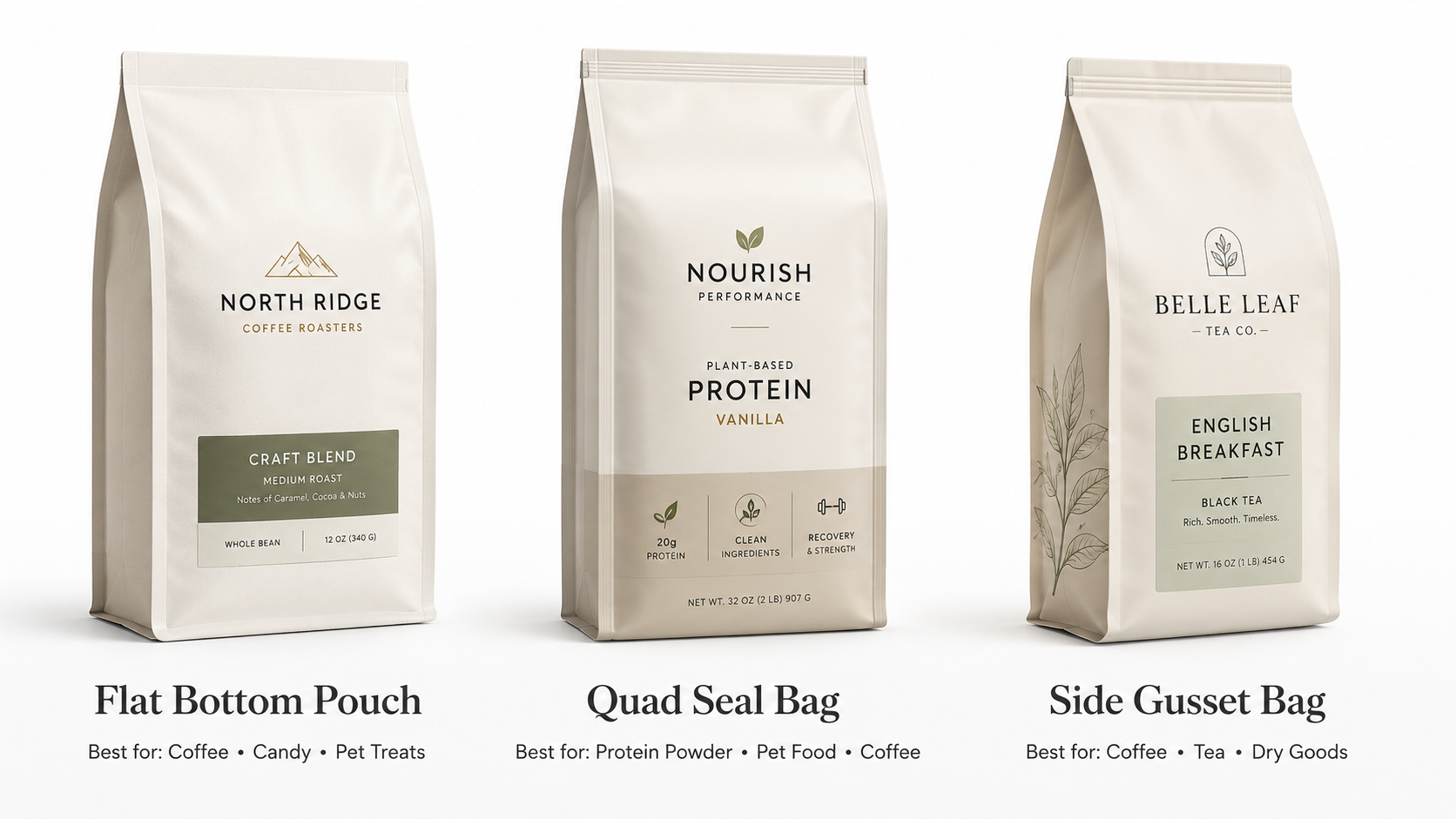
For brands still choosing a format, it may help to compare flat bottom pouches, quad seal bags, and side gusset bags before finalizing the design.

Comparison of flat bottom pouches quad seal bags side gusset bags and stand up pouches for digital printing
Digital Printing Is Also Better for AI Packaging Design Workflows
One of the biggest advantages of digital printing is how well it works with fast design iteration.
Many early-stage brands do not have a complete packaging design system yet. Some only have a logo and a product idea. Some have a Shopify store but no finished packaging. Some have old packaging that needs to look more retail-ready.
This is where AI packaging design can help.
At Anacotte Packaging, we can help turn a product link, logo, or brand direction into packaging concept images. Once the concept is refined, digital printing makes it easier to produce a real small-batch packaging run.
The workflow can look like this:
- Send product link, logo, or current packaging
- Create AI packaging concept directions
- Choose pouch type and size
- Prepare print-ready artwork
- Produce low MOQ custom packaging
- Test the design in real sales channels
- Reorder or adjust based on customer response
This process is much harder when every design change requires new plate setup.
That is why AI packaging design and digital printing work well together. Both are built around faster testing and faster launch cycles.
You can also explore Anacotte’s AI packaging customization platform here: AI Packaging Customization Platform.

AI packaging design workflow from product concept to digitally printed custom pouch packaging
Cost: Which Method Is Cheaper?
The honest answer is: it depends on quantity.
For small quantities, digital printing is usually more cost-effective because there is no plate fee and the MOQ is lower.
For very large quantities, gravure printing may have a lower unit cost after the setup cost is spread across many units.
A simple way to think about it:
- If you are testing a new product, choose digital printing.
- If you are launching multiple SKUs, choose digital printing.
- If you need seasonal packaging, choose digital printing.
- If you need a very large stable order, consider gravure printing.
- If you are not sure which design will win, start with digital printing.
The cheapest option is not always the one with the lowest unit price.
For small brands, the real cost includes risk:
- unused packaging
- design changes
- wrong size decisions
- slow launch timing
- cash tied up in inventory
- separate plate fees for each SKU
Digital printing helps reduce those risks.
Common Mistakes Brands Make When Choosing a Printing Method
Mistake 1: Only Comparing Unit Price
A lower unit price does not help if you have to order far more packaging than you need.
Mistake 2: Ignoring SKU Count
If you have multiple flavors or recipes, the total cost can rise quickly with traditional setup fees.
Mistake 3: Ordering Too Much Before Testing
Many brands change their product size, formula, flavor system, or design after launch. Low MOQ gives more room to improve.
Mistake 4: Treating Packaging as a One-Time Decision
Packaging is part of brand development. It should evolve as the product, customer, and sales channel become clearer.
Mistake 5: Waiting Too Long to Look Professional
Some brands delay custom packaging because they assume it requires massive volume. With digital printing, you can look retail-ready much earlier.
FAQ: Digital Printing vs Gravure Printing
What is the main difference between digital printing and gravure printing?
Digital printing prints artwork directly onto packaging film without plate setup. Gravure printing uses engraved cylinders and is usually better for very large production runs.
Is digital printing good enough for retail packaging?
Yes. Digital printing can produce premium, high-resolution custom pouch packaging suitable for retail, ecommerce, subscription boxes, and product photography.
Does digital printing require a plate fee?
No. Digital printing does not require traditional plate fees, which makes it useful for low MOQ orders and multiple SKU designs.
When should a brand use gravure printing?
Gravure printing is usually better when the brand has a stable design and needs very large quantities of the same packaging over time.
Can I print multiple designs with digital printing?
Yes. Digital printing is ideal for multiple flavors, formulas, seasonal designs, limited editions, and small-batch product launches.
What is the MOQ for digitally printed custom packaging?
At Anacotte Packaging, MOQ starts from 200 pcs per size or design, depending on the pouch type, material, and project details.
Start with Flexibility. Scale When Ready.
Digital printing and gravure printing both have their place in custom packaging.
If your brand already has stable demand and very large volume, gravure printing may be the right long-term option.
But if you are launching a new product, testing multiple SKUs, preparing a seasonal drop, building a Shopify brand, or creating packaging for your first production run, digital printing is usually the smarter place to start.
It gives you more flexibility, lower starting quantity, no plate fee, and faster room to test.
At Anacotte Packaging, we help CPG brands go from AI packaging concept to digital printing, pouch production, and delivery to the US/EU.
MOQ starts from 200 pcs. No plate fee. Unlimited colors. Multiple SKUs supported.
Ready to test your custom packaging?
Send us your product link, logo, or current packaging. We’ll help create a free AI packaging concept and recommend the right pouch type, material, and starting quantity.

Digital printed custom pouch packaging from 200 pcs with no plate fee by Anacotte Packaging

Laisser un commentaire
Ce site est protégé par hCaptcha, et la Politique de confidentialité et les Conditions de service de hCaptcha s’appliquent.