
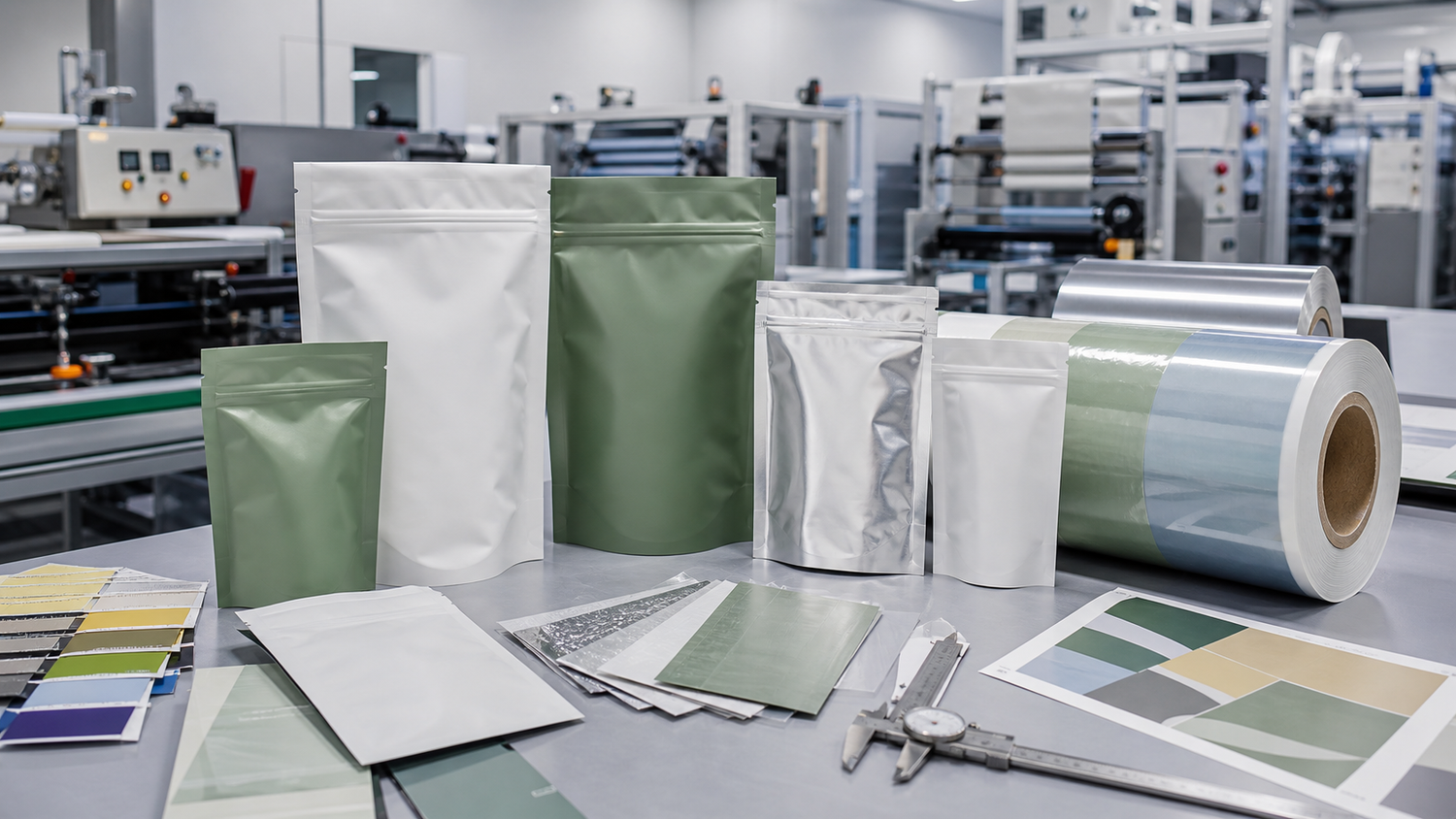
Flexible Packaging Trends 2026: What Brand Teams Should Check Before Changing Pouches
Flexible packaging buyers are hearing the same words from every direction: recyclable, mono-material, low MOQ, digital print, high barrier, lighter weight. The hard part is deciding what to change first.
In 2026, the useful trend is not a single pouch material. It is a stricter way to brief packaging. A brand team should know what the product needs before it asks for a new pouch, and the supplier should be able to explain the tradeoffs without hiding behind broad sustainability language.

Recyclability is becoming a design question, not a slogan
Regulators and retailers are pushing packaging teams toward less waste and more recyclable structures. The European Commission's packaging waste work points in that direction, and design-for-recycling groups such as RecyClass make the same point from a technical angle: recyclability depends on the whole structure, not one word on the artwork.
That matters for flexible packaging because many pouches have historically used several layers to protect aroma, moisture, oxygen sensitivity, grease resistance, or stiffness. A move toward recyclable packaging often starts with PE-based or PP-based structures, but the right answer still depends on the product.
Before changing a pouch, ask two plain questions:
- Which layer is doing the protection work?
- Which feature might make recycling harder, such as a zipper, valve, spout, heavy ink coverage, or incompatible material?

Mono-material pouches need product testing
Mono-material packaging is one of the strongest 2026 topics because it can simplify recycling streams. It also creates a common buyer mistake: assuming a simpler material is automatically ready for every product.
For dry snacks, powders, refills, and some lightweight goods, a recyclable or mono-material structure may be realistic. For products that depend on oxygen, aroma, grease, or moisture control, the change needs testing. Compare it against high barrier packaging before ordering a full production run.
A better supplier conversation sounds like this:
- product type and fill weight;
- shelf-life target;
- oxygen and moisture sensitivity;
- pouch format and closure;
- shipping route and storage conditions;
- claim wording that the brand wants to use.
That list is less exciting than a trend headline, but it prevents expensive rework.
Digital printing is changing how brands test packaging
The second practical trend is print flexibility. Smaller brands are launching more flavors, seasonal SKUs, limited runs, and retail tests. Ordering one large run for every design can lock cash into slow-moving packaging.
Low MOQ packaging and digital printing help solve that problem when the project needs multiple designs or faster iteration. A buyer can test four SKUs, adjust the winner, and avoid treating the first artwork file as a permanent decision.
This does not make every order a digital print order. Gravure can still make sense for large, stable volumes. The 2026 shift is that brands are asking for the print route to fit the launch stage instead of forcing every SKU into the same production model.
Pouch format is part of the trend
Material gets most of the attention, but the pouch format can change shelf presence, filling, shipping, and user handling.
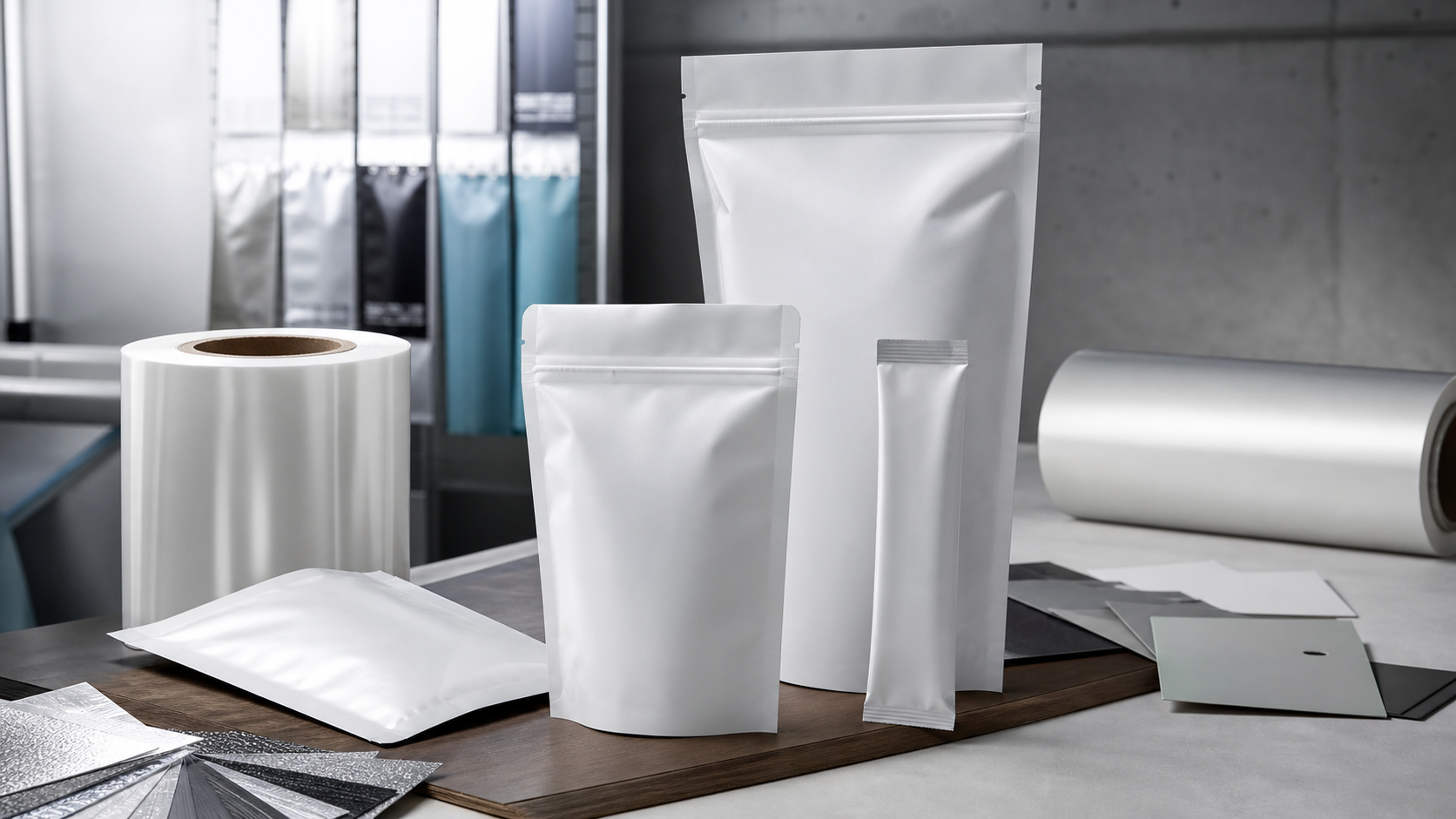
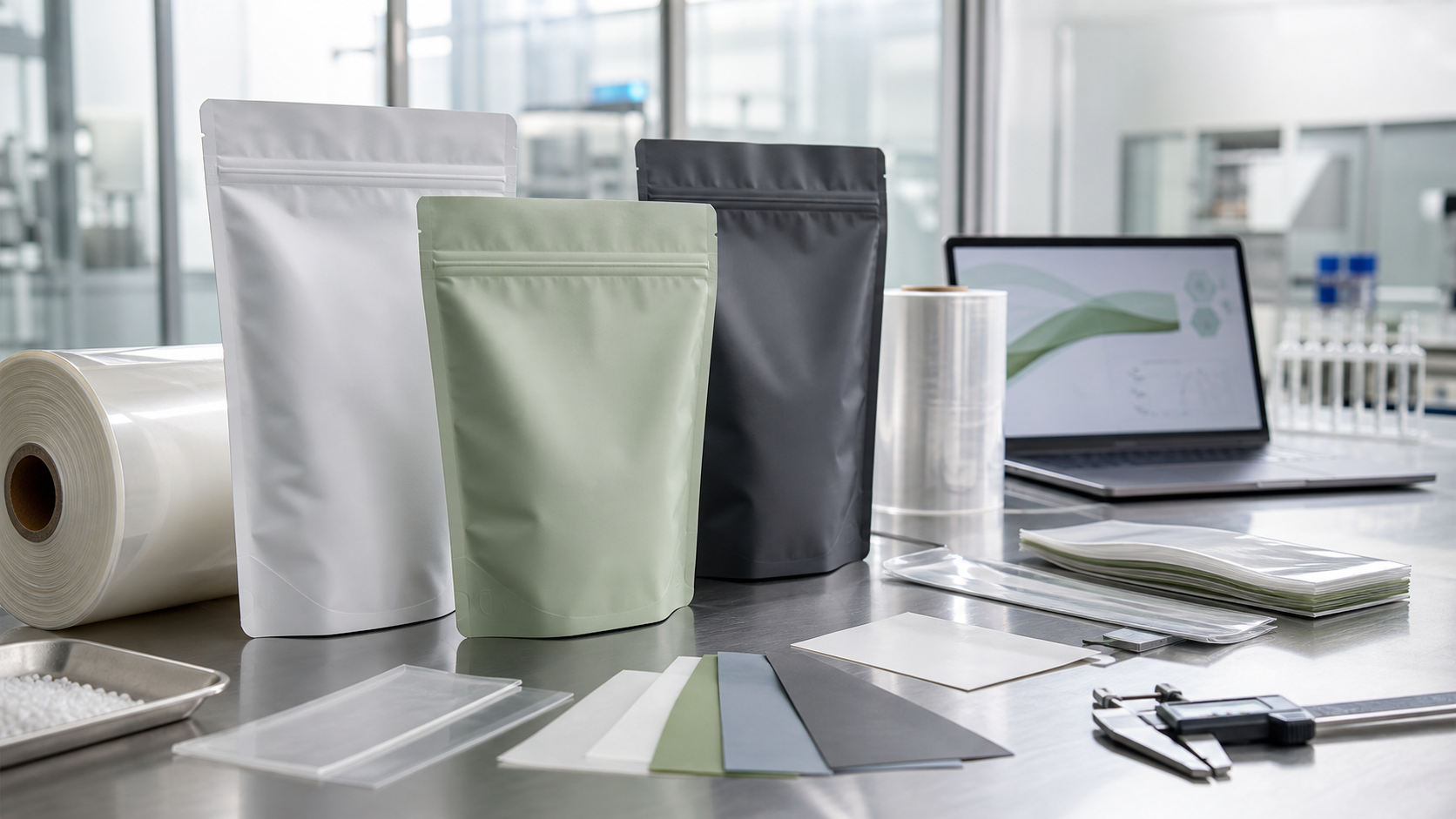
Stand up pouches remain a broad choice for snacks, powders, pet treats, supplements, coffee, and refill products. Spout pouches are gaining use where brands want flexible refill formats for liquids, gels, sauces, personal care, and household products. Flat bottom pouches are useful when shelf stability and a box-like face matter.
The format should be selected before artwork is finalized. A gusset, zipper, spout, valve, hang hole, or tear notch changes the printable area and may affect material choice.

Barrier needs still come first
The flexible packaging market keeps moving toward lighter, cleaner, easier-to-explain structures. That does not remove the basic job of packaging. The pouch must protect the product through filling, packing, shipping, storage, display, and use.
The Flexible Packaging Association describes flexible packaging as a broad category covering bags, pouches, wraps, sachets, and other non-rigid formats. That breadth is useful, but it also means there is no universal structure. A coffee pouch, powder pouch, sauce pouch, and refill pouch may all be flexible packaging while needing very different barrier performance.
If the product is sensitive, start with protection. Then ask whether a recyclable version, a lower-MOQ digital print version, or a format change can meet the same requirement.
Buyer checklist for 2026 pouch changes
Use this checklist before asking for a quote:
- Product category, fill weight, and target shelf life are clear.
- Barrier needs are written down, especially moisture, oxygen, aroma, grease, and light.
- The team knows whether it wants customized packaging, a recyclable structure, a high-barrier structure, or a test run.
- Artwork is checked against zipper, gusset, valve, spout, and seal areas.
- SKU count is separated into test SKUs and scale SKUs.
- Sustainability claims are reviewed against the actual structure and target market.
- The supplier can explain what changes when MOQ, print method, or material changes.

Talk to Anacotte
If you are reviewing flexible packaging for a 2026 launch or packaging refresh, start with the product requirements rather than the trend label. Anacotte Packaging can help compare recyclable structures, high-barrier laminates, pouch formats, and low-MOQ digital printing routes.
You can begin with a packaging consultation, review customized packaging, or request a quote with your product details and SKU plan.

Laisser un commentaire
Ce site est protégé par hCaptcha, et la Politique de confidentialité et les Conditions de service de hCaptcha s’appliquent.