
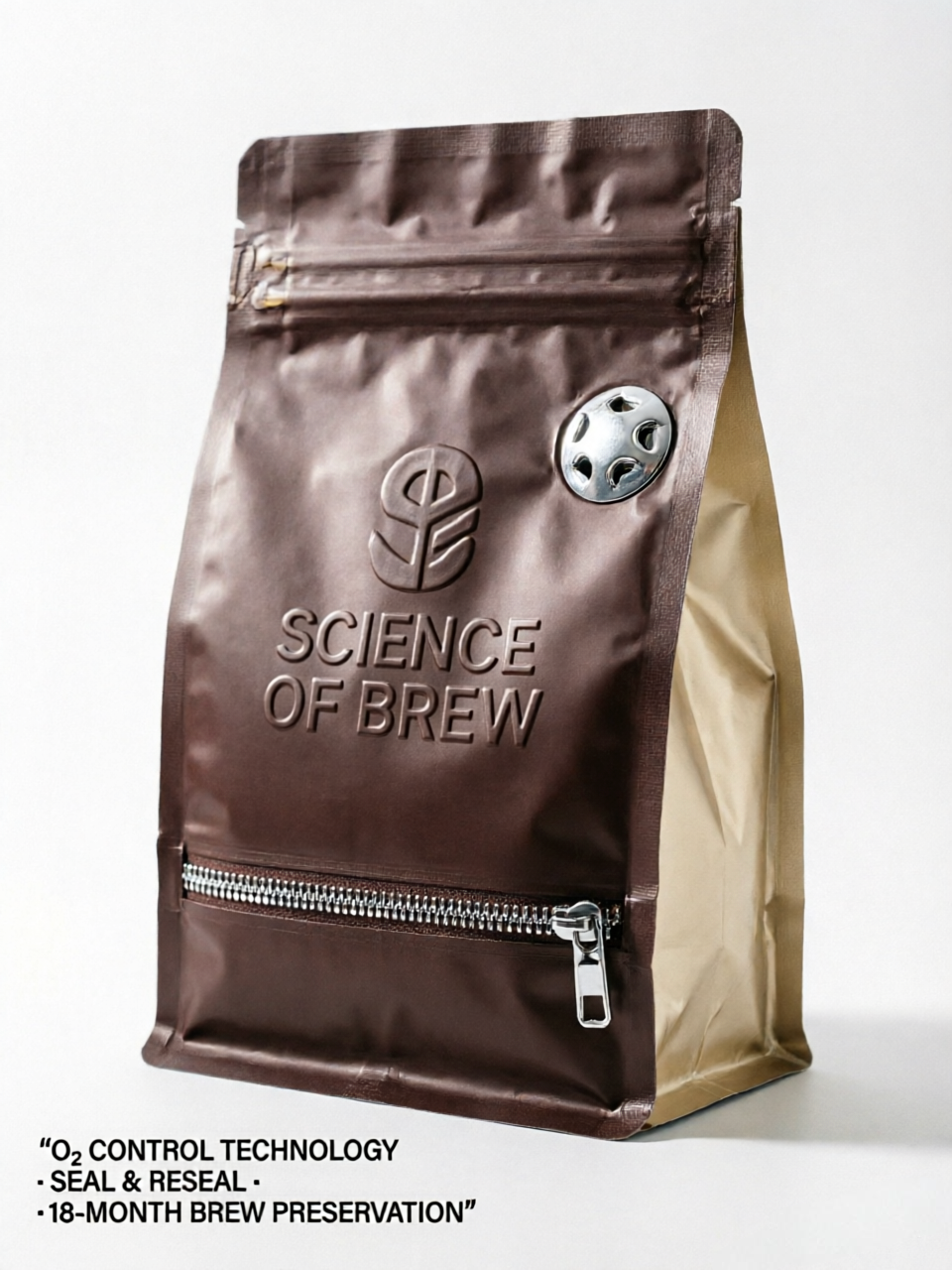
In the fiercely competitive specialty coffee market, the journey from bean to cup is a delicate ballet of chemistry and craftsmanship. For roasters targeting the discerning palates of North America and Europe, packaging is no longer merely a vessel; it is the final, critical step in the roasting process. This guide explores the intersection of preservation science and brand storytelling, detailing how to select high-barrier materials and functional features—like one-way degassing valves and resealable zippers—to shield delicate flavor profiles from oxidation, while using tactile finishes and strategic visual design to command shelf presence and communicate roast authenticity.

The Invisible Enemy: Oxygen and the Preservation Imperative
The moment a coffee bean is roasted, a race against time begins. Roasting transforms the bean’s chemistry, releasing aromatic compounds and, crucially, carbon dioxide (CO₂). Scientific studies show that freshly roasted coffee contains approximately 1–2% CO₂ by weight, generated during Maillard reactions and pyrolysis in the roasting process.
This post-roast degassing is essential for flavor development, or "resting," but it presents a paradox: the packaging must allow CO₂ to escape without letting oxygen in. Oxygen is the arch-nemesis of fresh coffee, rapidly oxidizing volatile oils and rendering vibrant acidity flat. Research indicates that exposure to atmospheric oxygen (about 21%) can increase the rate of coffee degradation by up to 20 times, dramatically accelerating flavor loss.
To combat this, high-barrier materials are non-negotiable. Industry standards suggest that specialty coffee packaging should achieve an Oxygen Transmission Rate (OTR) of ≤0.5 cc/m²/day to effectively protect roasted beans from oxidation.
Standard laminates often consist of layers of polyester (PET), aluminum foil, and polyethylene (PE). The aluminum layer acts as the ultimate shield against both oxygen and light—blocking up to 99% of UV radiation—while the inner polyethylene provides a heat-sealable, moisture-resistant interior.
For the eco-conscious European markets, innovations in bio-based films and degassing valves made from recycled materials are gaining traction, allowing roasters to maintain freshness without compromising sustainability values.
Functional Design: Engineering the Perfect Microclimate
The hallmark of professional coffee packaging is the one-way degassing valve. This small, often overlooked component is a feat of engineering. It allows the built-up CO₂ from freshly roasted beans to vent safely, preventing the bag from bloating or bursting, while maintaining a hermetic seal against external air.
Freshly roasted beans retain significant quantities of CO₂ trapped within their structure, with studies measuring 6–15 mg of CO₂ per gram of roasted coffee, depending on roast level.
Degassing can continue for several weeks after roasting, meaning packaging must manage gas release throughout storage and distribution.
Without a degassing valve, pressure buildup can cause package swelling or rupture, compromising both product integrity and shelf presentation.
For the consumer experience, resealable zippers have transitioned from a luxury to a standard expectation. Once the bag is opened, the battle against staleness resumes. A robust zipper closure allows the consumer to repeatedly access the beans while minimizing the coffee's exposure to ambient air and humidity. This feature is particularly vital for households that consume coffee over a week or more, ensuring that the first cup tastes as vibrant as the last.

The Aroma Paradox: To Smell or Not to Smell
A common consumer behavior, often depicted in marketing imagery, is the act of squeezing the bag and smelling the coffee through the valve. However, this practice is counterproductive to preservation. The valve is designed as a one-way street for gas; attempting to inhale through it can inadvertently draw external air—and moisture—back into the bag, accelerating oxidation.
In addition, studies show that ground coffee oxidizes up to 10 times faster than whole beans due to increased surface area exposure to oxygen.
Educating consumers on the valve’s true function—perhaps through subtle iconography on the bag—is a sophisticated touch that underscores a roaster’s commitment to quality.
Sensory Branding: Tactile Finishes and Visual Hierarchy
While science preserves the coffee, design sells it. In a retail environment or online marketplace, the packaging must communicate the quality of the product within before it is ever opened.
This is where tactile finishes come into play. A soft-touch matte lamination can evoke the sensation of velvet, suggesting luxury and refinement, while a spot gloss over a key illustration can draw the eye to the origin story or a prize-winning accolade.
Visual design must also signal authenticity. For European consumers, who often value tradition and provenance, clean typography, earthy color palettes, and illustrations that nod to the coffee’s geographic origin can build immediate trust. Conversely, American markets may respond to bold, typographic statements or minimalist designs that let the quality of the bean speak for itself.
The key is consistency: the visual language should mirror the flavor profile. A bright, acidic Ethiopian Yirgacheffe should look different from a heavy, chocolatey Sumatran blend.
Light and Temperature: The Silent Degraders
Beyond oxygen, light and temperature are silent assassins of coffee quality. UV radiation accelerates the breakdown of aromatic compounds and flavor molecules, while elevated storage temperatures accelerate oxidation reactions and staling.
Research suggests that UV exposure can accelerate photo-oxidation reactions several times faster than storage in darkness, significantly degrading flavor compounds over time.
This is why the aluminum layer in laminate packaging is so crucial—it blocks virtually all light exposure and protects the chemical stability of the roasted beans.
Furthermore, packaging design should instruct consumers on proper storage. A simple icon indicating “Store in a cool, dark place” can go a long way toward ensuring the consumer experiences the coffee as the roaster intended.

Sustainability: The Ethical Imperative
In 2024 and beyond, sustainability is no longer a niche concern but a core requirement, particularly in progressive coffee markets across Europe and North America.
Packaging that cannot be recycled or that contributes heavily to landfill waste is increasingly unacceptable to environmentally conscious consumers. As a result, roasters and packaging manufacturers are exploring recyclable mono-material pouches, compostable films, and bio-based plastics.
However, these solutions often involve a trade-off. Multi-layer laminates deliver superior barrier performance, while many recyclable structures still struggle to match their oxygen and moisture protection capabilities.
The “perfect” coffee package therefore balances three competing priorities:
- Product freshness and shelf life
- Consumer convenience
- Environmental responsibility
Some innovative brands are even pioneering “return-to-roaster” programs, where consumers mail back used packaging for centralized recycling—turning sustainability into a community-building initiative.
The Narrative of Origin
Finally, the best coffee packaging tells a story. It moves beyond mere regulatory compliance (net weight, roast date, lot code) to communicate the narrative of the bean itself.
This might include:
- the name of the farm
- the altitude of cultivation
- the varietal
- the processing method
- or even the farmer’s name
By printing the roast date prominently—rather than relying solely on a vague “best by” date—roasters invite consumers to participate in the freshness journey.
Transparency like this strengthens consumer trust and reinforces the craft ethos that defines specialty coffee.

Conclusion
Coffee bean packaging is a complex ecosystem where material science, functional engineering, and graphic design converge. It is simultaneously the guardian of flavor and the ambassador of the brand.
By selecting high-barrier materials with low oxygen transmission rates, incorporating degassing valves to manage CO₂ release, and designing packaging that communicates origin and authenticity, roasters can ensure their coffee arrives in the cup in peak condition.
Ultimately, great coffee packaging does more than protect beans—it preserves the story behind them.

Laisser un commentaire
Ce site est protégé par hCaptcha, et la Politique de confidentialité et les Conditions de service de hCaptcha s’appliquent.