
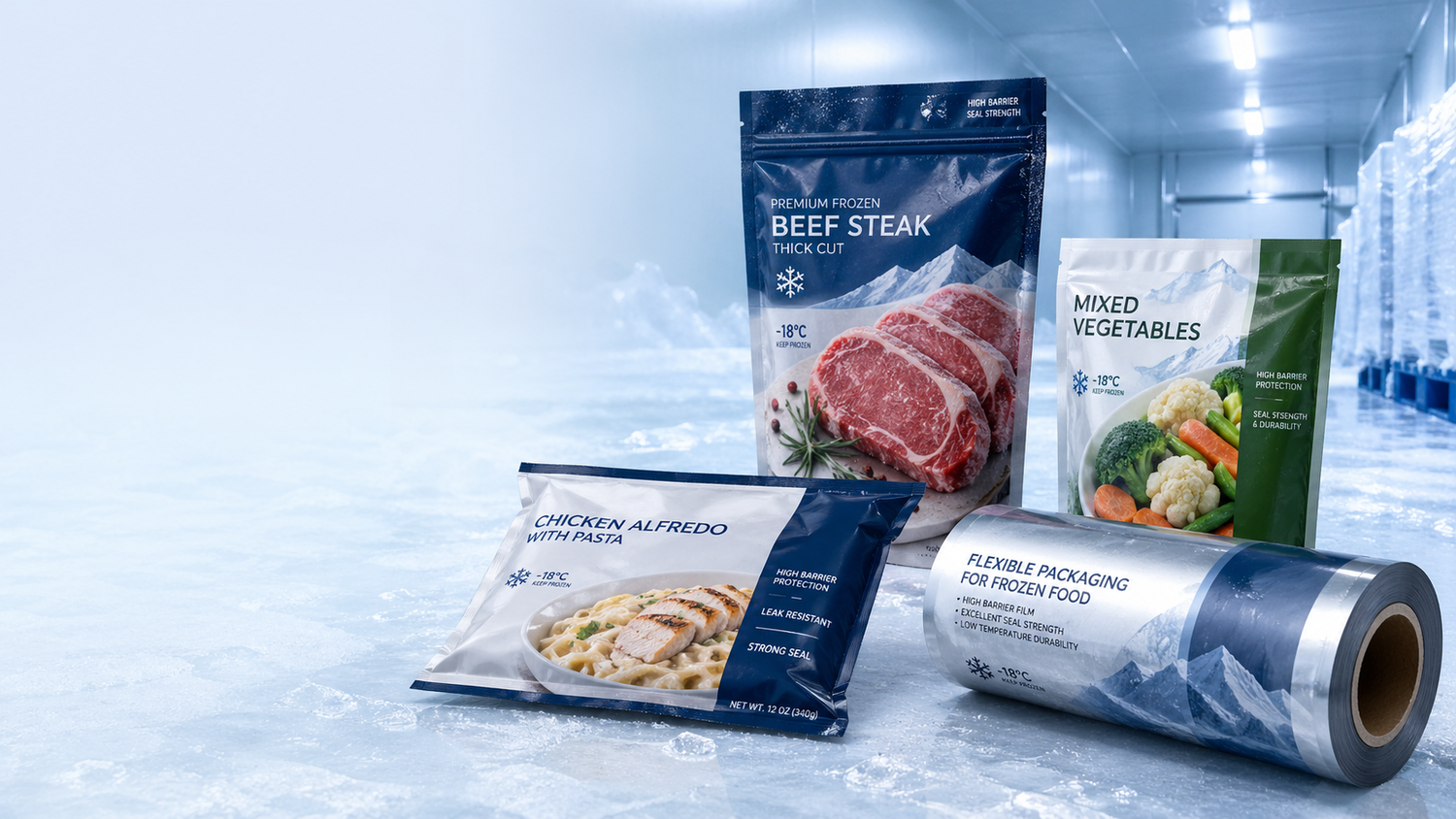
Frozen food packaging needs to endure more than the design to hold the food unit. It needs to endure cracking due to the low temperatures, protection from the from the moisture and the transfer of oxygen,, and seal all of the edges during processing, freezing, and the transit from the producer to the distributor. For those sourcing, the best the packaging choice should focus on three things preliminary, which are the cold chain conditions, the packaging of the level of the barrier, and if the goods packaged that are going to be sold to the customer are unit-packaged or if the goods are flow packaged on rollstock lines.
Frozen food packaging is flexible packaging that is designed be brought to breaking points and to stay sealed to keep the food from losing quality. The level and quality of the seal needs to be determined at the level of the packaging used, the food that is being transported, the quality of food. The planned use of the packaged goods needs to be considered the packaging used in the barrier level, the planned use of distribution, and the unit’s use.

What’s important when it comes to frozen food packaging?
For many frozen food categories, buyers typically start with three major concerns:
- Cold-crack resistance: Will the packaging be frost-crack flexible?
- Barrier protection: Can the packaging be designed to provide moisture protection, loss protection, and reduced exposure to freezer burn and oxygen exposure?
- Seal stability: Will the seal stand the test of time through freezing, handling, and the entire cold-chain transport?
Seal issues are a widespread concern when it comes to frozen food packaging. Failures can happen because of things like sharp edges and aggressive handling, along with seal contamination and misaligned packaging cross-sections. This is why many buyers prefer to compare high barrier, frozen packaging options early in the process rather than at the more material selection phase.

How do the types of products influence the packaging decisions?
Frozen Meat and Seafood Products
In many cases, buyers expect stronger barriers and more reliable, hermetic packs for frozen products due to surface moisture, fat, or sharp frozen edges. Buyers are concerned about or require the packaging to be puncture resistant, and seal consistent, especially while dealing with long cold-chain transport or export.
Frozen Pre-packaged Meals
In other cases, frozen food products such as pre-packaged meals, and other affordable meal building blocks like frozen meal components, frozen meal prep, and sauces, span reheating, boilability, and freezer performance. If the food is to be reheated after frozen storage, then specify the use case from the start, rather than as a secondary requirement to consider.
Frozen Fruits & Vegetables
When it comes to vegetable and fruit packs, moisture management, aesthetics, and packing format are considered. From the consumer's standpoint, whether it is a pouch, bag, or box, moisture barriers, seals, and storage are crucial. With this in perspective, buyers often evaluate stand up pouches for frozen foods when they are looking for a format ready to hit the retail floor.

What are the most popular packaging formats?
The correct format is determined by the sales avenue and production method. Rollstock is chosen for high-speed packaging and pre-made pouches for low-MOQ projects and retail displays of brands with different SKU sizes.
- Rollstock packaging: suitable for automated packaging and large production runs with seamless integration into packaging lines.
- Stand up pouches: used for display at retail, convenient for the consumer, and suitable for resealing frozen products
- Stand up pouches: used for display at retail, convenient for the consumer, and suitable for resealing frozen products
There is also interest in packaging designs that can withstand some cold-chain transportation conditions. Answers to these questions help to visualize packaging formats faster than artwork.

What should the buyers have ready before requesting a quote?
- Identify the product category: mixed frozen line, vegetables, fruit, meat or prepared meal.
- Ascertain whether the packaging will be constructed on rollstock film systems or premade pouches.
- Specify the knot conditions during storage and transportation.
- Clarify whether the packaging pouches will be sealed in the steam or boil ree
- Explain the target size and the line in terms of variety of different SKUs.
A project-oriented quote becomes easier to formalize with a thorough brief with suggestions for packaging a retail pouch, stronger structural barriers, or a rollstock system to ensure efficiency.

What Frozen Food Packaging Services Do Anacotte's Offer?
Anacotte Packaging works with any flexible packaging project that requires durability at low temperatures, barrier performance, and reliable sealing. For brands looking to package frozen foods, the most productive sourcing usually comes from matching the type of product to the right packaging structure early, instead of trying to fix seal or cracking problems after packaging production commences.
When it comes to relating frozen food product types to cold chain solutions, chances are, they’ll be packaging different things. We recommend starting with high barrier packaging, roll stock, and stand-up pouches, and comparing flexible packaging in each of those categories.
Frozen food packaging guidance for items like frozen meat, prepared frozen foods, and frozen vegetables can be obtained by submitting a packaging requirements profile. Include the product type, the package size and the transport requirements, and the end-users package requirements. We’ll recommend a structure that meets your process and market needs.

Frequently Asked Questions
What is the best packaging for frozen food?
The best packaging for frozen food varies for the product type and packing format and the conditions of the food being stored. Buyers usually choose pouch and roll stock options based on packing needs and examine cold-crack resistance, level of barriers, and seal stability.
Do frozen foods need high barrier packs?
Many frozen foods need high barrier packaging, especially for freezer burn protection, retention of appeal, and for food that is frozen for an extended period. The need for barrier protection is directly related to the food type being packed, the shelf life of the food, and the cold chain.
Why do frozen package seals fail?
Poor seals can occur from seal area contamination, poor seal barrier structure, rough handling of packaging during the supply chain of the product, and lastly, distorting the pack during the freeze and transport process. Therefore, seal stability should be examined in combo with the product and process.


Laisser un commentaire
Ce site est protégé par hCaptcha, et la Politique de confidentialité et les Conditions de service de hCaptcha s’appliquent.