
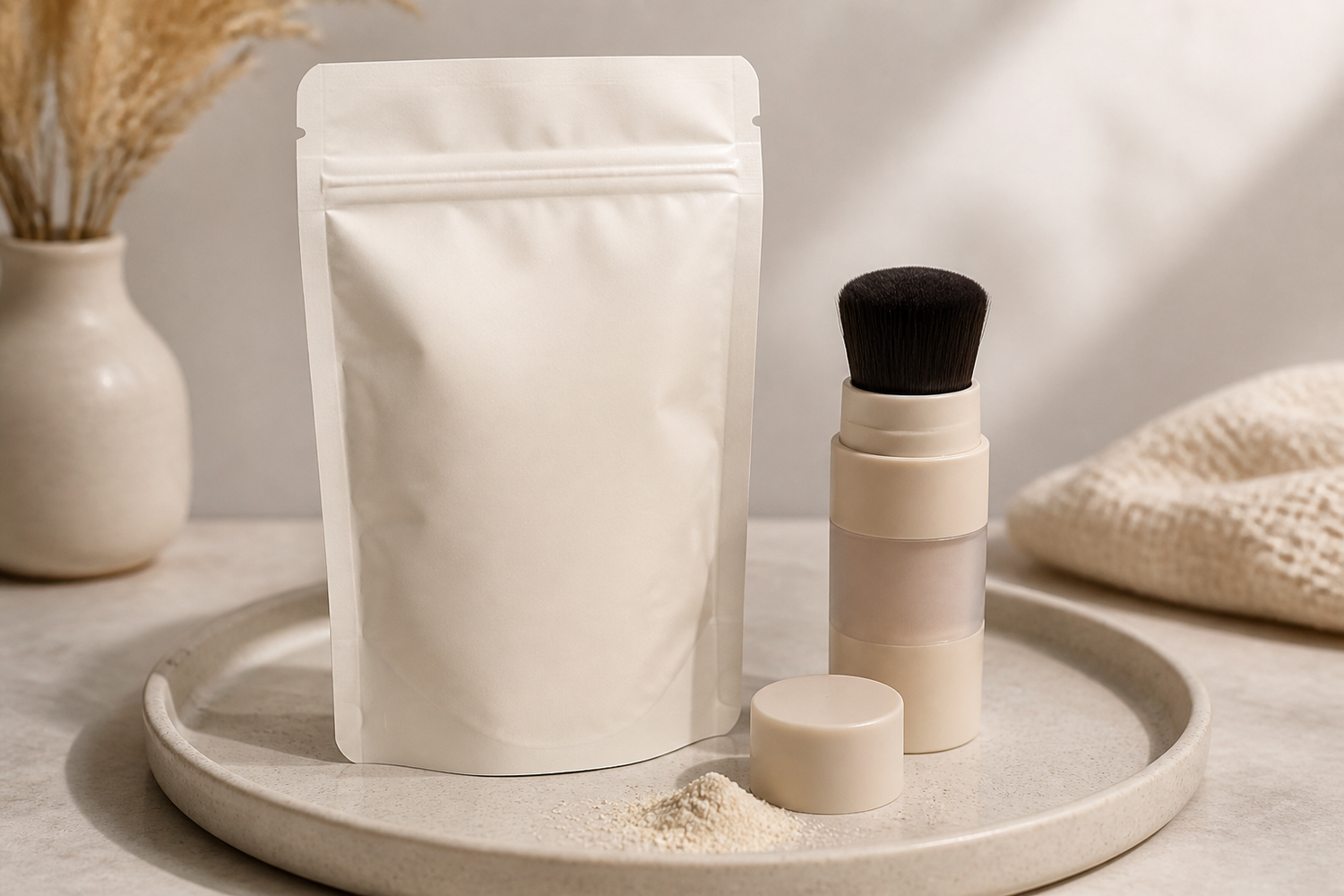
A dry shampoo refill pouch is part of a two-package system. The pouch stores and transfers powder; the reusable bottle, pump, shaker or brush applicator controls how the customer uses it. If those two packages are specified separately, a refill can spill, bridge at the opening, overload the applicator or leave the customer without clear instructions.
This guide is for U.S. indie hair-care brands, cosmetic founders and contract packers preparing a non-aerosol dry shampoo powder refill. It is a packaging-planning resource, not cosmetic-safety, formulation, environmental, shelf-life, regulatory or legal advice. Confirm the finished system with the responsible person, formulator, filler, packaging supplier and qualified regulatory reviewers.

1. Define the powder and destination container together
“Dry shampoo powder” does not tell a supplier how the product flows, how sensitive it is to humidity, how much volume a target weight occupies or whether the destination bottle can accept a clean refill. Build a product-and-container card before choosing the pouch size.
Record:
- Formula owner and product classification review.
- Target net weight, measured bulk volume and expected variation.
- Particle size range, flow observations, dust, clumping and fragrance considerations known to the technical team.
- Destination container type, usable capacity and opening dimensions.
- Pump, shaker, brush or other dispensing mechanism.
- Number of refills expected from one pouch and whether the pouch must reclose.
- Filling method, intended storage and ecommerce or retail route.
These inputs identify questions for samples. They do not prove that a specific film, zipper or applicator is compatible with every formula.
2. Size the pouch around a controlled refill event

A pouch that holds the required weight can still be awkward to pour. Make filled samples using the actual or technically representative powder. Compare the pouch opening with the destination bottle, then measure how much control the user has when the pouch is tilted.
Review working fill rather than nominal volume alone. The packet needs enough headspace for sealing and handling, but excessive empty space can make the refill feel underfilled or allow powder to move into the zipper and tear area. Confirm where the powder must stop below the reclosure and final heat seal.
If one pouch contains two refills, mark and test that use. The first pour should leave the remaining product in a package that can be closed, stored and opened again under the intended conditions. A one-time laboratory pour does not represent weeks in a bathroom cabinet.
3. Test opening, powder transfer and reclosure separately
Turn “easy to refill” into observable steps. Write the method before the test:
- Open the pouch using the intended tear path without scissors unless instructions specify them.
- Open and stabilize the destination container.
- Pour the target amount directly or through the planned funnel or insert.
- Record bridging, pulsing, dust, spills and powder left in the pouch corners.
- Check whether powder contacts the zipper track or heat-seal zone.
- Close the pouch and destination container using the proposed consumer instructions.
- Repeat after a defined storage interval if the pouch contains another refill.
Use a clean test mat or tray so transferred and spilled powder can be observed. Compare the filled destination container with its working capacity; overfilling can affect a pump or brush mechanism even when the bottle can physically hold more product.
Record pouch revision, powder lot, target and actual transfer weight, destination container, environmental condition, sample count, observations and disposition. The formula and filler should define acceptance criteria. Packaging alone cannot establish cosmetic safety or dispenser performance.
4. Build the cosmetic label map before approving the dieline

The FDA summary of cosmetics labeling requirements describes U.S. requirements for product identity, accurate net quantity, business information, ingredient declaration and applicable warnings or directions. The detailed Cosmetics Labeling Guide addresses principal display panels, information panels, prominence and type size.
Use those sources to start a review, not to copy a universal label. Pack size, outer packaging, claims, ingredients and whether the product is a cosmetic, drug or both can change the obligations.
Reserve zones for:
- Principal display: product identity and accurate net quantity.
- Information panel: responsible business, ingredient declaration and applicable information.
- Refill directions: destination container, preparation, transfer, cleanup and reclosure instructions approved by the responsible teams.
- Warnings and claim qualifications: based on the actual formula, intended use and substantiation.
- Variable code: meaningful lot or control code on a tested surface.
- Production areas: seals, zipper, tear path, folds and print safe zones.
Assign separate owners for formula/ingredient copy, regulatory review, environmental claims, artwork, production feasibility and final release. A visually approved proof does not silently approve the product claims.
5. Review storage, coding and refill claims
The FDA cosmetics GMP guidelines and inspection checklist state that raw and primary packaging materials should be handled to prevent mix-ups, contamination and decomposition from conditions including moisture. They also address written filling instructions, label identity and permanent code marks. Convert that into project questions: how are empty pouches stored, how is the powder protected during filling, how are labels controlled and how does the finished lot code connect to production records?

Test the pouch in the intended storage route, including the bathroom or travel environment if that is part of normal use. Look for powder in the zipper, changes in opening behavior, panel scuffing, code legibility and user handling. Product stability and microbiological or chemical safety remain the responsibility of the qualified product team; a package-use check is not a stability program.
If the artwork says “refillable,” verify that the brand actually provides a reasonable refill path. The FTC Green Guides summary says marketers should not make an unqualified refillable claim unless they provide a way to refill the package, such as selling a product consumers can use to refill the original. Recyclable, compostable and broad environmental claims require their own substantiation and qualifications. Do not infer them from a kraft look or from the word “refill.”
6. Send a quote-ready refill-system brief
A useful request for quote includes:
- Formula form, technical owner and representative powder availability.
- Target weight, measured bulk volume and known flow or humidity questions.
- Destination bottle or applicator, opening dimensions and working capacity.
- Refills per pouch, transfer method, need for a funnel and reclosure plan.
- Pouch format, target dimensions, filling route and seal-zone requirements.
- SKU list, quantity per design, artwork status and variable-code method.
- Label, warning, ingredient and environmental-claim review owners.
- Retail or ecommerce route, sample stages, target date and open questions.
Review Anacotte’s dry shampoo powder refill pouch direction, then request a project-specific quote with the powder, destination-container and test details above. Treat material and sustainability preferences as questions until the final system is reviewed and validated.
Frequently asked questions
Is fill weight enough to choose a dry shampoo refill pouch size?
No. Measure the powder’s bulk volume, working headspace and pour behavior, then test the pouch with the destination container and filling process.
Should every powder refill pouch have a zipper?
Not automatically. A zipper may be useful when the pouch contains more than one refill. A single-use refill may need a different opening. Confirm the intended consumer route and test filled samples.
Does “refillable” mean the pouch is recyclable or compostable?
No. Refillable describes a refill system. Recyclable and compostable claims concern different evidence, structures and local systems and must be reviewed separately.
What should be ready before requesting samples?
Prepare representative powder, target weight and volume, destination container, refill count, transfer method, label and claims status, SKU quantities, filling route, storage conditions and a written pour-test plan.

Laisser un commentaire
Ce site est protégé par hCaptcha, et la Politique de confidentialité et les Conditions de service de hCaptcha s’appliquent.