

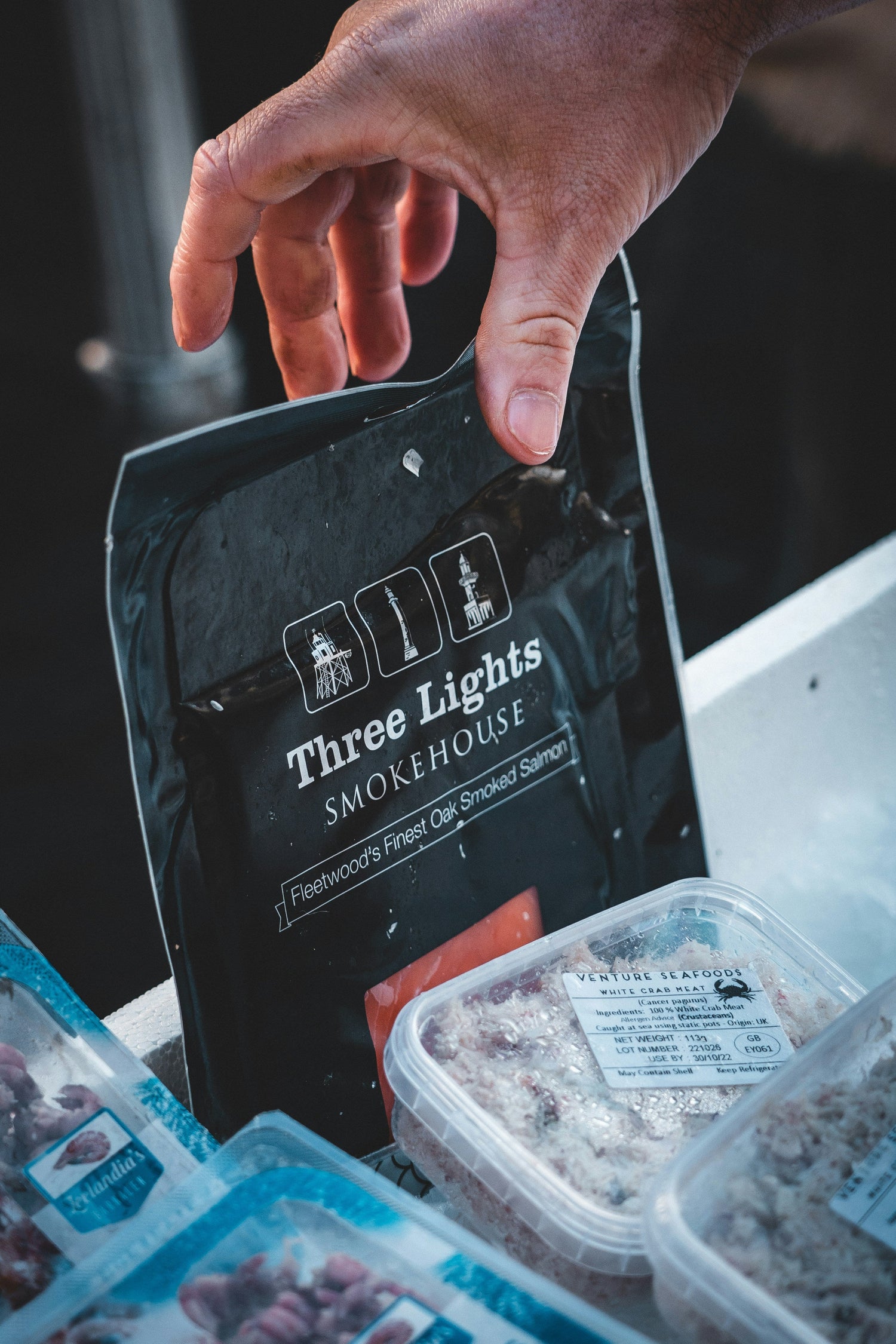
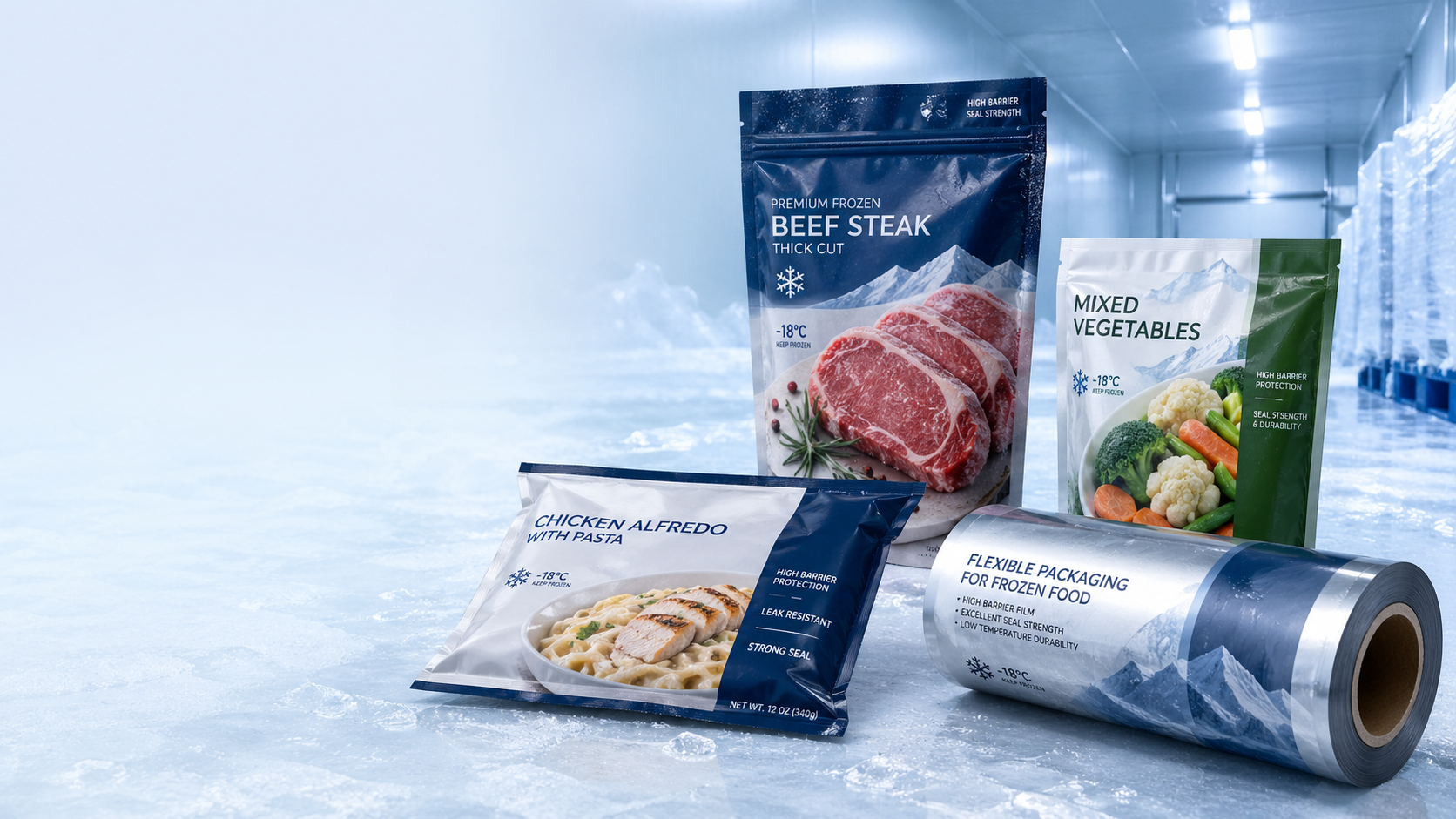
Freezer packaging has to face many challenges. Whether moisture or gas transfer, freezer packaging must protect products. It must withstand handling, transport, and storage, and it must protect seals. Packaging for brands offering frozen vegetables, prepared meals, or frozen meats, packaging must address three concerns: what is the structure for the protection to resist cracking in the cold, how does the seal protect the quality of the product, and how well do the seals hold through the cold chain. When choosing packaging formats, consider the options for high barrier frozen and select packaging based on the product, size of the pack, and the distribution model.
Flexibility is important in packaging frozen foods. This is important to protect the integrity of the packaging and the quality of the food. USDA and FDA food safety guidance state that food can be stored for an indefinite time if the temperature is maintained below freezing. While food can be stored indefinitely, the quality of the food will decline, making it important to choose the right flexible packaging, seals, and barrier materials. Packaging materials for frozen foods are important to protect the integrity of the packaging and quality of the food.
Packaging for frozen foods is critical to their success. American Frozen Food Institute says that 40% of people use frozen foods daily or every few days and buy freezing meals with a specific day or meal in mind. This has also been noticed by the U.S. Census Bureau, highlighting the large volume of frozen food production in the U.S. Frozen food packaging is a main commercial packaging alternative, and it is a requirement in the field of food packaging.

How does frozen food packaging differ from room-temperature packaging?
Many industries have used pouches/flexible packaging for frozen products, but pouches/flexible packaging simply do not have the right design for frozen products. Such frozen applications create different storage stresses. At low temps, packaging can get more brittle/flexible or lose seal integrity. Flexing ruptures seals, and other less obvious ruptures lead to quality evaporative losses and/or aromatics and barrier integrity, which contribute to the freezer burn, dehydration, and aging of the product. The consumer experience upon post-thawing or heating is compromised.
The procurement brief for frozen goods is mainly concerned with the industries four following priorities:
- Packaging should be thin yet low-temperature-resistant to avoid cracking or splitting under freezing conditions.
- There is a need for improvement in the protective seal barrier to limit evaporative loss, less exposure to air to eliminate freezer burn.
- Freezing, shipping, and final in-store handling may affect the integrity of the packaging seals a product is protected with.
- The case containment transit, the entire cold chain and even on a consumer scale, means the packaging must be able to endure layers of stacking.
As a general example of frozen packaging, the National Center for Home Food Preservation mentions durability, leakproof abilities, and other containment features (such as moisture, vapor resistance) but also notes the low temps create brittleness. Home freezing and commercial freezer specifications may differ, but the underlying logic is in line with freezing specifications.

Why are cold-crack resistance, barrier, and seal integrity the main buying priorities?
Cold-crack resistance
One of the most common frozen-food complaints is not a dramatic package failure but a subtle one: film splitting at corners, stress-whitening, cracked folds, or damage around seals after the pack has been frozen and moved through transport. This is why buyers often evaluate frozen food packaging based on toughness at low temperature rather than thickness alone. A thicker film is not automatically the better film if the structure is not suitable for freezer conditions.
Barrier performance
Barrier matters because frozen storage protects food safety but does not stop quality loss forever. The FoodSafety.gov cold storage chart explains that properly frozen foods can be kept indefinitely for safety, but freezer storage recommendations are still relevant for quality. That quality window is one reason many buyers look first at high barrier pouch structures for frozen proteins, prepared meals, and value-added products.
Seal stability
Seal complaints are especially important in frozen food because a pack may be filled warm or ambient, sealed, then cooled and frozen, which can change film behavior and increase stress during handling. If the seals are inconsistent, the brand may see leakage, poor pack appearance, or secondary complaints about freezer burn. In commercial terms, seal stability is not just a converting issue. It is a returns, quality, and customer-experience issue.
Transport and cold-chain stability
Cold-chain packaging decisions also have a compliance and logistics dimension. The FDA’s FSMA sanitary transportation rule focuses on preventing food-safety risks during transport, including failures in temperature control and inadequate equipment sanitation. The related eCFR provisions also reference pre-cooling and suitable transport conditions for foods requiring temperature control. For packaging buyers, this means frozen-food packaging must be specified as part of a cold-chain system, not as a standalone bag.

What is the difference in the packaging for different types of frozen foods like meat, prepared meals, and vegetables?
Packaging for frozen meat
Frozen meat is likely to have the toughest packaging demands, and for good reason. These have to keep the meat fresh and safe to eat; that requires strong barriers and seals. Packaging for frozen meat must be resistant to punctures and should ideally be reliable for use in freezing, refrigerating, and distributing the meat. It's especially important to have packaging durable packaging for meat that can be divided into portions, large joints that contain sharp bones, or be prepared to be vacuum sealed.
Typically, meat packaging is designed around an optimal moisture and oxygen barrier, and the sealing structure is designed around a specific packaging format. For faster production lines, rollstock packaging that is designed for freezing is often chosen for greater sealing and filling efficiency. For specialty meat products that cater to retail, a sealed pouch could potentially be a better format to suit merchandising and marketing.
Packaging for frozen prepared meals
Packaging for prepared frozen meals is perhaps most likely to be the most complex. Frozen meals must also have strong seals, great looking packaging, and in some cases, plastic that can withstand the heating and cooking processes. These meals also need to be designed to withstand freezing, steaming, or boiling, as well as microwaving. The cooking demands paired with freezing demanding can result in packaging that is weaker and not meant to withstand those cooking processes.
Complaints regarding leakage, pouch distortion, and the movement of product inside the packaging are also more common. For that reason, it is traditionally a more complex and multifaceted approach for brands to favor strong constraining packaging structures and not leave the design of those to be determined later.
Packaging of Frozen Vegetables and Fruits
Packaging that is appealing to the customer and able to withstand the rigors of a commercial freezer is an essential component to all of these products. Packing and sealing to avoid freezer burn is an important consideration as these things will lead to customer dissatisfaction. The National Center for Home Food Preservation has a clear vision about the sealing materials and techniques that will promote good preservation. These techniques also apply to the commercial packaging that is used within multi-perishable products.
As an example of this, the clever use of re-sealable, stand up, packaging for retail frozen products is a format that has made a convenient offering to the consumer. From the design perspective of a production line and product merchandising, there is an almost endless number of combinations that the packaging materials and formats will offer. From a frozen retail product, the stand -up pouch has proven to be one of the most effective formats.

What pouch formats and materials are recommended for food packaging for freezing?
Regarding frozen food packaging, you can't settle on a one-size-fits-all solution regarding materials because of variations in type of product, filling methods, sealing methods, and barrier requirements, end-use, and so on. Typically, in practice, before engaging in a packaging process, buyers narrow down unclear packaging guidelines by answering a handful of questions, such as:
- Does the product require a barrier to oxygen and moisture?
- Will the pack be frozen only, or frozen and heated in-pack later?
- Is the packaging done on a high-speed forming line, or is it supplied as pre-made bags?
- Does the product need strong drop resistance or a zipper? Does it need to be puncture resistant?
- Is there a seal leak, freezer burn, or film cracking issues?
| Application | Main Packaging Priority | Common Format Direction |
|---|---|---|
| Frozen meat or seafood | Barrier, seal integrity, puncture resistance | High-barrier pouch or rollstock |
| Prepared meals | Seal stability, graphics, possible cook-in-pack considerations | Premade pouch or rollstock depending on line setup |
| Frozen vegetables and fruit | Moisture control, pack efficiency, retail convenience | Rollstock or stand-up pouch |
| Retail multipacks or resealable formats | Shelf presence, reclose convenience, freezer durability | Stand-up pouch with suitable structure |
Packaging choices for rollstock and stand-up pouches for automated lines and retail pouches with reclosable or differentiated visial barriers can vary and so can frozen food packer solutions. Prior to packaging design approval, barrier-sensitive categories packaging should be reviewed from high barrier packaging perspectives.

What should buyers consider before requesting a quote for freezer food packaging?
When buyers provide a packaging specification, beyond flexible packaging dimensions, packaging for frozen foods moves faster. The handling, sealing, and end use of frozen food packaging can vary so enough detail helps the supplier provide the right level of recommendation.
- What is the product category: mixed frozen food, vegetables, fruit, prepared meals, seafood, meat?
- Is the product frozen, or is it in-pack, reheatable, steamed, microwavable or boiled?
- What are the common pack sizes and target dimensions?
- Is the product packed using a form-fill-seal line or premade-pouch?
- What are the current complaint points, if any, and include: poor graphics, freezer burn, damaged during transport, film cracking, seals are leaking?
- Does the product go through cold-chain distribution for a long duration or is it exported?
- Is the product for one-time use or is it designed for a single use pack? Is a reclosable feature intended?
Such questions guide packaging for frozen foods as failure is the opposite of success. For example, packaging to withstand the rigours of distribution in a local market, resilience to the local store's freezer and the rough handling of retail so that packaging is not damaged is required to meet the customer.

How does Anacotte Packaging facilitate the packaging of frozen foods?
Anacotte Packaging collaborates on flexible packaging that balances freezer durability and temperature barrier, reliable seals, and optimal pack format. In frozen applications, the optimal packaging comes from closely matching the film structure to the specific conditions of the cold-chain and end use, instead of just selecting a standard compressible structure.
While evaluating options, consider barrier packaging designed specifically for frozen products, rollstock options for automated lines, and stand up pouches for retail frozen packaging. This combined these factors gives your packaging team a more defined scaling structure based on product category, pack size, transport conditions, and sealing expectations.
Have packaging requirements for frozen meals, meat, or veggies? Contact us quoting your product type, pack size, sealing method, cold-chain requirements, and any in-pack heating so the structure will meet your real application requirements.

FAQs
What is the optimal packaging for frozen products?
The optimal packaging is based on the product and line type with certain barrier level requirements. Most buyers initially assess high-barrier needs separately from low-barrier needs, then choose between rollstock and premade pouches based on product filling and selling method.
What causes frozen food packaging to break in the freezer?
The most common reasons include an unsuitable film structure, weak seals, damage at folds or corners, stress, and breakage during cold-chain handling. More critical than film thickness is the low temperature toughness and seal performance.
Do frozen foods always need high barrier packaging?
No, but packaging for most frozen proteins, prepared foods, and premium retail items becomes more effective with stronger barriers to oxygen and moisture. Packaging decisions should be made based on product sensitivity, expected storage time, and previous complaint history related to freezer burn or odor loss.
Can the same frozen package also be used for boiling or steaming?
Not necessarily. If the pack is required to go from frozen storage into boiling water, steam, or microwave heating, this should be made clear at the quoting stage since frozen-pack performance and heat-process performance are separate design criteria.


Dejar un comentario
Este sitio está protegido por hCaptcha y se aplican la Política de privacidad de hCaptcha y los Términos del servicio.