

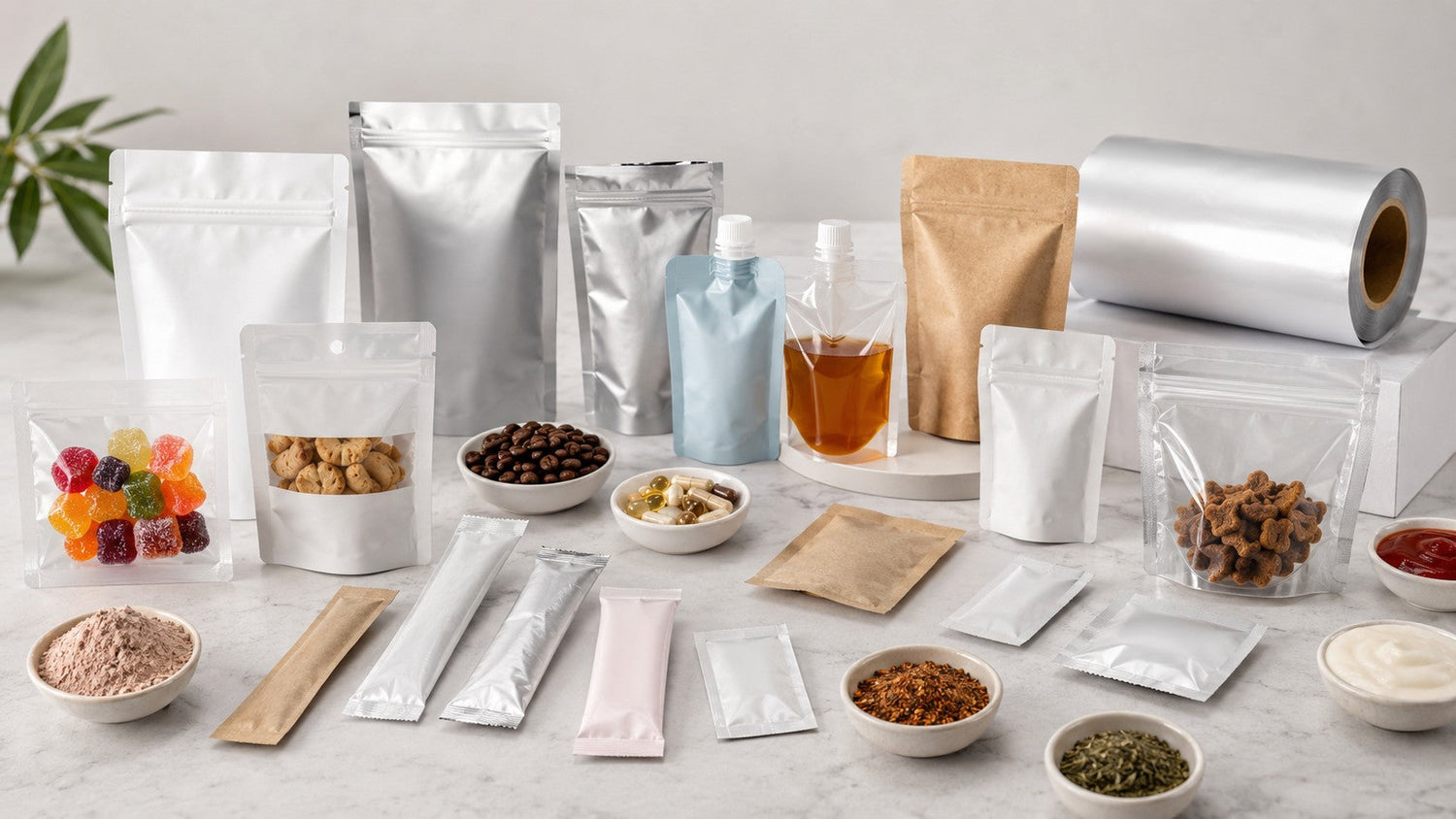
Sample packaging helps brands turn a small portion of product into a practical trial experience. Whether you are preparing snacks, candy, gummies, tea, coffee samples, protein powder, supplements, spices, seasoning, bakery ingredients, pet treats, cosmetics, skincare, sauce samples or powdered drink mixes, the right sample pack can reduce the first-trial barrier and help customers test before buying a full-size product.
Sample packaging can support trade shows, retail sampling, influencer seeding, ecommerce sample inserts, subscription boxes, new SKU testing, seasonal flavor testing, private label testing, B2B distributor samples and gift-with-purchase campaigns. However, sample packaging does not guarantee sales by itself. Results still depend on product quality, offer, audience, channel, timing and follow-up strategy.
Anacotte Packaging supports low MOQ sample packaging projects for startups, ecommerce brands and growing CPG businesses. Buyers can compare custom sample packaging, low MOQ packaging, powder sachet packaging and low MOQ packaging for startup food brands before choosing the final pouch size, material and print method.
Why sample packaging matters for customer acquisition
For new brands, sample packaging is often a lower-risk way to introduce a product before investing in full retail inventory. A small sachet, mini pouch or trial-size pack can be sent in ecommerce orders, included in a sales kit, handed out at events or used to test flavors with retail buyers. For B2B distributors, a clean sample pack can make product presentation more professional and easier to share with decision makers.

Sample packs also help brands test which format, flavor, scent, serving size or message resonates before scaling. For example, a protein powder brand may test 10 g and 20 g sachets; a tea brand may compare 5 g and 15 g sample pouches; a pet treat brand may offer 30 g or 50 g mini packs; and a skincare brand may use 1 ml, 2 ml or 5 ml trial sachets. The key is to match the sample size to the campaign goal, not simply make the smallest possible pack.
Flexible formats are especially useful for sample programs because they can be lightweight, compact, easy to distribute and practical for small portions. The Flexible Packaging Association summarizes flexible packaging advantages such as convenience, product protection and efficient distribution, which are relevant when brands use samples for mailers, trade shows, subscription boxes and retail buyer kits.
Sample packaging formats and best-use cases
Different sample campaigns need different packaging formats. A single-use powder sample may need a compact sachet, while gummies or pet treats may look better in a mini stand up pouch. A sauce sample may need a spout sample pouch or tested liquid pouch structure. For automated packing, rollstock film may be more suitable than pre-made pouches.

| Format | Best For | Buyer Notes |
|---|---|---|
| Three-side seal sachet | Powders, spices, single-use samples | Compact and cost-efficient for small trial portions. |
| Flat sample pouch | Tea, coffee, supplements, small snacks | Good for mailers, sample kits and lightweight product trials. |
| Mini stand up pouch | Gummies, pet treats, premium samples | Better presentation value for retail sampling and influencer kits. |
| Stick pack | Drink powders, collagen, sugar, seasoning | Useful for portion control and easy dispensing. |
| Spout sample pouch | Sauce, puree, liquid samples | Seal and fitment must be tested with the actual product. |
| Small zipper pouch | Multi-use samples, snacks, pet treats | Useful when the sample is not consumed in one use. |
| Rollstock film | Automated sample packing | Confirm film width, seal range, line speed and filling behavior. |
Common sample pack sizes
Sample size should be selected based on product density, serving size, label space and distribution channel. Powder sachets may use 2 g, 3 g, 5 g, 10 g, 15 g or 20 g formats. Spice and seasoning samples often use 1 g, 2 g, 5 g or 10 g. Tea and coffee samples may use 5 g, 10 g, 15 g, 20 g or 30 g. Snack, candy and gummy samples may use 10 g, 20 g, 30 g, 50 g or 100 g. Pet treat samples often use 20 g, 30 g, 50 g or 100 g. Cosmetic and skincare samples may use 1 ml, 2 ml, 3 ml, 5 ml or 10 ml.

Final pouch dimensions can be customized based on fill weight, product density, filling method, seal width, artwork space and distribution channel. A sample pack for a trade show may need a stronger first impression, while an ecommerce insert may need to stay thin enough for parcel packing. A B2B distributor sample may require more technical information than a gift-with-purchase pack.
Material options for sample packaging
Material choice depends on the product and shelf-life expectation. PET/PE can be used for many standard dry food and snack samples. PET/VMPET/PE or PET/AL/PE is often considered for powders, supplements, tea, coffee samples, spices and products needing stronger moisture, oxygen or aroma protection. Kraft/PE and Kraft/VMPET/PE can support a natural look for tea, bakery ingredients, pet treats and specialty food samples.

Clear film or clear window pouches can help customers see snacks, gummies, pet treats or colorful samples, but clear packaging may reduce light protection. Foil sachet material is useful for powders, drink mixes and aroma-sensitive products. Recyclable PE-based options may be suitable for some projects, but recyclability claims depend on final material structure, local collection systems and disposal communication.
For food, supplement and cosmetic sample packs, buyers should confirm food-contact or product-contact material suitability, local labeling requirements, allergen statements, ingredient information and required warning or usage information before production. The FDA explains that food contact substances can include food packaging and its components, such as adhesives, colorants and coatings. For packaged foods, brands should also review FDA food labeling resources, because small sample packs still need enough space for required information.
Low MOQ sample packaging and print paths
Low MOQ sample packaging is useful for startup brands, trial-size launches, seasonal flavors, influencer kits, subscription boxes, private label testing and retail buyer presentations. Low MOQ may be available depending on format, size, material, print method and order quantity. Early-stage brands often start with stock pouches and labels, then move into digital printing or custom printed pouches once the product and artwork are validated.

| Printing Path | Best For | Consideration |
|---|---|---|
| Stock pouch + label | Fastest launch and early testing | Lower setup risk, but less premium than direct printing. |
| Digital printing | Low MOQ and multiple SKUs | Good for trial campaigns, seasonal flavors and small-batch launches. |
| Custom printed pouch | Stronger brand presentation | Requires artwork preparation and production planning. |
| Rollstock printing | Automated sample packing | Best when line compatibility, film width and seal range matter. |
| Rotogravure printing | Mature high-volume sample programs | Higher setup, but suitable for scale and repeat production. |
Matte finish, glossy finish, kraft look, clear window, one-color print and full-color print can all be considered depending on the brand stage. If the project has many flavors or formulas, digital printing can help reduce multi-SKU risk before committing to a large production run.
Common issues to avoid in sample packs
Sample packaging often fails when the pack is designed only around cost and not around use. Common issues include a sample pack being too small for required label information, seal areas that are too narrow, powder leaking from sachets, tear notches that are hard to open, oil or aroma transfer, and clear pouches reducing light protection. Multi-SKU artwork confusion is also common when brands test many flavors at the same time.

For powders and fine ingredients, filling control and seal cleanliness are important because powder can contaminate the heat-seal area. For oily snacks, nuts, pet treats or high-aroma products, barrier selection should be reviewed carefully. For rollstock sample packing, film must run smoothly on the equipment, and buyers should confirm film width, seal temperature range, roll direction and line speed before production.
When sample packaging may not be enough
Sample packaging may not be suitable when the product needs full retail label space, when the product is highly oxygen-sensitive and needs a long shelf life, or when a liquid product has not been tested with the seal or spout structure. Very fine powders need filling control, high-aroma products may need stronger odor barrier, and regulated products may need child-resistant or market-specific packaging.

High-value samples also need careful presentation. A cheap-looking sample pack can reduce perceived quality, even if the product itself is strong. For sustainability claims, brands should avoid broad or unsupported claims. The EPA sustainable materials management resources emphasize lifecycle thinking and more productive material use. The FTC Green Guides are designed to help marketers avoid environmental claims that mislead consumers. For disposal communication, How2Recycle can help brands review how packaging components should be communicated to consumers.
Get a quote for sample packaging
To quote sample packaging accurately, send your product type, target activity, fill weight or volume, sample size, expected quantity, material requirement, barrier needs, print method, artwork status, labeling requirements, packing method and launch timeline. Anacotte Packaging can help compare sachets, flat sample pouches, mini stand up pouches, stick packs, powder sachets, spout sample pouches, zipper sample pouches, kraft pouches, clear pouches, high-barrier pouches and rollstock film.

Ready to create custom sample packaging? Request a quote for low MOQ sample packs for snacks, candy, gummies, tea, coffee samples, protein powder, supplements, spices, seasoning, bakery ingredients, pet treats, cosmetics, skincare, sauce samples and powdered drink mixes.
Frequently Asked Questions
What is sample packaging used for?
Sample packaging is used for trial-size launches, retail sampling, ecommerce inserts, influencer kits, trade shows, subscription boxes, distributor samples and new SKU testing.
What is the best format for powder samples?
Three-side seal sachets, powder sachets and stick packs are common for powders. The right format depends on portion size, filling method, seal control, barrier needs and how the sample will be distributed.
Can I order low MOQ sample packaging?
Yes. Low MOQ sample packaging may be available depending on format, pouch size, material, print method and order quantity. It is especially useful for startups, seasonal flavors and trial campaigns.
Do sample packs need labeling information?
Often yes. Food, supplement and cosmetic sample packs may still need ingredient information, allergen statements, warnings, usage instructions or local labeling details. Buyers should confirm requirements before production.
Which print method is best for sample packaging?
Stock pouch plus label is useful for fast testing. Digital printing is useful for low MOQ and multi-SKU launches. Rollstock printing is better for automated sample packing, while rotogravure is usually better for mature high-volume programs.


Dejar un comentario
Este sitio está protegido por hCaptcha y se aplican la Política de privacidad de hCaptcha y los Términos del servicio.