

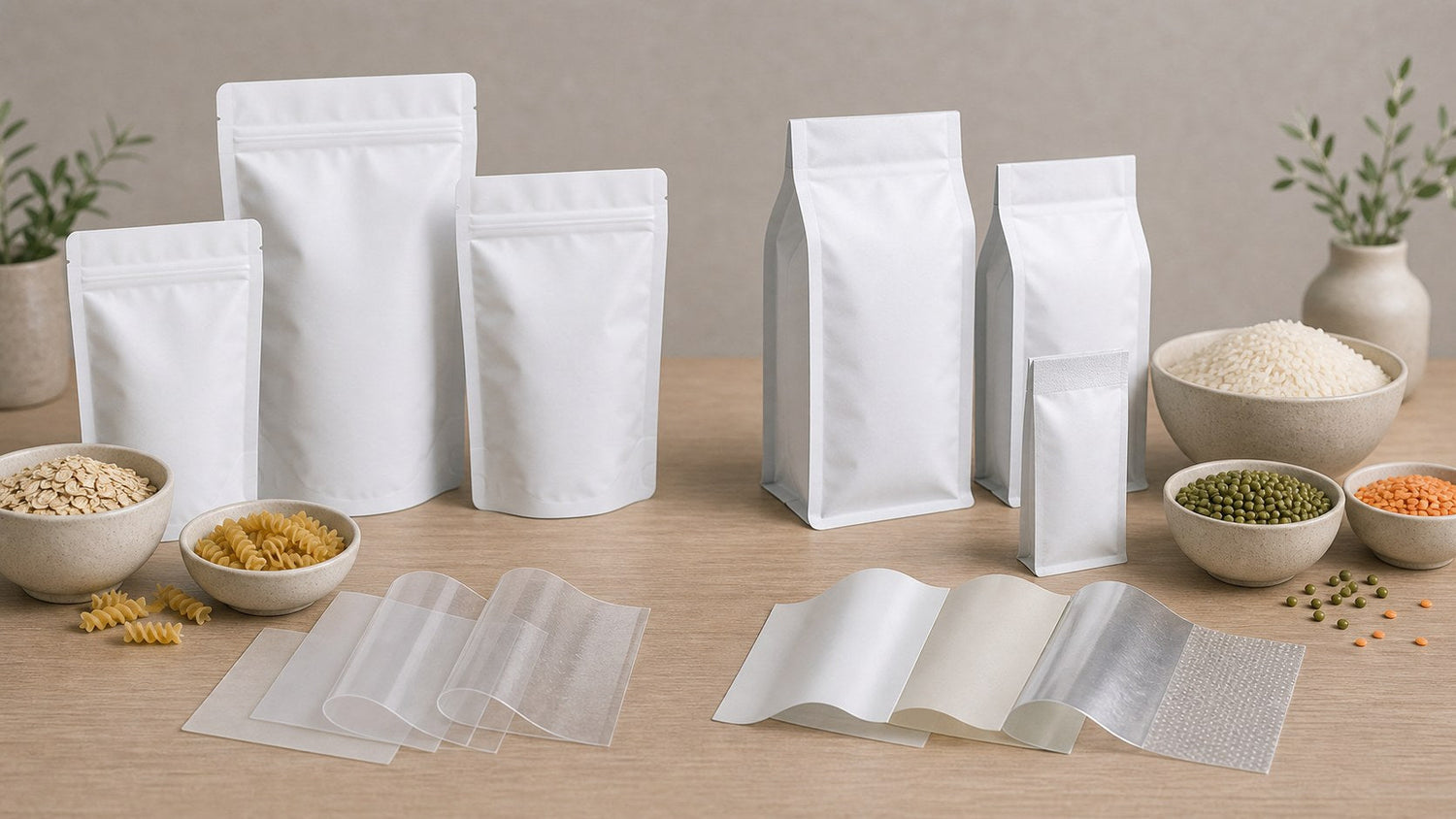
Recyclable packaging vs mono material packaging is often misunderstood because the two terms are related but not identical. Mono material packaging usually means the structure is designed from one main material family, such as PE-based or PP-based film, to improve recycling compatibility where collection and processing exist. Recyclable packaging is a broader claim that depends on the final structure, format, local recycling access, sorting systems, and claim substantiation.
The most important buying rule is this: mono material can support a recyclable packaging strategy, but it does not automatically make a pouch recyclable in every market. A package sold in the United States, Canada, and EU may face different collection systems, labeling expectations, and claim standards. The FTC Green Guides summary, EPA information on sustainable materials management, and European Commission resources on packaging waste can help buyers understand why claims need context.
Anacotte Packaging supports low MOQ recyclable packaging discussions, digital printing for multi-SKU launches, and custom quotes based on size, material, artwork, and quantity. Buyers can compare recyclable packaging, high barrier packaging, stand up pouches, recyclable vs compostable flexible packaging, and low MOQ packaging before finalizing claims or materials.
What recyclable packaging means in practice
Recyclable packaging is not just a material choice. It requires the final package to be accepted, sorted, and processed in a relevant recycling system. A rigid bottle, paperboard carton, flexible pouch, and multilayer film all face different infrastructure realities. For flexible packaging, layers, inks, adhesives, closures, valves, zippers, metalized films, foil, and product residue can influence whether a recycling claim is appropriate.

Buyers should avoid broad claims such as eco-friendly, fully sustainable, or 100% recyclable unless the claim is supported by the final package and the target market. How2Recycle explains consumer-facing labeling through its label system, while the Ellen MacArthur Foundation provides broader context on plastics and circular economy principles. These resources are useful for claim planning, but buyers should still confirm project-specific requirements.
What mono material packaging means
Mono material packaging is usually designed to reduce mixed-material complexity. Instead of combining several incompatible layers, the structure uses one main material family where suitable. For example, a PE-based pouch may be easier to align with certain flexible film recycling streams than a PET/AL/PE high-barrier pouch. However, the package still needs to protect the product, seal properly, survive shipping, and meet shelf-life requirements.
Traditional flexible packaging structures such as PET/PE, PET/VMPET/PE, and PET/AL/PE may offer useful stiffness, printability, oxygen barrier, moisture protection, light barrier, and aroma protection. Mono-material options may be suitable for selected dry goods, refill products, and less sensitive products, but they can involve tradeoffs in barrier, heat resistance, puncture resistance, and shelf life.

| Topic | Recyclable Packaging | Mono Material Packaging |
|---|---|---|
| Meaning | A claim about recovery potential in a market system | A structure strategy using one main material family |
| Main risk | Claim may be too broad or unsupported | Performance may not match product needs |
| Best use | When recovery access and claim evidence are clear | When product sensitivity allows simplified material structure |
| Buyer action | Confirm local recycling access and labeling rules | Test barrier, sealing, shipping, and shelf life |
How to choose the right structure
Start with the product, not the claim. Coffee, pet treats, oily snacks, supplements, spices, and powders may need moisture, oxygen, aroma, grease, or light protection. A recyclable mono-material option is only useful if it protects the product well enough through filling, storage, shipping, and consumer use. If the product fails faster, leaks, clumps, or loses aroma, the packaging choice may create more waste than it prevents.

| Product Need | Possible Structure | Buyer Notes |
|---|---|---|
| General dry goods | PET/PE or mono-material option where suitable | Compare cost, stiffness, print appearance, and seal behavior. |
| Aroma-sensitive products | PET/VMPET/PE or tested barrier alternative | Useful for coffee, spices, and flavored snacks. |
| High oxygen or light sensitivity | PET/AL/PE or other high-barrier structure | Do not trade away shelf life without testing. |
| Sustainability-led refill | Mono-material option where suitable | Claims depend on the target market and local recovery access. |

Common questions and complaints
Customers often ask whether mono material means recyclable, whether they can print a recycling symbol, whether a clear pouch can still protect the product, and whether a recyclable option will cost more. Common complaints include vague eco claims rejected by retailers, pouches that do not meet shelf-life goals, zipper or seal performance issues, and artwork that overpromises sustainability before the final material is confirmed.
For the United States, Canada, and EU, buyers should confirm market-specific rules before printing sustainability claims. A safer wording strategy is to describe the material structure and qualification clearly, such as “recyclable-ready where accepted” or “mono-material option available for suitable products,” only when substantiated.
Another frequent issue is treating packaging sustainability as a single yes-or-no decision. In practice, buyers may need to rank several goals: product protection, material reduction, recycling compatibility, print appearance, seal strength, cost, and consumer communication. A snack pouch that protects crisp texture may need a different structure from a refill pouch for dry detergent or a simple sample pouch for a short promotion. When sustainability goals conflict with barrier needs, buyers should request samples, run filling tests, and review claim language before mass production instead of approving a structure from a material name alone.
Get a quote for recyclable or mono material packaging
To quote accurately, send product type, target shelf life, target market, pouch format, fill weight, material preference, required barrier level, artwork status, number of SKUs, order quantity, and claim language you plan to use.

Ready to compare packaging structures? Request a low MOQ quote or digital printing plan for multi-SKU launches based on size, material, artwork, and quantity.
Frequently Asked Questions
Is mono material packaging always recyclable?
No. It may improve recycling compatibility, but recyclability depends on the final structure, local collection access, sorting, processing, and claim substantiation.
Can recyclable packaging use high-barrier materials?
Sometimes, but higher barrier needs can limit recyclable options. Product protection should be tested before choosing a claim-led structure.
Can I say my pouch is 100% recyclable?
Avoid that claim unless the final pouch, target market, and evidence fully support it. Qualified, specific wording is usually safer.


Dejar un comentario
Este sitio está protegido por hCaptcha y se aplican la Política de privacidad de hCaptcha y los Términos del servicio.