

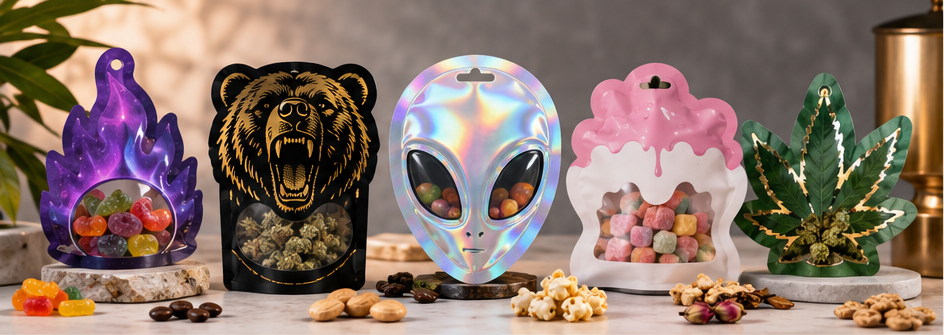
Die cut mylar bags are designed for brands that want packaging to do more than simply hold product. By using a custom outline, shaped edge, hang hole, window, or unique opening style, a die cut bag can create stronger shelf impact and make a product easier to recognize in crowded retail categories. For buyers comparing flexible packaging options, the decision usually starts with three questions: what shape will improve visibility, what structure will protect the product, and what features are required for the target market.
In practical sourcing terms, die cut mylar bags are custom-shaped flexible pouches often used for snack, supplement, cosmetic, herbal, cannabis, and specialty retail products. Brands commonly compare them with standard mylar bags, cannabis packaging, and smell proof packaging when visual differentiation and product protection both matter.

Why choose die cut mylar bags for retail display?
The main value of a die cut bag is visual difference. Standard rectangular pouches are efficient, but they can look similar on a shelf. A die cut shape gives the brand more control over silhouette, display style, and first impression. For ecommerce, the effect also matters in product photos, unboxing, subscription boxes, and social media content.
Die cut packaging can support several display goals:
- Stronger shelf recognition through a custom outline or shaped top
- Better merchandising with hang holes or display-friendly pouch forms
- Premium presentation for limited editions, seasonal SKUs, or giftable products
- Product visibility through an optional shaped window when the product appearance helps sell
For products sold in regulated categories, visual creativity should still be balanced with compliance and label-space requirements. A unique shape should not make required information harder to read or reduce package performance.

Which industries use die cut mylar bags?
Die cut mylar bags are useful wherever packaging shape can increase recognition or improve the retail experience. They are common in snack foods, gummies, coffee samples, tea, supplements, cosmetics, bath products, herbal products, and cannabis-adjacent categories. For food-contact applications, buyers should confirm material suitability for the intended use. The U.S. FDA explains that food-contact substances include packaging components, adhesives, colorants, and other materials that contact food or are used on packaging surfaces (FDA food packaging and food-contact substances).
For cannabis products, packaging requirements vary by market. California’s Department of Cannabis Control states that final-form cannabis goods must meet packaging checklist requirements such as tamper evidence, child resistance, resealability for packages with more than one serving, and opacity for edibles (California DCC final-form packaging requirements). Because of this, cannabis buyers often begin with cannabis packaging options and then decide whether a die cut shape is practical for the product and market.

What features can be added to die cut bags?
The most common custom features include special shapes, tear notches, resealable zippers, hang holes, shaped windows, matte or gloss finish, metallic effects, and smell-control structures. Some buyers also ask for special seals, rounded edges, or reinforced areas depending on the product weight and display method.
Common feature questions include:
- Does the bag need a custom silhouette or only a shaped top?
- Should the pouch include an irregular window to show the product?
- Does the product need a zipper or one-time tear-open format?
- Is smell control needed for herbal, coffee, cannabis, or aromatic products?
- Will the package hang on a peg, sit on a shelf, or ship in ecommerce cartons?
If odor control is part of the brief, buyers should compare the die cut shape with the structure used in smell proof packaging. A shape alone does not make a bag smell proof. Seal quality, material structure, and closure performance all matter.

What are the most popular die cut shapes?
Popular shapes depend on the product category. Snack brands often choose rounded tops, product-inspired outlines, or large display windows. Cannabis and herbal brands may prefer compact shaped pouches with strong front-panel identity. Beauty and wellness brands often use softer curves, hang holes, or slim pouch shapes for sample packs and retail displays.
Common directions include:
- Rounded-top bags for a softer retail look
- Product-shaped silhouettes for seasonal or novelty launches
- Hang-hole pouches for pegboard display
- Window-cut bags for visible product quality
- Compact shaped pouches for samples, gummies, and small premium SKUs
The best shape should still leave enough room for branding, claims, nutrition or ingredient panels, warning statements, barcodes, and regulatory information where required.

How do printing, MOQ, and lead time work?
Die cut mylar bags usually require more planning than standard pouches because the tooling, shape, artwork, and production setup need to work together. A custom outline can affect usable print area, seal placement, zipper position, and how the bag runs through production.
For new brands or multi-SKU launches, MOQ is often the biggest commercial question. Lower-volume projects may focus on simpler die cut modifications, while larger programs can support more complex shapes and finishes. Lead time depends on artwork readiness, material selection, tooling complexity, sampling, and approval speed.
Printing choices usually include matte, gloss, metallic effects, soft-touch finishes, and full-color graphics. If the project includes environmental claims such as recyclable, reusable, or eco-friendly wording, buyers should review claim language carefully. The U.S. Federal Trade Commission explains that its Green Guides are intended to help marketers avoid environmental claims that may mislead consumers (FTC Green Guides).

What should buyers confirm before requesting a quote?
- What product will be packed, and is it food, supplement, cosmetic, cannabis, or another category?
- Does the bag need a custom outer shape, a shaped window, or both?
- Is the package for retail shelves, peg display, ecommerce, or samples?
- Does the product need smell control, resealability, child-resistant direction, or tamper evidence?
- What is the expected fill weight and finished bag size?
- How many SKUs will launch at the same time?
- Does the market require specific packaging or labeling documentation?
If child-resistant packaging may be required, it should be discussed early. The U.S. Consumer Product Safety Commission explains that child-resistant packaging under the Poison Prevention Packaging Act is designed to be significantly difficult for children under five to open within a reasonable time, while still not being difficult for normal adults to use properly (CPSC Poison Prevention Packaging Act overview).

How can Anacotte Packaging support die cut mylar bag projects?
Anacotte Packaging supports custom flexible packaging projects where shape, barrier performance, smell control, and shelf impact need to work together. If your team is comparing shaped pouches for snacks, cannabis products, supplements, cosmetics, or specialty retail, start by reviewing mylar bag options, cannabis packaging formats, and smell proof pouch solutions based on your product type and market requirements.
Need a custom-shaped mylar bag for retail impact? Get a Quote with your product category, target shape, window preference, sealing requirement, and SKU count so the recommended structure fits both your visual goals and production plan.
Frequently Asked Questions
What are die cut mylar bags?
Die cut mylar bags are flexible pouches made with a customized shape, edge, window, or display feature. They are used when a brand wants stronger shelf recognition than a standard rectangular pouch can provide.
Can die cut mylar bags be smell proof?
They can be designed with smell-control structures, but the shape itself is not what creates odor control. Material barrier, seal quality, and closure performance are the key factors.
Can I add a custom window to a die cut bag?
Yes, many brands request shaped windows to show product quality. The window design should be reviewed together with barrier needs, print layout, and product sensitivity.
Are die cut mylar bags suitable for cannabis packaging?
They can be suitable in some cannabis packaging projects, but the final design must match the target market’s packaging rules. Buyers should confirm child-resistant, tamper-evident, resealable, opaque, and labeling requirements where applicable.


Dejar un comentario
Este sitio está protegido por hCaptcha y se aplican la Política de privacidad de hCaptcha y los Términos del servicio.