
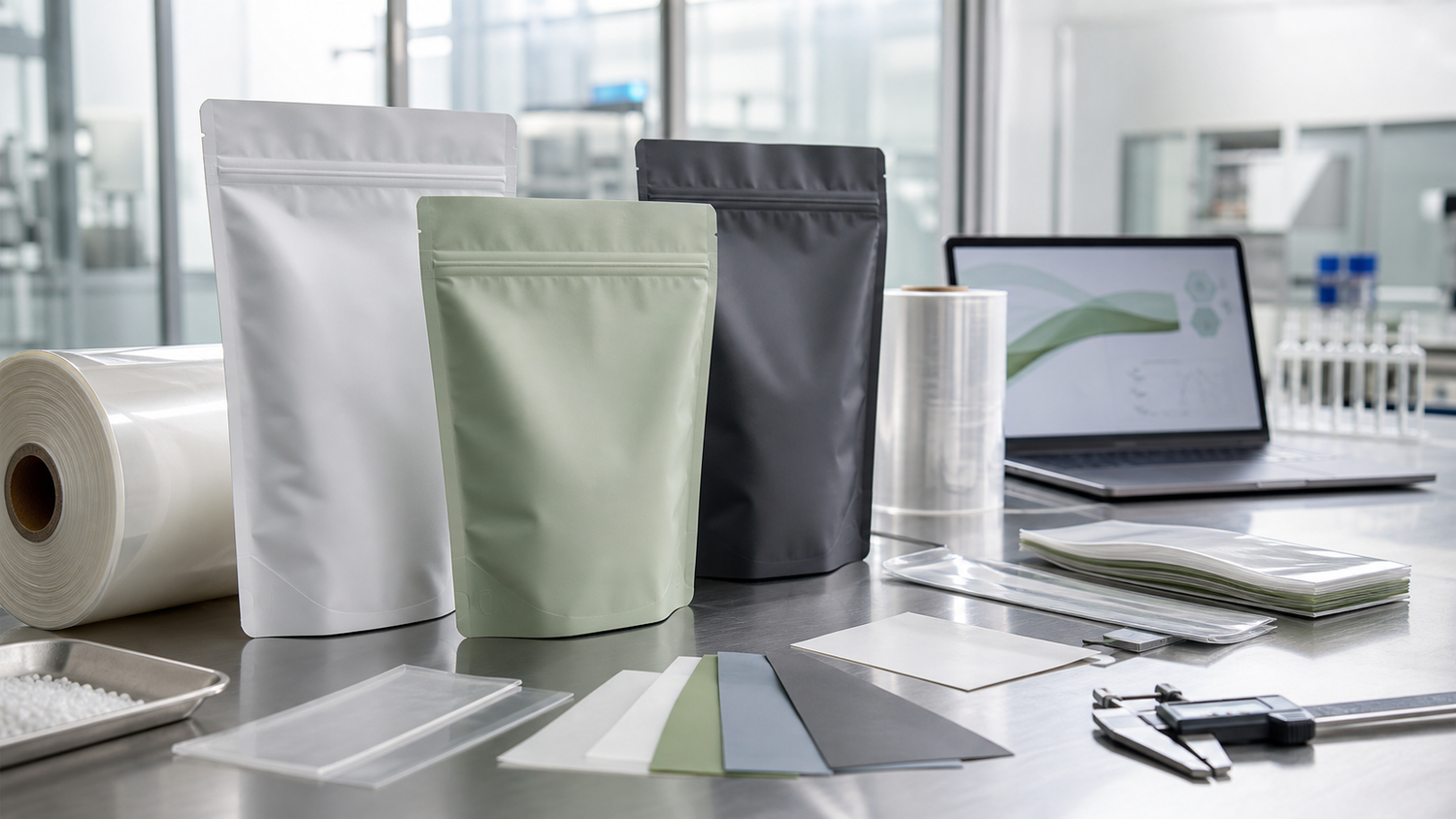
Mono-Material Packaging: Where It Works, Where It Needs Testing
Mono-material packaging sounds simple: build the pouch from one main material family so it is easier to evaluate for recycling. The buying decision is not that simple. A pouch still has to protect the product, run on filling equipment, seal cleanly, survive shipping, and carry the right print and closure features.
For flexible packaging buyers, the useful question is not "Is mono-material good?" It is "Which products can move toward a mono-material PE or PP structure without losing the protection the current pouch provides?"

Mono-material does not mean feature-free
Design-for-recycling guidance from groups such as CEFLEX and the Association of Plastic Recyclers points buyers toward the same practical lesson: recyclability is affected by the whole pack, not only the main film layer. Material family, adhesives, inks, labels, closures, valves, windows, and barrier coatings can all change how a pouch is sorted or recycled.
That is why recyclable packaging should be reviewed as a structure, not a slogan. A mono-material pouch may still need a zipper, matte finish, strong seal area, high stiffness, or a window. Each feature needs to be checked against the recycling route and the product's protection needs.
Good early questions are plain:
- Is the target stream PE, PP, or another route?
- Does the product need oxygen, moisture, aroma, grease, or light protection?
- Will the closure, label, or print coverage create compatibility problems?
- Can the filling line run the new film without seal failures?

Where mono-material pouches often make sense
Mono-material pouches are most realistic when the product does not need extreme barrier performance and when the brand can test the structure before scaling. Dry snacks, powders, some pet treats, lightweight refill goods, and certain ecommerce samples may be candidates.
For these projects, a stand up pouch can give enough shelf face while keeping the brief familiar for the filling team. A flat bottom pouch may be useful when the brand needs a stronger retail block and a larger front panel, but it also adds more structure decisions.
The buyer should ask the supplier for the reason behind the recommendation. "PE recyclable structure" is not enough. Ask what the film is meant to do, what limits it has, and what the test plan should cover.
Where testing matters before a full switch
Some products punish vague material decisions. Coffee, oily snacks, supplements, powders with moisture sensitivity, pet food with aroma concerns, and refill products that face rough ecommerce handling may need stronger validation.
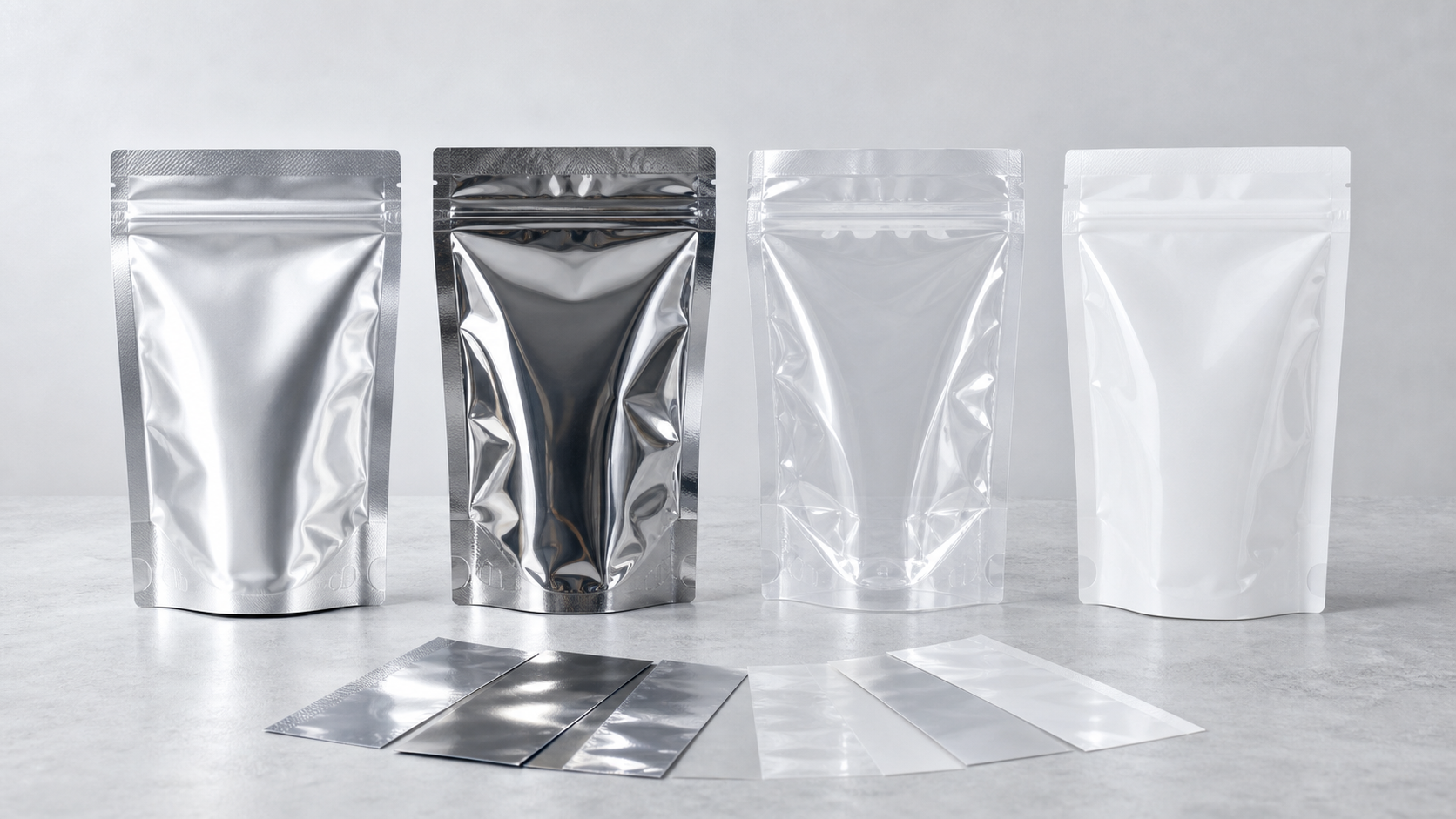
This is where buyers should compare the mono-material option against high barrier packaging, not as a competitor in a sales deck, but as a control sample. If the current structure protects shelf life, aroma, puncture resistance, or seal quality, the new structure has to prove itself against those jobs.

Useful checks include:
- seal strength after filling;
- drop and scuff resistance;
- moisture gain or loss during storage;
- oxygen or aroma sensitivity;
- zipper function after repeated opening;
- print durability on the selected finish;
- shelf appearance after shipping.
The Flexible Packaging Association often frames flexible packaging around performance, material efficiency, and product protection. That framing is useful here. A lighter or more recyclable structure only works if it still protects the product that would otherwise be wasted.
Match the material route to the product brief
A supplier cannot choose the right mono-material route from a logo file. The brief needs product detail. At minimum, prepare:
- product type and fill weight;
- current pouch structure, if known;
- target shelf life;
- retail, ecommerce, or refill use case;
- pouch format and closure;
- finish and print coverage;
- sustainability claim the brand wants to make;
- expected first order and reorder volume.
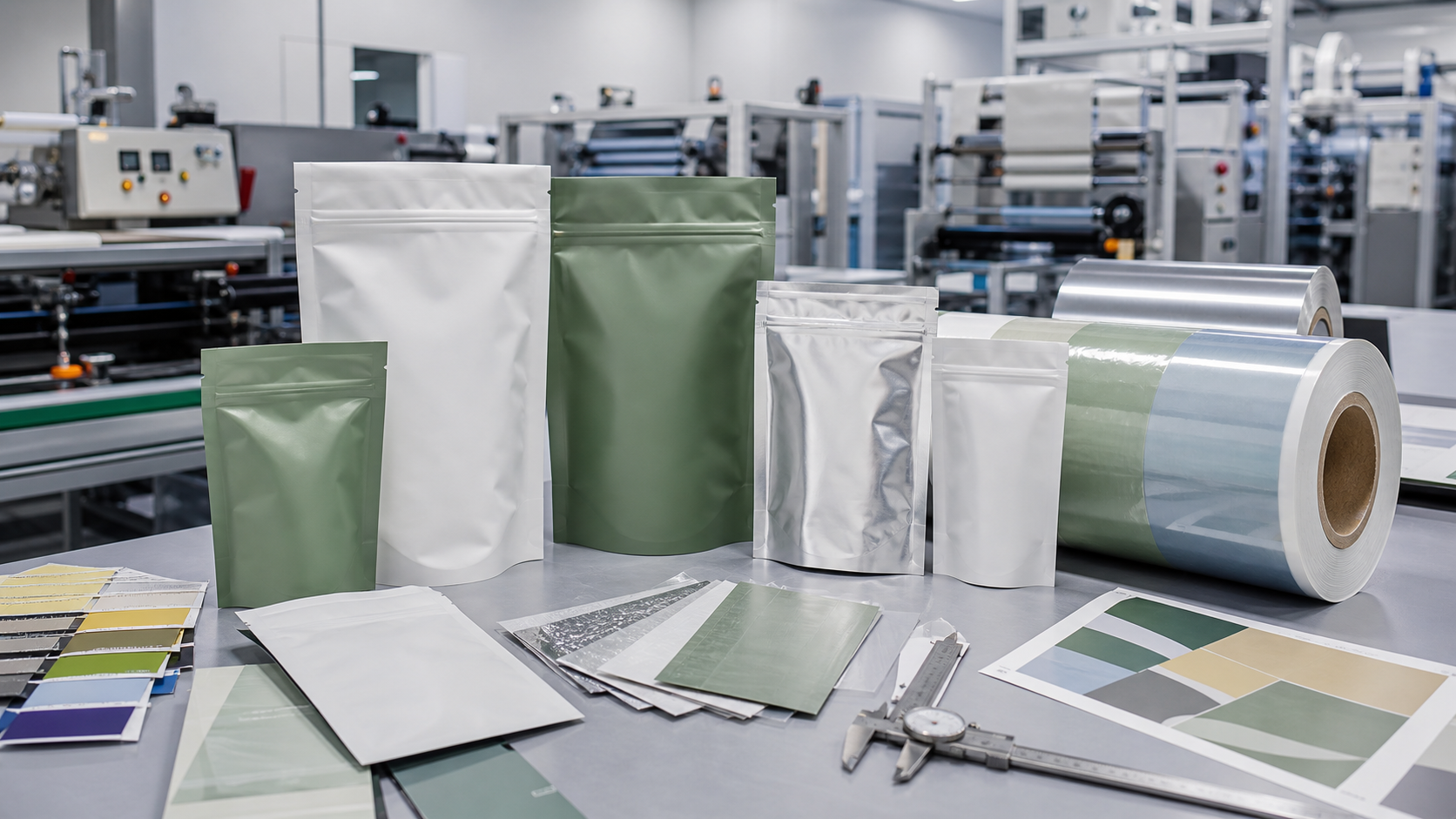
Anacotte's customized packaging work is most useful when the buyer brings those details early. It lets the team compare recyclable, high-barrier, and format choices before the artwork is treated as final.

A buyer checklist for mono-material packaging
Before approving a mono-material pouch, confirm:
- the target material family is clear;
- the pack format matches filling and shelf needs;
- the closure and print finish have been checked for compatibility;
- barrier tradeoffs are documented;
- the supplier has proposed sample or pilot testing;
- the artwork claim has been reviewed carefully;
- the quote separates material, print, finish, and MOQ assumptions.
If a supplier skips these checks and only says the pouch is "eco-friendly", slow the project down. The better decision is usually a tested structure, a cautious claim, and a clear reorder plan.
Talk to Anacotte
If you are comparing mono-material packaging with your current pouch, Anacotte Packaging can help review the product brief, pouch format, barrier needs, and print route before production. Start with packaging consultation, review recyclable packaging, or request a quote with your product details and target order size.

Dejar un comentario
Este sitio está protegido por hCaptcha y se aplican la Política de privacidad de hCaptcha y los Términos del servicio.