
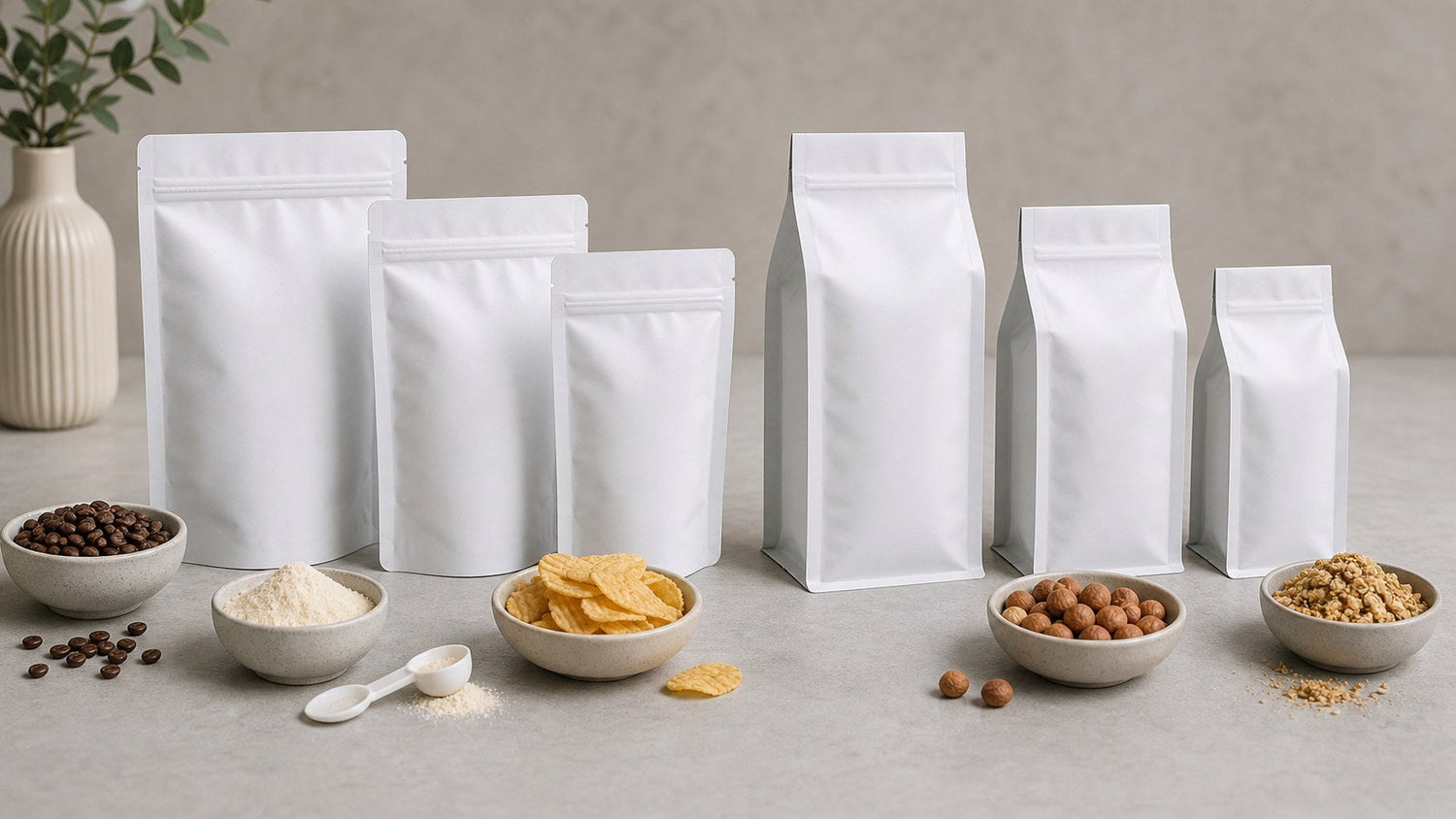
Stand up pouch vs flat bottom pouch is one of the most common packaging decisions for food, coffee, supplement, pet treat, snack, and dry goods brands. The short answer is simple: choose stand up pouches when flexibility, lower entry cost, and broad product compatibility matter most; choose flat bottom pouches when shelf presence, premium structure, and larger front-facing panels are more important. The right answer still depends on product weight, fill method, barrier needs, retail channel, MOQ, artwork, and target market.
Both formats can be customized with zipper closures, hang holes, tear notches, windows, valves, matte or gloss finishes, high-barrier laminates, and digital printing for multi-SKU launches. For food products, buyers should confirm food-contact suitability and market-specific labeling requirements for the United States, Canada, and EU before production. FDA information on food contact substances, Health Canada information on food packaging materials, and the European Commission page on food contact materials are useful references when planning food packaging.
Anacotte Packaging supports low MOQ custom pouch projects, digital printing for multi-SKU launches, and custom quotes based on size, material, artwork, and quantity. Buyers can compare stand up pouches, flat bottom pouches, high barrier packaging, recyclable packaging, and low MOQ packaging before finalizing the format.
The practical difference between the two pouch formats
A stand up pouch uses a bottom gusset that expands when filled, allowing the package to stand on a shelf while remaining flexible and cost-efficient. It is widely used for snacks, powders, gummies, pet treats, dried fruit, seasonings, samples, and refill products. It usually works well for brands that need an adaptable format across several SKUs or sizes.
A flat bottom pouch has a more box-like base and side gussets, giving it a stronger shelf stance and more structured retail appearance. It often provides more printable surface area, including front, back, side gussets, and bottom panels. Coffee roasters, premium snack brands, protein powder brands, and specialty food companies often choose flat bottom pouches when presentation and stable filling are key priorities.
Shelf presence, filling efficiency, and cost comparison
Flat bottom pouches usually win on shelf presence. Their squared base and vertical panels create a more premium look, and they can hold shape better when displayed in retail rows. Stand up pouches are still strong for shelf display, especially in smaller sizes, but they may look softer or less structured depending on fill weight and material stiffness.

For filling, the better format depends on product behavior. Dense coffee beans, granola, protein powder, and pet treats may benefit from the stability of flat bottom pouches. Lightweight snacks, powder samples, dried fruit, and refill products may work well in stand up pouches. Cost also matters: stand up pouches are often simpler and may support a lower entry point, while flat bottom pouches can cost more because of structure, material usage, and converting complexity. MOQ and lead time depend on size, material, print method, artwork readiness, and quantity.

| Decision Factor | Stand Up Pouch | Flat Bottom Pouch |
|---|---|---|
| Shelf presence | Good for many retail and ecommerce uses | Stronger premium shelf block and structured shape |
| Cost sensitivity | Often better for low MOQ launches and price-sensitive SKUs | Often better for premium products and mature SKUs |
| Printable area | Front and back panels are the main brand surfaces | Front, back, side gussets, and bottom can support more branding |
| Product fit | Snacks, powders, samples, dried fruit, treats, refill products | Coffee, granola, premium snacks, powders, pet food, specialty foods |
Material structures and barrier options
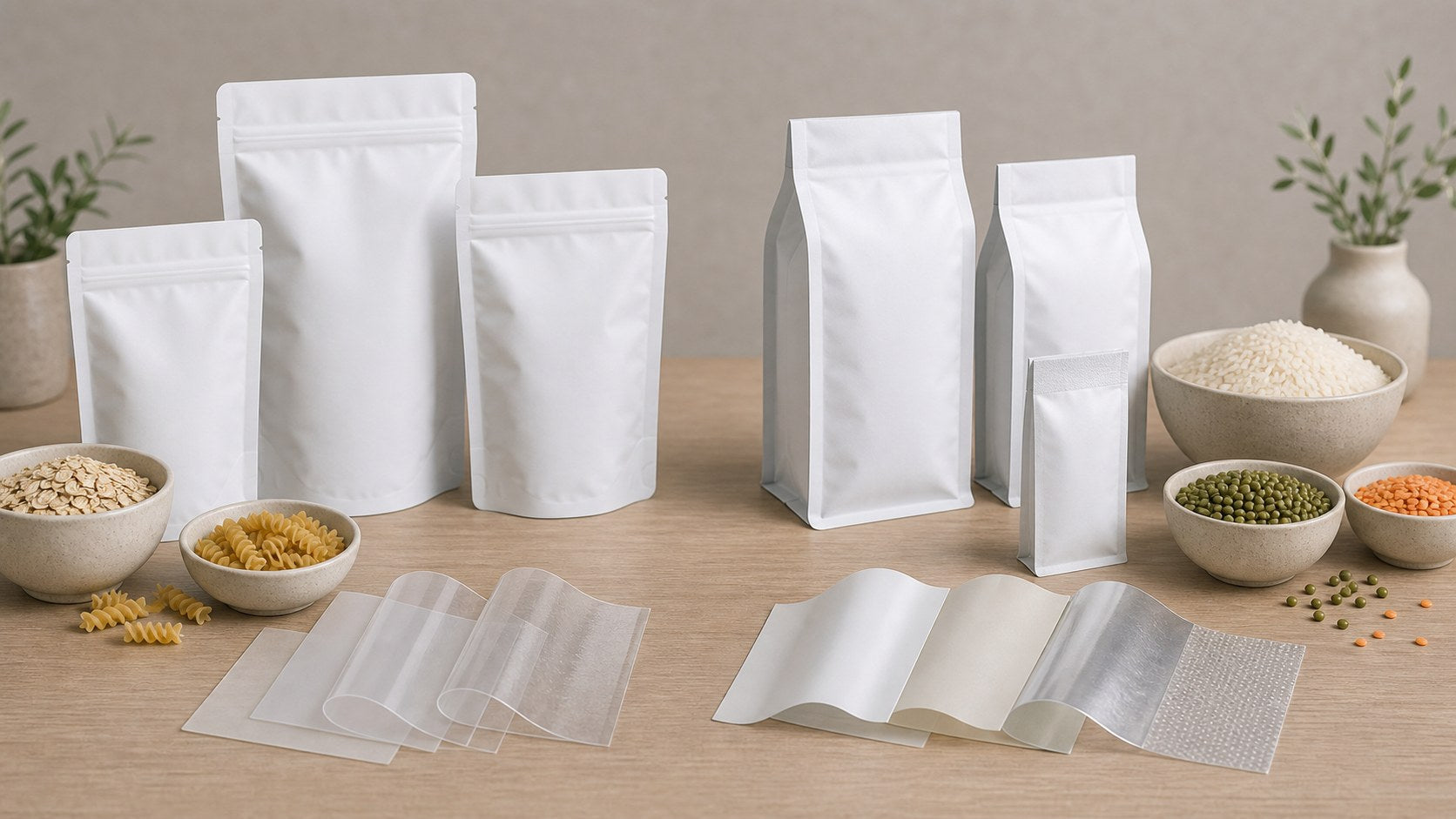
Both pouch formats can use similar flexible packaging structures. PET/PE may be suitable for general dry goods where moderate protection is enough. PET/VMPET/PE can support stronger light, aroma, and oxygen protection for coffee, snacks, seasonings, or flavored powders. PET/AL/PE may be used when high barrier is needed for sensitive products. Recyclable mono-material options may be available where suitable, but buyers should confirm barrier performance, sealing, shelf life, and local recycling access before making claims.

Environmental claims should be qualified. The FTC summary of the Green Guides explains why broad environmental claims can be misleading. Avoid claiming eco-friendly, fully sustainable, or 100% recyclable unless the final package structure, market access, and claim substantiation support it.
Common customer questions and complaints
Customers often ask whether switching from stand up pouches to flat bottom pouches will improve shelf impact, whether flat bottom pouches are worth the extra cost, and whether the same artwork can be reused. Common complaints include pouches that do not stand well, zipper feel that does not match the brand position, underfilled-looking packs, hard-to-fill openings, and material structures that do not protect flavor or texture. These issues usually come from choosing format before confirming fill weight, shelf display, equipment, and barrier needs.

| Buyer Situation | Recommended Starting Point | Why |
|---|---|---|
| Startup testing multiple flavors | Stand up pouch with digital printing | Supports low MOQ and SKU flexibility. |
| Premium retail coffee or granola | Flat bottom pouch | Improves structure, shelf block, and premium appearance. |
| Ecommerce refill product | Stand up pouch | Flexible, efficient, and suitable for many refill categories. |
| High-barrier sensitive product | Either format with tested barrier structure | Material selection matters more than pouch shape alone. |
Get a quote for stand up or flat bottom pouches
To quote accurately, send product type, fill weight, target pouch size, preferred format, target market, material preference, barrier needs, artwork status, order quantity, sample needs, and shipping method. A custom quote should be based on size, material, artwork, and quantity rather than pouch style alone.

Ready to compare pouch formats? Request a low MOQ custom quote or digital printing plan for multi-SKU launches before committing to stand up pouches or flat bottom pouches.
Frequently Asked Questions
Are flat bottom pouches better than stand up pouches?
They are better for premium shelf presence and structured displays, but stand up pouches may be better for low MOQ launches, flexible sizing, and cost-sensitive SKUs.
Can both formats use high-barrier materials?
Yes. PET/VMPET/PE, PET/AL/PE, and other barrier structures may be used depending on product needs. Filled-product testing is recommended.
Can I use recyclable mono-material options?
They may be suitable for some products, but recyclability claims depend on the final structure, barrier performance, and local recycling access.


Dejar un comentario
Este sitio está protegido por hCaptcha y se aplican la Política de privacidad de hCaptcha y los Términos del servicio.