
The global cannabis and CBD market is at a pivotal crossroads. As legalization expands and consumer acceptance grows, the industry is rapidly transitioning from a niche, underground market to a sophisticated mainstream sector. According to industry research, the global cannabis market was valued at approximately USD 69.78 billion in 2024 and is projected to exceed USD 216.76 billion by 2033, reflecting strong double-digit growth driven by medical adoption, recreational legalization, and wellness applications.
Similarly, the global cannabidiol (CBD) market reached around USD 8.97 billion in 2024 and is expected to grow to nearly USD 38.97 billion by 2034, expanding at a CAGR of roughly 15.8%.
As this rapid expansion continues, packaging has emerged as one of the most critical infrastructure elements in the cannabis supply chain. In fact, the global cannabis packaging market alone was valued at approximately USD 2.85 billion in 2024 and is projected to reach more than USD 22 billion by 2034, highlighting how compliance, product preservation, and branding are becoming essential competitive differentiators.
However, this evolution brings unique challenges, particularly in packaging. For brands targeting the US and European markets, success hinges on mastering a delicate balance: navigating stringent regulatory landscapes while simultaneously building a premium brand identity that resonates with modern consumers. This guide explores the intricate world of cannabis and CBD packaging, focusing on the integration of safety, preservation, and aesthetics to destigmatize products and foster trust.

The Regulatory Landscape: A Transatlantic Comparison
Understanding the legal frameworks in the US and Europe is the foundational step for any brand. While both regions prioritize consumer safety, their approaches differ significantly.
In the United States, the regulatory environment is complex due to the federal prohibition of cannabis, creating a patchwork of state-specific laws. However, a universal requirement across legal states is child-resistant packaging (CRP). Compliance with the Poison Prevention Packaging Act (PPPA) is mandatory, meaning packaging must be tested and certified to standards such as 16 CFR §1700.20.
This standard requires packaging to be difficult for children under five years old to open while remaining accessible to adults, particularly seniors. Certified child-resistant formats—including push-and-turn caps, squeeze-and-turn lids, and CR zipper pouches—have become standard infrastructure across regulated cannabis markets.
The importance of CR packaging continues to grow as cannabis products diversify into edibles and ingestible formats. For example, the child-resistant reclosable edible bag market is projected to grow from USD 1.8 billion in 2025 to USD 3.1 billion by 2034, driven largely by stricter safety mandates in regulated product categories.
Furthermore, the US market increasingly requires track-and-trace systems, such as Metrc and BioTrack, which rely on unique identifiers on packaging to ensure transparency and prevent diversion across the supply chain.
Europe presents a different challenge. While the European Union is working toward regulatory harmonization, packaging requirements still vary by country. The EU Medical Device Regulation (MDR) and national medical cannabis laws impose strict controls over packaging materials, particularly regarding chemical migration into pharmaceutical products.
In addition, the EU has become a global leader in sustainability legislation. The Packaging and Packaging Waste Directive (PPWD) and national Extended Producer Responsibility (EPR) schemes require companies to register packaging volumes, report waste data, and contribute to recycling infrastructure. Failure to comply with these requirements can lead to substantial fines or even market exclusion.

Safety First: Engineering Child-Resistant Solutions
At the heart of cannabis and CBD packaging is the non-negotiable requirement for child safety. However, effective CRP goes far beyond simply adding a locking mechanism.
The engineering of child-resistant systems represents a highly specialized field of packaging design. For glass containers—commonly used in cannabis packaging due to their premium appearance and chemical inertness—the closure system becomes the critical functional component.
Common CR mechanisms include:
-
Press-and-turn caps
-
Squeeze-and-turn closures
-
Push-button locking lids
-
Certified CR zipper bags
These mechanisms require a level of dexterity and strength that children typically lack while still allowing adults to open the container without excessive difficulty.
Engineering precision extends to the container finish, including thread design, shoulder angle, and torque tolerance. Even minor deviations in manufacturing specifications can cause closures to fail compliance testing.
To achieve certification, packaging must undergo third-party testing protocols involving both children and adult participants. Panels of children attempt to open the packaging within a set timeframe, while adult panels must demonstrate that the packaging remains usable.
This process ensures that safety does not compromise accessibility—an essential requirement in regulated consumer goods industries.
Tamper-evident features are also commonly integrated alongside CR mechanisms. Although tamper evidence and child resistance are distinct regulatory requirements, their combination significantly improves product security and reinforces consumer trust.

Preservation: Protecting Product Integrity
Beyond safety, packaging serves as the primary protector of product quality. Cannabis and CBD products contain chemically active compounds that are sensitive to environmental exposure.
Cannabinoids such as THC and CBD degrade when exposed to light, oxygen, and humidity, which can significantly reduce potency and alter product composition.
High-performance barrier packaging therefore plays a crucial role in maintaining product stability. UV-blocking glass, amber jars, and multilayer barrier films help prevent photodegradation of cannabinoids and terpenes.
Moisture barriers are particularly important for dried cannabis flower, where improper humidity levels can lead to mold growth or terpene evaporation. Maintaining a controlled microenvironment inside the package helps preserve both potency and product safety.
For cannabis oils and tinctures, borosilicate glass containers are widely used because they are chemically inert and do not interact with the extract. This prevents contamination and preserves the purity of the formulation.
Preserving the terpene profile is not merely a technical requirement—it directly affects consumer perception. Terpenes are responsible for the aroma and flavor of cannabis and are believed to contribute to the entourage effect, where cannabinoids and aromatic compounds work synergistically.
Packaging that successfully protects these volatile compounds ensures that consumers experience the product exactly as intended by the manufacturer.

Destigmatization through Design
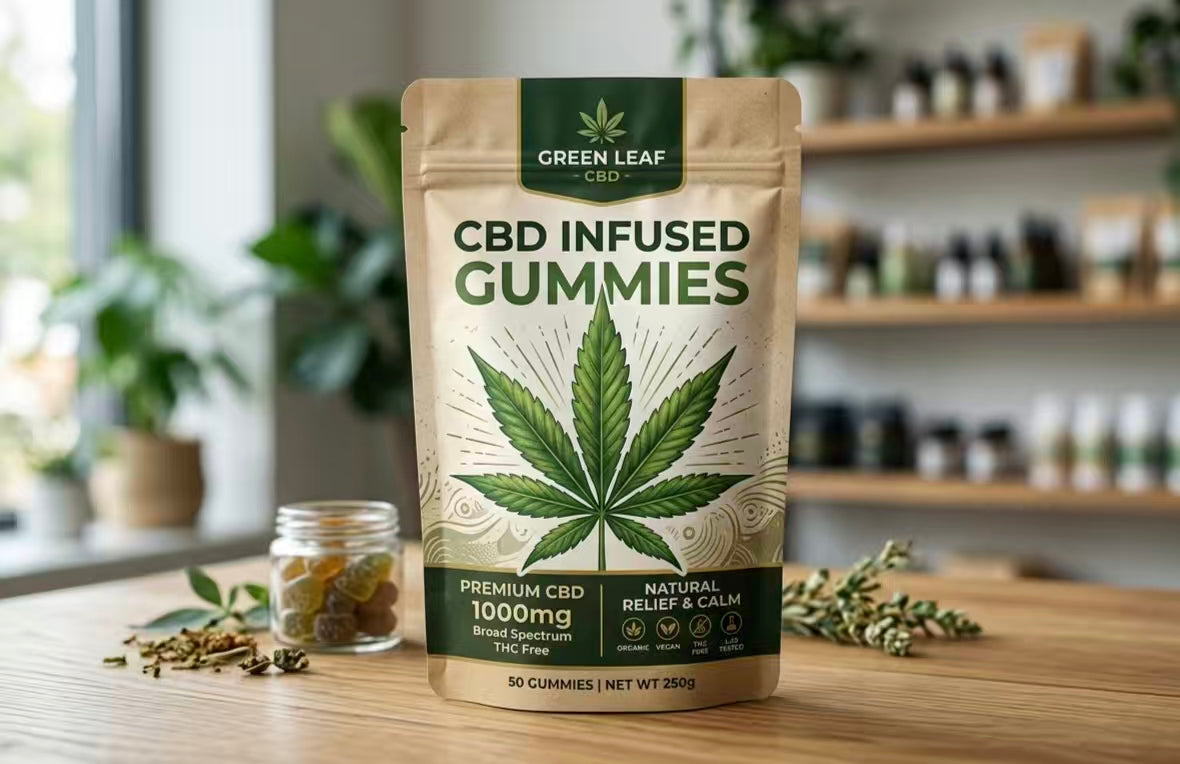
Historically, cannabis packaging relied heavily on stereotypical imagery—most notably the cannabis leaf motif—which often reinforced associations with illicit drug culture.
However, as legalization expands and the market matures, brands are increasingly adopting design strategies that align more closely with wellness, pharmaceutical, and premium consumer goods aesthetics.
Modern cannabis packaging often emphasizes:
-
minimalist typography
-
clean visual hierarchies
-
neutral color palettes
-
medical-grade information clarity
This shift is particularly important as the customer base broadens beyond recreational users to include medical patients, older consumers, and wellness-focused buyers.
Premium design elements also support brand differentiation in an increasingly competitive market. Research indicates that 27% of U.S. cannabis consumers actively prioritize premium product quality, demonstrating how packaging aesthetics can influence purchasing behavior.
Dosage transparency has also become a critical component of responsible packaging design. Clear labeling of cannabinoid content—such as CBD-to-THC ratios, serving sizes, and recommended usage—helps consumers make informed decisions while reducing the risk of accidental overconsumption.
In many jurisdictions, accurate dosage labeling is no longer just best practice; it is becoming a regulatory requirement.

Sustainability: The Future of Packaging
Environmental responsibility has rapidly become a defining issue for the cannabis industry. Despite its association with natural wellness, the sector has faced criticism for excessive packaging and heavy reliance on single-use plastics.
Consumer expectations are also evolving. Studies of cannabis packaging markets indicate that sustainable packaging materials currently account for roughly 22% of industry production, and this share continues to grow as brands respond to regulatory pressure and consumer demand.
At the same time, rigid packaging formats—including glass jars and bottles—still dominate the market due to their protective performance and premium presentation. These formats represent over 60% of cannabis packaging applications globally.
To reduce environmental impact, leading brands are adopting strategies such as:
-
recyclable glass containers
-
mono-material plastic packaging
-
paper-based flexible pouches
-
compostable biopolymers
-
refillable container systems
In Europe, sustainability initiatives are strongly shaped by the PPWD framework, which encourages packaging designed for recyclability and circular material flows.
Companies that proactively invest in sustainable packaging solutions can not only reduce regulatory risk but also strengthen their brand positioning among environmentally conscious consumers.

Packaging in the cannabis and CBD industry represents a uniquely complex intersection of regulation, engineering, and brand strategy. As the global cannabis market continues its rapid expansion, companies must treat packaging not merely as a container but as a critical compliance and communication tool.
By integrating certified child-resistant engineering, advanced barrier technologies, and sophisticated brand design, companies can successfully navigate the complex regulatory landscape while building consumer trust.
In an industry where safety, transparency, and sustainability are becoming core expectations, packaging will increasingly define how brands differentiate themselves in the marketplace.
The companies that succeed will be those that recognize packaging as a strategic asset—one that ensures product safety, preserves quality, supports regulatory compliance, and ultimately strengthens long-term brand credibility.

Dejar un comentario
Este sitio está protegido por hCaptcha y se aplican la Política de privacidad de hCaptcha y los Términos del servicio.