
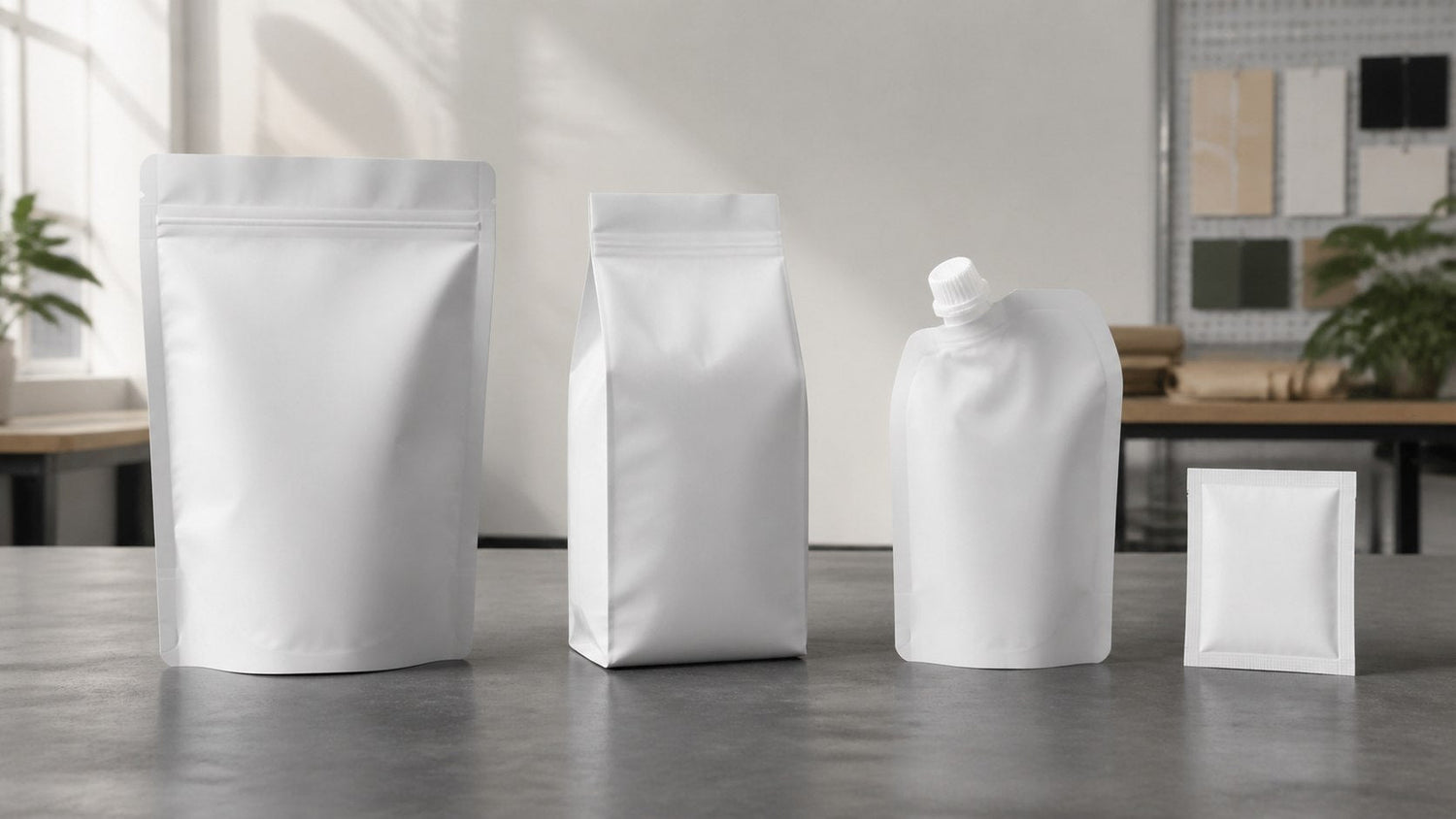
Fertilizer packaging should start with the product state, not with a favorite pouch shape. A water-soluble powder, a dry granular blend, a liquid concentrate, and a single-use trial portion create different questions about filling, opening, storage, and customer use. The right starting point is the format that makes those questions visible before a supplier quote or sample run.

Match the format to the fertilizer state
Use the table below as a first conversation with your packaging supplier. It is a starting hypothesis, not a final specification. The formula, actual fill, filling equipment, storage condition, and destination market still control the final decision.
| Product state | Starting format hypothesis | Confirm before sampling |
|---|---|---|
| Water-soluble powder | Flat or stand-up pouch with a clean heat seal; reseal only if the customer will reopen the pack. | Powder flow, dust, hygroscopic behavior, fill mass, headspace, seal contamination, and the actual dispensing routine. |
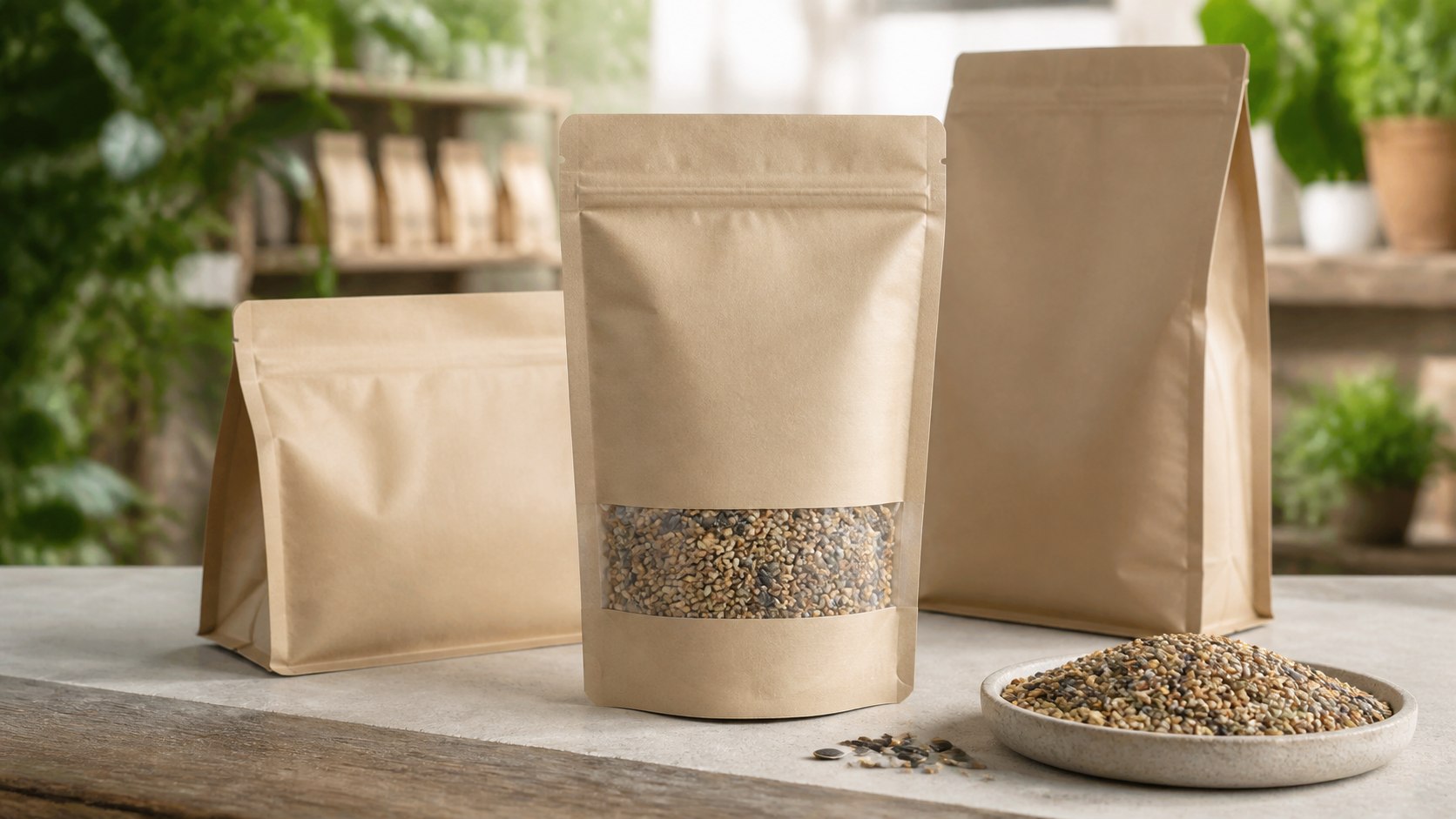
| Granules or slow-release particles | Resealable stand-up or flat-bottom pouch when retail display and repeated opening matter. | Particle size, density, sharp edges, fill height, zipper cleaning, drop handling, and the footprint needed on shelf. |
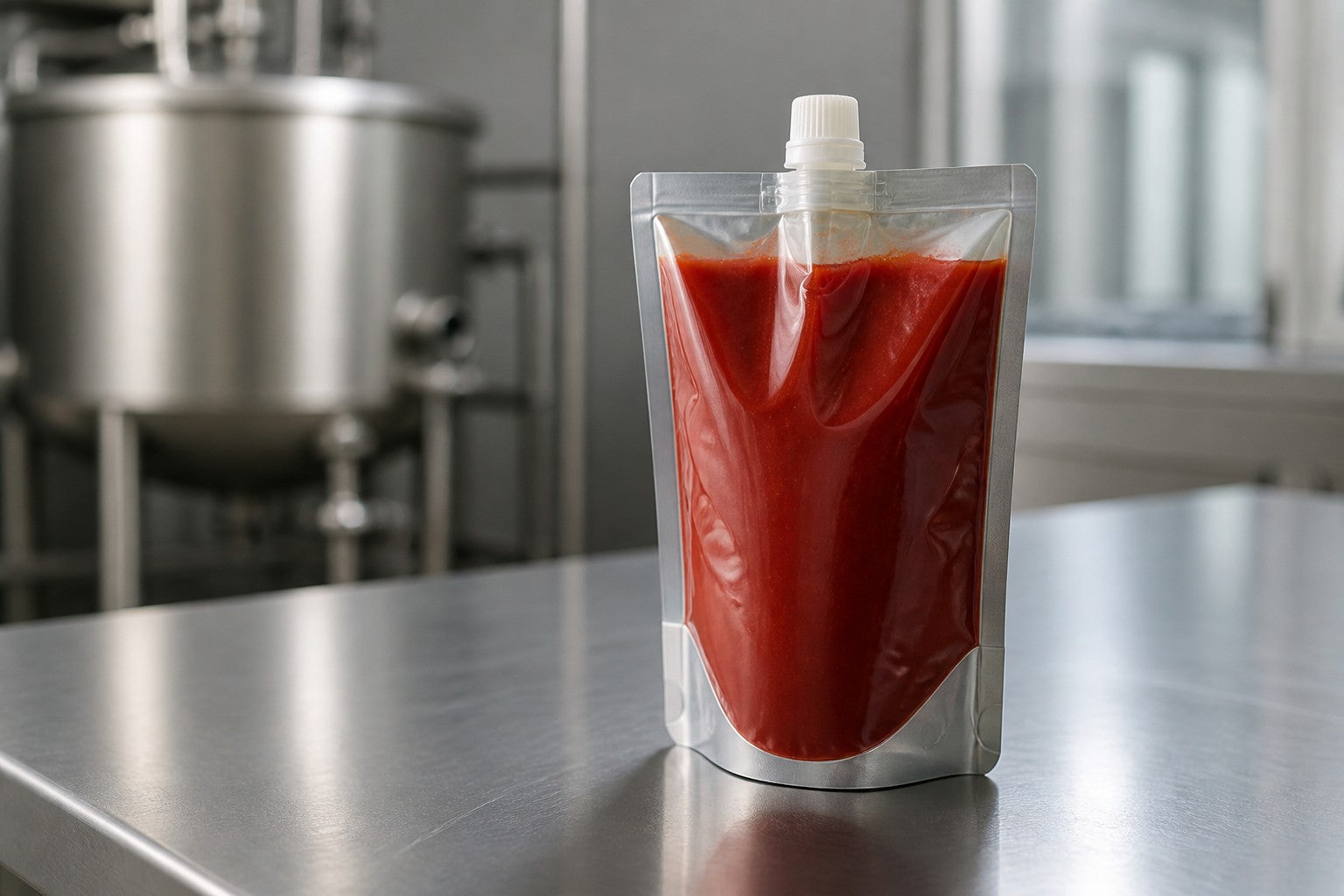
| Liquid concentrate or refill | Stand-up spout pouch with a cap when controlled pouring and reclosure are part of the use pattern. | Viscosity, chemistry, fill temperature, fitment resin, cap torque, seal window, line compatibility, and leak-screen plan. |
| Single-use trial portion | Flat sachet or another compact portion format. | Exact dose, tear behavior, label space, lot/date-code zone, and whether the customer needs one opening or repeated use. |
Storage is a separate decision from pouch geometry. Michigan’s current bulk-storage guidance discusses protection from precipitation for dry products and compatibility and containment questions for liquids; that is a useful reminder to keep package design, facility storage, and handling responsibility distinct. It does not certify a flexible pouch or replace a project-specific review. Read the MDARD storage guidance.

What current fertilizer packaging examples show
Current supplier pages illustrate why “fertilizer packaging” is not one universal bag category. Fuyao’s fertilizer bag example presents a dry granular and powder route with a different construction and larger-fill context. Asia Packaging Group’s fertilizer spout-pouch page presents a liquid refill route with a spout and cap. ProAmpac’s ShakerPAK shows another dry-product direction that combines dispensing and reclosure.
These are market examples, not universal recommendations. A supplier’s material name, thickness, minimum order, closure, or performance language should become a question for your formula and line—not a promise copied into your brief.
Four decisions to make before you request a quote
1. Start with the real fill behavior
Send a representative sample or a clear description of the powder or granules. Bulk density changes the pouch footprint; dust can reach the seal area; irregular particles can affect how a pack settles and how much headspace remains. Ask the supplier to review the actual fill target rather than selecting a nominal size from a catalog.
2. Separate opening from dispensing
A zipper answers a reclosure question. A spout and cap answer a pour-control question. A flat sachet answers a single-use question. Those functions are related, but they are not interchangeable. For a liquid refill, confirm fitment position, cap design, torque, tamper direction, and how the filling line will handle the pouch. For a dry pack, confirm whether the zipper stays clean after filling and whether a tear notch is useful or unnecessary.
3. Define storage and distribution assumptions
Tell the supplier where the pack will sit before use and how it will travel: warehouse, garden-center shelf, parcel shipment, garage, shed, or another route. Ask what filled-pack checks are appropriate for the real distribution pattern. Do not treat a “barrier” label as proof that a formula will remain unchanged, or treat a pouch shape as proof of leak or puncture performance.
4. Reserve the label and code zones early
Leave stable space for product identity, net quantity, instructions, responsible-company information, barcode, and lot or date information as required by the responsible owner and destination market. Keep those zones away from zippers, spouts, gussets, seals, and case-pack stress areas. The artwork proof should show the package geometry, not just a flat front panel.

Use a format family when the line has more than one SKU
A fertilizer brand may need a dry powder sample, a larger granular retail pack, and a liquid refill without forcing every SKU into one structure. Anacotte’s live references can help you compare those starting points: the water-soluble fertilizer powder pouch, organic granular fertilizer pouch, liquid fertilizer refill spout pouch, and orchid fertilizer sample sachet.
Those product pages are geometry and application references. They do not establish that a particular film, seal, fitment, shelf life, storage result, or filling process is right for your formula. If you are working through the broad category first, see the broader fertilizer packaging comparison. For a liquid project, the liquid fertilizer spout-pouch leak-test workflow covers a deeper formula-to-fitment handoff.
Build a quote-ready fertilizer packaging handoff
Before asking for a price or sample, send one compact project brief with:
- Product state and a representative powder, granule, liquid, or trial description.
- Target fill by mass or volume, expected fill height, and number of SKUs.
- Opening pattern: single-use, zipper reclose, spout pour, or another defined routine.
- Filling method, co-packer, or equipment constraints that are already known.
- Storage and distribution assumptions, including parcel or retailer handling.
- Requested pouch dimensions, gusset or bottom preference, fitment, cap, tear notch, window, or hang-hole needs.
- Artwork status, label/code zones, barcode needs, and the person responsible for final copy.
- Sample questions: seal contamination, closure use, filled-pack handling, drop or parcel checks, and any formula-contact review.

What remains project-specific
Do not finalize the structure until the formula owner, filler, and packaging supplier agree on the unknowns: contact compatibility, barrier target, seal conditions, fill temperature, headspace, closure behavior, storage, transport, and destination-market requirements. A careful fertilizer packaging brief makes those unknowns visible early, which is more useful than a confident but generic claim.
Ready to compare a starting format with real product information? Request a project-specific quote from Anacotte Packaging with the state, target fill, SKU count, use pattern, and sample questions.

Dejar un comentario
Este sitio está protegido por hCaptcha y se aplican la Política de privacidad de hCaptcha y los Términos del servicio.