
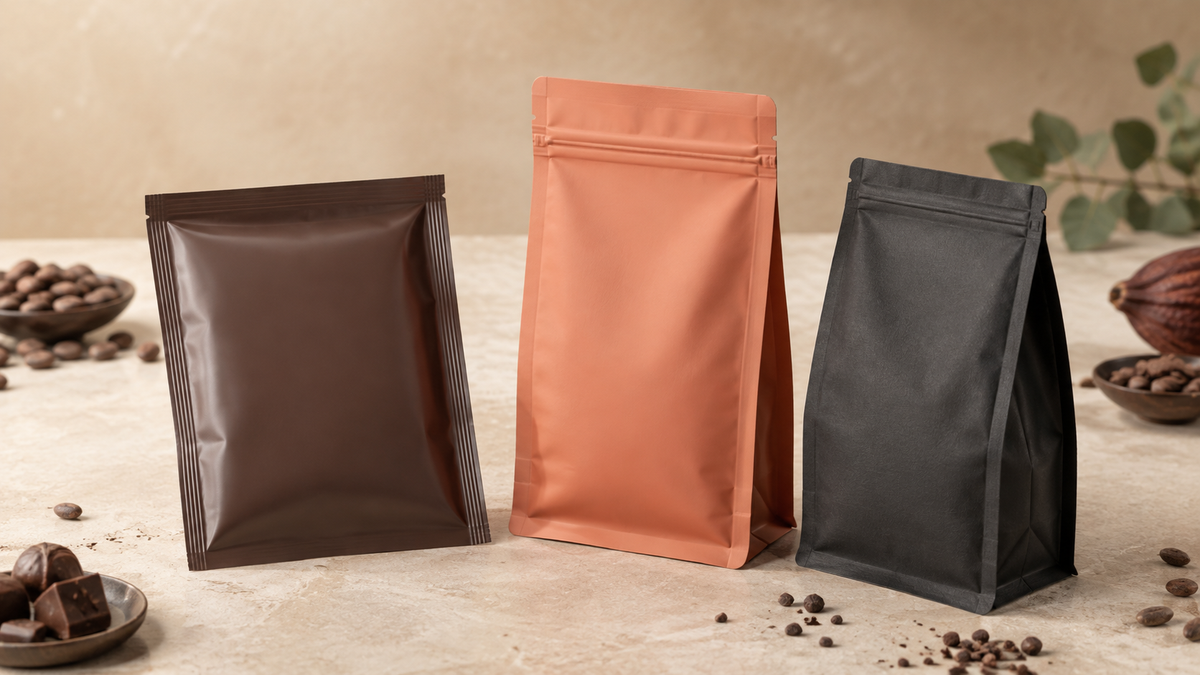
Chocolate snack pouch packaging should be chosen from the product outward. A pouch that looks attractive when empty may still be a poor fit for fragile pieces, oily or dusty fills, a zipper that is hard to close, a seal exposed to product, or a shipping route that compresses the pack.
The practical decision is to match the product’s fill behavior and consumption routine to a format, then test the proposed barrier, opening, reclosure, and filled-pack handling. This guide gives a quote-ready way to compare lay-flat, stand-up, and flat-bottom directions without turning a supplier example into a universal performance claim.

Quick answer: start with the fill and the first-open moment
Use the format as a working hypothesis:
| Format | Useful starting direction | Questions to test |
|---|---|---|
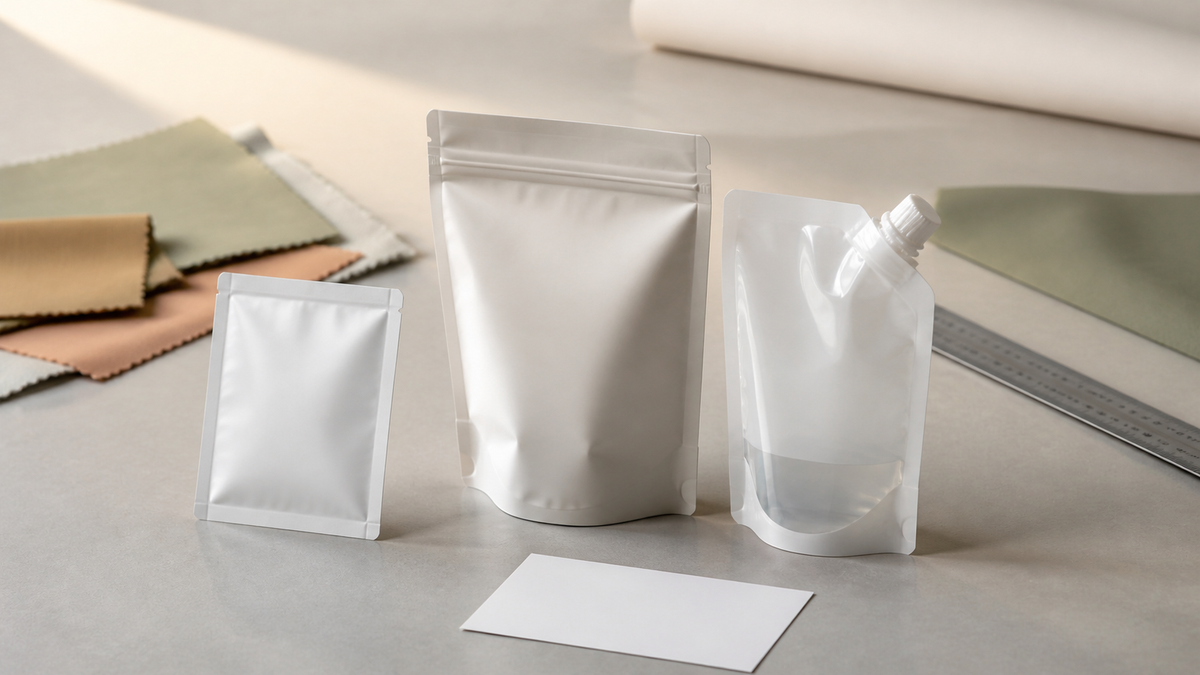
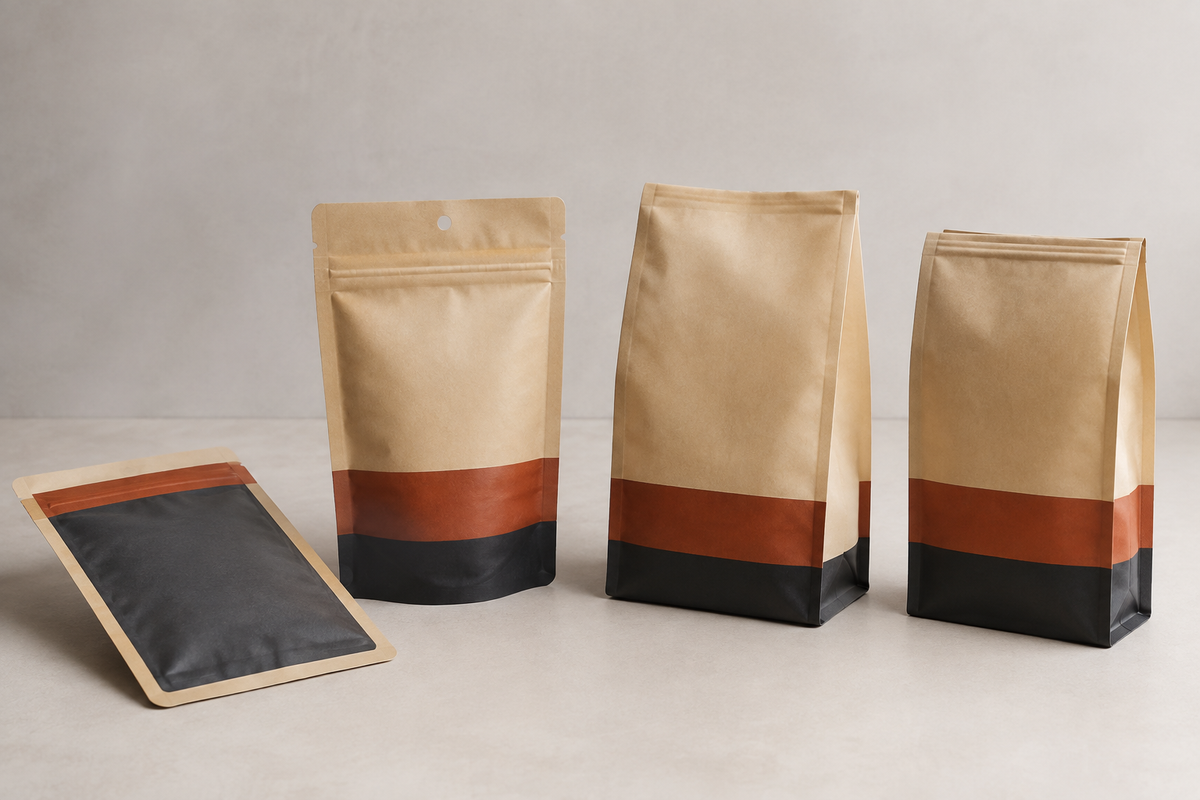
| Lay-flat three-side-seal pouch | Single portions, trial packs, compact snack packs, or products that do not need to stand | Fill spread, tear direction, opening width, stackability, seal contamination, and piece protection. |
| Stand-up zipper pouch | Shareable or repeated-use packs that need shelf stance and reclosure | Filled stance, zipper pinch, first-open force, reclose feel, headspace, and shelf footprint. |
| Flat-bottom pouch | Larger retail packs where shelf presence and compression handling matter | Bottom geometry, filled stability, corner stress, case packing, compression, and seal performance. |
None of these directions is automatically the best choice. The correct first sample depends on the recipe, piece size, fill weight, customer routine, filling equipment, storage, and distribution conditions.
1. Describe the chocolate product before choosing a structure
“Chocolate snack” can mean very different packaging inputs. A filled ganache bite, a crisp cookie, a coated cluster, a brownie piece, a bar, and a cocoa-based dry mix may have different breakage, dust, fat-transfer, moisture, aroma, and temperature questions.
Send a supplier the inputs that change the filled pack:
- Product form and piece dimensions, including sharp edges, fragile inclusions, or irregular shapes.
- Target fill weight, tolerance, headspace, and whether pieces are filled manually or through equipment.
- Observed dust, oil, crumbs, coating transfer, or seal contamination during filling.
- Expected storage and distribution conditions, including seasonal or parcel-route excursions.
- Single-use or repeated-use behavior, expected number of openings, and reclosure expectations.
- Target market, intended food-contact use, artwork status, and required lot or date code zones.
This information helps the packaging discussion stay grounded. It also prevents a generic phrase such as “high barrier” from hiding the actual questions: barrier against what, for which product, at which conditions, and with what evidence?

2. Treat barrier as a specification and test direction
Chocolate products can be sensitive to more than one exposure. Depending on the recipe and route, the brief may need to ask about oxygen, moisture, light, odor transfer, grease or oil interaction, abrasion, and temperature. The proposed laminate or film structure should be connected to the intended use and reviewed with the supplier and qualified quality owner.
Useful questions include:
- Which product attribute is the structure intended to protect: texture, aroma, appearance, or another defined requirement?
- What is the proposed structure and sealant, and what evidence is available for the intended contact and storage conditions?
- How will the pack be filled, sealed, cased, stored, and shipped?
- Are light exposure, humidity, condensation, compression, or heat excursions part of the route?
- Will the buyer run a filled-pack observation or a qualified shelf-life study before making a product claim?
For U.S. food packaging, use the FDA food-packaging and food-contact reference as a starting point for intended-use and regulatory conversations. It is not a blanket approval of an unspecified pouch. The product owner and qualified regulatory or quality team must identify the applicable market and use conditions, and the supplier must confirm the proposed structure for that project.
3. Make opening and reclosure part of the product experience
The first-open moment and the second-use moment are different tests. A tear notch should be easy to find and open without scattering small pieces. A zipper should be reachable, align across the pouch, and remain usable after the product has been handled. A stand-up pack should not become unstable when the fill settles or the user removes part of the contents.
Review the filled sample for:
- First-open force and tear path.
- Opening width relative to piece size and hand access.
- Product in the zipper or seal area after filling.
- Reclose feel after crumbs, coating, or oil contact.
- Closure alignment after the pouch has been opened and carried.
- Whether the chosen format still looks and handles correctly at the intended fill level.

4. Compare current market directions with the right boundaries
Current supplier pages show several viable directions. ePac’s chocolate packaging page presents stand-up and lay-flat pouches, barrier choices, zippers or hang holes, and short-run or multiple-SKU use cases. Coveris presents a flat-bottom confectionery direction with barrier and reclose-oriented features. ProAmpac presents a twist-close direction for treat and snack bags.
These pages are useful for understanding how the market frames options. They are not evidence that every chocolate recipe will achieve the same freshness, grease resistance, reclose performance, or shelf result. Keep each observation tied to the named supplier, proposed structure, intended use, and filled-pack test plan.
For a related format overview, see Anacotte’s chocolate packaging guide. For the narrower after-opening question, see the guide to custom resealable pouches and reclosure. The decision in this article is deliberately more operational: what should be tested before a chocolate snack pouch is approved?
5. Create a filled-pack review before scale-up
A useful sample review can be simple and repeatable:
- Fill check: use the intended product or a controlled substitute to review fill level, headspace, dust, oil transfer, and seal contamination.
- Closure check: open and reclose the pack repeatedly, then record tear behavior, zipper alignment, and closure feel.
- Handling check: observe abrasion, corner stress, compression, and case-pack interaction during normal handling.
- Route check: review the filled pack after the expected storage and shipping conditions, using a qualified protocol where product claims depend on the result.
- Approval check: record the approved format, dimensions, structure, artwork version, tolerances, and unresolved questions before requesting repeat production.
The goal is not to make a generic pouch test sound like a validated shelf-life study. The goal is to make the next supplier conversation and quality review more concrete.

6. Prepare a quote-ready chocolate pouch brief
Include the following in the first handoff:
- Product form, piece size, fill weight, tolerance, headspace, and expected breakage or dust.
- Opening and reclosure routine, zipper or tear-notch preference, and serving behavior.
- Storage and shipping conditions, case pack, and any seasonal or parcel-route assumptions.
- Target market, intended food-contact use, artwork status, mandatory copy, and code zones.
- Preferred starting format and the question the first filled sample must answer.
- Requested evidence for the proposed structure and any quality or regulatory owner who must review it.
As live Anacotte product references, review the elegant flat pouch for chocolate ganache bites and the custom stand-up pouch for artisan chocolate chip cookies. These pages can help frame a format conversation; they do not replace product-specific filled testing or confirm a universal material result.
Final takeaway
Good chocolate snack pouch packaging is a chain of decisions: characterize the fill, choose a format hypothesis, ask focused barrier questions, review opening and reclosure, test the filled pack, and document the approved specification. If you are ready to move from a product description to a supplier handoff, request a project-specific quote with your fill, piece geometry, use routine, target market, artwork status, and distribution assumptions.

Dejar un comentario
Este sitio está protegido por hCaptcha y se aplican la Política de privacidad de hCaptcha y los Términos del servicio.