
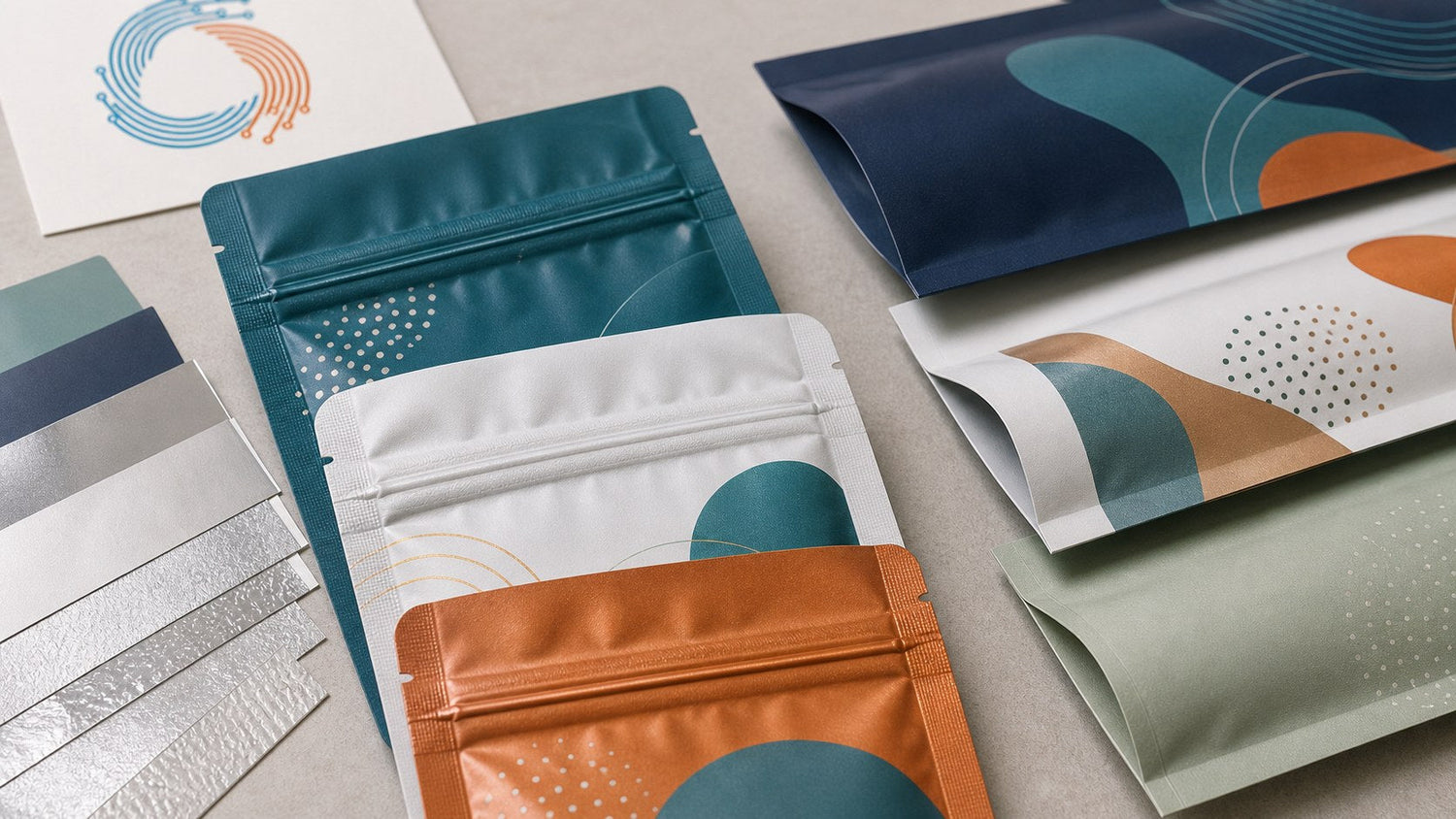
Child resistant zipper bags vs exit bags is a common packaging comparison for cannabis, hemp-derived products, regulated retail, pharmacy-style handoff, and other categories where child-resistant access may matter. A child-resistant zipper bag is usually a reusable pouch with a child-resistant closure built into the package. An exit bag is often a secondary or checkout bag used to carry a product out of a retail environment. The right choice depends on product type, market rules, reuse needs, branding goals, unit economics, and documentation.
Child-resistant does not mean child-proof. Buyers should confirm market-specific packaging rules and applicable test documentation before production. For U.S.-market planning, the CPSC provides information on the Poison Prevention Packaging Act, and the eCFR includes 16 CFR Part 1700. For Canada and EU, requirements vary by product category, province, member state, and sales channel, so buyers should review local rules before printing or importing.
What child-resistant zipper bags are best for
Child-resistant zipper bags are often used when the package itself needs to remain functional after purchase. They can support repeat opening and closing, stronger branding, smell-control goals, and direct product storage. They are common for flower, edibles, gummies, concentrates accessories, and other small regulated goods where the retail unit needs a branded structure. Buyers can compare child-resistant packaging, mylar bags, and high barrier packaging when planning structure.
Because these bags may be reused by consumers, zipper feel, opening instructions, seal strength, and pouch stiffness matter. Common complaints include closures that are too difficult for adults, closures that feel weak, bags that do not reseal cleanly, and artwork that does not leave enough room for required warnings or label panels. If the package needs certified child resistance, buyers should not rely on visual appearance alone.

What exit bags are best for
Exit bags are often used as secondary packaging at retail checkout or handoff. They may be simpler, flatter, and more cost-conscious than reusable zipper pouches. In some markets, they may be used to help meet local transport or exit requirements when the primary product packaging is not sufficient by itself. However, requirements vary significantly, and an exit bag does not automatically solve compliance for every product or jurisdiction.

Exit bags can be useful when brands or retailers need a lower-cost handoff solution, temporary secondary containment, or a branded outer bag for multiple small items. They may be less suitable when the product needs long-term storage, strong aroma barrier, or repeated consumer use. Anacotte's compliance certification hub can support early planning, but buyers should confirm documentation and local rules before production.
Compliance, branding, and unit economics

Compliance planning should come before artwork. Buyers should confirm whether the package needs child-resistant functionality, tamper evidence, resealability, opacity, warning space, batch labels, or retailer-specific requirements. Branding goals may point toward reusable zipper bags, while unit-cost goals may point toward exit bags. Digital printing can support low MOQ and multi-SKU launches, but compliance language and label areas should be reviewed before print approval.
| Decision Factor | Child-Resistant Zipper Bags | Exit Bags |
|---|---|---|
| Main use | Primary reusable branded package | Secondary retail handoff or checkout package |
| Consumer experience | Resealable, storage-oriented, stronger brand interaction | Simple transport or exit function |
| Cost profile | Often higher due to closure and structure | Often more cost-conscious for retail handoff |
| Common risk | Closure is hard to use or documentation is incomplete | Retailer assumes it solves rules it does not cover |

Materials, print, and claim boundaries
Common structures may include PET/PE, PET/VMPET/PE, PET/AL/PE, or recyclable mono-material options where suitable. High-barrier structures can support aroma control and opacity, but buyers should test the actual product. Recyclable options may be possible in selected cases, but do not claim 100% recyclable unless the final package structure and local recycling access support it. For environmental claims, the FTC Green Guides summary is a helpful reference.

For regulated products, print planning is also part of risk control. Packaging surfaces may need space for batch labels, warnings, ingredient panels, potency or product information, retailer stickers, or market-specific language. The design should not fill every panel with decoration before compliance copy is reviewed. A strong brand system can use color families, abstract patterns, matte or metallic effects, and SKU coding, but it should leave practical space for required information.
Buyers should also think about the difference between product compliance and package compliance. A closure may be designed to resist access, but the finished package still needs to be evaluated with the actual pouch size, material stiffness, fill weight, and intended use. If the package will be sold in multiple regions, documentation should be organized by market so the sales team does not assume one approval applies everywhere.
Common buyer questions and complaints
The most common customer questions are whether exit bags are enough for compliance, whether child-resistant zipper bags can be reused, whether the closure will frustrate adult consumers, and whether the same design can be sold across the United States, Canada, and EU. Common complaints include closures that are too stiff, pouches that do not reseal cleanly, exit bags that tear at checkout, odor control that is weaker than expected, and artwork delays caused by missing warning space. These issues are easier to prevent when the buyer shares target market, product format, and retailer requirements before quoting.
Get a quote for child-resistant zipper bags or exit bags
To quote accurately, send product type, target market, required child-resistant function, documentation needs, pouch size, material preference, artwork status, warning label needs, order quantity, and whether the package is primary or secondary packaging.

Ready to compare regulated packaging options? Request a low MOQ or digital printing quote based on size, material, artwork, compliance goals, and quantity.
Frequently Asked Questions
Are child-resistant zipper bags the same as exit bags?
No. A child-resistant zipper bag is often a reusable primary package, while an exit bag is usually a secondary retail handoff package.
Does child-resistant mean child-proof?
No. Child-resistant does not mean child-proof. Buyers should confirm applicable testing, documentation, and market-specific rules.
Which option is better for branding?
Child-resistant zipper bags usually offer stronger branding and consumer interaction. Exit bags may be better for cost-conscious retail handoff.

Dejar un comentario
Este sitio está protegido por hCaptcha y se aplican la Política de privacidad de hCaptcha y los Términos del servicio.