

Capability fit
Useful for rollstock, high-barrier films, sachets, pouches, and automated packaging lines.
Buyer confidence
Extrusion lamination bonds substrates with a molten polymer layer, so the right structure depends on barrier target, sealant, coating weight, web handling, and filled-pack stress.

Useful for rollstock, high-barrier films, sachets, pouches, and automated packaging lines.
Review substrate choice, seal layer, bond strength, COF, curl, and line speed before committing.
Filled-pack trials help catch pinholes, delamination, weak seals, and storage failures.
Quote path should include product sensitivity, target shelf life, pack format, web width, and filling equipment.
| Buyer situation | Recommended path |
|---|---|
| High-barrier film | Extrusion lamination structure review |
| Automated filling | Web width, COF, and seal window |
| Aroma or moisture risk | Barrier and filled-pack testing |
| Scale-up | Line speed and repeat material spec |
Share product type, fill weight, material preference, target MOQ, artwork status, and launch timing so the quote can be matched to the right structure.
It is used to bond flexible packaging substrates and create structures with specific barrier, seal, and handling properties.
Common risks include curl, poor bond, pinholes, weak seals, and mismatched COF for filling equipment.
Specify product type, pack format, web width, line speed, barrier target, seal needs, and shelf-life goal.
Extrusion Lamination
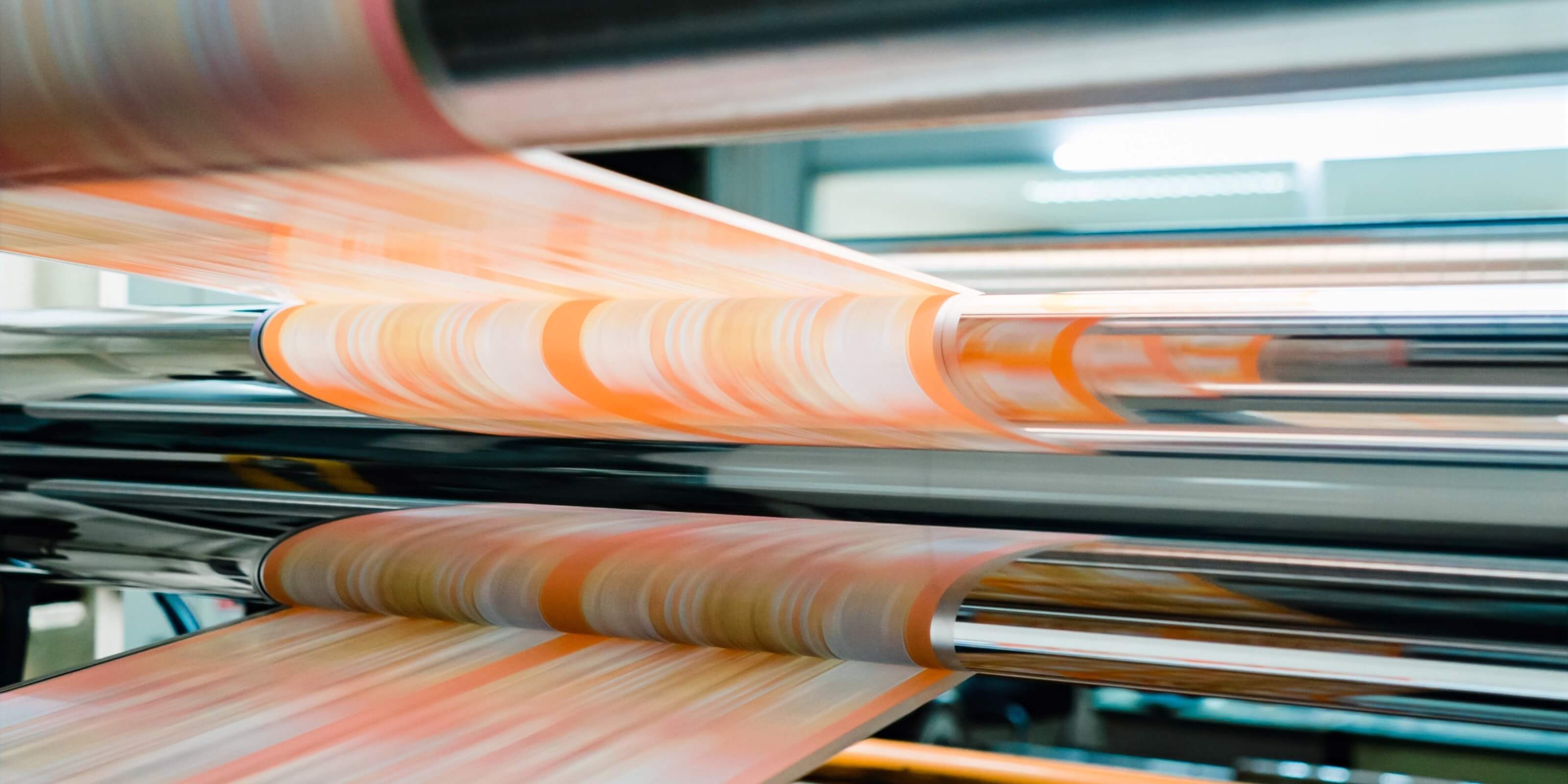
Extrusion lamination is by applying a layer of adhesive and extruded between two or more layers of material. The layers are then bonded together under heat and pressure. This method is typically used to laminate a variety of different materials, such as paper, film, and foil. When compared to other lamination methods, such as adhesive lamination, solvent-based lamination, and water based lamination, extrusion lamination has the advantage of being versatile and cost-effective. However, it also has the disadvantage of requiring costly setup which makes it not suitable for short-run projects. Co-extrusion lamination is also a faster and more efficient method, and can create multilayer films with specific properties. However, it can only be used to laminate a single type of material, such as film.
Process
The process involves the following steps:
1. The layers of material to be laminated are fed into an extruder where they are heated to a high temperature.
2. A layer of adhesive is then extruded between the layers of material. The adhesive is usually a polymer, such as polyethylene, that is melted and extruded in a thin layer.
3. The layers of material and adhesive are then passed through a set of nip rollers which apply pressure to the laminate and bond the layers together.
4. The laminate is cooled and wound up into a roll ready for further processing or packaging.
The outcome will be a single, cohesive package with excellent barrier properties, strength and printability.
Click here for water based lamination
Click here for non-solvent based lamination
Click here for solvent based lamination
Learn about the materialsMaterial Structure
Reference
NY/AL/extPE/PE
PET(NY, OPP)/extPE/PE
KOP(KNY)/extPE/PE
PET/VMPET/extPE/PE
ExtPE stands for "extruded polyethylene". It is a type of polyethylene that is produced by extrusion process: by melted and forced through a die to create a shape, such as a film, sheet, or tubing.
VMPET/extPE/PE
OPP/extPE/PE
OPP/EVOH/extPE
OPP/exPP
exPP stands for "extruded polypropylene". In the case of exPP, the polypropylene is melted and forced through a die to create a film or sheet. The exPP film or sheet can then be used for a wide range of applications, such as packa
Comparing
Extrusion and Co-extrusion
In this method, a layer of adhesive is extruded between two or more layers of material, and the layers are then bonded together under heat and pressure. This method is typically used to laminate a variety of different materials, such as paper, film, and foil.
In this method, multiple layers of material are extruded simultaneously, and are then bonded together as they are extruded. This method is typically used to laminate a single type of material, such as film, and is often used to create multilayer films with specific properties. Learn more about co-extrusion lamination by clicking here.
In this method, a layer of adhesive is extruded between two or more layers of material, and the layers are then bonded together under heat and pressure. This method is typically used to laminate a variety of different materials, such as paper, film, and foil.
In this method, multiple layers of material are extruded simultaneously, and are then bonded together as they are extruded. This method is typically used to laminate a single type of material, such as film, and is often used to create multilayer films with specific properties. Learn more about co-extrusion lamination by clicking here.
Let's Connect