

Stand Up Pouch vs Flat Pouch: Which Is Better for Your Brand?

Flexible packaging has become one of the fastest-growing segments in the global packaging industry. According to a report from Grand View Research, the global flexible packaging market was valued at more than USD 280 billion in 2023 and is expected to continue expanding steadily through the end of the decade.
Among the many flexible packaging formats available today, stand up pouches and flat pouches are two of the most widely used solutions. They are commonly used in industries such as food, coffee, dietary supplements, cosmetics, and pet products. Both packaging styles provide strong product protection, lightweight transportation, and flexible printing options. However, the best option depends on your product type, marketing strategy, and distribution channels.
Understanding the differences between these two pouch formats can help brands choose the right packaging solution for their products.
What Is a Stand Up Pouch?

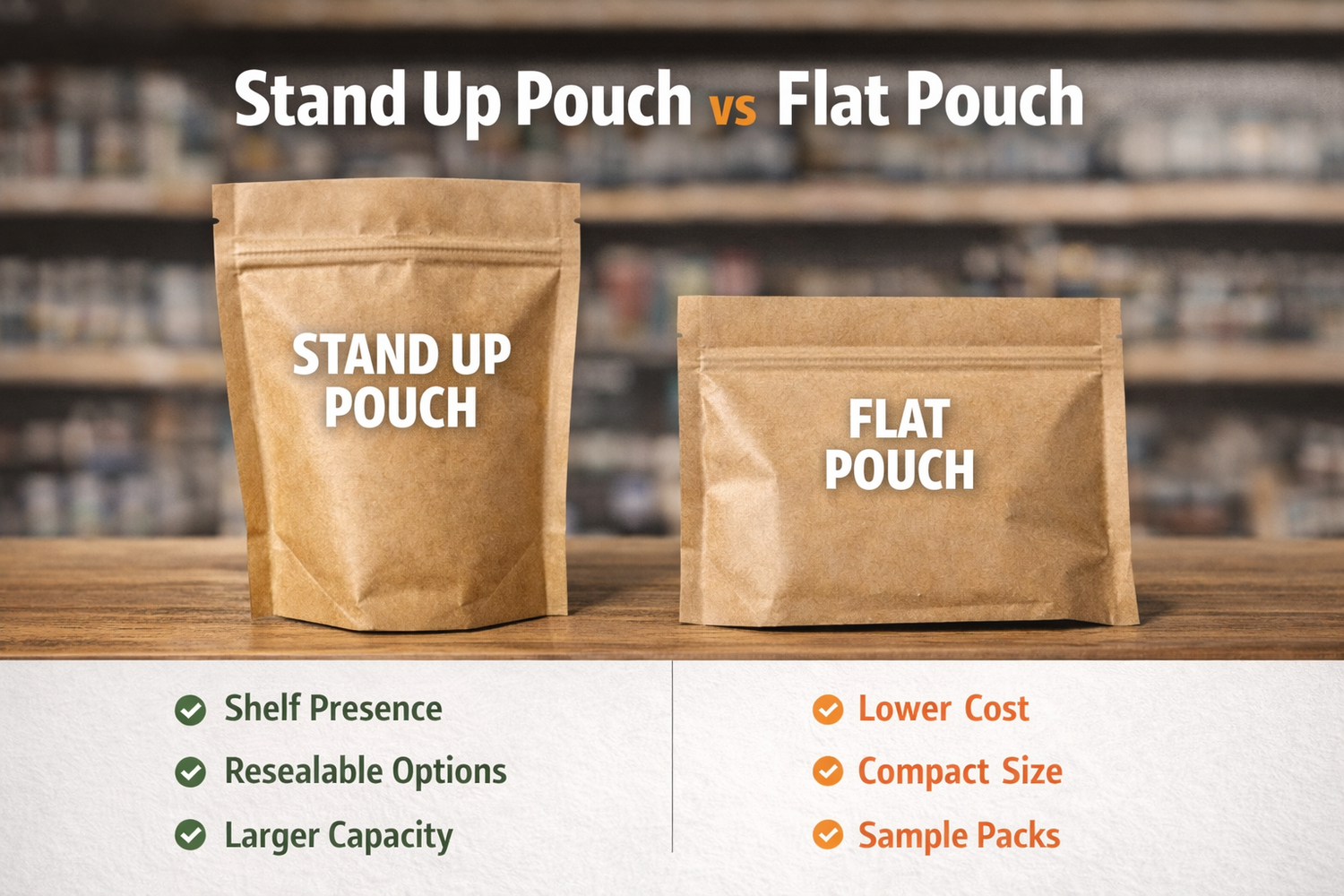
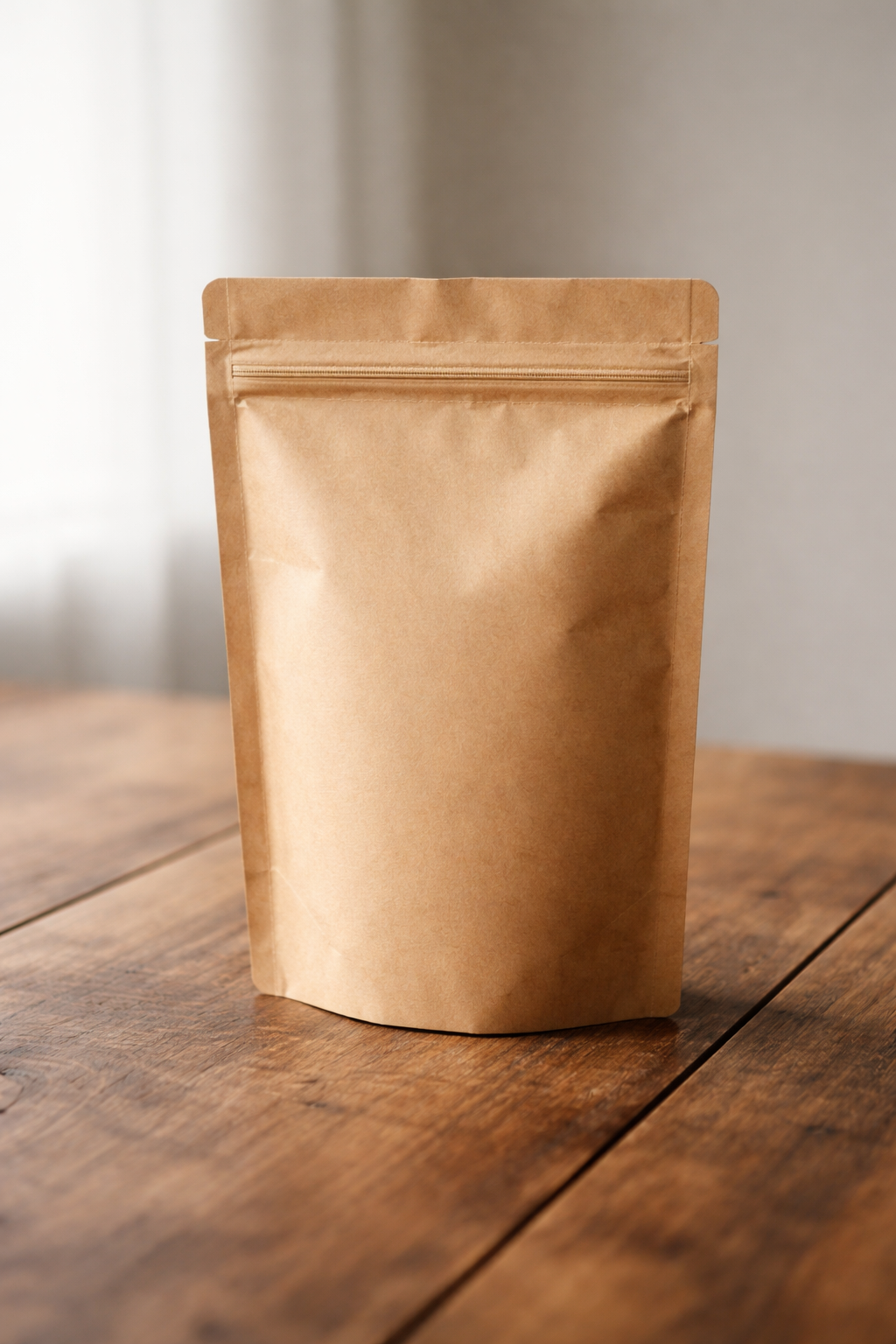
A stand up pouch, often referred to as a doypack, features a bottom gusset that allows the pouch to stand upright on store shelves. This structural design makes the product more visible and improves retail presentation.
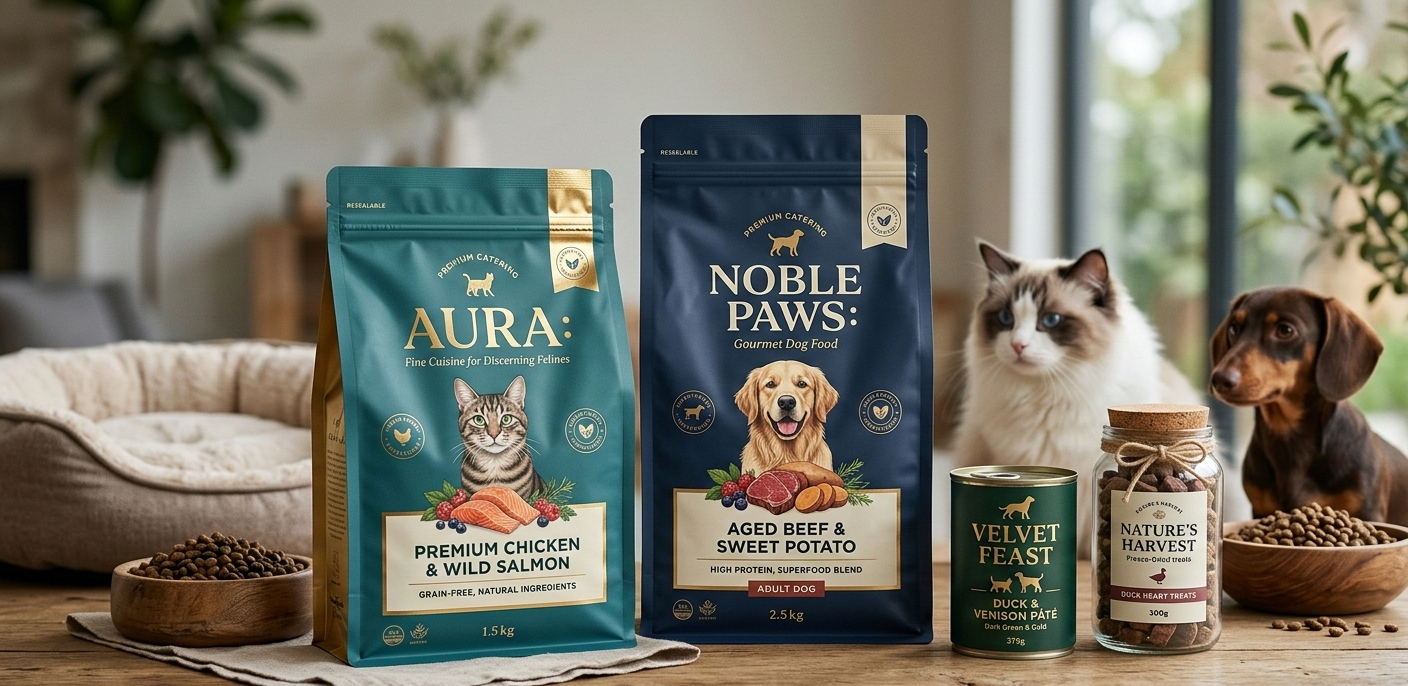
Stand up pouches are commonly used for products such as coffee, snacks, pet food, protein powders, and liquid products with spouts. Because of their stable base and larger surface area, they are often chosen by brands that want strong shelf presence.
According to the Flexible Packaging Association, flexible pouches can significantly reduce packaging weight compared with rigid containers. This reduction in material usage helps lower transportation costs and reduces environmental impact.
One of the main advantages of stand up pouches is shelf visibility. The upright structure allows products to be displayed neatly on retail shelves, making them easier for consumers to notice. This can be especially important in competitive retail environments.
Another benefit is the larger printable surface area. Stand up pouches provide more space for branding, product information, and graphics, which helps brands create visually appealing packaging.
Many stand up pouches also include consumer-friendly features such as resealable zippers, tear notches, or spouts. These features improve convenience and help maintain product freshness after opening.
What Is a Flat Pouch?
A flat pouch, also known as a three-side seal pouch, is sealed on three sides with a top opening. Unlike stand up pouches, flat pouches do not include a bottom gusset and therefore cannot stand upright.
Flat pouches are commonly used for single-serve food products, spices, nutritional supplements, sample packs, and pharmaceutical items. Their compact structure makes them particularly suitable for products that require smaller packaging sizes.
One major advantage of flat pouches is cost efficiency. Because they use less material and require a simpler production process, flat pouches are generally more economical than stand up pouches.
Another benefit is space-efficient transportation. Without a bottom gusset, flat pouches can be packed tightly during shipping and storage, which helps reduce logistics costs.
Flat pouches are also widely used for sample packaging and trial products. Many brands use them to introduce new products or offer single-use portions.
Key Differences Between Stand Up Pouches and Flat Pouches
The most obvious difference between the two packaging formats is shelf presentation. Stand up pouches can stand vertically, giving them a clear advantage in retail environments where visual impact is important. Flat pouches are usually displayed in boxes, trays, or hanging racks.
Cost is another important factor. Flat pouches typically have a lower production cost because they require fewer materials and simpler manufacturing processes. This makes them an attractive option for startups or brands testing new products.
Product capacity is also different. Stand up pouches are designed to hold larger volumes because of their bottom gusset structure. They are often used for products ranging from small snack packs to multi-kilogram food packaging. Flat pouches are generally better suited for smaller quantities.
Consumer convenience is another consideration. Stand up pouches often include resealable features such as zippers or spouts, making them more convenient for repeated use. Flat pouches are typically used for single-use products.
Which Packaging Option Is Better?
The choice between stand up pouches and flat pouches depends on your product and brand goals.
Stand up pouches are often the better option when products are sold on retail shelves, when branding and visual presentation are important, or when the packaging needs to be resealable.
Flat pouches may be a better choice when cost efficiency is a priority, when the product is packaged in small quantities, or when the packaging is intended for samples or trial products.
In many cases, brands choose to use both formats strategically. For example, a company may sell its main retail product in stand up pouches while offering smaller sample sizes in flat pouches.
The Future of Flexible Pouch Packaging
Flexible packaging continues to gain popularity as brands look for packaging solutions that combine sustainability, efficiency, and strong branding potential. According to research from Smithers, demand for flexible packaging is expected to grow steadily in the coming years as companies shift away from heavier rigid packaging formats.
Both stand up pouches and flat pouches will continue to play important roles across industries such as food, health products, and pet food.
Final Thoughts
Stand up pouches and flat pouches each offer unique advantages. Stand up pouches provide stronger shelf presence and better consumer convenience, while flat pouches offer a cost-effective and compact packaging solution.
Choosing the right pouch structure depends on your product requirements, branding strategy, and distribution channels. By understanding the strengths of each format, brands can select packaging that not only protects their products but also supports long-term business growth.

Leave a comment
This site is protected by hCaptcha and the hCaptcha Privacy Policy and Terms of Service apply.