

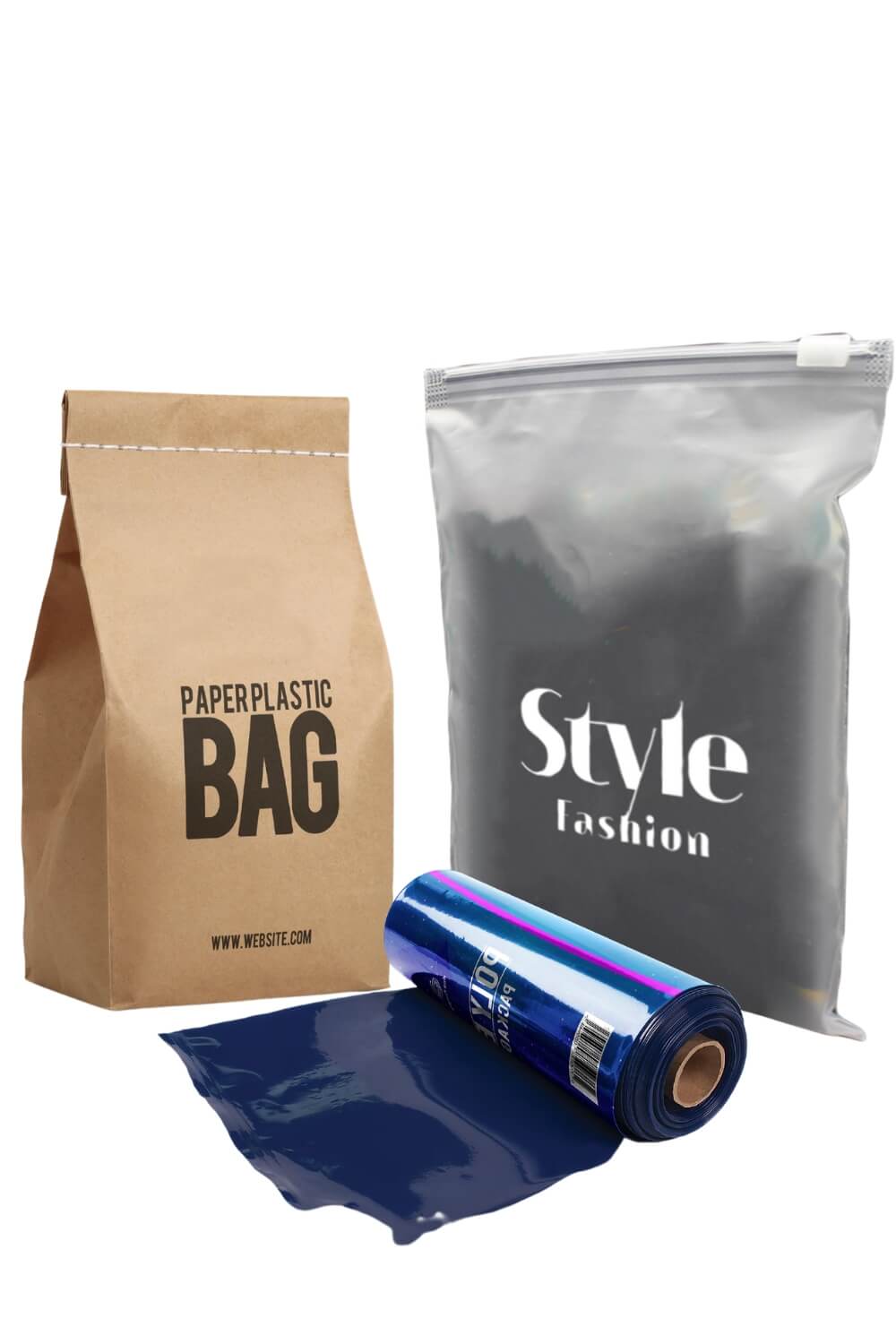


Custom packaging was previously not accessible for small businesses, however with low MOQ options, businesses can use custom packaging sooner. This allows small businesses to test the market with custom packaging, without the extra cost of inventory.
Even though small business owners might prioritize custom packaging options that are affordable, just because something is low MOQ doesn't mean that packaging is the best option. Small business owners want their packaging to look professional, use appropriate materials, be delivered on time, and be affordable. While cost and packaging materials are important, small business owners want to avoid packaging that increases their risk and instead want to use packaging that looks great.
While some people may think that the best packaging option for small businesses is the cheapest, the best packaging options are actually the ones that are the most well thought out. For small businesses, flexible packaging is the alternative, increasing their options and leaving them packaging freedom for future SKU expansion.
What does low MOQ mean for Custom Packaging?
First, we need to define what an MOQ, or a minimum order quantity refers to. With custom packaging, an MOQ refers to the minimum number of units a supplier needs to produce to fulfill a custom order.
For a small business, low MOQ custom packaging means being able to get custom imprinted packaging without having to book larger scale production runs too far ahead of time. Early-stage brands have to deal with a number of challenges such as uncertain sales forecasts, limited storage, and tight cash flow. Because of this, ordering packaging that is too large of a quantity too soon, creates a demand pressure before the business has reliable demand. Being able to order your packaging in lower minimum order quantities helps ease the demand pressure.
With a low MOQ, small business owners have the flexibility to adapt, make changes, test, and learn what works and what the consumers respond to most in the market.
This is the reasoning for Anacotte Packaging. For flexible packaging, the starting order quantity is 100 units for all types of pouches. This means that the minimum order quantity is the same for each type of pouch. 100 digital prints is also the starting minimum. 30,000 is the starting minimum for gravure, meaning that the sampling has no minimum.
The difference between digital and gravure is important. Low MOQ is not just about how many units you can purchase. It also relates to which printing method is justifiable based on the quantity, number of SKUs, and where the brand is at.
The Importance of Low MOQ Packaging for Small Businesses
Possibility of holding inventory is one reason why small businesses take low MOQ packaging. A new business may be confident about their product, however, they may be unsure about how fast their product will sell, which SKU will be the best seller, or whether the design of their packaging will need to be adjusted after the launch. Starting with a small run gives small businesses the ability to test the market.
Low MOQ packaging helps cash flow. The budget used to make a large packaging order can be used for product development, advertising, or shipping. Just because large orders decrease the average cost of a unit doesn’t mean it is a good idea.
Low MOQ packaging also helps businesses to test ideas in the shortest amount of time. This is extremely important when a business is introducing new flavors, sizes, or formulas. When the pouch size is the same, we support combining multiple SKUs in one order, which can be a practical way to improve total run efficiency while still keeping flexibility.
Many small businesses see the value of packaging as a means of building a brand from the very beginning. Well designed pouches and boxes help a product to compete more seriously whether in a retail storefront or online. Small brands may not require the most intricate packaging design on day one, but they certainly require packaging that looks purposeful, is robust enough to protect the product, and is ready for the retail marketplace.
Best Low MOQ Custom Packing Options for Small Businesses
There is no best one type of packaging for every small business. The specific solution will depend on product type, fill volume, barrier requirements, brand positioning and stage of sales. That said, there are certain options that are more workable than others when focusing on low MOQ and flexibility.
Custom Stand-Up Pouches
When pricing out packaging options stand up pouches are one of the first options small brands consider. They provide a good mix of shelf impact, storage efficiency and cost effectiveness. They are a great fit for dry products like coffee, snacks and supplements.
For coffee companies, a common choice is a stand up pouch with a one way valve that is approximately 125 mm wide by 250 mm high with a 75 mm gusset. This size provides sufficient branding space while being practical for small launch quantities.
Snack brands often choose stand up pouches as well. They are lightweight, flexible and easy to ship. They can also be made resealable by adding a zipper and can be made visually appealing with a matte or gloss finish and a window based on the product and brand.
Flat-Bottom Pouches
The flat-bottom pouch is an excellent choice for packaging pet treats. They can give the shelf more presence, provide more visibility for the product, and seem more structured and higher quality than other types of pouches, giving the product a better chance of winning shelf competition.
For pet treats, the packaging size is determined first by the weight of the pack. A trial pack from 50 g to 80 g may use a pouch that is approximately 120 mm wide and 200 mm high and has a gusset at the bottom of 35 mm. An average family-sized pack from 150 g to 200 g will use a pouch approximately 160 mm wide and 240 mm high and a bottom gusset of 40 mm.
Pet treat shoppers generally know what they are looking for in zipper quality and overall barrier protection. In pet food and treat projects in the early stages, the most visible feature is the bag, but the most important defining feature will be the repeated opening and the unit's ability to retain freshness.
Spouted Pouches
Spouted pouches are often a very good option for supplements, energy gels, and other specific liquid or semi-liquid products. They are portable, practical, and provide end users with a good handle.
A typical spouted pouch we deal with is 100 mm wide and 170 mm high with a gusset of 30 mm at the bottom. Common spouts vary in size from 8.6 mm to 15 mm depending on the product and the needs for dispensing.
For supplement and energy gel brands, spouted pouches can be particularly beneficial when portability and convenience are the customer requirements. They do not necessitate an immediate shift to a larger production structure. The packaging also can be an experiential component when it needs to be functional.
Application of Shaped Pouches
Shaped pouches are an option for products requiring stronger visual differentiation. Cannabis packaging buyers, for example, are more likely to consider the packaging offer when it is visually more differentiated from its competitors. Shaped pouches are advantageous for making the packaging more memorable or feeling more premium.
Not every startup, however, should opt for highly customized shapes right from the start. However, when the product category is saturated and the brand wishes to gain more of a presence on the shelf, more creative structures will be deployed sooner than anticipated.
For some brands, particularly those just establishing a product, stock packaging and customized labels can be a useful interim solution that will not always be the case. This can help mitigate potential losses while the brand verifies design, product-market fit, and dimensions.
That said, flexible packaging is the best long-term solution for businesses that want to improve their brand image early, and it is often the case that custom printed flexible packaging is the best option once the basic product and sales channel are more apparent.
Why Flexible Packaging Combines Lower Entry Barriers and Practical Performance
In flexible packaging, lower entry barriers and practical performance are well combined.
First, flexible packaging more naturally supports smaller starting quantities. For brands, flexible packaging is often the best option due to combined lower entry barriers and practical performance. They do not need to choose between “professional” or “manageable”. They can start with custom packaging early and then scale when necessary.
Flexible packaging can be beneficial for brands with various different SKUs, especially for businesses that manufacture pet treats, snacks, supplements, and different coffee roasts. Having the same pouch size allows brands to run SKUs together, which can ease the process of low-volume production.
Flexible packaging provides brands with endless options for materials and structures, including custom solutions to accommodate their preference for design, aluminum foil, polyethylene and polyester, nylon, and others. Custom options include size adjustments for openings, different types of spouts and zippers, one-way valves, and transparent windows, as well as finishes that are either matte or glossy.
For brands that use spouted pouches, the spouts can be selected to accommodate product and dispensing requirements. The same applies to zippers and one-way valves, which are intended to suit the pouch configuration and packaging function rather than be viewed as fixed options.
Flexible packaging is especially beneficial for brands that want to create strong visuals, as flexible packaging is usually easier to ship and store. This is especially important for brands that want to manage warehousing and shipping costs.
Digital Printing or Gravure Printing for Low MOQ
A vital aspect for start-ups is choosing a pouch type and printing option.
If your total order will be less than 30,000 units, involves numerous SKUs, or if your customer requires samples and approvals prior to going to full production, then digital printing will be the better option. Anacotte Packaging has a digital print minimum order of 100 units, and sampling has no minimum order. Sample production takes approximately 5 days, and Digital printing is 5 to 7 days after design approval. Up to 12 days may be required for complex design, high order volume, or peak season.
Many start-ups will benefit from this most. While the unit cost is likely to be higher than a large run in gravure, the brand benefits from less commitment, faster iterations, and lower inventory pressures.
Once packaging demand in a single run exceeds 30,000 units, gravure printing becomes competitive. In this case, speed and lower average unit cost are the strongest priorities. Brands that have consistent demand, few design changes, and certainty in volume are better suited to gravure.
In real terms, your brand is likely better off initially with digital printing, whilst high demand justifies moving to gravure printing.
Choosing low MOQ packaging can be a challenging process because there are several options available, and many factors that can help determine what would be best for a particular business.
Determining the function of your packaging is always the best starting point. This helps narrow the choices down. For instance, if your product is coffee, a stand-up pouch with a one-way valve may be the best option to help protect the freshness and allow gas to escape. If your product is a pet treat, a pouch with resealability may be more beneficial, leading brands towards a flat bottom pouch with a zipper closure. Additionally, for energy gels or certain supplements, a pouch with a spout may be more useful than a simple, standard pouch.
When it comes to packaging, size is a very important factor to consider. Many small brands do not know what size pouch they need, and this is a very common, normal situation. Sometimes, a customer may have the product, and the design for the brand, but have no dimensions set for the packaging itself. This is where supplier guidance plays a crucial role.
It is vital that your supplier is able to assist with the design, review of the production files, and any modifications of the design. Many start-up brands do not have a finalized design or have design requirements that do not fit the criteria to be used for production which is why this is so important.
It is also important to consider what is most important to you at this point in your business. For some brands, the first goal to be achieved is the appearance of their product on a shelf. For other brands, establishing adequate barrier protection is most important, or maybe getting the product on the shelf quickly, or having the option to easily switch out packaging if the product will come in multiple SKUs. The answer is not typically the same for every brand.
Considerations When Choosing Low MOQ Packaging Suppliers
In addition to listing pouch options and pricing, a good packaging supplier should lessen concerns for small businesses most.
An expectation is a clear layout of their MOQ. If there is a wide range of disparity for the minimums across different formats, it will make planning and forecasting difficult. When considering the options, a more consistent MOQ structure gives more confidence to smaller brands. From your smaller brand's perspective, the second one is the clarity of the lead time. For us, the quoted lead times are only concerning the production time, and not the time spent in transport. For brands dealing with international delivery timelines, that difference is very important. Though global shipping options exist, production time and transport time need to be distinct and clear.
Lastly, most businesses do not expect design assistance to be as important as it is, so they often do not utilize it. Because they do not have a complete packaging design, many of our customers in the early stages require design assistance to help them modify their files so that they align with the production templates. At Anacotte Packaging, design support can include complete packaging design, file checks, and file adjustments. For small brands, that can save significant revision time before printing starts.
Fourth, we expect suppliers to give packaging advice, not just sell packaging. The inclusion of zippers, one-way valves, windows, and spouts should be justified by product and packaging goals, not aesthetics. In cases where a brand wants its packaging to stand out on shelf, or where the product has requirements regarding filling, freshness, or transport, features such as zippers, stand-up pouches, windows, and valves should be considered.
Lastly, from the outset, compliance and export readiness may matter. For brands targeting Europe and the United States, there are packaging requirements pertaining to EU and FDA standards for food-contact materials. This is often part of the discussion sooner than new brands anticipate.
Mistakes Small Businesses in Custom Packaging
Some mistakes come from a lack of understanding how custom packaging functions in a business. One of these mistakes is considering the unit price in isolation. Small businesses may be focused on how packaging is going to impact their bottom line, however, small order sizes have a higher unit price due to the length of the production run. Packaging is not about getting the best unit price, it is about how the total price fits the business stage of the company.
Another mistake is ordering custom packaging that is too large too soon. Newer businesses may feel an impulse to control their packaging costs by ordering in bulk, but packaging that is too large takes up storage space, uses up cash flow, and is a problem before the business has established demand.
Not considering SKU expansion is another mistake. It is often seen that for the same pouch size, more total run is more combined SKUs. For small businesses, this could be a way to achieve low MOQ and control flexibility, while optimally utilizing production costs.
Inadequate production-ready artwork is a mistake that is often underappreciated. It happens often that the customer has a vision of how the packaging design is going to look, and is often fixated on that vision, however, it may require a lot of adjustments to be suitable for packaging. Such mismatches typically result in a production delay.
Finally, some brands make their first packaging version too complicated. Not every new product requires every potential added feature. A better approach is to select a structure that provides good protection, looks good for the shelf, and has the ability to be modified as the business evolves.
Scaling Small Businesses With Smart Packaging Cost
Using low MOQs in packaging to drive specific purchases is far less effective than using them as part of a holistic growth strategy.
One startup coffee brand tested the market with 6,000 custom coffee pouches. After a successful market test, the brand scaled its order volume to 20,000 coffee bags every week. This pulls-based approach to demand is prudent, as opposed to starting with a larger order based on assumptions.
One of our pet treat brands approached us without finalized artwork for packaging, and needed design support. After the first concept, the customer ordered 4,000 market test flat-bottom pouches. As her brand scaled, she increased her SKU and order frequency until she was placing weekly multi-SKU orders of 15,000 pouches. This demonstrates the value of having design support and SKU flexibility.
One of our energy gel customers began with a small batch of spouted pouches, as she was working under inventory pressure. As demand grew, she transitioned to being a regular weekly buyer of 10,000 spouted pouches. In many cases, a low Minimum Order Quantity (MOQ) does more than just allow a brand to start small. It allows brands to grow without pushing pressure points during the initial phases of their business.
The Best Strategies for Low MOQ Packaging for New Businesses
Most small businesses have limited time and resources. Instead of trying to optimize every detail of a new product option, small businesses can benefit more quickly, be more flexible, and be more cost effective by starting with packaging options that are just good enough, but realistic to the product specifications.
For products that are coffee, pet treats, and energy gels or supplements, packaging options can be chosen that can work for a more complete, realistic packaging strategy.
Equally, or even more important than the type of pouch chosen for a given product or type of product, is the type of printing that will be done. As a general rule, especially for smaller volume orders and with multiple SKUs, digital printing will be the more cost-effective option. When larger single runs become necessary for economic gravure printing, that will be the time for gravure printing.
Small businesses need flexible packaging options that help them test the actual product and provide a realistic and scaled approach to packaging. Cash flow protecting options and product testing packaging options work strongly with flexible packaging options and low MOQ packaging.
Small businesses need flexible packaging options that help them test the actual product and provide a realistic and scaled approach to the product strategy. Cash flow protecting options and product testing packaging options are best aligned with low MOQ flexible packaging. If small businesses focus on the product needs, the expected order volumes, and the flexibility to adjust, they will have a much easier time scaling the overall strategy.
FAQ
What is considered a low MOQ for custom packaging?
Low MOQ refers to flexible minimum order quantity that allows a brand to design custom packaging without having to do bulk mass production. At Anacotte Packaging, all flexible packaging types start from 100 units.
What is the MOQ for digital printing and gravure printing?
Digital printing has a minimum order quantity of 100 units, while gravure printing has a minimum order quantity of 30,000 units.
Can I order samples before mass production?
Yes, sampling is available and there is no minimum order requirement. Sample production is done in approximately 5 days.
How long does production take?
Digital printing usually averages 5 to 7 days of production after the design has been approved. For more complex orders, larger quantity orders, and orders made during peak season, the average production lead time is 7 to 12 days. Production lead time excludes shipping transit time.
Can multiple SKUs be combined in one order?
Yes. multiple SKUs can be included in one order, as long as the pouch size is the same.
What factors affect the unit price most?
Most of the unit price is affected by size and quantity. Small-batch orders tend to have a higher unit price because of the total production volume being lower.
Can you help if I do not know the right pouch size yet?
Yes, most customers at the start are not sure of the right pouch size. Guidance from suppliers is common, especially for new brands.
Do you offer design support?
Yes, design support can range from complete packaging design, file checking, and alterations to artwork.
What is the best packaging for small coffee brands?
Most small coffee brands have found that a stand-up pouch with a one-way valve is a good starting format for them. It balances the needs for freshness preservation, space for branding and manageability for order forecasting.
What packaging is best for pet treat brands?
For pet treat brands, flat-bottom pouches are a good option as they provide an excellent shelf presence. They also work well with additional features such as zippers and barrier materials.
What packaging is best for energy gels or liquid supplements?
For energy gels and liquid supplements, spouted pouches are a good choice. They are an ideal, portable, easy to use and work well for products that need controlled dispensing.
Do you support packaging projects for Europe and the U.S.?
Yes, we do. We support projects that involve packaging for the EU and FDA regulations, especially when it concerns food contact materials.


Leave a comment
This site is protected by hCaptcha and the hCaptcha Privacy Policy and Terms of Service apply.