

In the hyper-competitive landscape of modern retail, your packaging is the first "tactical handshake" your brand extends to a consumer. Beyond mere aesthetics, packaging is a high-stakes logistical equation. According to Smithers, the global flexible packaging market is witnessing a compound annual growth rate (CAGR) of 4.5%, expected to reach $373 billion by 2026.
Two heavyweights dominate this space: the Flat Pouch (Pillow Pouch) and the Stand-Up Pouch (Doypack). Selecting between them is a strategic alignment with operational throughput and shifting consumer expectations.

Deconstructing the Fundamentals
The Flat Pouch: Minimalist Efficiency
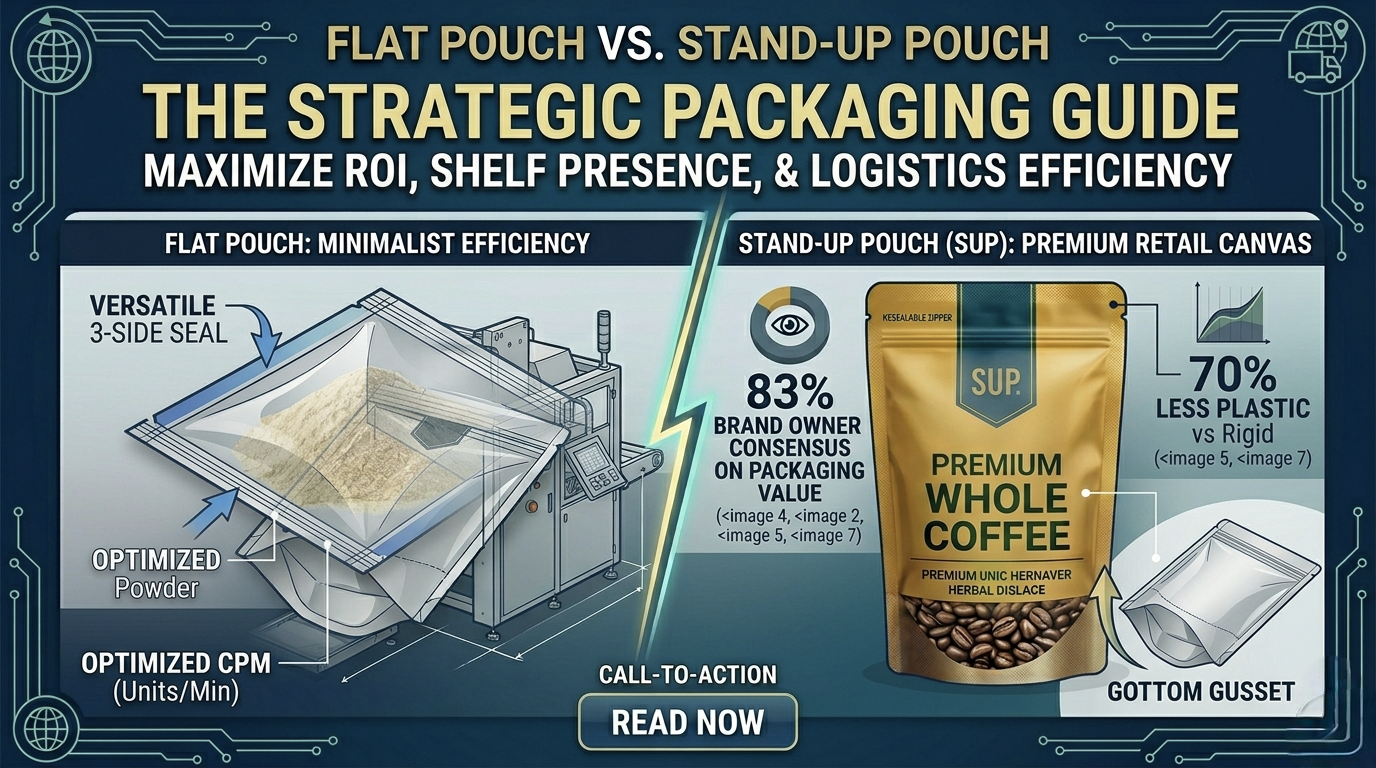
A flat pouch is a streamlined, two-dimensional architecture. It remains the backbone of high-velocity consumer goods.
- Compliance: Flat pouches are a go-to for food-contact applications requiring strict adherence to FDA (21 CFR) safety standards.
- Market Share: Industry reports from Technavio indicate that the pillow pouch segment still accounts for over 25% of the total flexible packaging market due to its sheer versatility.
The Stand-Up Pouch (SUP): The Retail Standard
The "Doypack" is defined by its integrated bottom gusset. It has become the "Gold Standard" for premium retail positioning, aligning with EFSA migration and safety benchmarks

Brand Identity and the "Billboard Effect"
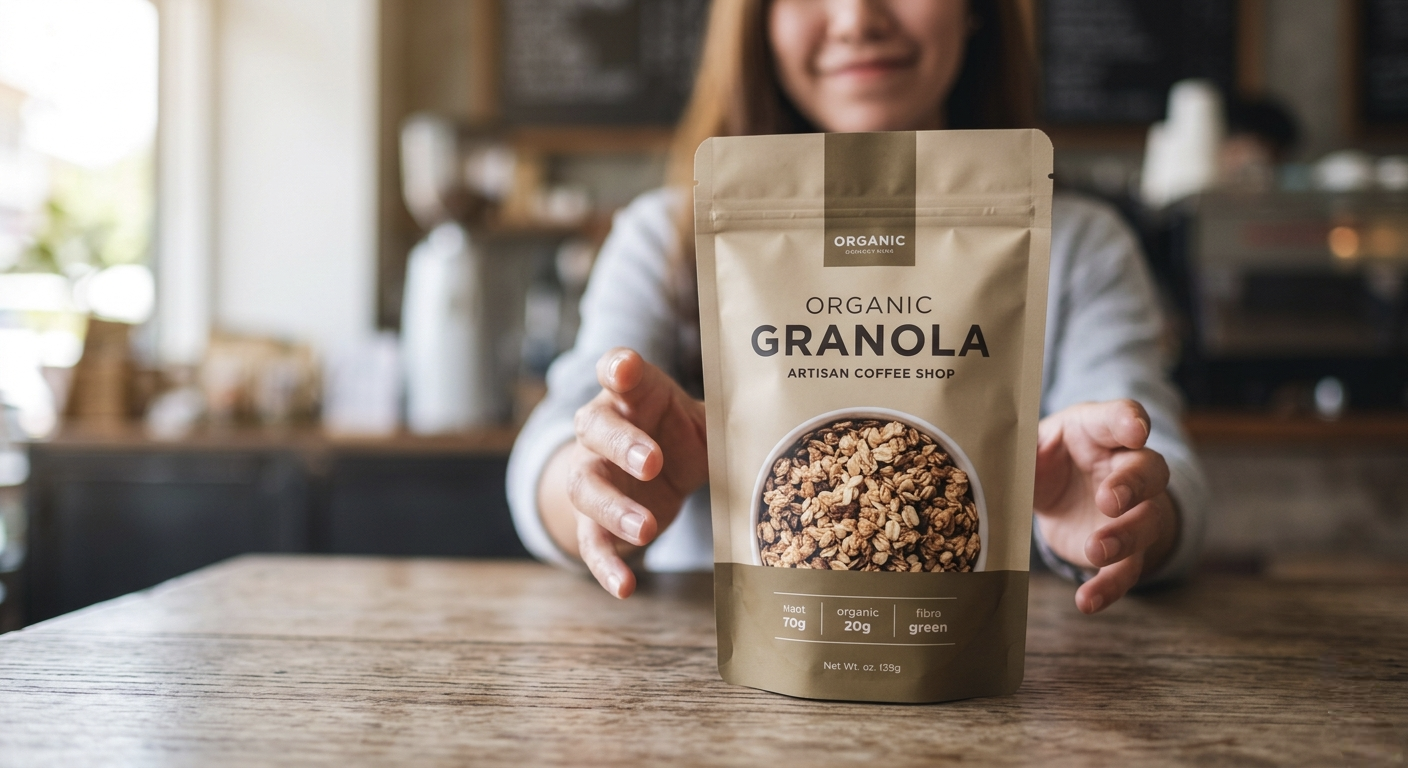
Stand-Up Pouches: The Premium Canvas
In North American and European markets, "premiumization" is the dominant trend.
- Consumer Perception: A study by the Flexible Packaging Association (FPA) revealed that 83% of brand owners believe packaging is a key contributor to product value and brand image.
- Vertical Presence: The upright stance creates a natural "billboard effect," maximizing shelf visibility where 70% of purchase decisions are made.
Flat Pouches: Functional Minimalism
Flat pouches excel in high-speed efficiency:
- Integrity First: Widely utilized in pharmaceutical packaging to meet WHO standards for unit-dose precision and contamination prevention.

Functionality and Consumer UX
The Convenience Factor (SUP)
- Preservation: According to the American Institute for Packaging and the Environment (AMERIPEN), advanced resealable stand-up pouches can extend the shelf life of certain products by up to 30-50%, drastically reducing household food waste.
E-commerce Optimization (Flat Pouch)
The flat pouch is a masterclass in logistics:
- "Letterbox Friendly": Logistics data from DHL suggests that "Letterbox-ready" packaging can reduce "last-mile" delivery costs by up to 40% by eliminating the need for redelivery.

The Cost Equation: Manufacturing & Logistics
Production Throughput
Flat pouches generally offer a lower entry cost:
- Material Economy: Flat pouches typically use 20-30% less film than a stand-up pouch of the same volume.
- Speed: Flat pouch Form-Fill-Seal (FFS) machines can often operate at speeds exceeding 150 units per minute, whereas complex SUP lines may run at 60-90 units per minute.
Shipping Efficiencies
- Volume Reduction: Flexible packaging overall uses up to 70% less material than rigid alternatives. According to the Sustainable Packaging Coalition (SPC), one truckload of flat flexible pouches can hold the same amount of product as 25 truckloads of rigid glass jars.

Sustainability and the Regulatory Shift
The transition to a circular economy is now regulatory-driven:
- Plastic Reduction: The European Commission mandates that all packaging in the EU market must be reusable or recyclable in an economically viable way by 2030.
- Refill Revolution: Stand-up pouches used as "refills" for rigid containers can reduce the total weight of plastic used by up to 80-90% per unit.
Strategic Comparison Matrix
|
Feature |
Flat Pouch |
Stand-Up Pouch |
|
Primary Use |
Single-use / Sampling |
Multi-use / Bulk / Liquid |
|
Material Usage |
~20% Lower |
Moderate |
|
Logistics |
E-commerce Optimized |
Retail-Ready |
|
Unit Cost |
Highly Economical |
Premium |
Conclusion: Architecture of a Smart Choice
- Deploy Flat Pouches if your strategy hinges on DTC models, high-speed sampling, or extreme cost-optimization.
- Invest in Stand-Up Pouches if your brand requires a premium retail presence and consumer-facing convenience.
As the "letterbox economy" expands, the most successful brands will be those that treat their pouch selection as a strategic financial asset.
Would you like me to create a detailed technical "Sourcing Checklist" for your procurement team to use when vetting pouch suppliers?

Leave a comment
This site is protected by hCaptcha and the hCaptcha Privacy Policy and Terms of Service apply.