

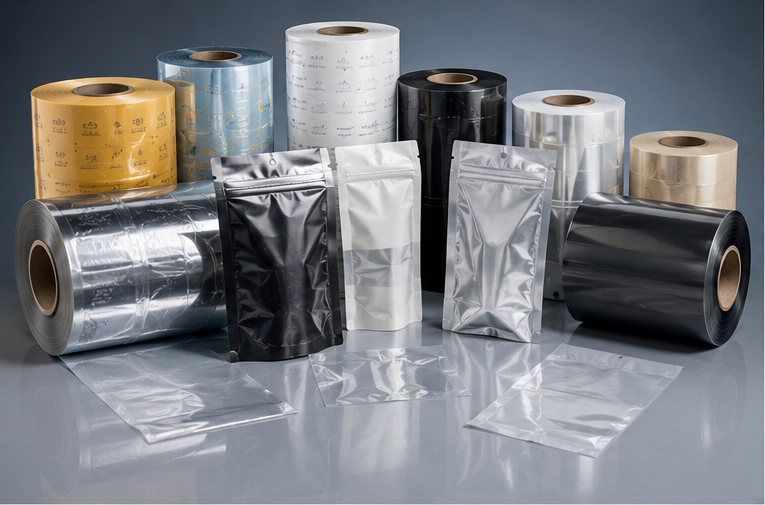
Flexible packaging films are roll-fed materials used to form, fill, seal, wrap, or laminate packaging for food, supplements, pet products, personal care, and specialty retail products. For buyers, the right film is not simply “plastic film.” It needs to match the packaging machine, sealing method, product sensitivity, barrier target, film thickness, and print requirement. If your production uses roll-fed equipment, a good starting point is to compare rollstock packaging, high barrier packaging, and the broader flexible packaging catalog.
The Flexible Packaging Association defines flexible packaging as packaging made from flexible or easily yielding materials that can change shape when filled or closed, including film, lidding, liners, rollstock, pouches, wraps, and sleeves (Flexible Packaging Association industry overview). In sourcing terms, this means film selection should begin with the package function and machine process, not only with artwork.

What are flexible packaging films used for?
Flexible films are commonly used on automated or semi-automated packing lines where the film is supplied on rolls and converted during production. They can be used for form-fill-seal pouches, flow wrap, stick packs, sachets, lidding films, vacuum packs, pillow bags, fin-seal packs, and multi-layer laminated structures. The buyer’s equipment type usually determines the basic film direction before the material structure is finalized.
Common equipment-related questions include:
- Is the line vertical form-fill-seal, horizontal flow wrap, lidding, sachet, or another roll-fed system?
- Does the machine require center seal, lap seal, fin seal, three-side seal, or four-side seal?
- What line speed does the film need to support?
- Does the product require hot fill, cold fill, vacuum, gas flush, or standard ambient packing?
- What film thickness range works best for machine stability and package feel?

How should buyers choose the right material structure?
Film structure depends on product protection first. Dry snacks, powders, frozen foods, liquids, pet treats, and coffee all need different combinations of stiffness, sealability, puncture resistance, barrier level, and print surface. A simple monolayer film may be enough for some short-cycle products, while more sensitive products may require laminated or high-barrier structures.
For food-contact applications, buyers should also confirm regulatory suitability. The U.S. FDA explains that food-contact substances include packaging materials and components such as adhesives, colorants, and substances applied on packaging surfaces (FDA food packaging and food-contact substances). For EU-bound products, food-contact materials must follow safety and inertness principles under the EU framework regulation, meaning they should not endanger health or change food composition, taste, or smell under normal or foreseeable use (European Commission food contact materials legislation).

What barrier level do flexible films need?
Barrier level should be matched to the product’s shelf-life risk. Oxygen-sensitive products may need stronger oxygen protection; moisture-sensitive products may need better moisture control; aroma-sensitive products may need structures that help reduce flavor loss or odor transfer. This is why many brands review high barrier packaging films when packing coffee, nuts, powders, pet treats, sauces, or products with long distribution cycles.
Barrier performance should be discussed with measurable targets where possible. ASTM F1927 covers determination of oxygen gas transmission rate through film, laminates, co-extrusions, and related materials at specified temperature and humidity conditions (ASTM F1927 oxygen gas transmission rate). For buyers, this means “high barrier” should be connected to product needs, test expectations, and storage conditions rather than treated as a vague marketing phrase.

Why do sealing method and line speed matter?
Film must run smoothly on the buyer’s equipment. A film that looks good but seals inconsistently can create scrap, leakage, downtime, and customer complaints. Seal temperature range, dwell time, pressure, coefficient of friction, film stiffness, and thickness all affect machine performance.
Seal strength can also be tested rather than guessed. ASTM F88 measures the force required to separate a seal in flexible barrier materials and helps identify the mode of seal failure (ASTM F88 seal strength test method). For rollstock projects, this is especially relevant when buyers report seal failures, burst issues, leakage, or inconsistent packaging on faster lines.

Which industries use flexible packaging films?
Flexible films are used across many categories because they can be tailored for protection, speed, and presentation. Typical applications include snacks, frozen food, coffee, powders, pet food, condiments, confectionery, medical-adjacent supplies, cosmetics, wipes, and household products. Buyers with multiple SKUs often choose printed rollstock because it can support consistent branding while adapting to different package sizes and filling formats.
For brands still planning product formats, the flexible packaging catalog can help compare film-based packaging with pouch, sachet, and high-barrier options before finalizing the project brief.

What printing capabilities should buyers consider?
Printed rollstock can support strong branding, seasonal SKUs, flavor variants, and multi-product programs. Buyers usually compare matte, gloss, metallic, transparent window areas, and full-color artwork effects. The key is to confirm how the print method, film structure, and sealing area work together. Artwork should not interfere with seal zones, machine registration marks, or areas that need strong heat sealing.
For early-stage brands, MOQ and SKU count matter. For established production lines, repeatability, roll dimensions, core size, web width, and machine compatibility usually become more important than the lowest possible order quantity.

What should buyers prepare before requesting a quote?
- Equipment type and model, if available.
- Required seal style, such as fin seal, lap seal, three-side seal, or four-side seal.
- Line speed and any known machine limitations.
- Target film thickness or current film structure.
- Product type, fill weight, and shelf-life goal.
- Barrier needs for oxygen, moisture, aroma, puncture, or light protection.
- Roll width, roll length, core size, and unwind direction.
- Printing requirements and number of SKUs.
How can Anacotte Packaging support flexible packaging film projects?
Anacotte Packaging supports flexible packaging film projects where machine fit, barrier performance, sealing stability, and print quality all need to work together. If your team is comparing roll-fed materials for automated packing, start with rollstock packaging options, review high barrier structures, and use the flexible packaging catalog to narrow the right format.
Need a film structure for automated packaging? Get a Quote with your equipment type, sealing method, line speed, film thickness target, and product requirements so the recommended rollstock structure fits your machine and market needs.

Frequently Asked Questions
What are flexible packaging films?
Flexible packaging films are roll-fed or sheeted materials used to create pouches, wraps, sachets, lidding, liners, and other flexible pack formats. They are commonly used on automated packaging lines.
How do I choose the right rollstock film?
Start with your machine type, sealing method, line speed, product sensitivity, and barrier needs. The film must protect the product and run reliably on your equipment.
Do flexible packaging films need high barrier materials?
Not always. High barrier films are usually needed when oxygen, moisture, aroma, light, or shelf-life protection is important. The required barrier level depends on the product and storage conditions.
What information is needed for a film quote?
Send the product type, equipment type, sealing style, roll dimensions, target thickness, barrier needs, print requirements, and SKU count. These details help prevent film-machine mismatch.



Leave a comment
This site is protected by hCaptcha and the hCaptcha Privacy Policy and Terms of Service apply.