

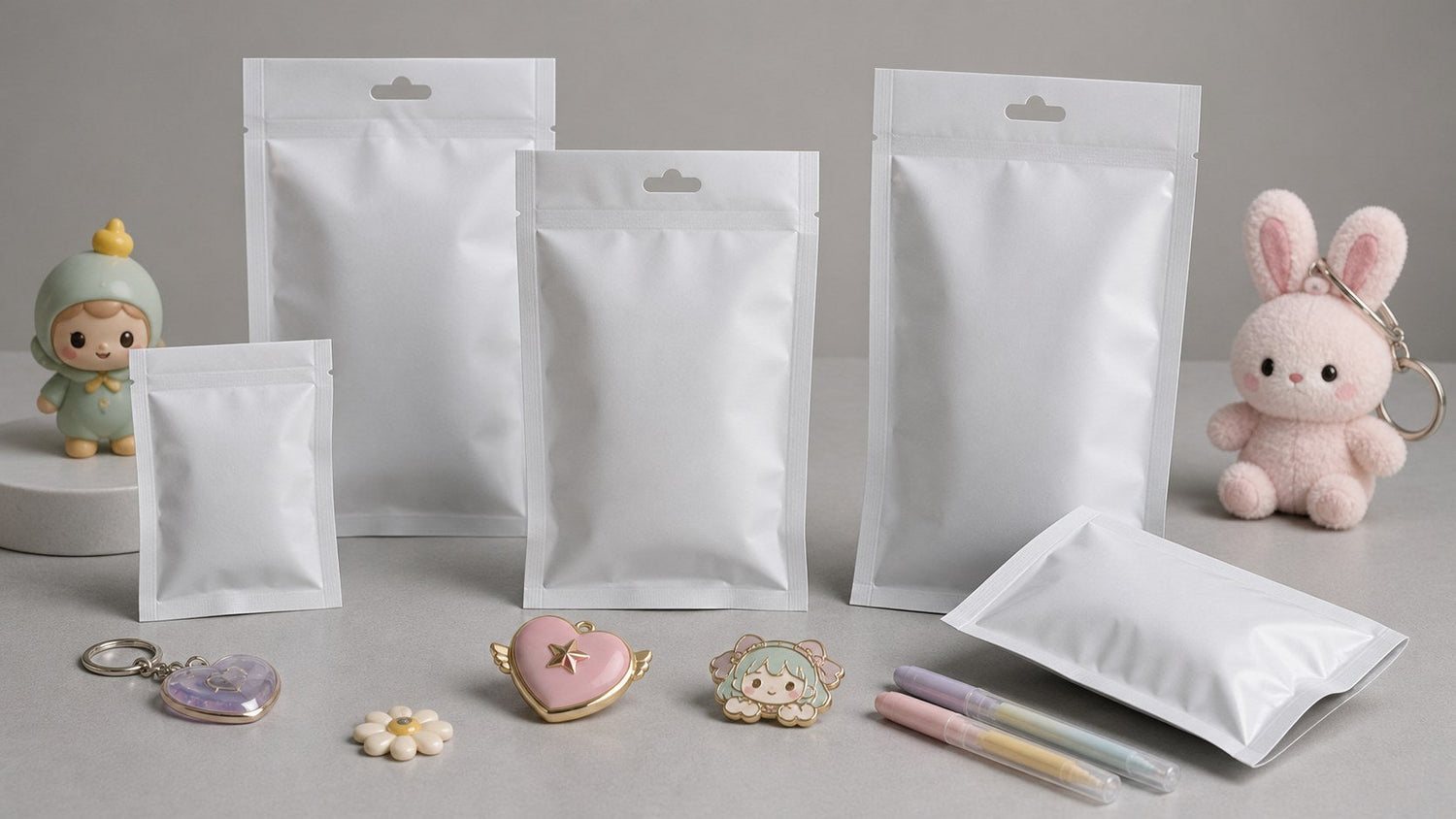
Blind bags packaging is designed for products where surprise, collectability, and shelf curiosity are part of the buying experience. It is commonly used for mini toys, collectible figures, trading accessories, pins, charms, stickers, stationery items, game pieces, promotional merchandise, fan products, artist collaborations, and limited-edition drops. The package should hide the exact item while still communicating the collection theme, age range, product category, and required safety information.
For buyers, blind bag packaging is not only an opaque pouch. It must protect the product, resist handling, support retail display, keep assortment programs organized, and reduce the chance that customers can identify variants by weight, outline, or light. If the product is intended for children, safety and labeling review should start before artwork approval. CPSC guidance on small parts for toys and children's products and Children's Product Certificates is important for U.S.-market planning.
Anacotte Packaging supports custom blind bags for low MOQ tests, digital printing for multi-SKU collectible launches, and custom quotes based on size, material, artwork, finish, and quantity. Buyers can compare mylar bags, stand up pouches, flat bottom pouches, and high barrier packaging when deciding how much opacity, structure, and shelf presence the launch needs.
What makes blind bag packaging different
Blind bags are built around controlled mystery. Customers should understand what series or product world they are buying into, but they should not be able to identify the exact variant before opening. That means the pouch should be opaque enough for retail lighting, strong enough for handling, and consistent enough that one item does not reveal itself through outline, stiffness, or weight. If some items are larger, sharper, or heavier than others, test whether consumers can guess the contents by touch.

This format is strong for IP launches, convention merchandise, toy series, retail impulse programs, fan drops, subscription boxes, and seasonal promotions. It is less suitable for products where the buyer needs to inspect size, color, ingredients, technical specifications, or safety details before purchase. Blind packaging should create surprise without hiding information customers need to make a responsible buying decision.
Material, opacity, and finish options
Blind bags often use opaque laminated films with strong print coverage. PET/PE may be suitable for lighter applications where basic durability is enough. PET/VMPET/PE can improve opacity and shelf impact with metallic appearance. PET/AL/PE may be considered when stronger opacity or barrier is required, though the final choice depends on product and budget. Recyclable mono-material options may be suitable in selected cases, but opacity, puncture resistance, seal strength, and local recycling access must be confirmed before making claims.

| Question | Why It Matters | Common Complaint If Missed |
|---|---|---|
| Does the bag need full opacity? | Customers should not identify variants before purchase. | Consumers can see or guess the item inside. |
| Does the product have sharp edges? | Hard parts can puncture or distort weak film. | Pinholes, scuffs, dents, or broken retail presentation. |
| How many variants are in the series? | Assortment control affects production and fulfillment. | Wrong ratios, missing rare items, or inventory confusion. |
| Is the item for children? | Age grading, warning, and certification rules may apply. | Artwork delays or retailer rejection. |

For Canada and EU launches, buyers should verify toy and product safety obligations in the target market. Canada provides product safety resources through Health Canada consumer product safety, while the European Commission explains EU toy safety requirements. Requirements vary by product, age group, importer role, and sales channel.
Artwork, SKU control, and retail presentation
Because customers cannot inspect the exact item, the outer artwork carries much of the sale. It should communicate the collection name, theme, possible item type, age range, and product universe clearly. It should not use fake safety badges, unsupported rarity claims, or misleading certification icons. If the series includes common, rare, or limited variants, define the assortment logic before mass packing.

SKU control is often the hidden challenge. A launch may use one shared outer bag for ten or more variants. Production teams need internal coding and carton-level tracking that does not reveal the surprise to retail customers. If items have different shapes or weights, inner wrapping, inserts, or structural adjustments may help keep the experience fair and consistent.
| Planning Area | Buyer Question | Recommended Action |
|---|---|---|
| Retail display | Will bags sit in trays, cartons, or hang displays? | Confirm pouch size and display orientation early. |
| Assortment | How many variants and rarity levels are included? | Plan packing ratios and internal tracking. |
| Finish | Does the project need matte, gloss, metallic, or holographic effects? | Balance shelf impact with lead time and cost. |
| Compliance | Is the product for children or general collectors? | Confirm warnings, age grading, and documentation before printing. |

MOQ, lead time, and sustainability claim boundaries
Blind bag projects often follow fixed launch dates such as conventions, holidays, retail drops, game releases, or influencer campaigns. MOQ and lead time depend on size, material, finish, artwork readiness, number of variants, sample approval, packing method, and quantity. Low MOQ digital printing can help test a new collectible series or limited run. Larger repeat campaigns may use another production path to manage unit cost.

Small lightweight packaging can be efficient, but environmental claims still need evidence. The FTC Green Guides summary explains why broad claims should be qualified. Avoid terms such as eco-friendly, zero waste, fully sustainable, or 100% recyclable unless the final material, local recovery access, and claim substantiation support them.
Get a quote for blind bags packaging
To quote blind bags packaging accurately, send product dimensions, item weight, shape, number of variants, target market, age range, opacity requirement, material preference, finish preference, artwork status, packing method, retail carton needs, launch deadline, and quantity.

Ready to create custom blind bags? Request a low MOQ or multi-SKU digital printing quote based on your size, material, artwork, finish, and quantity.
Frequently Asked Questions
What are blind bags used for?
Blind bags are used for collectible toys, mini figures, charms, pins, stickers, stationery items, game pieces, promotional merchandise, fan products, and limited-edition drops.
Can blind bags be fully opaque?
Yes, opaque films and strong print coverage can help, but finished samples should be tested under realistic retail lighting and handling.
Do blind bags for toys need safety warnings?
They may, depending on product type, age grading, small parts, and target market. Buyers should confirm U.S., Canada, and EU requirements before printing.


Leave a comment
This site is protected by hCaptcha and the hCaptcha Privacy Policy and Terms of Service apply.