

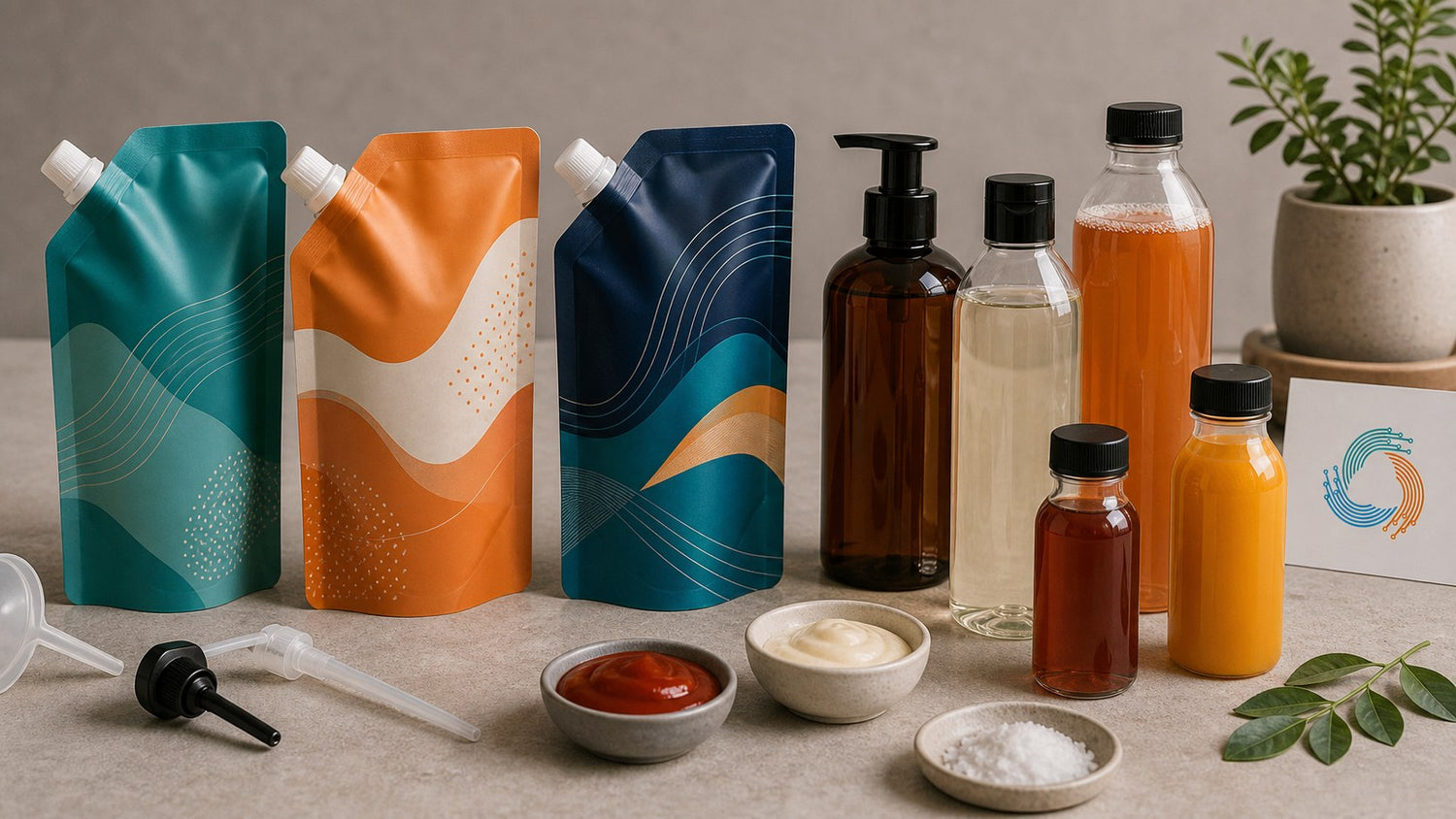
Spout pouch vs bottle packaging is a high-intent comparison for liquid, sauce, refill, baby food, beverage concentrate, personal care, detergent, and household product brands. Bottles are familiar, rigid, and easy to display. Spout pouches are flexible, lightweight, and often attractive for refill systems, ecommerce shipping, and reduced storage volume before filling. The best choice depends on product viscosity, filling process, cap fitment, shelf display, leakage risk, consumer use, target market, and sustainability claim strategy.
For food or personal care products sold in the United States, Canada, or EU, buyers should confirm food-contact or product-contact suitability and market-specific labeling rules before production. FDA resources on food contact substances, Health Canada information on food packaging materials, and the European Commission page on food contact materials can support early planning. Anacotte buyers can compare spout pouches, recyclable packaging, and custom spout pouches for liquid and refill packaging.

Where spout pouches perform well
Spout pouches work well for refill packs, squeezable products, sauces, purees, concentrates, soaps, detergents, gels, and lightweight ecommerce formats. Empty pouches can store and ship more compactly than rigid bottles, which may reduce inbound storage pressure before filling. They can also be designed with corner spouts, top spouts, different cap sizes, handles, clear windows, and printed surface systems that help separate SKUs.
The main risks are leakage, cap fitment issues, pouch stability, filling compatibility, and consumer expectations. A pouch that works for a thin liquid may not work for a thick sauce or high-viscosity gel. Filled sample testing should cover pressure, temperature change, transit movement, drop handling, and cap torque.

Where bottles still make sense
Bottles are strong when rigid shape, premium dispensing, shelf stability, pump compatibility, or consumer familiarity matters. They may be easier for some filling lines, labeling systems, and retail shelf sets. Bottles can also support pump tops, spray heads, measurement caps, and transparent product inspection. For some products, the consumer simply expects a bottle, especially for high-viscosity personal care or repeated countertop use.
However, bottles can take more storage space when empty and may ship less efficiently than flat unfilled pouches. They can also create breakage, denting, or cap leakage issues depending on resin, closure, and ecommerce packaging. The choice is not only pouch versus bottle; many brands use bottles as the main container and spout pouches as refill packaging.
Logistics, filling, material and cost comparison
Spout pouches can reduce empty-package storage volume and support refill positioning, but they require careful material and fitment selection. Common flexible structures include PET/PE, PET/VMPET/PE, PET/AL/PE, and recyclable mono-material options where suitable. The structure must match product chemistry, viscosity, barrier needs, seal strength, cap fitment, and filling temperature. Recyclable options may be available, but buyers should not claim 100% recyclable unless the final structure and local access support the claim.

| Decision Factor | Spout Pouch | Bottle |
|---|---|---|
| Logistics | Compact before filling and useful for refill formats | Bulkier when empty but familiar in distribution |
| User experience | Squeezable, lightweight, refill-friendly | Rigid, stable, compatible with pumps and sprays |
| Common risk | Leakage, cap fitment, pouch stability | Denting, cap leakage, higher empty storage volume |
| Best use | Refills, sauces, concentrates, baby food, detergent, gels | Countertop use, pump products, rigid display, premium dispensing |

Sustainability and claim planning
Spout pouches may reduce package weight and empty storage volume, but those benefits do not automatically mean the final package is recyclable or sustainable. The FTC Green Guides summary is useful for claim review, and EPA information on sustainable materials management provides broader waste hierarchy context. Buyers should use qualified wording and confirm claim substantiation for each target market.
Common buyer questions and complaints
Customers often ask whether spout pouches can replace bottles completely, whether they can be used for hot fill, whether the cap will leak during ecommerce shipping, and whether the same pouch can handle sauce, soap, and beverage concentrate. The answer depends on product chemistry, viscosity, filling temperature, cap style, and material structure. A pouch that works for hand soap may not be suitable for acidic sauce or baby food without further testing.
Common complaints include leaking caps, weak seals near the fitment, pouches that do not stand well after filling, spouts that are too small for thick liquids, and graphics that crack or scuff during shipping. Brands can reduce these risks by testing filled samples, confirming torque and cap compatibility, evaluating carton support, and comparing user experience against the bottle format customers already know.
For refill programs, buyers should also confirm the relationship between the pouch and the main bottle. The refill opening, pour control, cap size, fill volume, and instructions must work together. If the pouch is marketed as a refill solution, sustainability language should be specific and supported rather than relying on broad claims.
Brands should also consider merchandising. Bottles may stand better in traditional retail sets, while spout pouches may need cartons, trays, or hang solutions depending on the channel. Ecommerce brands should test both options in real shipping boxes because cap orientation, pouch flexibility, and bottle rigidity can change damage risk.
Get a quote for spout pouches or bottle alternatives
To quote spout pouch packaging accurately, send product type, viscosity, fill volume, filling temperature, target market, cap size, spout position, pouch size, material preference, artwork status, order quantity, sample testing needs, and whether the pouch is a refill pack or primary container.

Ready to compare spout pouches and bottle packaging? Request a low MOQ or digital printing quote based on size, material, artwork, fitment, and quantity.
Frequently Asked Questions
Are spout pouches better than bottles?
They are often better for lightweight refill and ecommerce formats, while bottles may be better for rigid shelf display, pumps, sprays, or countertop use.
Can spout pouches hold thick liquids?
Some can, but viscosity, spout size, seal strength, and filling process must be tested with the actual product.
Are spout pouches recyclable?
Some recyclable mono-material options may be suitable, but recyclability depends on final structure, fitment, local recycling access, and claim substantiation.


Leave a comment
This site is protected by hCaptcha and the hCaptcha Privacy Policy and Terms of Service apply.