

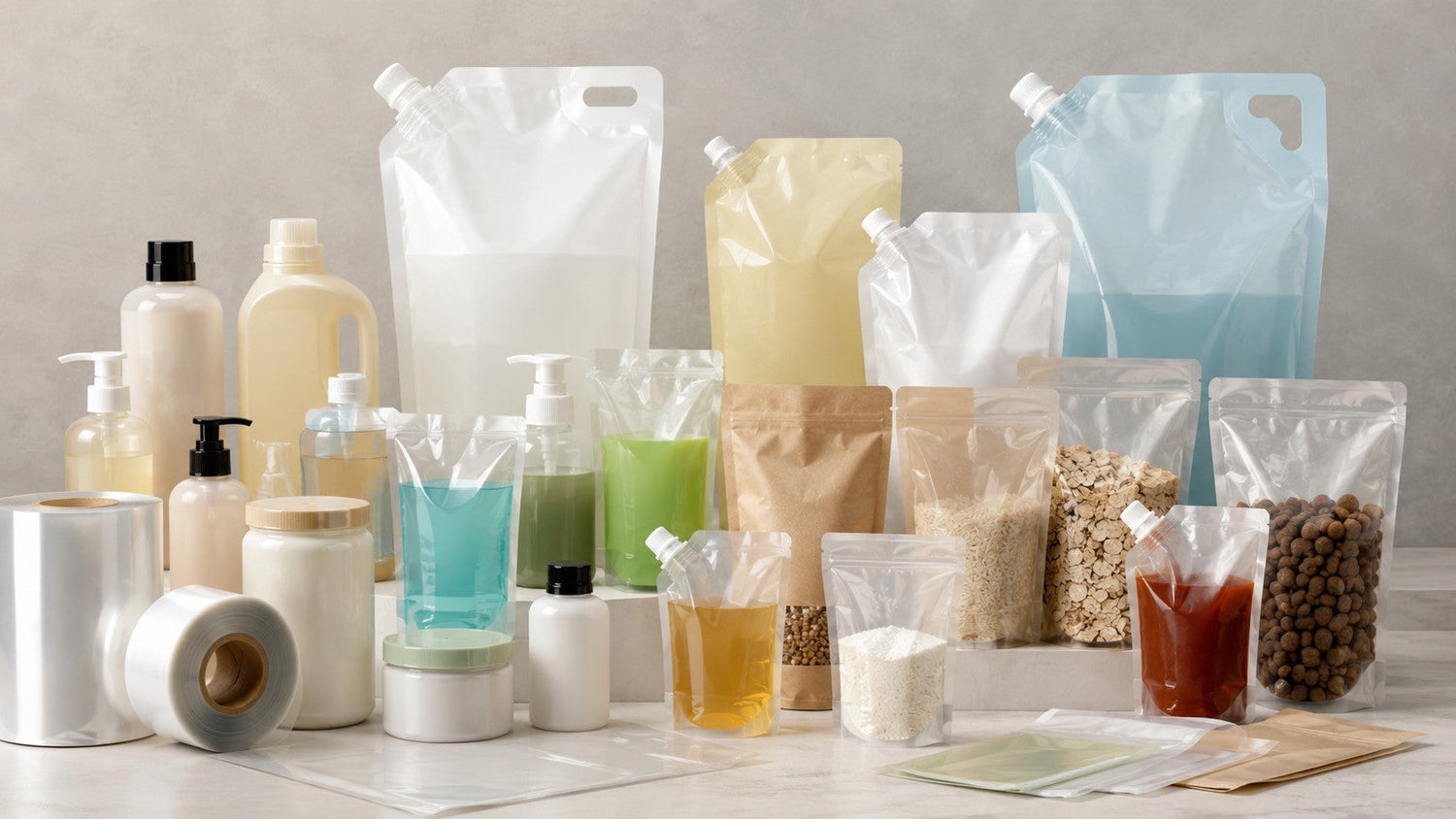
Refill pouches are flexible packaging formats designed for brands that sell replenishment products and want customers to refill an existing bottle, jar, dispenser, tub or starter container. They are widely used for household cleaning, laundry detergent, dish soap, hand soap, shampoo, conditioner, body wash, lotion, skincare refill, hand sanitizer, sauce, condiments, beverage concentrate, dry food refill, powder refill and pet product refill applications.
For repeat-purchase products, refill packaging can support a more efficient system than selling a new rigid bottle every time. A refill pouch can help reduce rigid packaging weight, lower shipping volume, simplify storage and give customers a practical way to reuse the main container. However, refill pouches should not be described with broad claims such as “100% eco-friendly,” “zero waste” or “fully sustainable” unless the final package structure, local recycling access and claim substantiation support those statements.
Anacotte Packaging supports low MOQ custom refill pouch projects for liquid, dry and powder refill products. Buyers can compare custom spout pouches for liquid and refill packaging, recyclable packaging options, spout pouches and recyclable vs compostable flexible packaging before choosing the final format.
Why refill pouches work best with a main container
Refill pouches work best when the brand already has a main packaging system. This may be a bottle, dispenser, jar, pump container, tub or retail starter pack. The first purchase gives the customer a durable container, while the refill pouch supports repeat purchasing with less rigid packaging. This is common for hand soap, shampoo, conditioner, detergent, body wash, lotion, skincare, sauce, condiments and dry pantry refill products.

If the brand does not yet have a main container, the refill pouch should be planned together with the primary container. Buyers should confirm the bottle opening, pour direction, volume, label instructions, storage behavior and user experience. A refill pouch that does not match the main container can cause messy pouring, customer complaints, leakage, underfilled perception or poor repeat purchase experience.
Refill systems can support source reduction by helping customers reuse an existing container instead of buying a new rigid package for every purchase. The EPA sustainable materials management hierarchy places source reduction and reuse above recycling because reducing material use at the source can prevent waste before it is created.
Refill pouch formats and best-use cases
The right refill pouch format depends on product viscosity, fill volume, shelf display, shipping method and consumer use. Liquid products usually need a spout, cap and fitment. Dry food and powder refills may use a zipper pouch or stand up pouch. Large household refill products may need stronger seals, wider gussets and better carton protection.

| Format | Best For | Buyer Notes |
|---|---|---|
| Spout refill pouch | Liquid soap, detergent, shampoo, sauce | Spout size, cap seal and fitment position should match viscosity and pouring behavior. |
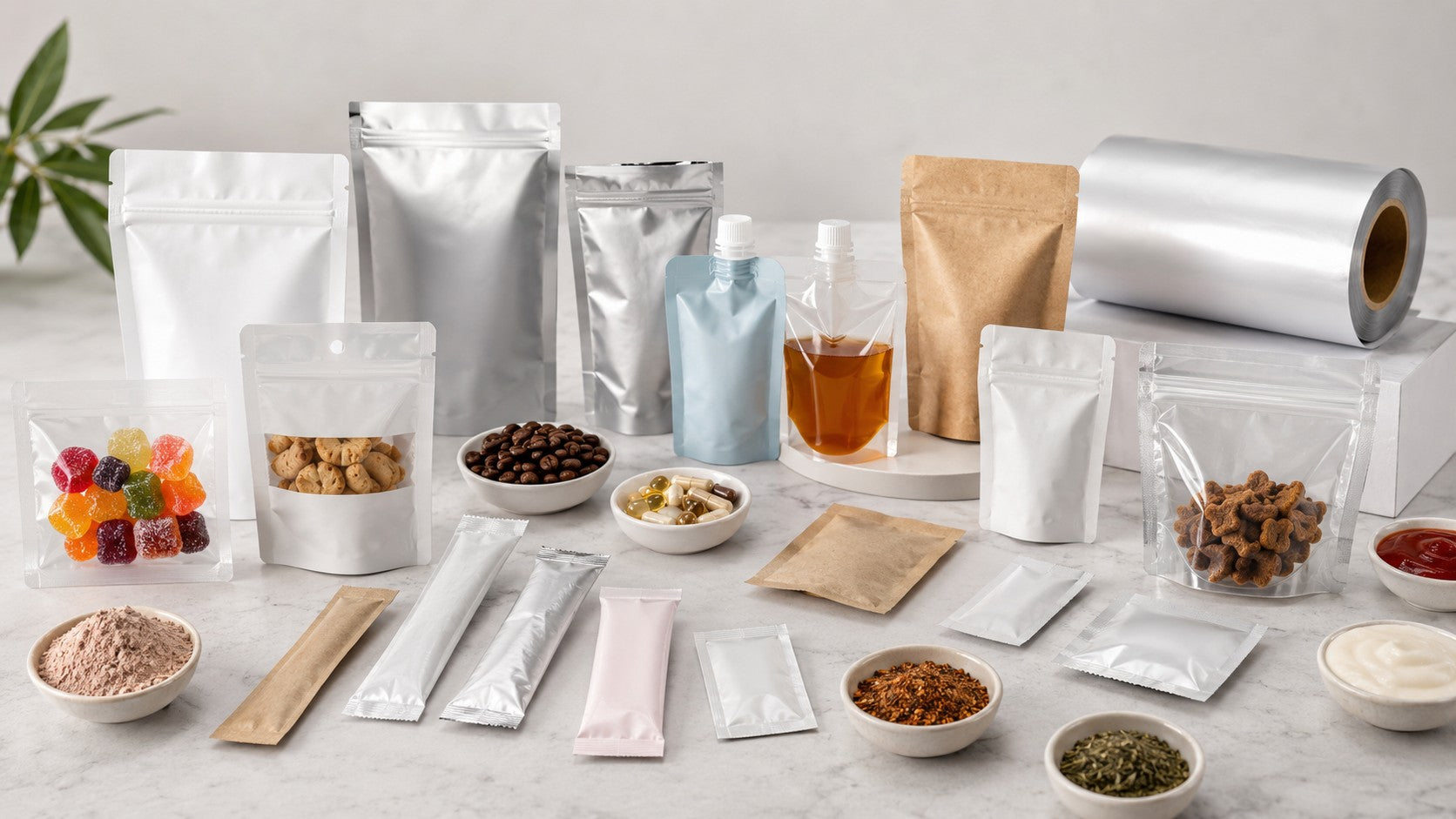
| Stand up refill pouch | Retail refill packs, dry goods, pet products | Shelf-ready, printable and useful when brand presentation matters. |
| Flat refill pouch | Lightweight refills and mailer-friendly packs | Compact and efficient, but with less shelf presence than a stand up pouch. |
| Large-volume refill pouch | Household cleaning, foodservice, bulk refill | Needs stronger seals, headspace control and carton planning. |
| Zipper refill pouch | Powders, dry food, pantry refill | Useful when dry refill products are not used all at once. |
| Rollstock film | Automated refill packing | Confirm film width, seal range, roll direction and line speed before production. |
For liquid products, brands can also review Anacotte’s spout pouch vs bottle packaging guide to compare refill strategy, lighter packaging weight and shipping efficiency against rigid bottle expectations.
Common refill pouch capacities
Common liquid refill pouch capacities include 100 ml, 250 ml, 500 ml, 750 ml, 1 L and 2 L. Household refill pouches often use 500 ml, 1 L, 2 L or 3 L formats for detergent, dish soap, cleaning liquid and hand soap. Personal care refill pouches may use 100 ml, 250 ml, 500 ml or 1 L for shampoo, conditioner, body wash, lotion and skincare. Sauce, condiment and beverage concentrate refill pouches may use 100 ml, 250 ml, 500 ml or 1 L depending on serving size and distribution channel.

Dry food refill pouches may use 250 g, 500 g, 1 kg, 2 kg or 5 kg formats, while powder refill pouches often use 250 g, 500 g, 1 kg or 2 kg. Final pouch dimensions can be customized based on fill volume, product viscosity, density, spout position, seal width, headspace, carton packing and filling equipment.
Spout, cap and fitment choices
Spout refill pouches can use corner spouts, center spouts, top spouts or angled spouts. Cap options may include small caps, large caps, standard screw caps and tamper-evident cap options. The right choice depends on viscosity, fill temperature, pouring speed, consumer use, refill destination and leakage risk.

Thin liquids such as hand sanitizer or some cleaning liquids may pour easily through smaller fitments. Thicker products such as lotion, shampoo, conditioner, sauce, puree or gel may need a larger cap or wider spout to improve pouring and reduce mess. For ecommerce shipping, buyers should also review spout torque, cap sealing, seal strength, pouch burst resistance, drop testing, carton packing and headspace control. Do not overfill the pouch, because insufficient headspace can increase stress during shipping and handling.
For a product-specific reference, Anacotte’s 100 ml / 250 ml / 500 ml / 1 L shampoo refill pouch shows how refill capacity, spout format and low MOQ custom printing can be planned for personal care refill products.
Material options for refill pouches
Material structure should be selected based on product chemistry, barrier needs, filling conditions and sustainability goals. PET/PE and NY/PE can be used for many standard liquid refill products. PET/VMPET/PE, PET/AL/PE, metallized film or foil laminate may be considered for products that need stronger moisture, oxygen, aroma or light protection. Dry food and powder refill products may use PET/PE, Kraft/PE, Kraft-look laminated pouch, high-barrier film or recyclable PE-based options depending on shelf-life needs.

For brands prioritizing recyclability, PE/PE, mono-PE and recyclable PE-based structures may be reviewed. However, recyclability depends on the final material structure, product residue, cap and fitment design, local collection systems and disposal communication. The How2Recycle program provides standardized disposal instructions for packaging in the United States and Canada, which is useful when brands need clearer consumer-facing recycling communication.
For sauce, condiment or beverage concentrate refill pouches, buyers should also confirm food-contact suitability. The FDA explains that food contact substances can include food packaging and its components, such as adhesives, coatings and colorants. For food refill products, material selection should be reviewed together with local labeling and product-contact requirements before production.
Sustainability claim planning for refill pouches
Refill pouches are often chosen for sustainability-oriented packaging strategies, but claims should be specific and supported. A stronger claim framework starts with the refill system itself: does the customer reuse a main container? Next, consider source reduction: does the pouch reduce rigid packaging weight or shipping volume compared with the original format? After that, review whether recyclable PE-based or mono-material structures are suitable for the product’s barrier and compatibility needs.

| Claim Area | What to Confirm |
|---|---|
| Refill system | Does the consumer reuse a main bottle, jar, dispenser or starter pack? |
| Source reduction | Does the pouch reduce rigid packaging weight or shipping volume? |
| Recyclability | Is the final structure accepted by the target recycling stream? |
| Mono-material | Can the product work with PE-based or mono-material film? |
| Barrier needs | Does the product require foil, metallized film or high-barrier layers? |
| Disposal communication | Is the recycling or disposal message accurate for the target market? |
Brands should avoid broad or unsupported claims such as “eco-friendly,” “zero waste,” “fully sustainable” or “100% recyclable” unless the final structure and market evidence support them. The FTC Green Guides are designed to help marketers avoid environmental claims that mislead consumers. The Flexible Packaging Association also summarizes advantages of flexible packaging, including convenience, protection and efficient distribution, which are relevant when evaluating refill pouch systems.
When refill pouches are a good fit
Refill pouches are a good fit for replenishment products, repeat-purchase products, household cleaning refills, personal care refills, foodservice refill packs, sauce refill packs, dry pantry refill packs, subscription refill programs, bulk-to-home refill models and starter kit plus refill systems. They work especially well when the customer clearly understands how to refill the main container and why the pouch is part of the brand’s packaging system.

They can also support private label testing, seasonal scents, new liquid formulas and subscription refill programs. Low MOQ refill pouches are useful when a brand wants to test a refill model before committing to large-scale packaging changes. Lead time depends on material structure, pouch size, spout and cap selection, artwork, sample approval, leak testing and order quantity.
When refill pouches may not be suitable
Refill pouches may not be suitable for products without a main container or clear refill logic. Very low repeat-purchase products may not benefit from a refill system. Carbonated products, highly corrosive liquids, strong solvents, hot-fill products, high-viscosity products and regulated products with strict packaging rules require extra testing and material review.

Some products still need rigid protection, especially when the consumer expects a hard bottle, pump or container. Highly acidic sauces, oily formulas, detergents, disinfecting products and chemical blends may require compatibility testing before material approval. For ecommerce shipping, leakage, cap sealing, carton protection and drop resistance should be reviewed before launch.
Common buyer concerns before ordering
Most refill pouch buyers ask whether the pouch will leak during shipping, whether the spout size fits the product viscosity, whether the refill pouch fits the main bottle or dispenser, and whether consumers can pour without mess. Other common questions include whether the pouch is strong enough for ecommerce shipping, whether the structure supports recyclable claims, whether the pouch stands upright after filling, whether a handle or larger cap is needed, and whether the label has enough space for instructions and warnings.
To reduce risk, buyers should test actual product viscosity, filling temperature, cap sealing, spout torque, seal strength, carton packing, drop resistance and product compatibility. For dry refill products, zipper closure, powder leakage, dust in the seal area and pouch stability after filling should also be reviewed.
Get a quote for custom refill pouches
To quote refill pouches accurately, send your product type, whether you already have a main container, target fill volume or weight, pouch format, spout position, cap size, material preference, barrier needs, recyclability goals, artwork status, shipping method, sample testing needs and order quantity. Anacotte Packaging can help compare spout refill pouches, stand up refill pouches, flat refill pouches, large-volume refill pouches, zipper refill pouches and rollstock film for liquid, dry and powder refill products.

Ready to create custom refill pouches? Request a quote for low MOQ refill packaging for household cleaning, laundry detergent, dish soap, hand soap, shampoo, conditioner, body wash, lotion, skincare refill, hand sanitizer, sauce, condiments, beverage concentrate, dry food refill, powder refill and pet product refill applications.
Frequently Asked Questions
What are refill pouches used for?
Refill pouches are used for products that replenish an existing bottle, dispenser, jar, tub or starter container. Common uses include cleaning liquids, soap, shampoo, conditioner, lotion, sauce, dry food, powder refills and pet products.
Are refill pouches recyclable?
Some refill pouches may use recyclable PE-based or mono-PE structures, but recyclability depends on the final material, cap and fitment design, product residue and local collection systems. Claims should be confirmed before printing.
What size refill pouch should I choose?
Liquid refill pouches commonly range from 100 ml to 2 L, while household refill formats may reach 3 L. Dry food and powder refills may use 250 g, 500 g, 1 kg, 2 kg or 5 kg formats depending on product density and shipping method.
Do refill pouches need a spout?
Liquid products usually benefit from a spout and cap for controlled pouring. Dry food, powder and pantry refill products may use zipper pouches, stand up pouches or flat pouches instead.
Can I order low MOQ refill pouches?
Yes. Low MOQ refill pouches are useful for pilot programs, starter kit launches, private label testing, seasonal scents, new formulas and subscription refill programs. Final MOQ depends on size, material, spout and cap selection, printing method and quantity.


Leave a comment
This site is protected by hCaptcha and the hCaptcha Privacy Policy and Terms of Service apply.