

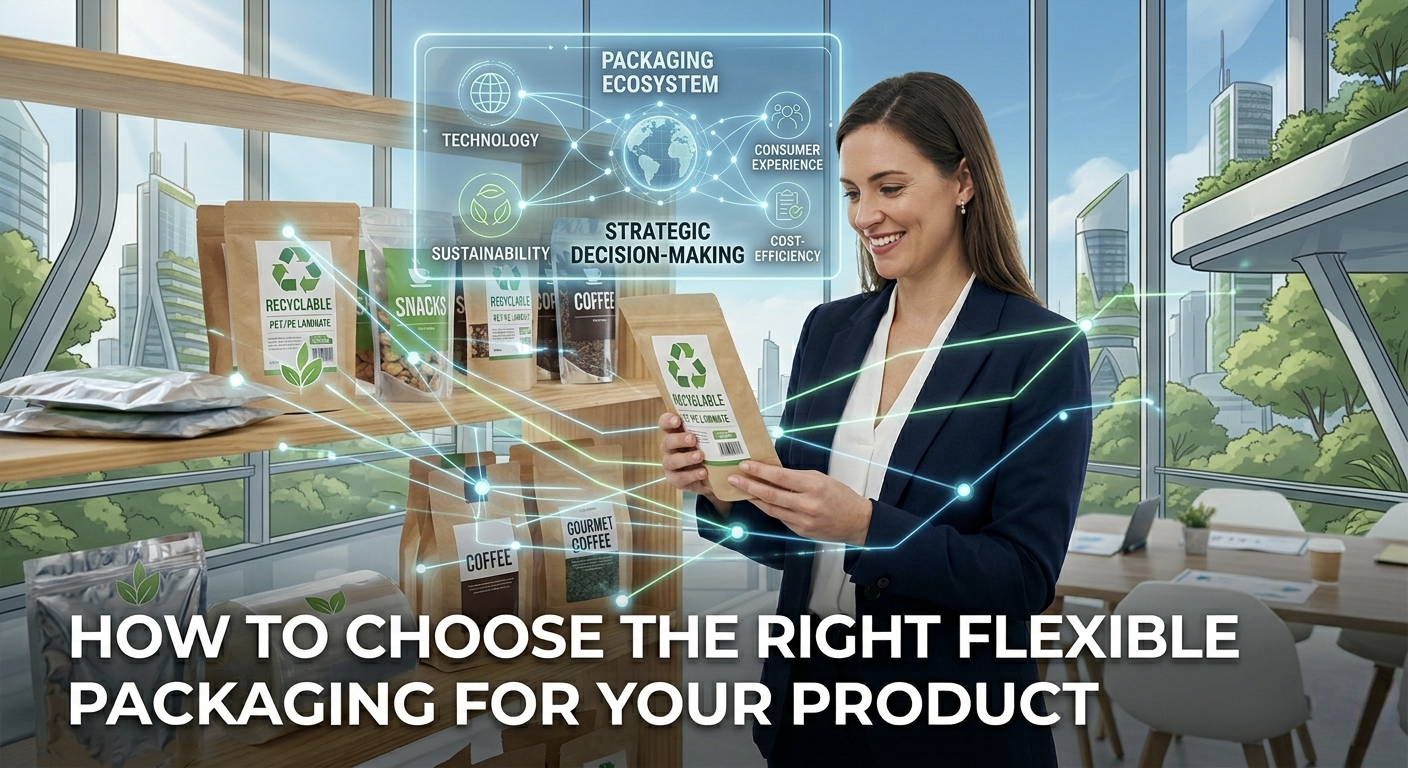
Choosing the right flexible packaging is no longer a simple operational decision—it’s a strategic one that directly influences product quality, shelf life, consumer perception, and environmental impact. In today’s highly competitive market, especially across the United States and Europe, brands that treat packaging as part of their value proposition consistently outperform those that don’t.
Whether you are launching a new product or upgrading an existing one, understanding how to select the right flexible packaging can help you reduce waste, meet regulatory requirements, and create a better user experience. This guide walks through every critical factor—from barrier performance to sustainability—so you can make smarter, data-driven decisions.

Why Flexible Packaging Matters in Today’s Market
Flexible packaging, including pouches, films, and laminates, has rapidly become the preferred solution across industries such as food, pet food, nutraceuticals, and personal care. Its appeal lies in its ability to combine performance with efficiency.
According to Statista, the global flexible packaging market is projected to exceed $390 billion by 2030.
Beyond market growth, packaging also plays a critical role in reducing waste. The FAO (Food and Agriculture Organization) estimates that improved packaging systems can reduce food loss by up to 30% across supply chains.
At the same time, the WHO (World Health Organization) highlights that proper packaging is essential for preventing contamination and ensuring food safety throughout distribution.
However, the benefits only materialize when the packaging is correctly designed. Poor material choices or inadequate barrier properties can quickly lead to spoilage, compliance issues, or damaged brand reputation.

Step 1: Understanding Barrier Requirements
The first and most fundamental step in choosing flexible packaging is evaluating the level of protection your product needs. Barrier performance determines how well your packaging can resist external factors like oxygen, moisture, and light.
Oxygen exposure is one of the primary causes of food degradation, particularly for products rich in fats or oils. Research published by the NIH (National Institutes of Health) shows that oxygen accelerates lipid oxidation, leading to off-flavors and nutrient loss.
To address this, high-barrier materials such as EVOH or metallized films are often used in snack foods, coffee, and meat packaging.
Moisture is another critical factor, especially for dry goods like powders, grains, or pet food. Even small amounts of moisture ingress can cause clumping, microbial growth, or texture degradation. Materials like aluminum laminates or high-barrier polymers such as nylon are commonly used to prevent this.
Light protection is equally important for sensitive products like vitamins and nutraceuticals. Exposure to UV light can degrade active ingredients, making opaque or UV-blocking materials essential.

Step 2: Selecting the Right Material Structure
Once barrier needs are defined, the next step is choosing the appropriate material structure.
Multi-layer laminates, such as PET/AL/PE, are widely used because they combine the strengths of different materials—offering excellent protection against oxygen, moisture, and light. However, their complexity often makes them difficult to recycle.
On the other hand, mono-material packaging, typically made from polyethylene (PE) or polypropylene (PP), is gaining popularity due to its recyclability and alignment with circular economy goals.
The EFSA (European Food Safety Authority) supports the safe use of recycled plastics in food packaging, provided strict safety and traceability requirements are met.

Step 3: Ensuring Product Compatibility and Distribution Efficiency
Even the best materials can fail if they are not compatible with the product itself or the conditions it will face during distribution.
From a chemical perspective, packaging must not interact negatively with the product. The FDA (U.S. Food and Drug Administration) strictly regulates food-contact materials to prevent harmful substance migration.
Temperature is another critical factor. Products stored in frozen environments require different material properties than those distributed in hot or humid climates.

Step 4: Designing for the Consumer Experience
Today’s consumers expect packaging to do more than just protect a product—they expect it to enhance usability and convenience.
Features such as resealable zippers, easy-tear notches, and spouted pouches significantly improve user experience. According to Statista, convenience features influence purchasing decisions for a large majority of consumers, often exceeding 70%.

Step 5: Meeting Sustainability Goals and Regulatory Requirements
Sustainability is no longer optional—it is a core expectation from both consumers and regulators.
Global organizations like the FAO and WHO emphasize that sustainable packaging solutions contribute not only to environmental protection but also to public health.
In the United States, the FDA governs food-contact materials to ensure safety. In Europe, regulations such as REACH and oversight from EFSA ensure that packaging materials do not pose chemical risks.

Step 6: Balancing Cost and Performance
Flexible packaging offers a significant advantage in reducing material usage and transportation costs. Compared to rigid packaging, it can reduce packaging weight by up to 70%, improving logistics efficiency and lowering carbon emissions (based on industry and FAO-related logistics findings).

Real-World Insights and Practical Tips
Digital tools such as lifecycle assessment platforms are also becoming valuable resources for evaluating environmental impact.
Conclusion: The Future of Flexible Packaging
Flexible packaging sits at the intersection of innovation, sustainability, and consumer experience. By carefully evaluating barrier requirements, selecting appropriate materials, ensuring regulatory compliance, and prioritizing user experience, businesses can create packaging that not only protects their products but also strengthens their market position.


Leave a comment
This site is protected by hCaptcha and the hCaptcha Privacy Policy and Terms of Service apply.