
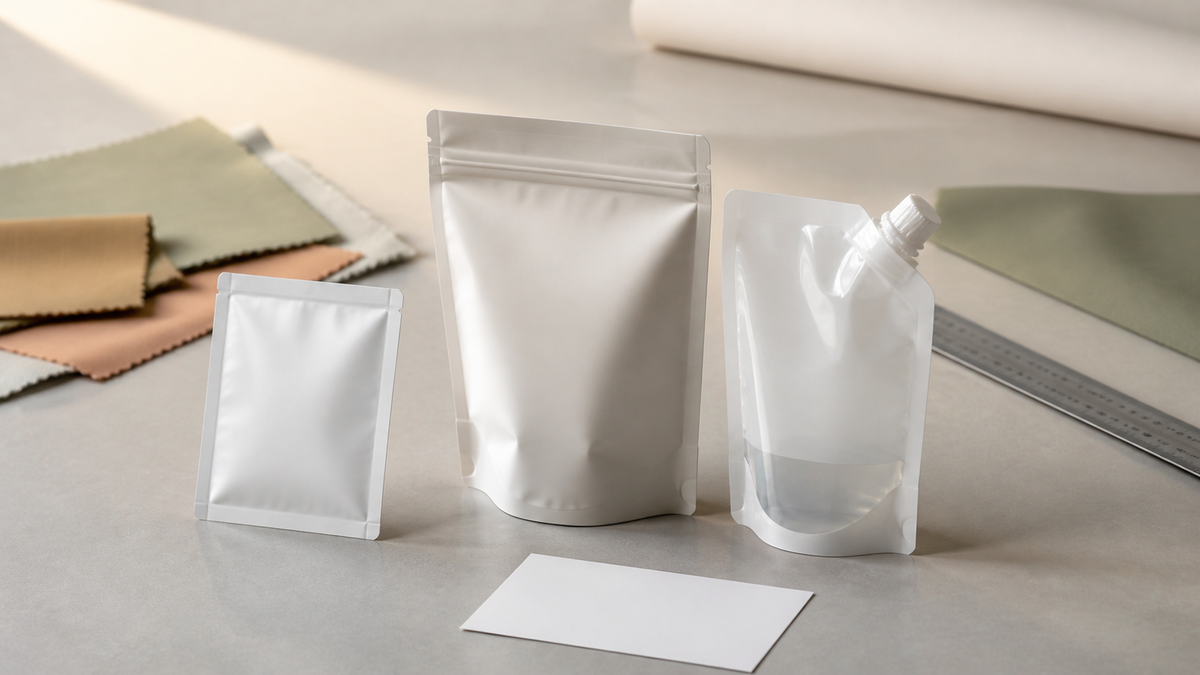
Low-MOQ cosmetic pouch packaging is most useful when it gives a beauty brand a controlled path from idea to evidence. The important question is not simply, “How few bags can I order?” It is, “What does this next quantity need to prove, and will the same format still make sense when the formula, artwork, and fill routine move forward?”
This guide turns that question into a sample-to-scale workflow. It covers format selection, formula and fill inputs, label space, artwork, proof gates, and the information a buyer should send before requesting a project-specific quote.

Quick answer: define the stage before you define the quantity
“Low MOQ” can refer to several different things:
- Functional samples: blank or lightly specified pieces used to check fill, opening, dispensing, stance, and seals.
- Printed proofs: a way to review artwork, color direction, panel placement, and SKU differences before a larger commitment.
- Starter production: a limited commercial run that must survive the real fill, pack-out, storage, and distribution routine.
- Repeat production: the point where the approved structure, artwork, dimensions, and quality checks become a repeatable specification.
A quantity that is sensible for an artwork proof may not be enough to reveal a seal-contamination problem. A quantity that works for one launch SKU may be inefficient when a brand adds several sizes or formulas. Put the proof question first, then compare the quantity, print method, and production route that answer it.
1. Start with the cosmetic use routine
Format should follow how the customer handles the product. A flat pouch can be efficient for a sample, trial, travel portion, or controlled single-use routine. A stand-up pouch can support a retail or refill presentation when filled stance, shelf footprint, and a zipper matter. A spout pouch can be useful when the user needs controlled dispensing, but the fitment, cap, weld, opening, and formula behavior need to be tested together.
Do not choose a spout simply because it looks premium, or a zipper simply because it is familiar. Ask:
- Is the product used once, occasionally, or repeatedly?
- Does the customer pour, squeeze, tap, or scoop?
- Is the formula free-flowing, viscous, particulate, or sensitive to air exposure?
- Does the filled pack need to stand on a shelf or travel inside a parcel?
- Which side of the pack needs the clearest label and usage information?
Anacotte’s public hair-mask pouch comparison uses the same starting principle: compare formula state and use pattern before debating a spout or a flat sachet. The exact result for a new cosmetic formula still belongs to sample review.

2. Make the first brief measurable
A supplier can quote more intelligently when the brief describes the filled pack rather than only the empty-bag style. Include the following inputs before you compare options:
| Input | What to specify | Why it changes the sample |
|---|---|---|
| Formula | Product type, viscosity, pH, oils, fragrance, solvent notes, and any particles | These details influence compatibility questions, filling behavior, and fitment testing. |
| Fill | Target weight or volume, tolerance, headspace, and fill temperature | Dimensions and usable panel area depend on the filled pack, not the nominal pouch size. |
| Use routine | Single-use, refill, retail, salon, travel, or sample distribution | It determines the opening, closure, stance, and reclosure requirement. |
| Artwork | SKU count, dieline status, mandatory copy, code zones, and finish direction | Short runs are easier to control when each SKU has a clear artwork map. |
| Route | Filling equipment, case pack, parcel route, storage, and target markets | Handling assumptions affect filled-pack and seal checks. |
When a founder does not know an input yet, mark it as an open decision. A visible unknown is easier to test than an assumed specification that quietly carries into production.
3. Separate “low MOQ” from “low risk”
A small order reduces the size of a commitment; it does not automatically reduce technical risk. The safest workflow uses separate proof gates:
- Functional gate: confirm dimensions, filled volume, headspace, stance, opening, cap or zipper feel, and basic fill behavior.
- Visual gate: confirm artwork, color direction, readable panel space, finish, SKU variation, and code zones.
- Filled-pack gate: fill the proposed formula and check seals, dispensing, leakage screening, closure, scuffing, and parcel handling.
- Scale gate: document the approved structure, dimensions, tolerances, artwork version, sample observations, and quality checkpoints before repeat production.
This sequence gives each sample a job. It also keeps a printed proof from being mistaken for a compatibility approval, and keeps a successful blank sample from being mistaken for a finished commercial pack.

4. Treat materials and finishes as questions to verify
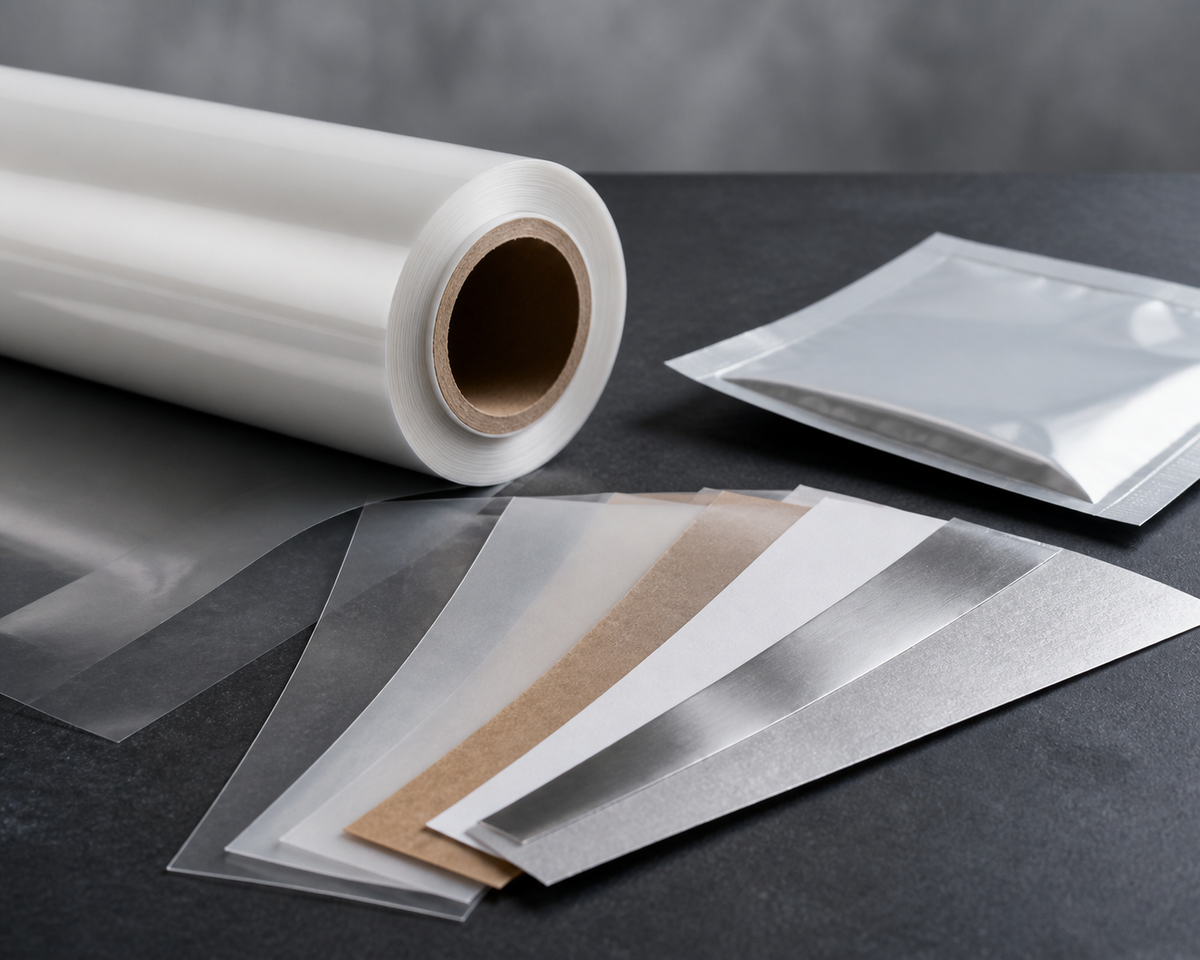
Cosmetic formulas vary widely. A cleansing liquid, hair mask, balm, serum, powder, and exfoliating product do not create the same packaging questions. The proposed film structure, sealant, fitment, zipper, finish, and print process should be reviewed against the formula and the intended conditions.
Useful questions for the sample discussion include:
- What is the proposed structure, and which layer is intended to contact the formula?
- What compatibility or filled-storage evidence is available for this formula and use condition?
- What happens at the seal area if the formula reaches the seal during filling?
- Does the finish need to resist handling marks, oil transfer, or scuffing during fulfillment?
- Are there heat, light, humidity, or temperature excursions in the distribution route?
Words such as “premium,” “safe,” or “eco” are not substitutes for a structure and test plan. Keep any recyclability, barrier, leak, or compatibility language tied to the specific material, market, and evidence available for the project.
5. Protect the label panel and artwork handoff
Small pouches have limited usable real estate. The label plan should reserve space for the brand’s approved product name, ingredients, net quantity, directions, warnings, responsible-party information, lot or expiration details, and other information required for the target market. It should also reserve quiet zones for seals, zippers, fitments, and variable codes.
For U.S. cosmetics, review the FDA cosmetics labeling guidance and the related claims guidance with the brand’s qualified regulatory owner. The packaging supplier can help with panel geometry and artwork setup; the product owner remains responsible for approved copy and applicable claims. Market requirements differ, so a U.S. label discussion should not be presented as a universal global rule.
For a short run, create one controlled artwork packet per SKU. Name the dieline version, identify the finish and color direction, show the code area, and mark anything that is intentionally blank. This makes a printed sample useful as an approval record rather than just a visual mockup.
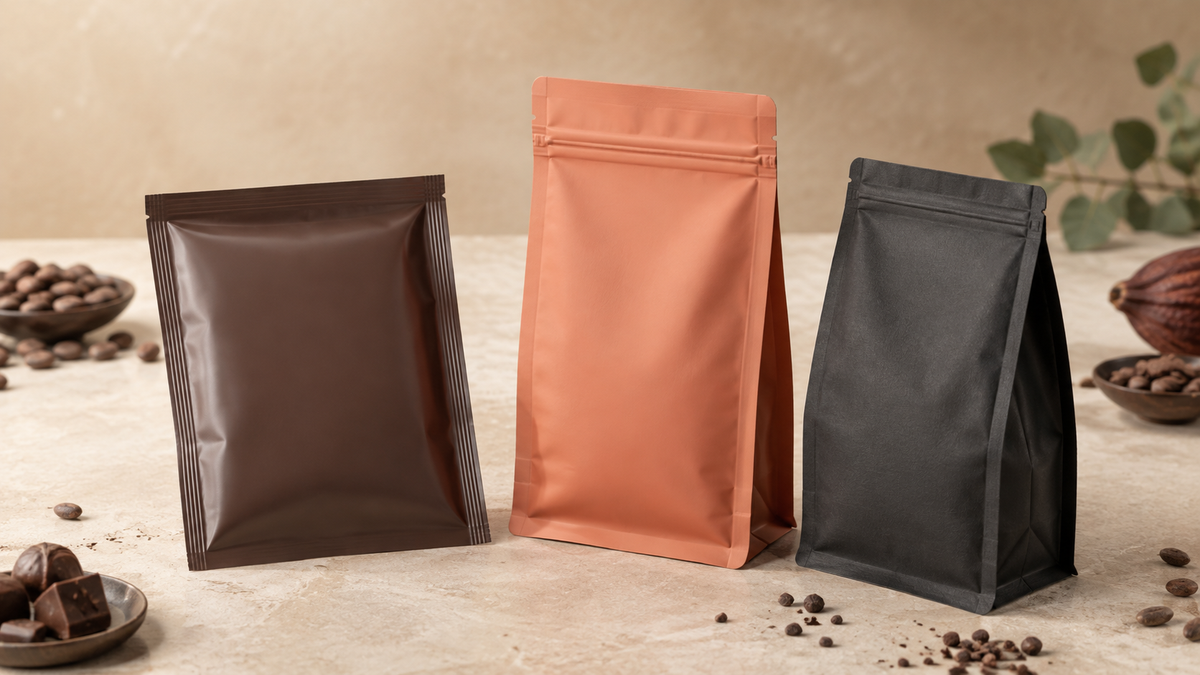
6. Learn from current low-MOQ market examples without copying their promises
Current supplier pages show why “low MOQ” needs context. CarePac presents bounded digital and plate-based quantity examples for cosmetic bags on its packaging page. The Pouch House presents digitally printed custom stand-up and lay-flat directions for skincare and cosmetics. Sparal’s current beauty-packaging page presents a 200-piece encouraged starting point. These are useful market examples, but each quantity and process belongs to the named supplier’s own offer and should not be converted into a universal minimum or an Anacotte promise.
The practical lesson is to ask every supplier the same questions: Is the quantity for a blank sample, digital print, or production? Does it apply per SKU? What artwork and structure assumptions are included? What is the next quantity step if the sample is approved? How will the supplier document a change between sample and repeat production?
7. Build a quote-ready sample-to-scale path
A clear first request can be short:
- Product and formula description, including viscosity and any known compatibility concerns.
- Target fill weight or volume, dimensions, tolerance, headspace, and number of SKUs.
- Preferred format direction: flat, stand-up, or spout, plus opening and reclosure needs.
- Artwork status, required panel copy owner, finish direction, and code zones.
- Filling method, distribution route, storage assumptions, and sample quantity.
- The decision that the first sample must answer and the evidence needed before scale-up.
For a starting point, review the active custom spout pouch for facial cleanser and custom flat pouch for luxury hair masks. They are product references, not a substitute for a formula-specific sample or a promise that one format fits every cosmetic application.

Final takeaway
The best low-MOQ cosmetic packaging decision is rarely the smallest number on a quote. It is the path that turns a formula and use routine into a measurable sample, a controlled artwork proof, a filled-pack review, and a documented next production step. If you are ready to compare formats, request a project-specific quote with your formula type, target fill, use routine, artwork status, target market, and sample-to-scale assumptions.

Hinterlasse einen Kommentar
Diese Website ist durch hCaptcha geschützt und es gelten die allgemeinen Geschäftsbedingungen und Datenschutzbestimmungen von hCaptcha.